Artwork
Sunset, Venice
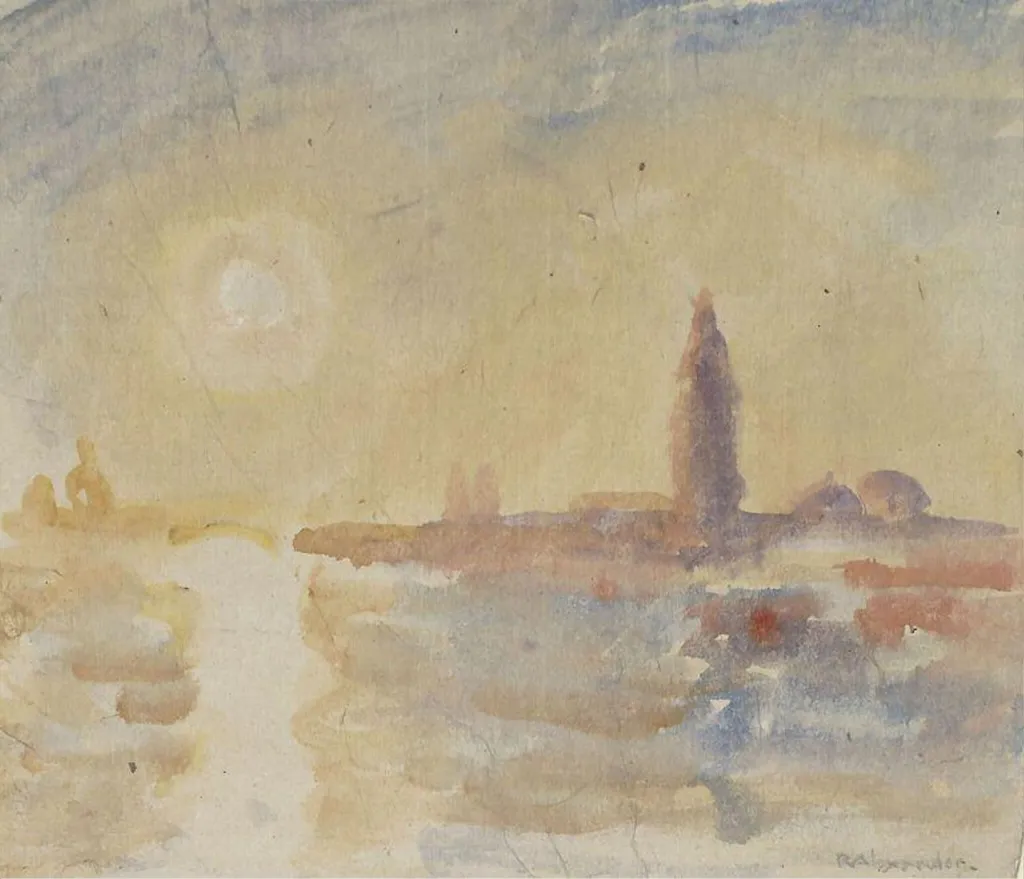
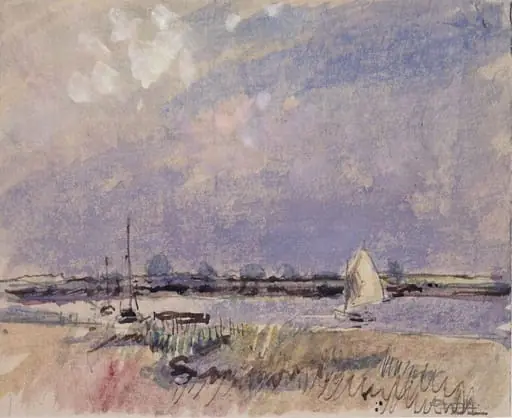
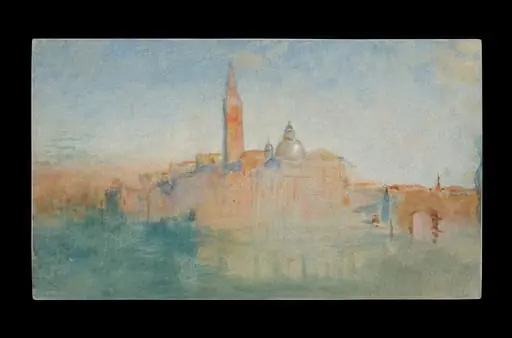
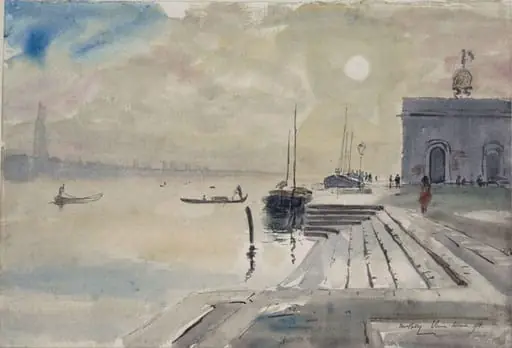
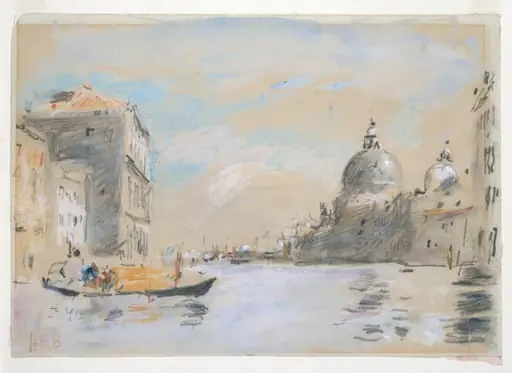
Sunset, Venice is a watercolor work on paper by the Impressionist artist Robert Graham Dryden Alexander. It dates from 1900 and is held in the collection of the Victoria and Albert Museum. This watercolour on Japanese paper depicts a quiet evening in Venice, rendered with delicate washes and minimal detail.
About this work
Overview
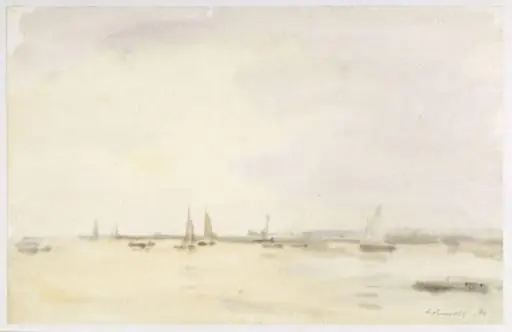
This watercolour on Japanese paper depicts a quiet evening in Venice, rendered with delicate washes and minimal detail. Signed and labeled by the artist, the work captures a single moment as daylight fades. The composition centers on the horizon, where sky meets water, and relies on subtle tonal shifts rather than precise forms to convey atmosphere.
Subject & Meaning
The scene presents Venice at dusk, with low-slung buildings and sparse trees framing the water’s edge. A few small boats drift near the shore, their forms softened by the fading light. The absence of human figures and the stillness of the water suggest solitude and reflection, emphasizing the transient nature of twilight rather than the city’s landmarks.
Technique & Style
The artist employed thin, layered washes to build the warm glow of the sunset, allowing the paper’s texture to show through in places. Brushwork is restrained, avoiding sharp outlines; edges blur where sky, water, and land meet. The palette is muted—ochres, pale pinks, and soft blues—creating a sense of quiet luminosity without dramatic contrast.
History & Provenance
The work is signed and inscribed by the artist, indicating personal authorship and intent. Its use of Japanese paper suggests an interest in non-Western materials, common among 19th-century watercolourists seeking luminous surfaces. No documented exhibition or ownership history is widely recorded, but its preservation implies it was held in private collections.
Context
Created during a period when European artists increasingly turned to plein air watercolour for its immediacy, this piece aligns with a broader trend of capturing ephemeral light effects. Venice, a popular subject for travelers and artists, was often rendered not as a bustling city but as a poetic landscape of reflection and decay.
Legacy
Though not widely exhibited, the work contributes to a quiet tradition of intimate watercolours that prioritize mood over monumentality. Its focus on transience and subtle colour resonates with later modernist approaches to light and perception, offering a restrained counterpoint to more theatrical depictions of the same subject.
Artist & collection
Artist
Robert Graham Dryden Alexander
Robert Graham Dryden Alexander (1875–1945) was an artist, born in London.