Artwork
Collect Pond, New York City
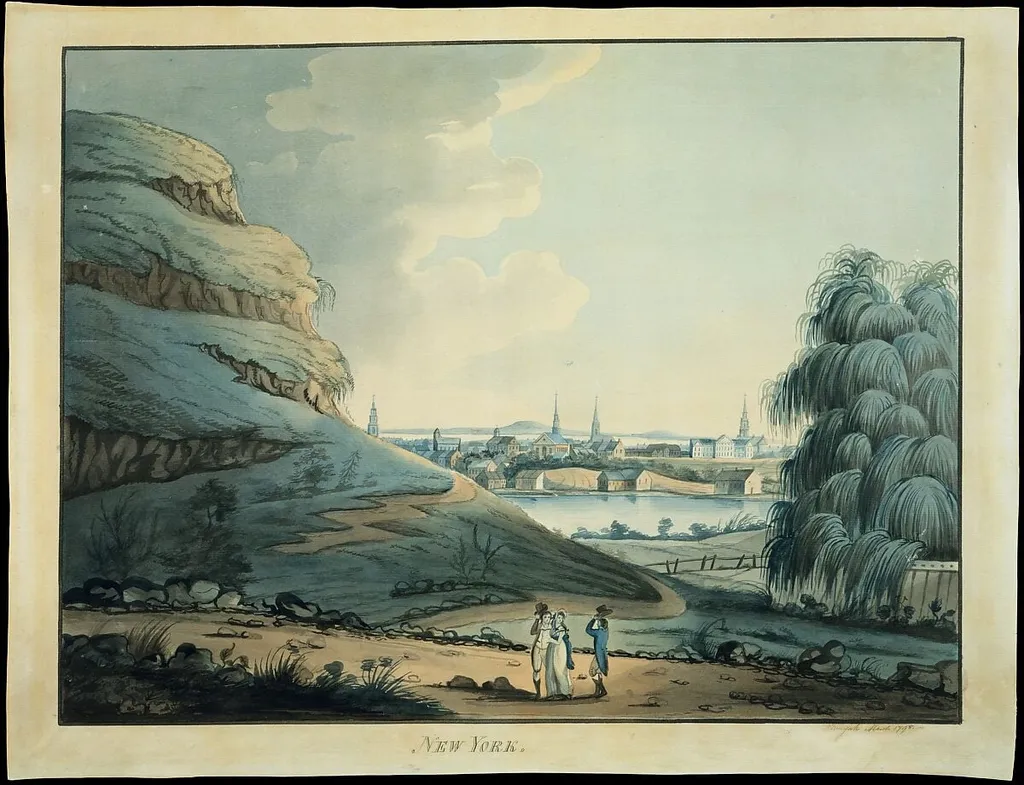
Collect Pond, New York City is a watercolor work on paper by the American Folk Art artist Alexander Robertson|Archibald Robertson. It dates from 1798 and is held in the collection of the Metropolitan Museum of Art.
About this work
The brothers who painted it ran an art school in Manhattan; they probably stood right where the courthouses are today.
You see a small pond ringed by trees, with a few people strolling or sitting on the grass in 1798 New York City.
This is one of the earliest pictures of Collect Pond, a freshwater spot that later got filled in and became a slum. The brothers who painted it ran an art school in Manhattan; they probably stood right where the courthouses are today.
If you like quiet city scenes like this, look up watercolor next.
Overview
Alexander Robertson's 1798 watercolor, Collect Pond, New York City, captures an early view of a significant Manhattan landmark. Executed with watercolor and black chalk on off-white laid paper, this landscape offers a glimpse into the city's appearance at the close of the 18th century. It is housed within The American Wing, reflecting its importance to the nation's artistic heritage.
Subject & Meaning
The artwork portrays Collect Pond, an artificial body of freshwater, surrounded by trees and a few figures engaged in leisure activities. This serene depiction shows a tranquil urban oasis, with individuals strolling or resting on the grassy banks. As one of the earliest known visual records of the pond, it documents a specific moment in New York City's development before significant urban transformation.
Technique & Style
Robertson utilized watercolor and black chalk to render the scene, a common combination for landscape studies and finished works of the period. The delicate washes of watercolor convey the atmospheric qualities of the pond and surrounding foliage, while the black chalk likely provided initial structural drawing and definition. This approach allowed for both precision and a sense of immediacy in capturing the natural elements within the urban setting.
Context
This image was likely created by Alexander Robertson, who, along with his brother Archibald, operated a prominent art school in Manhattan. The brothers were influential in early American art education, teaching drawing and painting techniques. The vantage point for this depiction was probably near the present-day location of New York City's courthouses, placing the artists directly within the evolving urban landscape they documented.
Legacy
Collect Pond, once a vital freshwater source and recreational area, underwent significant changes in the decades following this painting's creation. As New York City expanded, the pond was eventually filled in, transforming the area into dry land. This urban development, however, led to poor sanitation and the subsequent decline of the neighborhood into a notorious slum, making Robertson's tranquil depiction a poignant record of a lost landscape.
Artist & collection

Artist
Alexander Robertson|Archibald Robertson
New York at the close of the 1700s is the subject here: Alexander Robertson painted the city’s Collect Pond in 1798, showing a quiet stretch of water and modest buildings in delicate watercolor and chalk.
