Artwork
Untitled
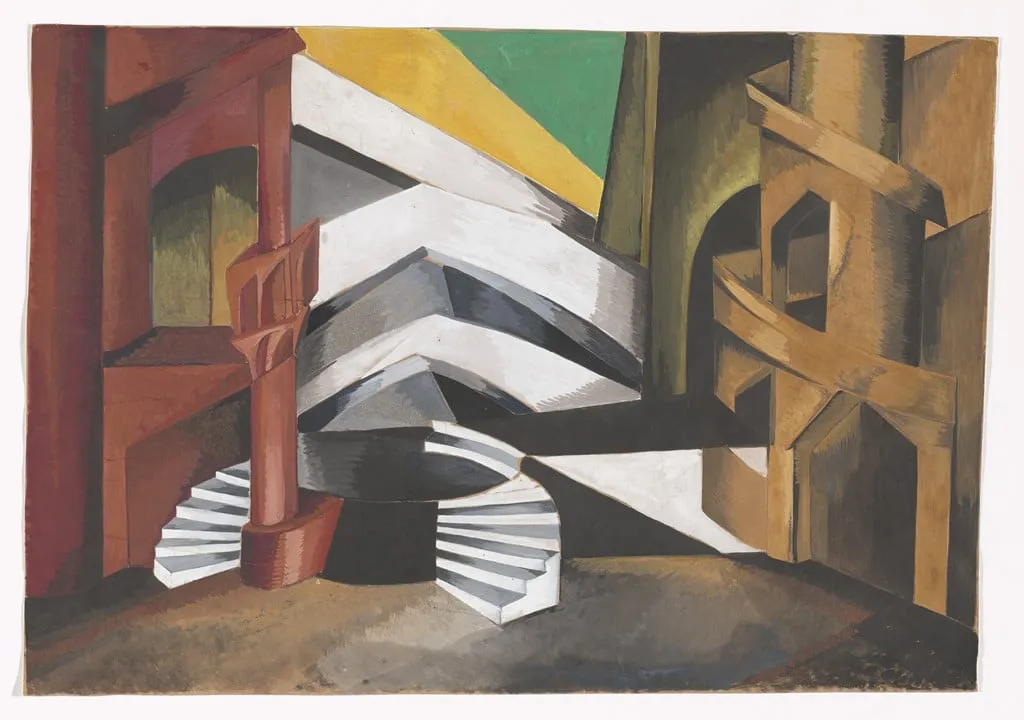
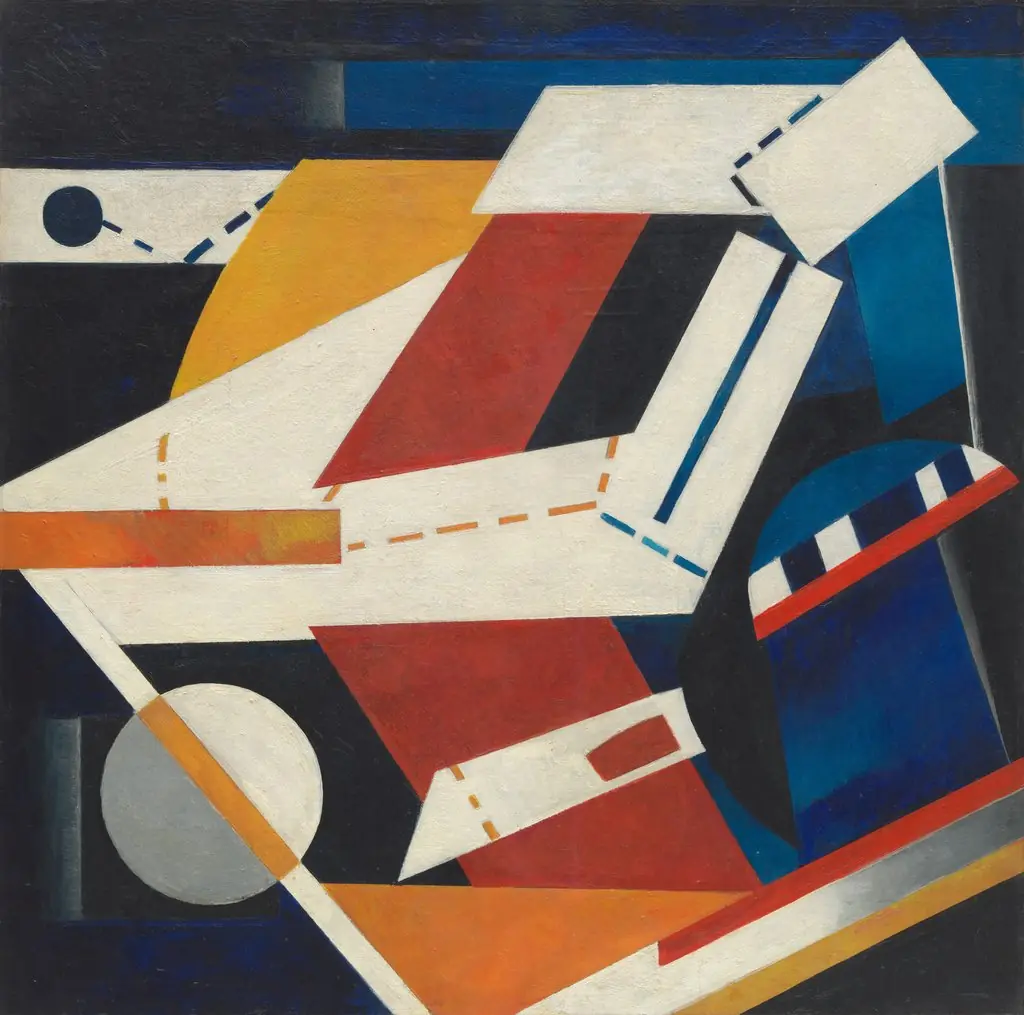
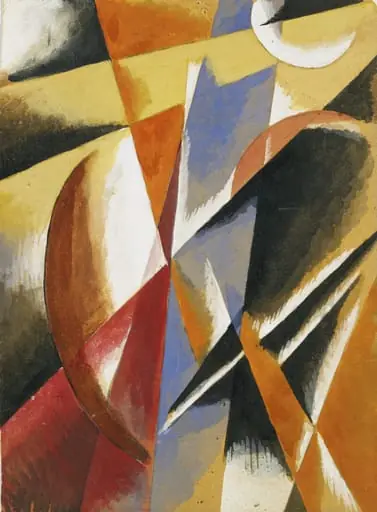
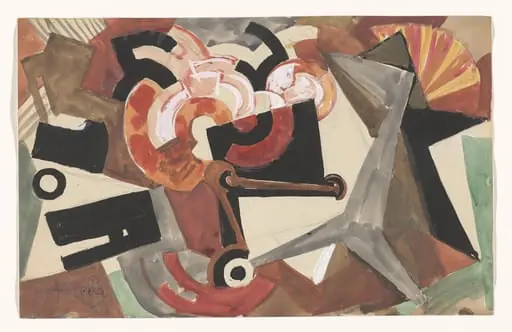
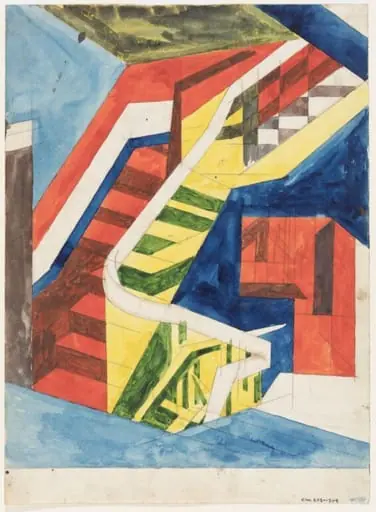
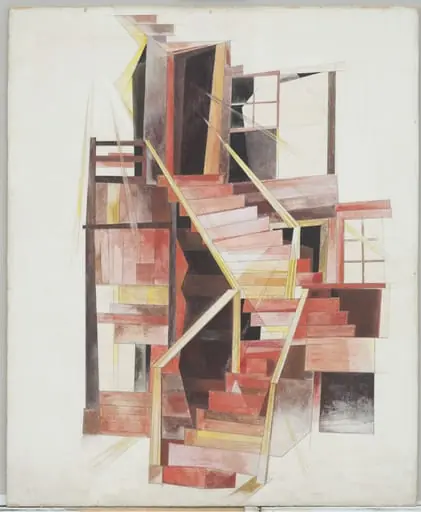
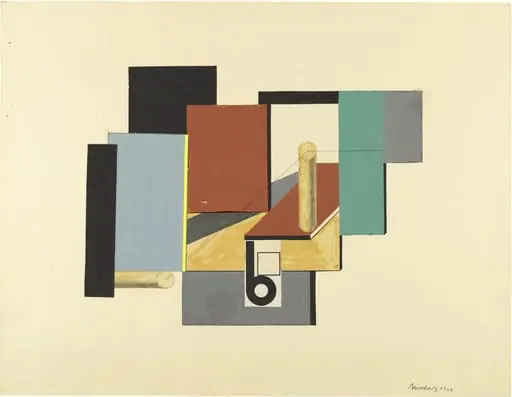
Untitled is a gouache drawing by Aleksandra Ekster. It dates from 1921 and is held in the collection of the Museum of Modern Art.
About this work
You see sharp shapes in red, black, and silver—like gears, stairs, and a moon—floating on a dark background.
You see sharp shapes in red, black, and silver—like gears, stairs, and a moon—floating on a dark background.
This was a costume sketch for a 1921 production of *Romeo and Juliet*. The director wanted the actors to look like moving machines, not people. Exter used metallic paint so the costumes would glint under stage lights.
Look up *gouache*—it’s a thick, opaque watercolor that dries fast, perfect for quick theater designs.
Overview
Created around 1921, this gouache and metallic paint drawing on paper is a costume design by Alexandra Exter for a stage production of Romeo and Juliet. Executed with rapid, precise strokes, it reflects her engagement with avant-garde movements in both Kiev and Paris. The work was made for a theatrical context, where visual abstraction replaced naturalism, and its materials were chosen for their reflective qualities under stage lighting.
Subject & Meaning
The composition features angular, machine-like forms—resembling gears, staircases, and a crescent moon—arranged to suggest fragmented human silhouettes. These shapes reject traditional costuming, instead proposing actors as kinetic, mechanical entities. The design embodies a directorial vision that sought to dissolve individual identity into a collective, industrial aesthetic, aligning with early 20th-century mechanization themes in art and theater.
Technique & Style
Exter employed gouache for its opaque, fast-drying properties, ideal for quick theatrical sketches. Metallic paint was added to catch and reflect stage lights, enhancing the illusion of movement and metallic surfaces. The forms are reduced to geometric planes, echoing Cubo-Futurist and Constructivist principles. Sharp contrasts of red, black, and silver create rhythm and depth without modeling or perspective.
History & Provenance
The drawing originated as a preparatory study for a 1921 production in Kiev, directed by a proponent of experimental theater. It remained in Exter’s personal archive before entering the collection of The Museum of Modern Art. Its preservation reflects its significance as a rare surviving artifact of avant-garde stage design from a period when many such works were ephemeral or lost.
Context
During the early 1920s, Exter was part of a broader European shift toward abstraction in performance art. Influenced by contemporaries like Picasso and Braque, she adapted Cubist fragmentation for theatrical use. This design emerged alongside other radical stage experiments in Russia and Ukraine, where artists sought to merge visual art with live performance to challenge bourgeois norms of representation.
Legacy
The drawing stands as a testament to the integration of fine art and theater in the avant-garde. It influenced later stage designers who embraced geometric abstraction and industrial aesthetics. Its survival in a major museum collection underscores its role in documenting how modernist visual languages extended beyond canvas into the ephemeral realm of performance.
Artist & collection
Artist
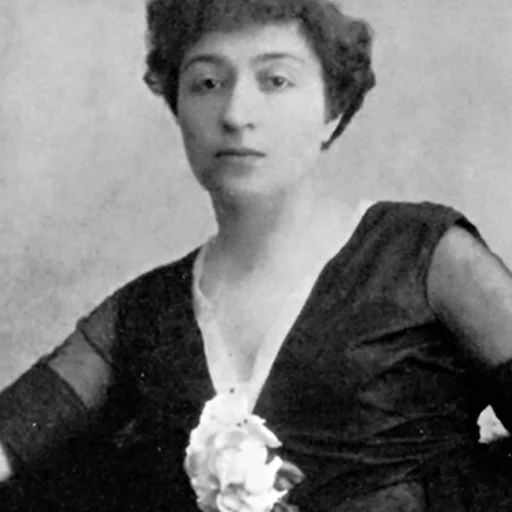
Aleksandra Aleksandrovna Ekster (née Grigorovich; Russian: Алекса́ндра Алекса́ндровна Эксте́р; Ukrainian: Олекса́ндра Олекса́ндрівна Е́кстер; 18 January 1882 – 17 March 1949), also known as Alexandra Exter, was a Russian and French painter…