Artwork
Self-portrait
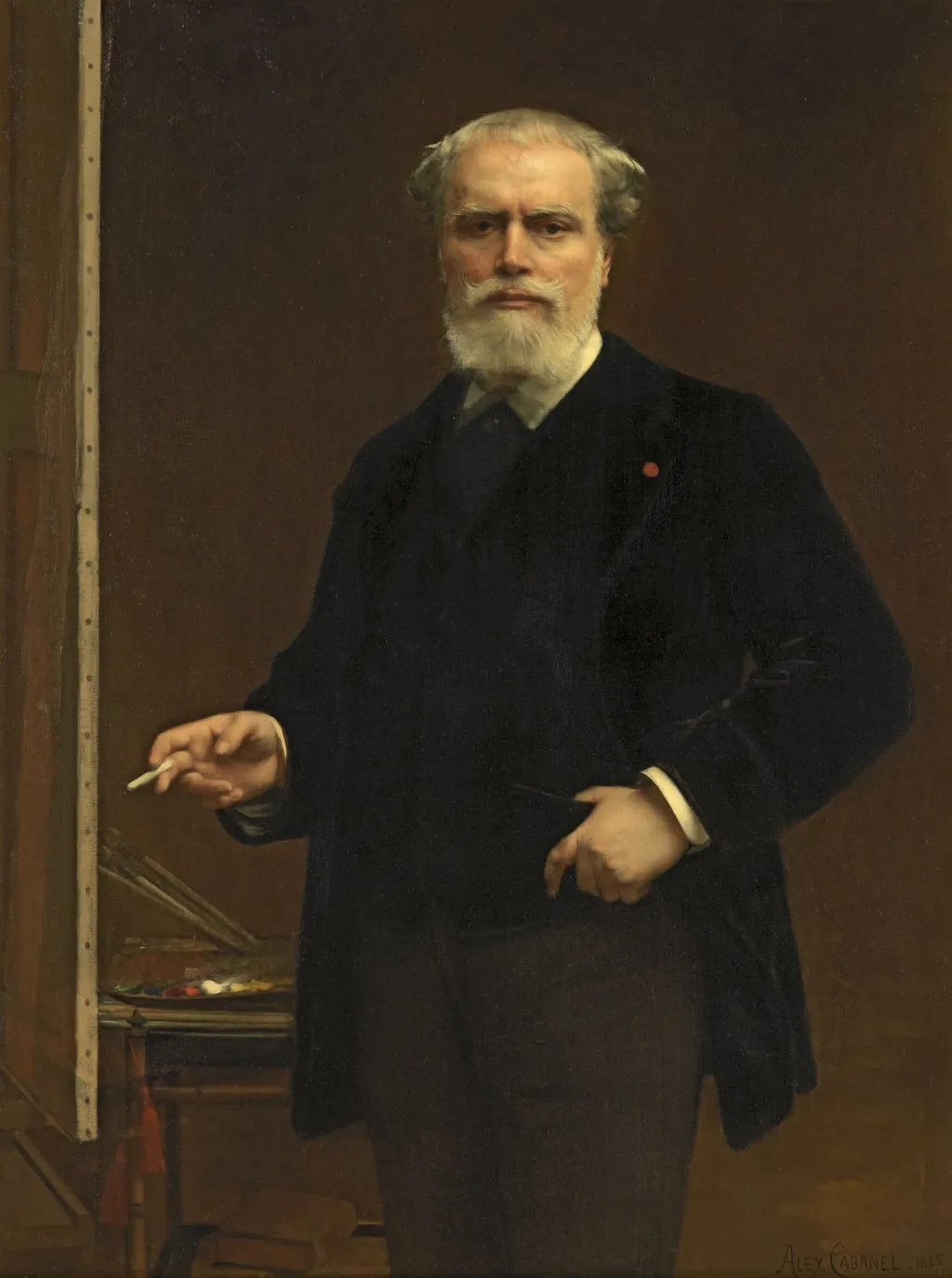
Self-portrait is an oil painting by Alexandre Cabanel. It dates from 1893 and is held in the collection of the Royal Museum of Fine Arts Antwerp.
About this work
If you're interested in learning more about this technique, you can explore the concept of chiaroscuro.
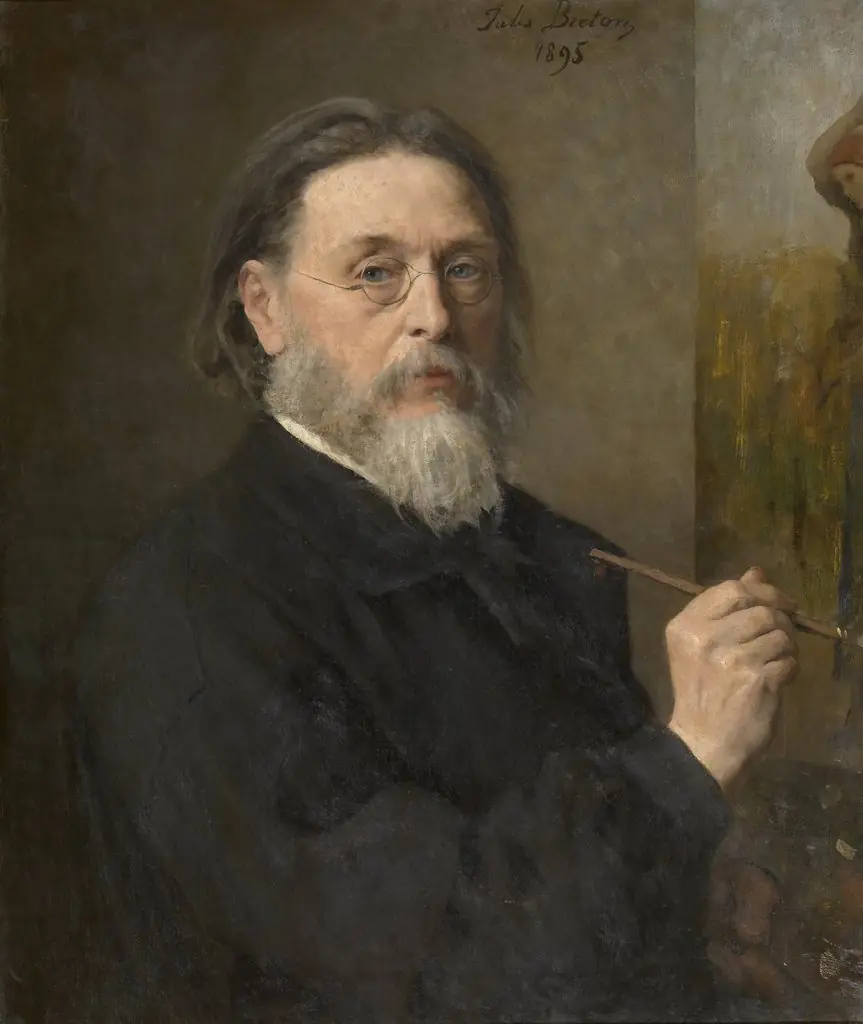
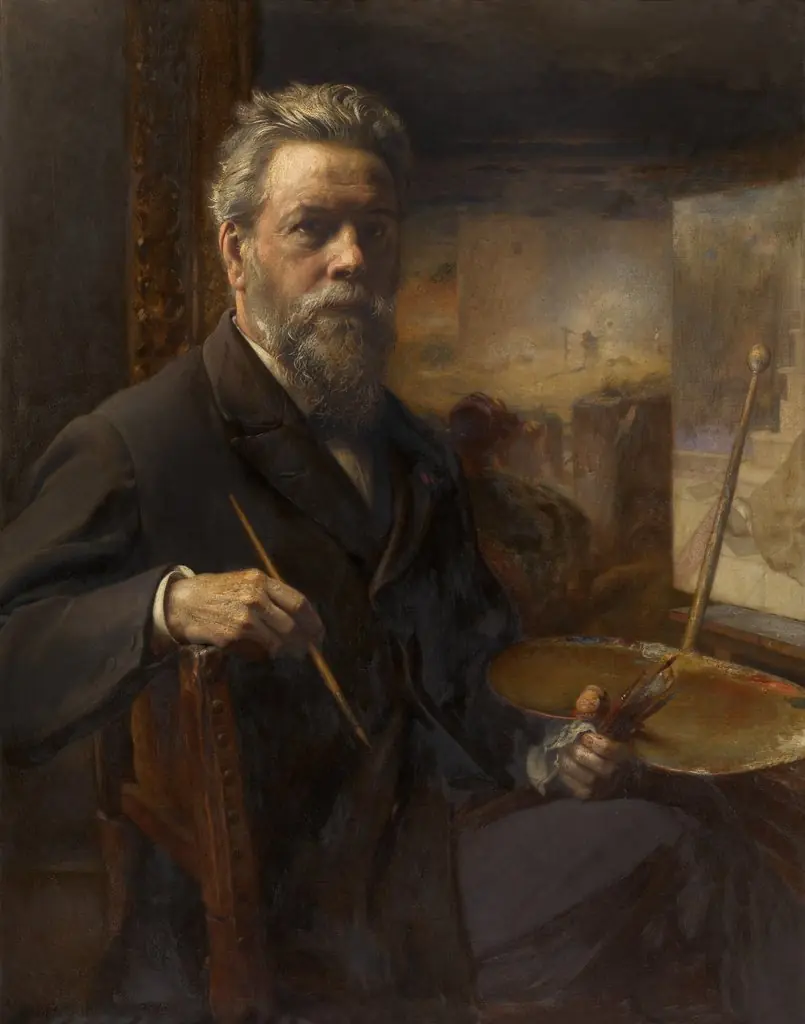
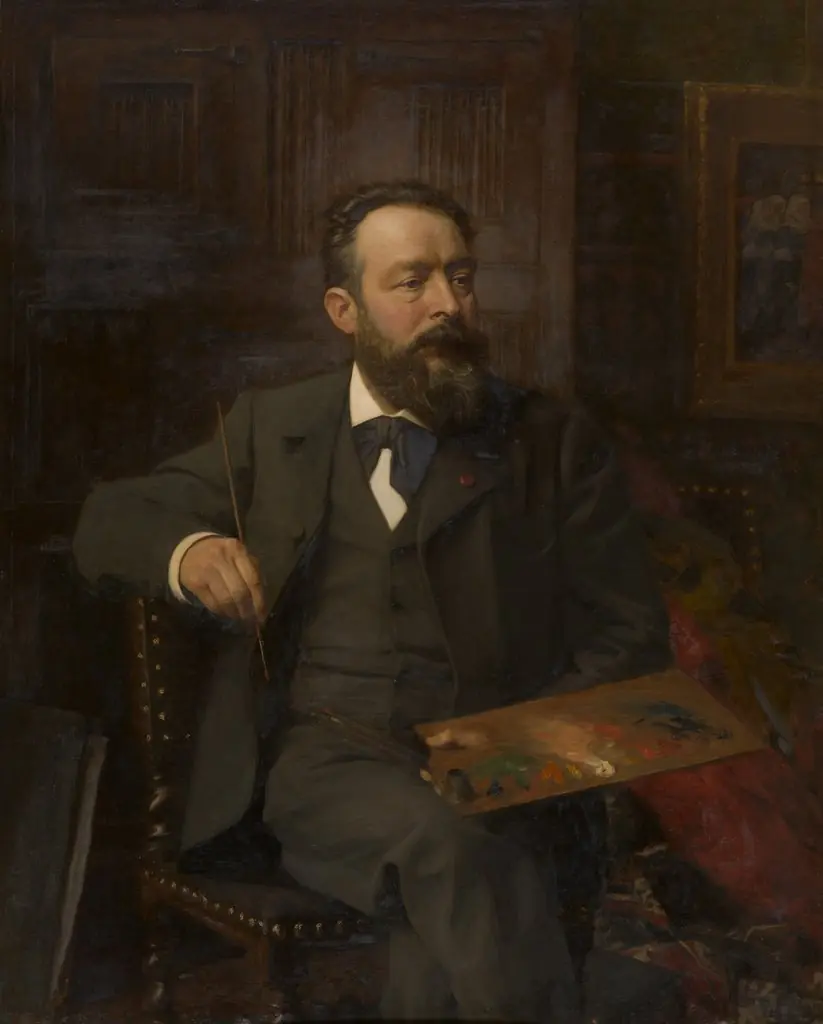
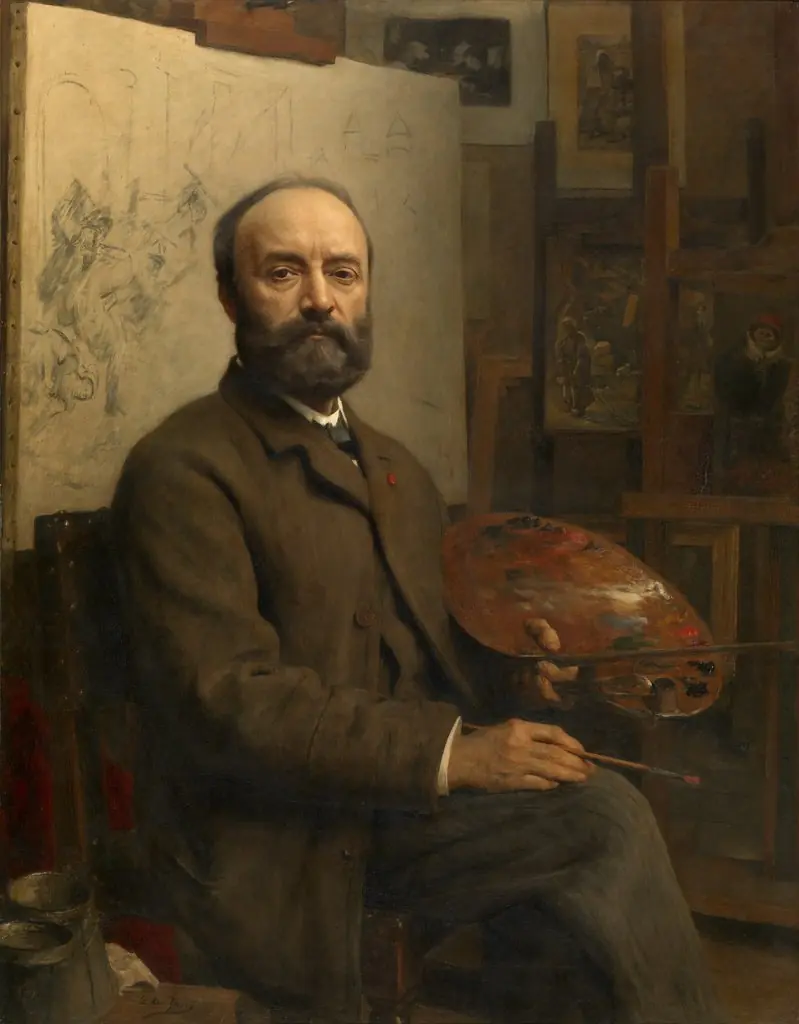
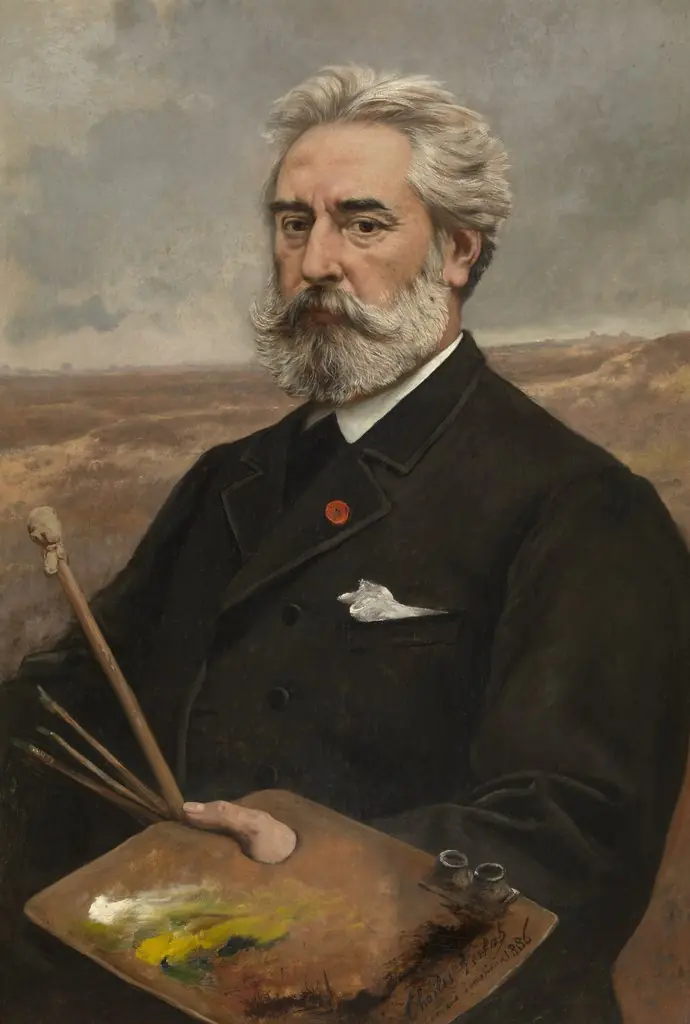
This painting is a self-portrait of the artist, created in 1885. The artist is depicted wearing a dark suit and holding a paintbrush in his right hand. He stands in front of an easel, with a palette of paints on a table beside him.
The artist's face is serious, with a hint of concentration. His hair is gray and his beard is white, giving him a distinguished look. The background of the painting is a warm, earthy tone, which complements the artist's dark clothing.
The artist's use of chiaroscuro creates a sense of depth and dimensionality in the painting. The contrast between light and dark adds a sense of drama and tension to the scene. If you're interested in learning more about this technique, you can explore the concept of chiaroscuro.
Overview
Painted in 1885, this oil on canvas self-portrait captures Alexandre Cabanel in his later years, presenting him not as a grand historical figure but as a working artist. He stands beside an easel, brush in hand, surrounded by the tools of his trade. The composition is restrained, emphasizing quiet professionalism over theatricality. The work resides in the Royal Museum of Fine Arts Antwerp, reflecting its recognition beyond France.
Subject & Meaning
Cabanel portrays himself with solemn focus, his gray hair and white beard suggesting experience and quiet authority. The paintbrush in his right hand and the palette on the table affirm his identity as a practitioner, not merely a celebrated figure. There is no allegory or adornment—only the artist in his studio, engaged in the act of creation. The seriousness of his expression conveys dedication to craft rather than self-aggrandizement.
Technique & Style
Cabanel employs chiaroscuro to model his form against a warm, muted background, lending volume and spatial depth. His dark suit contrasts subtly with the soft light falling across his face and hands, drawing attention to his gaze and the brush he holds. The brushwork is precise yet unobtrusive, consistent with his academic training. The palette and easel are rendered with careful attention to texture, grounding the scene in tangible reality.
History & Provenance
Created in 1885, the portrait dates from the final decade of Cabanel’s life, after his peak influence under Napoleon III. Though once a favored court painter, by the 1890s his style was increasingly viewed as traditional amid rising modernist movements. The painting entered the Royal Museum of Fine Arts Antwerp’s collection, likely through acquisition or donation, preserving a personal record of an artist whose reputation had shifted but whose technical skill remained respected.
Context
In the late 19th century, academic art faced growing criticism from Impressionists and other avant-garde groups. Cabanel, long associated with institutional success, here turns inward, documenting his own role as a painter rather than a producer of mythological scenes. This self-portrait reflects a quiet reorientation—away from public commissions and toward the private, enduring act of making art.
Legacy
Though less celebrated today than in his lifetime, Cabanel’s self-portrait endures as a testament to the discipline of academic practice. It offers a rare glimpse of the artist as he wished to be seen: composed, attentive, and immersed in his craft. The work stands as a quiet counterpoint to the flamboyance of his earlier historical paintings, revealing a more introspective side of a once-dominant figure in French art.
Own this work as a print
Artist & collection
Artist
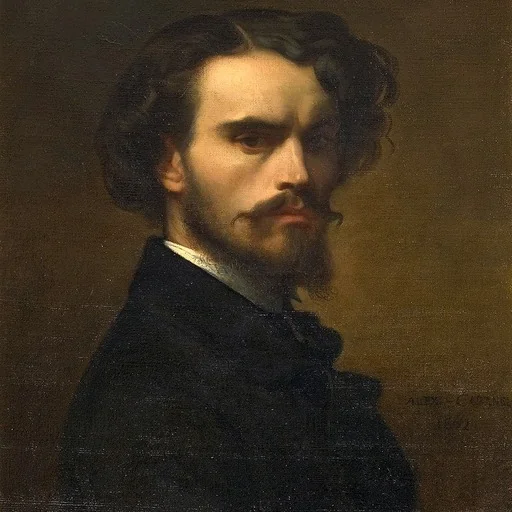
Alexandre Cabanel (French: ; 28 September 1823 – 23 January 1889) was a French painter.