Artwork
La Mer
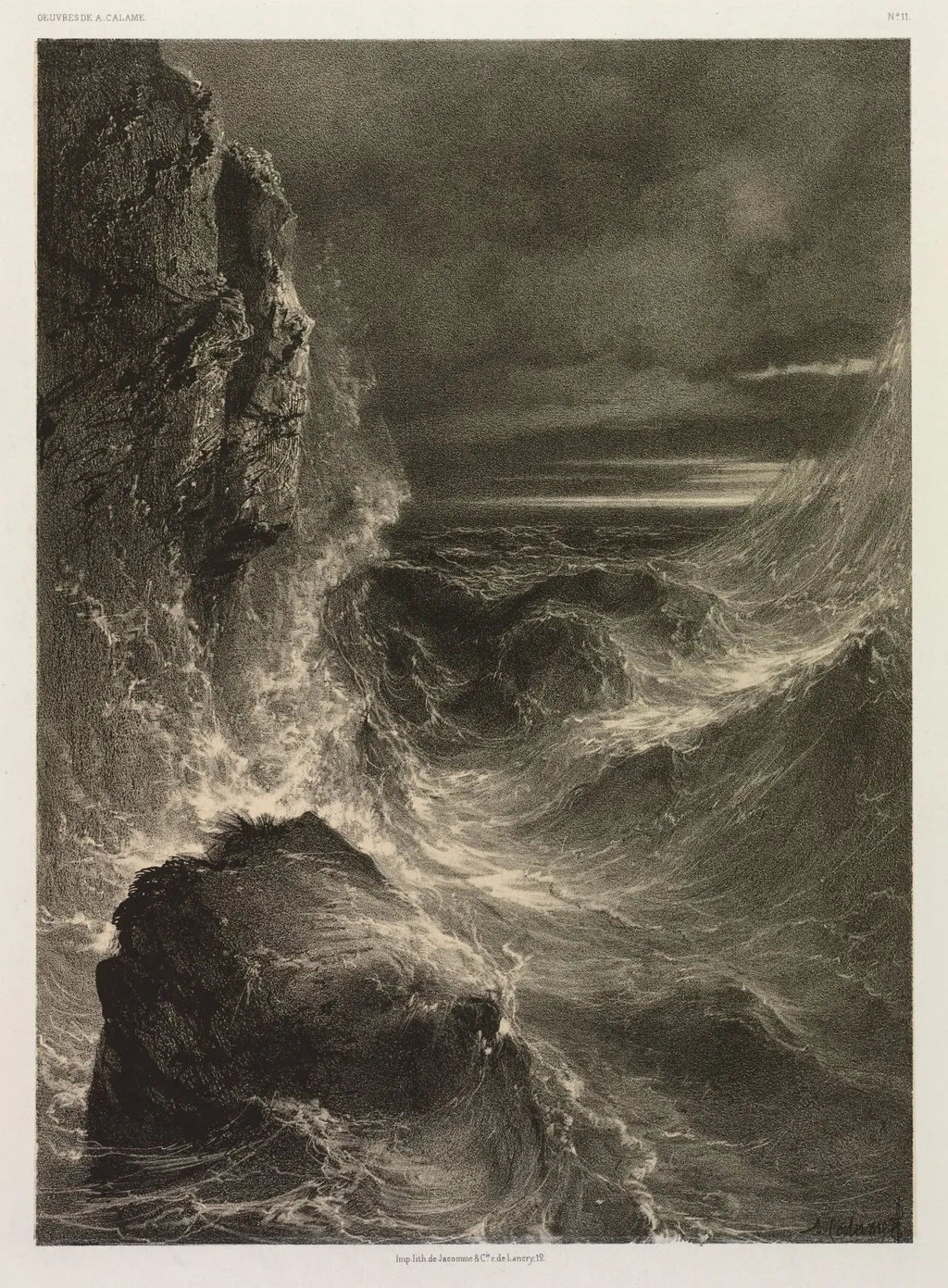
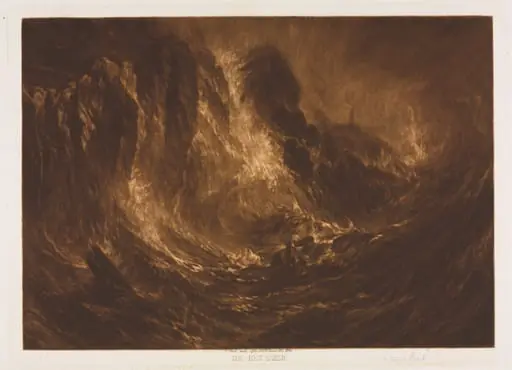
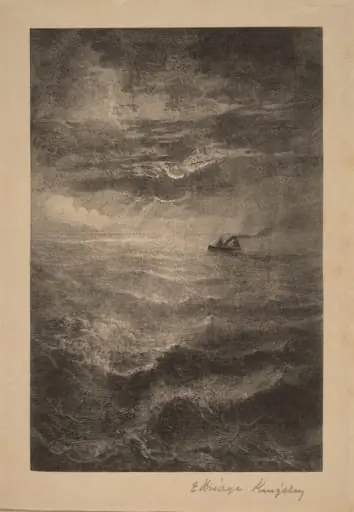
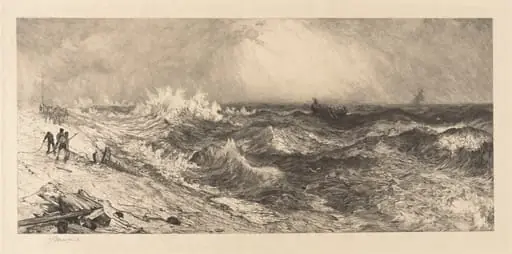
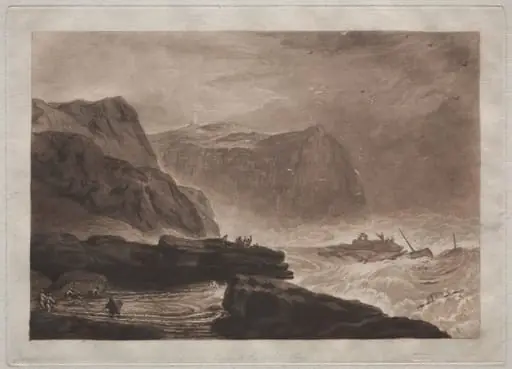
La Mer is a print by the Impressionist artist Alexandre Calame. It dates from 1851 and is held in the collection of the Cleveland Museum of Art.
About this work
Overview
Executed with expressive, fluid lines, it conveys both the violence of the waves and the stillness of the approaching night.
La Mer, created by Alexandre Calame in 1851, is a print depicting a rugged coastal scene at twilight. The work captures the transient moment between day and night, when light recedes and the sea dominates the composition. Executed with expressive, fluid lines, it conveys both the violence of the waves and the stillness of the approaching night. The Cleveland Museum of Art holds this piece as part of its collection of 19th-century European prints.
Subject & Meaning
The scene portrays a desolate stretch of rocky shore battered by turbulent waves. No human presence interrupts the landscape, emphasizing nature’s autonomy. The fading light and darkening sea suggest a quiet, almost meditative confrontation with elemental forces. The absence of narrative or figures invites contemplation of nature’s power and impermanence, aligning with Romantic sensibilities that valued awe over control.
Technique & Style
Calame employed loose, energetic linework to suggest motion in the crashing surf and drifting mist. The print’s tonal contrasts—deep shadows against a narrow band of horizon glow—create atmospheric depth without relying on heavy shading. His technique prioritizes immediacy and emotional resonance over precision, using the medium’s inherent delicacy to amplify the scene’s raw, fleeting character.
History & Provenance
Created in 1851, La Mer emerged during Calame’s mature period, when he focused on alpine and coastal landscapes with increasing emotional intensity. The print entered The Cleveland Museum of Art’s collection through established acquisition channels, likely as part of broader efforts to expand holdings of European graphic art in the early 20th century. Its provenance remains consistent with institutional records.
Context
In mid-19th-century Europe, landscape art increasingly moved beyond idealized views toward more personal, emotionally charged interpretations. Calame, influenced by Swiss Romanticism and the sublime tradition, responded to contemporary interest in nature’s untamed aspects. La Mer reflects this shift, aligning with artists who sought to evoke awe through raw, unembellished natural scenes rather than classical harmony.
Legacy
La Mer stands as a quiet example of Calame’s contribution to Romantic printmaking. While not widely reproduced, it exemplifies his ability to convey atmosphere with minimal means. The work continues to be studied for its expressive use of line and tone, offering insight into how 19th-century artists translated emotional responses to nature into graphic form.
Artist & collection