Artwork
A Rock in the Sea
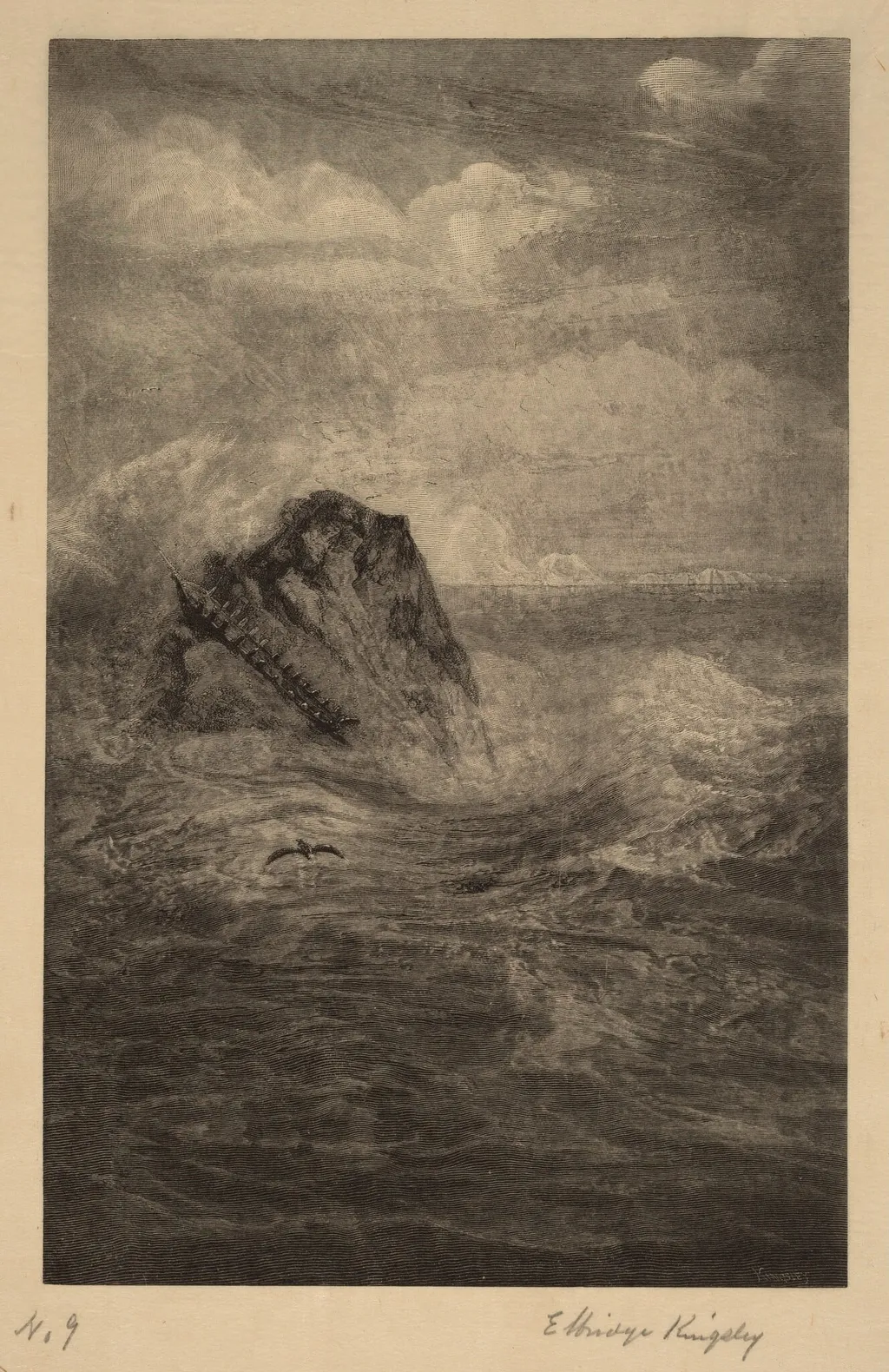
A Rock in the Sea is an ink print by the Impressionist artist Elbridge Kingsley. It dates from 1890 and is held in the collection of the National Gallery of Art.
About this work
Overview
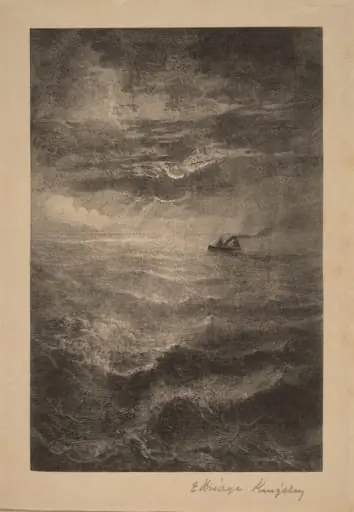
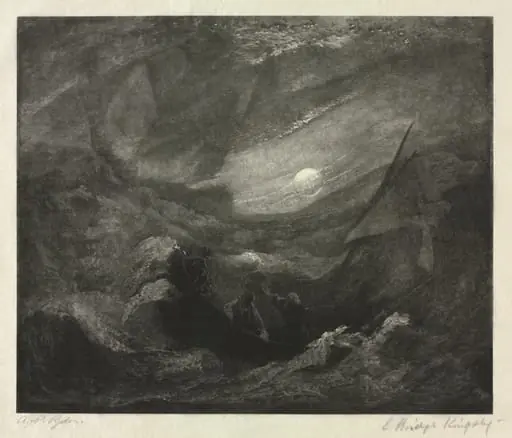
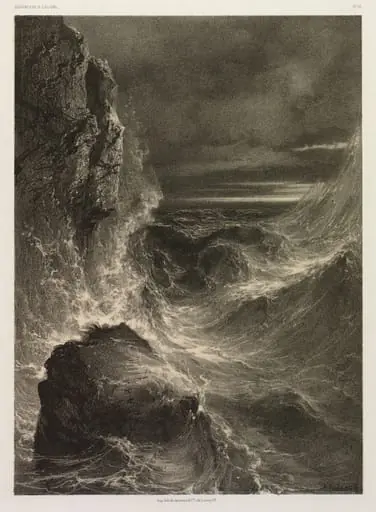
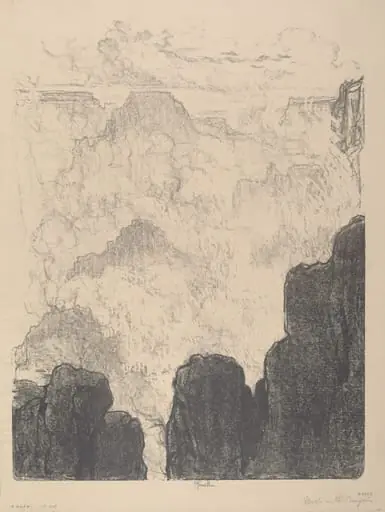
Elbridge Kingsley’s wood engraving titled *A Rock in the Sea* dates from around 1890. Executed in black on Japanese paper, the work presents a solitary, weather‑worn outcrop thrusting from turbulent water, its silhouette rendered in stark, textured lines.
Subject & Meaning
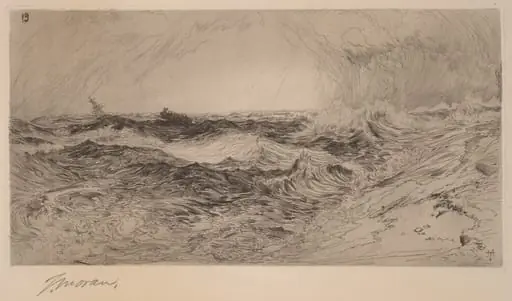
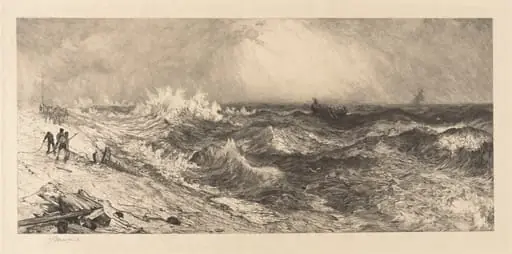
The composition centers on a massive stone confronting the sea’s surge, the surrounding waves suggested by lighter tonal washes and frothy white accents. Clouds dominate the upper space, reinforcing a sense of atmospheric pressure and the relentless dialogue between land and water.
Technique & Style
Kingsley employed the wood engraving process, carving fine details into a block and printing the image in a single, deep black hue. The contrast between the dense, rugged rock and the more fluid, airy treatment of the water reflects an interest in capturing fleeting visual impressions rather than precise realism.
History & Provenance
Created in the late nineteenth century, the print belongs to a period when American artists were exploring European print traditions and incorporating Japanese paper for its delicate surface. Its exact ownership trail remains limited, but it is documented within collections of late‑Victorian American graphic works.
Context
The work aligns with the broader Impressionist tendency to depict momentary effects of light and movement, though rendered through the stark monochrome language of engraving rather than color. This approach mirrors contemporary experiments that blended American realism with emerging modernist sensibilities.
Artist & collection