Artwork
Two Cows
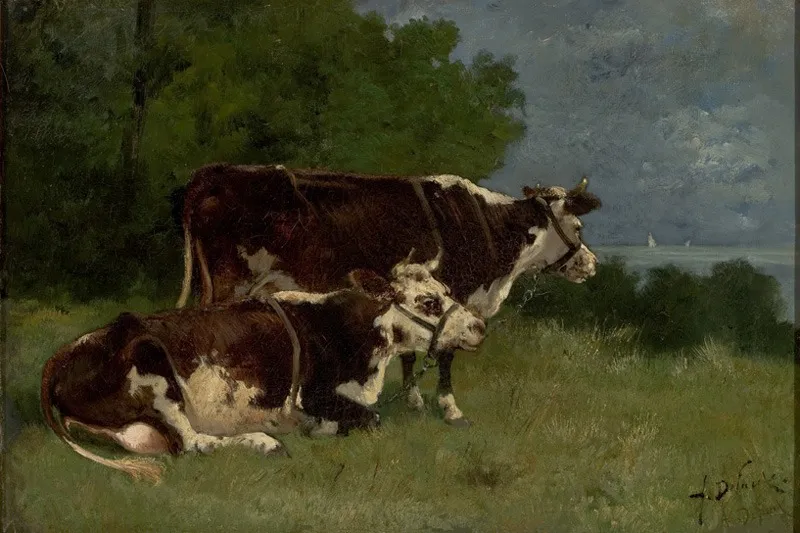
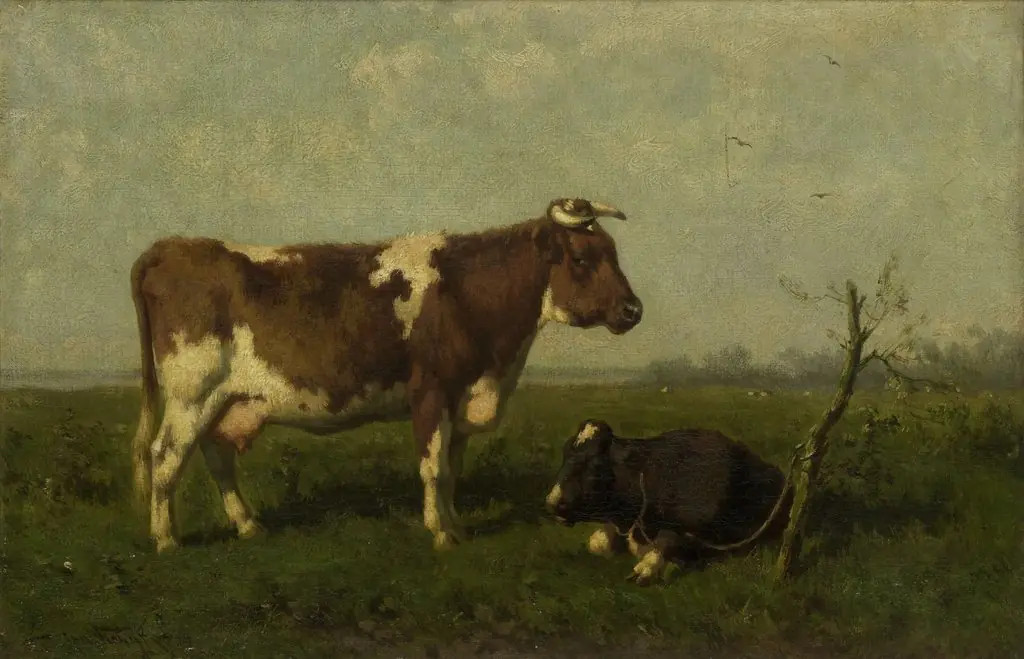
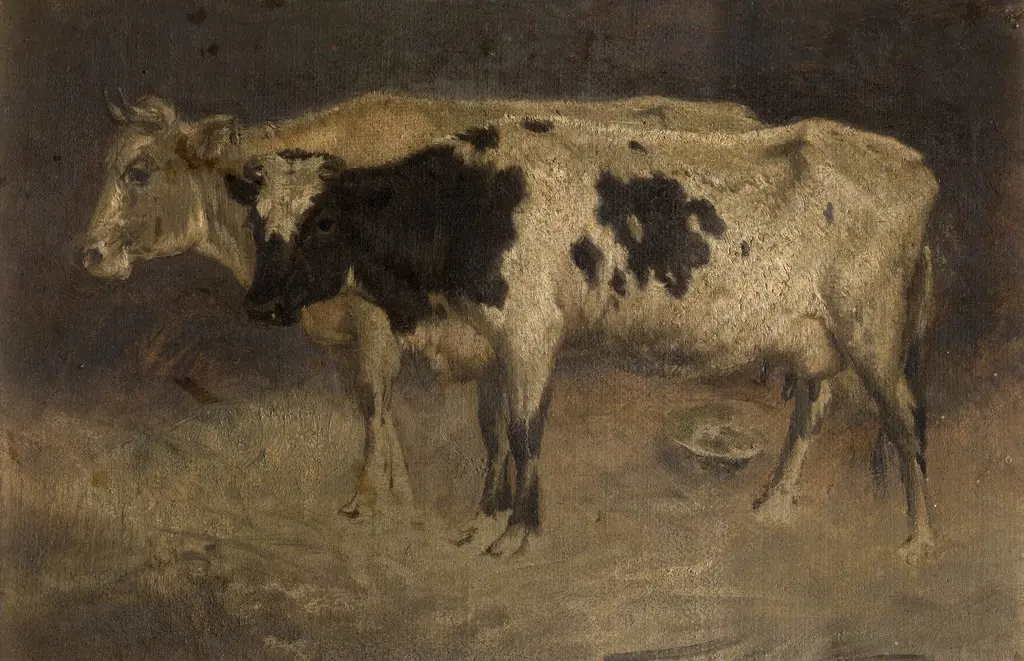
Two Cows is an unspecified painting by the Post-Impressionist artist Alexandre Defaux. It dates from 1893 and is held in the collection of the São Paulo Museum of Art.
About this work
Overview
Painted in 1893 by French artist Alexandre Defaux, *Two Cows* is an oil on canvas work that exemplifies the quiet realism of the Barbizon School’s later phase.
Painted in 1893 by French artist Alexandre Defaux, *Two Cows* is an oil on canvas work that exemplifies the quiet realism of the Barbizon School’s later phase. Defaux, trained under Jean-Baptiste Corot and active in the rural regions of Barbizon and Normandy, focused on everyday rural life. This piece captures a moment of stillness in the countryside, reflecting the movement’s commitment to observing nature without idealization.
Subject & Meaning
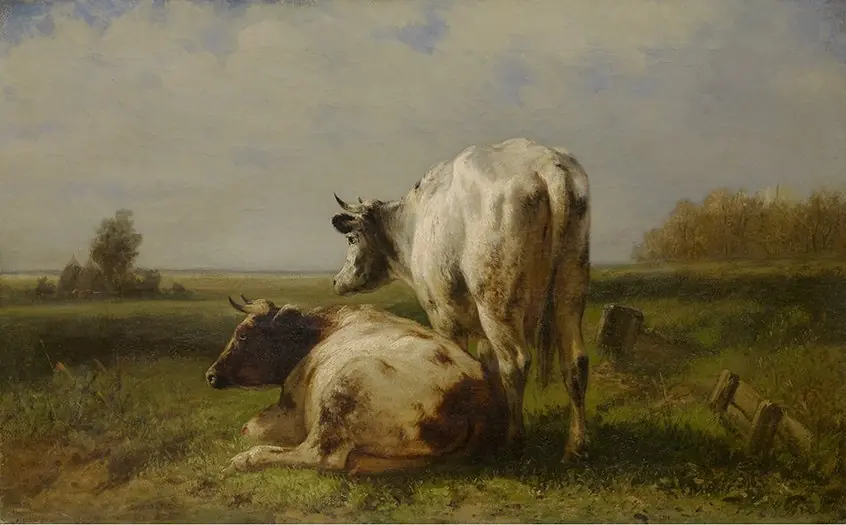
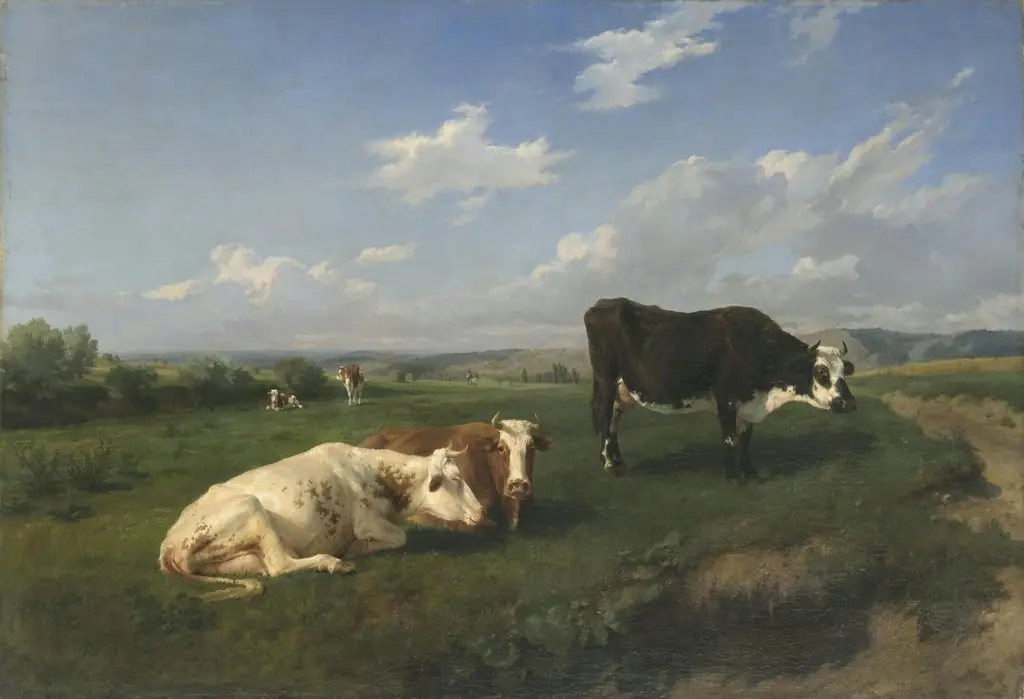
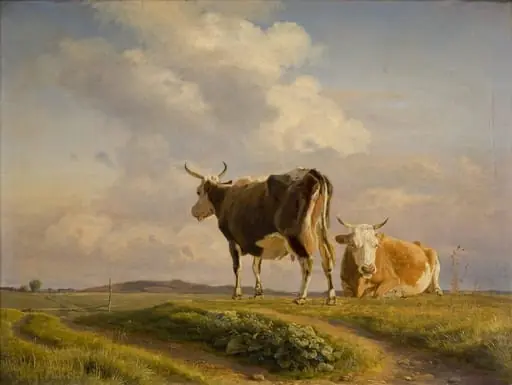
The painting portrays two dairy cows in a tranquil pasture—one reclining, the other standing—both fitted with simple leather halters. The absence of human figures emphasizes the animals’ autonomy within the landscape. The scene conveys no narrative beyond presence and rest, aligning with Barbizon ideals that valued the dignity of ordinary rural existence. The calm demeanor of the animals reinforces a sense of harmony between livestock and land.
Technique & Style
Defaux employs soft, blended brushwork to render the cows’ forms and the hazy background, creating a gentle sense of depth. The palette is muted, dominated by earth tones and pale greens, with subtle contrasts in light and shadow guiding the viewer’s eye. While not overtly dramatic, the use of chiaroscuro subtly models the cows’ bodies, lending volume without theatricality. The blurred distant trees and water suggest atmospheric perspective, enhancing the painting’s quiet realism.
History & Provenance
Created in the final years of Defaux’s career, *Two Cows* remained within private collections until entering the São Paulo Museum of Art’s holdings. Its presence in Brazil reflects the global circulation of 19th-century European academic and realist works during the early 20th century. The painting’s documented provenance is limited, but its stylistic consistency with Defaux’s known oeuvre supports its attribution and dating to 1893.
Context
Defaux worked within a generation that inherited the Barbizon School’s ethos after its founding figures—Millet, Rousseau, Daubigny—had passed. By the 1890s, urbanization and Impressionism were reshaping French art, yet Defaux retained the earlier generation’s focus on rural solitude. *Two Cows* stands as a quiet testament to this persistence, offering a contemplative alternative to the brighter, more fragmented styles emerging in Paris at the time.
Legacy
Though Defaux is not widely known outside specialized circles, *Two Cows* endures as a representative example of late Barbizon pastoralism. Its inclusion in a major Brazilian museum underscores the international reach of 19th-century French realism. The work contributes to broader understandings of how rural themes persisted in art beyond the movement’s peak, preserving a mode of observation rooted in patience and quiet attention.
Artist & collection
Artist
Alexandre Defaux (1826–1900) was a French artist. Defaux was born in Bercy, on the outskirts of Paris and is an important figure of the second generation of Barbizon School painters in the lineage of Jean-Baptiste Corot…