Artwork
A Farmhouse Interior with a Boy at a Table
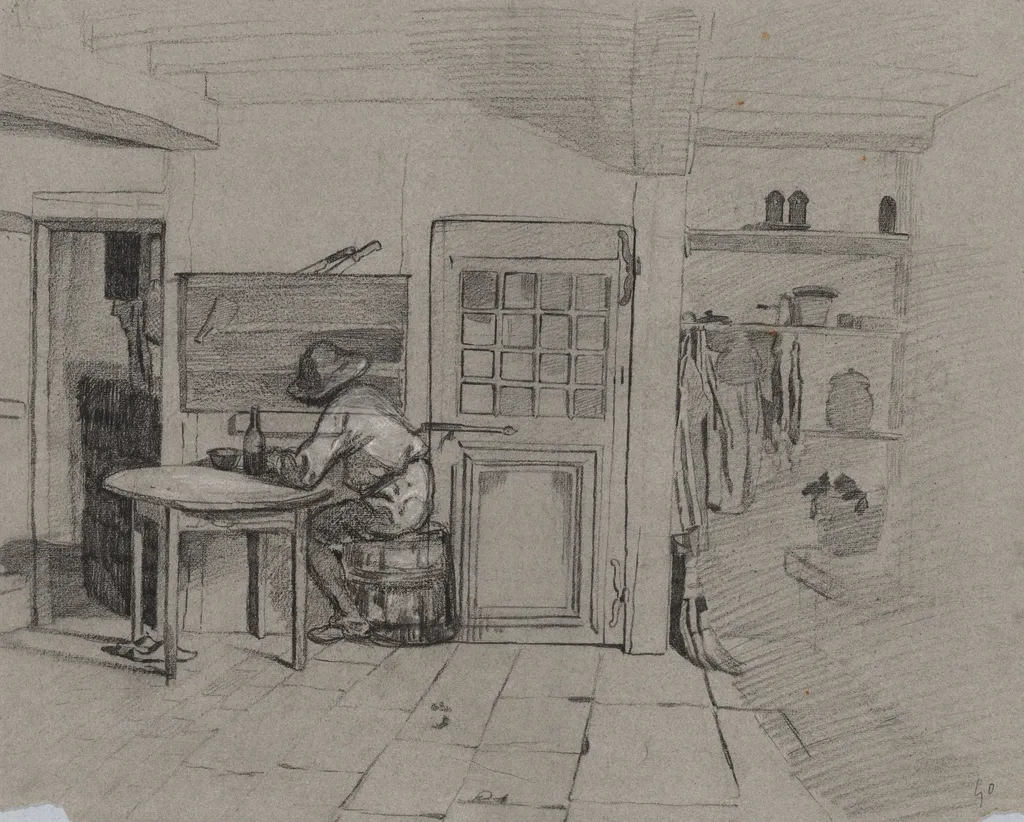
A Farmhouse Interior with a Boy at a Table is a drawing by the Romanticist artist Alexandre Gabriel Decamps. It dates from 1846 and is held in the collection of the Cleveland Museum of Art. Created around 1846 by Alexandre-Gabriel Decamps, this drawing captures a quiet moment in a rural French farmhouse.
About this work
Overview
Its modest scale and unadorned subject reflect Decamps’ interest in everyday life, rendered with immediacy and sensitivity to natural conditions.
Created around 1846 by Alexandre-Gabriel Decamps, this drawing captures a quiet moment in a rural French farmhouse. Executed in pencil and ink, it belongs to the collection of The Cleveland Museum of Art. The work is not a finished painting but a spontaneous study, emphasizing atmosphere over detail. Its modest scale and unadorned subject reflect Decamps’ interest in everyday life, rendered with immediacy and sensitivity to natural conditions.
Subject & Meaning
A solitary boy sits bent over a book at a plain wooden table, his back turned to the viewer. The scene suggests quiet concentration, possibly study or homework, amid humble surroundings. Objects on the table—a bottle, cup, and basket—hint at domestic routine. A hanging coat and tucked stool reinforce the sense of a lived-in space. The boy’s isolation and the dim interior evoke themes of solitude and the quiet dignity of rural labor.
Technique & Style
Decamps employed loose, rapid strokes to suggest form and texture, avoiding fine detail in favor of expressive gesture. Light is modeled through contrasting washes and hatched shadows, particularly where the faint glow from the window meets the dark walls. The rough stone floor and wooden surfaces are rendered with minimal lines, yet their materiality is clear. This sketchy approach prioritizes mood over precision, aligning with Romantic-era interests in authenticity and emotional resonance.
History & Provenance
The drawing entered The Cleveland Museum of Art’s collection in the 20th century, though its earlier ownership remains undocumented. It was likely made during Decamps’ period of intense interest in rural French life, following his travels through the countryside. As a study, it may have served as preparation for larger works or stood alone as an independent observation. Its survival reflects its value as a personal, unpolished record of the artist’s eye.
Context
In mid-19th century France, artists increasingly turned from mythological or grand historical scenes to depictions of ordinary life. Decamps, influenced by the Barbizon painters and earlier Dutch genre works, sought truth in unidealized settings. This drawing aligns with a broader cultural shift toward realism, where the quiet moments of peasant existence were seen as worthy of artistic attention, free from romantic embellishment.
Legacy
Though not widely exhibited, this drawing exemplifies Decamps’ contribution to the transition toward realism in French art. Its unembellished observation of light, space, and human presence influenced later artists who valued directness over theatricality. As a study, it reveals the artist’s process and his commitment to capturing the subtle rhythms of daily life, leaving a quiet but enduring mark on 19th-century draftsmanship.
Artist & collection
Artist
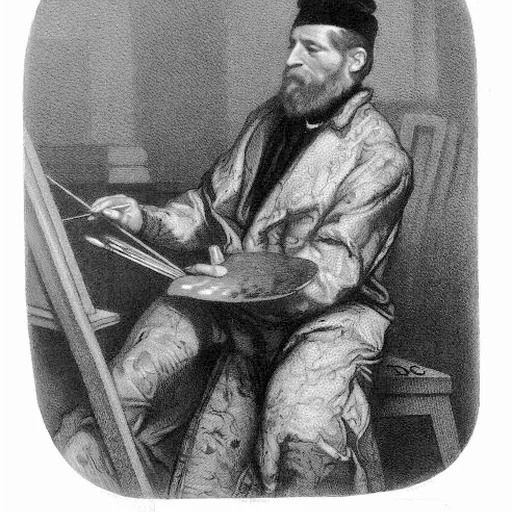
Alexandre-Gabriel Decamps was a French painter noted for his Orientalist works.

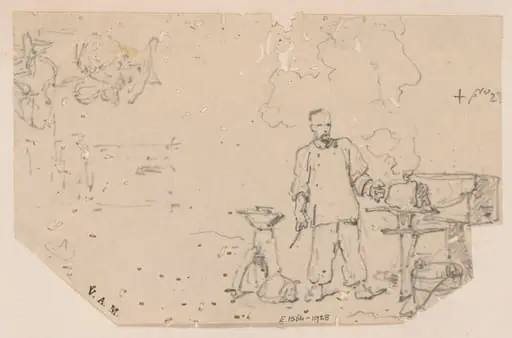 A blacksmith and a seated man
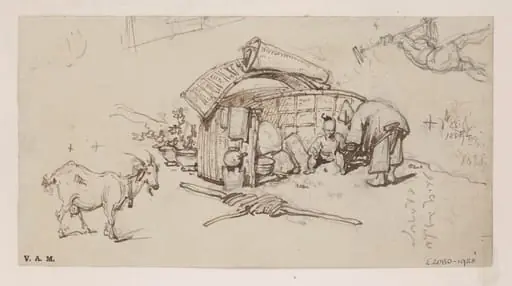 A beached Tanka boat adapted as a dwelling
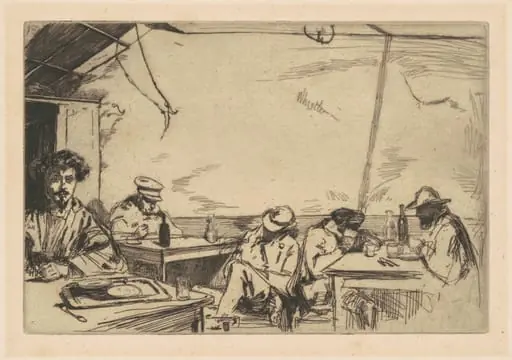 Soupe à Trois Sous
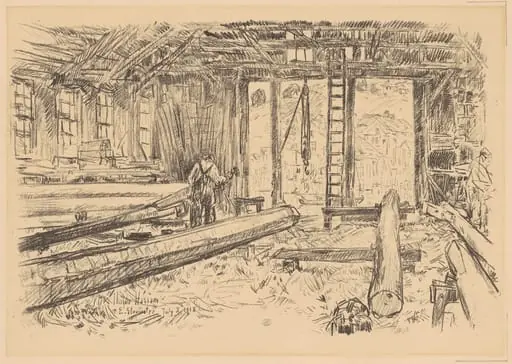 The Spar Shop, Gloucester
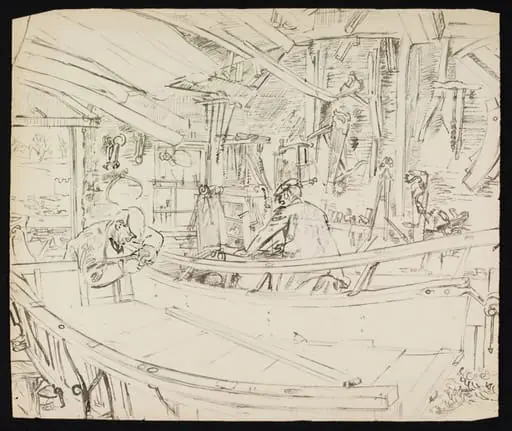 Building a Wiltshire Waggon near Longleat (April 1941)
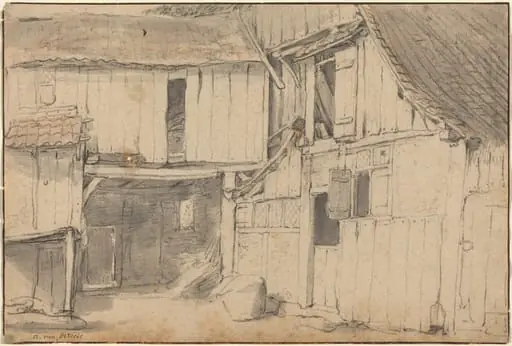 Interior of a Courtyard
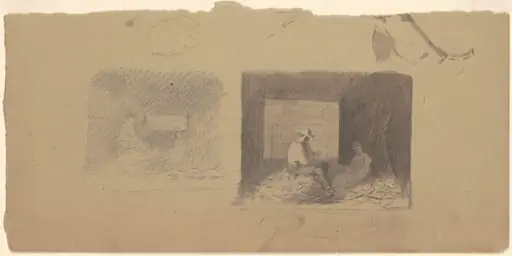 Studies of Farmers Shucking Corn
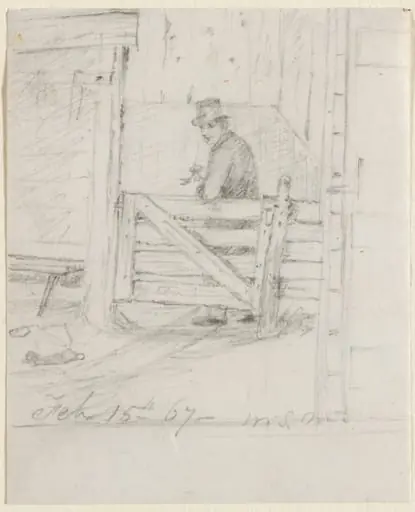 Resting on the Fence
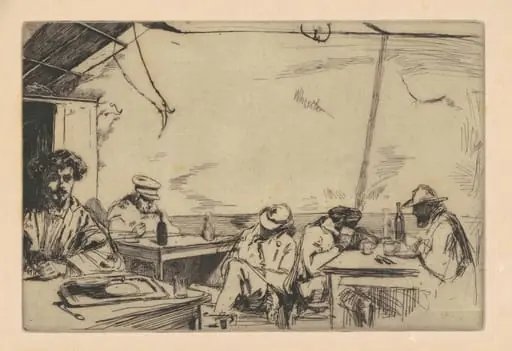 Soupe à Trois Sous
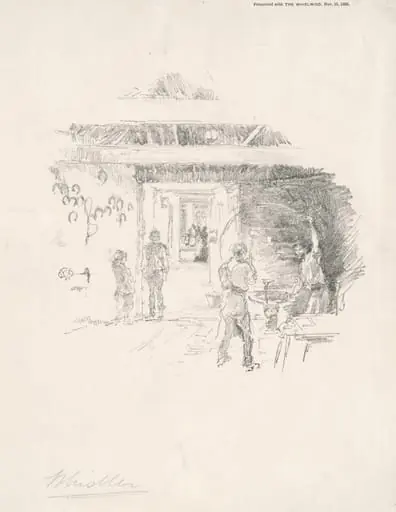 The Tyresmith
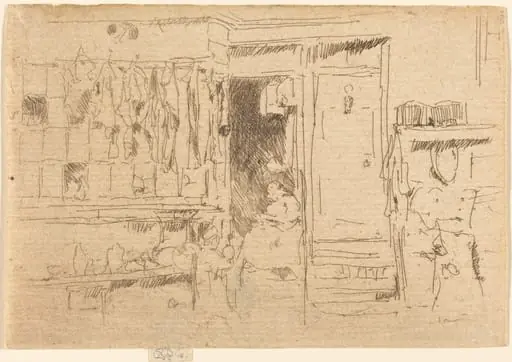 Old-Clothes Shop, No.I
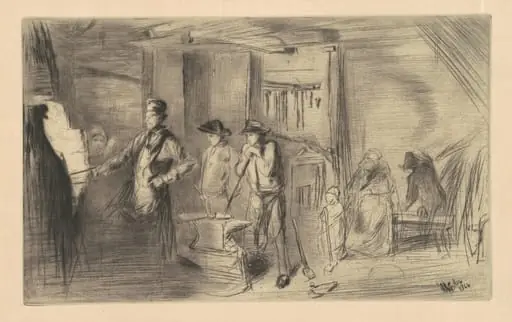 The Forge