Artwork
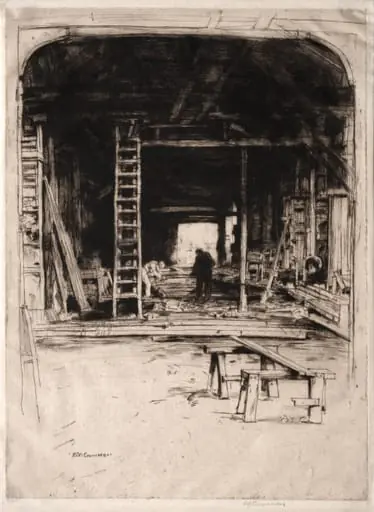
The Spar Shop, Gloucester
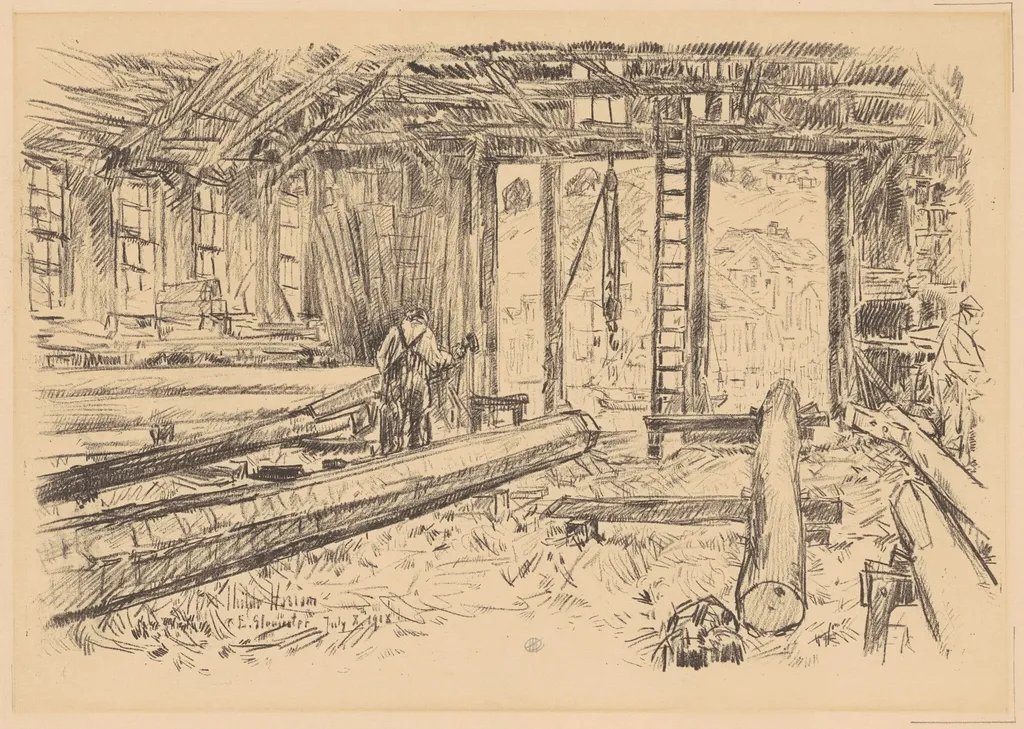
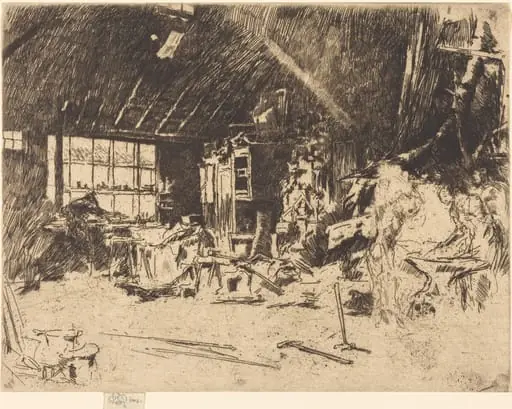
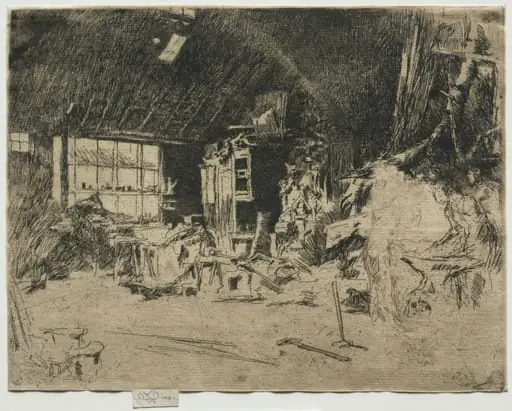
The Spar Shop, Gloucester is an ink print by Childe Hassam. It dates from 1918 and is held in the collection of the National Gallery of Art.
About this work
He often painted quiet American scenes like this one, far from fancy galleries.
You see a dim workshop filled with thick wooden beams and tools. Light cuts through cracks, making sharp lines on the rough walls. Childe Hassam shows how gritty places can be beautiful.
This isn’t just a spare room. Hassam made this in 1918, during World War I. He often painted quiet American scenes like this one, far from fancy galleries.
Look for another of his prints at the National Gallery of Art, Washington.
Overview
Created in 1918, 'The Spar Shop, Gloucester' is a lithograph by Childe Hassam that portrays the interior of a modest woodworking workshop in Gloucester, Massachusetts. Rendered in black ink on wove paper, the print emphasizes texture and atmosphere through precise linework and tonal contrast. Hassam focused on unadorned, functional spaces, capturing the quiet dignity of labor environments often overlooked in art.
Subject & Meaning
The scene depicts a cluttered, dimly lit carpenter’s shop filled with rough-hewn beams, hanging tools, and weathered wood. Rather than idealizing the setting, Hassam presents it with unembellished realism, suggesting beauty in utility and the quiet rhythm of manual work. The composition invites contemplation of craftsmanship and the physicality of everyday labor, particularly resonant during wartime when domestic industry held renewed significance.
Technique & Style
Hassam employed lithography to achieve fine gradations of tone and sharp linear definition. The interplay of light and shadow—created by slivers of daylight piercing through cracks in the walls—heightens the sense of spatial depth and material texture. His use of dense, controlled lines conveys the grain of wood and the weight of tools, reflecting his mastery of printmaking as a medium for atmospheric realism.
History & Provenance
Hassam produced this print during World War I, a period when he increasingly turned to intimate American scenes over his earlier Impressionist subjects. The work was likely made in Gloucester, a coastal town he frequented and where he maintained a studio. It entered public collections shortly after its creation, with an impression held today by the National Gallery of Art in Washington, D.C.
Context
In 1918, as the United States engaged in global conflict, Hassam’s focus on local, unglamorous interiors offered a counterpoint to wartime propaganda and grand historical narratives. His choice to depict a carpenter’s workshop aligned with broader cultural interests in American identity, regional craftsmanship, and the dignity of ordinary life during a time of national upheaval.
Legacy
The print exemplifies Hassam’s later commitment to American realism in print form, distinguishing him from peers who favored urban or coastal scenes. While less known than his paintings, this lithograph contributed to a growing appreciation for printmaking as a vehicle for documenting everyday American environments. It remains a quiet but significant record of early 20th-century artisanal spaces.
Artist & collection
Artist
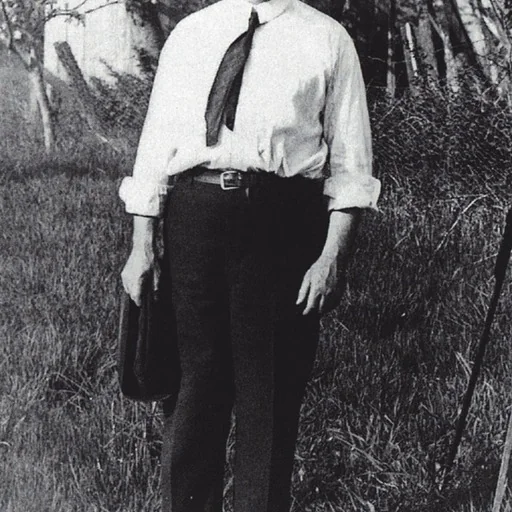
Frederick Childe Hassam was an American Impressionist painter, noted for his urban and coastal scenes.