Artwork
Πηρούνι
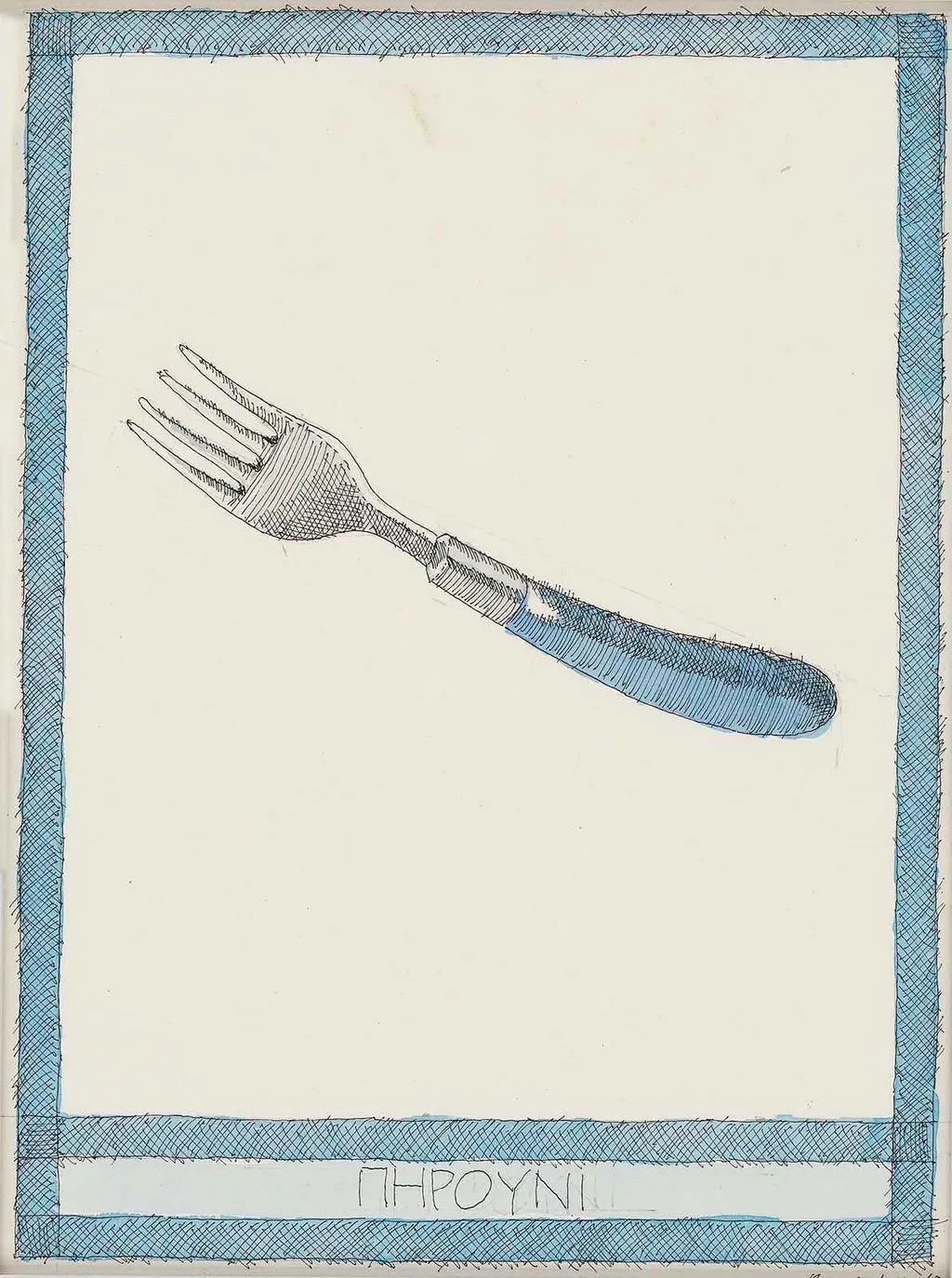
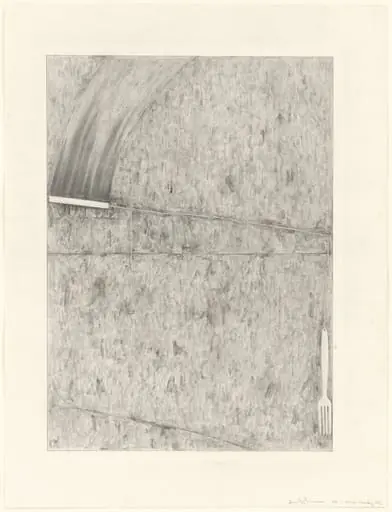
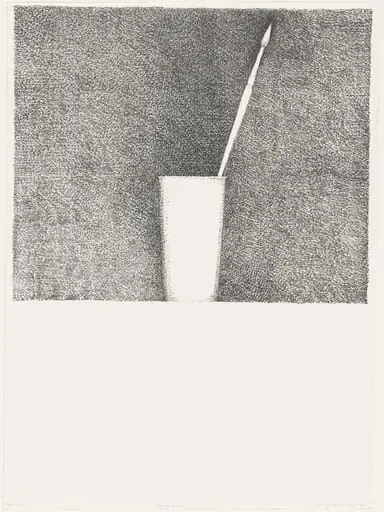
Πηρούνι is a drawing by Nikita Alexeev. It dates from 2014 and is held in the collection of the Metropolitan Organisation of Museums of Visual Arts of Thessaloniki – MOMus.
About this work
Each piece pairs two objects to show how things long for their perfect form.
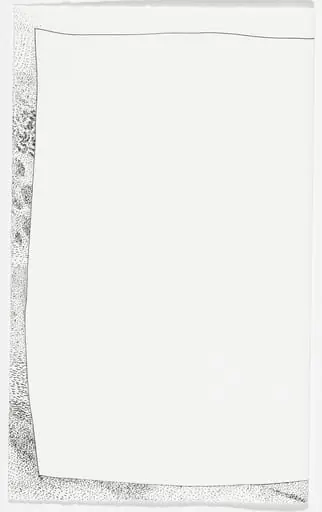
You see a sharp metal fork floating in dark space. It’s drawn in fine lines, almost like a wire frame. The fork tilts slightly, its tines pointing down.
This drawing comes from a series about Plato’s idea of love. Each piece pairs two objects to show how things long for their perfect form. Here, the fork stands in for something that’s lost or incomplete.
Look up the artist who made this, Alexeev, Nikita (1953).
Overview
Created by Nikita Alexeev in the late 20th century, this work is part of a series exploring philosophical concepts through paired visual elements. It presents a suspended real fork between two hand-drawn representations of the same object, invoking classical ideas about ideal forms and their imperfect material manifestations. The composition is minimal, relying on spatial tension and material contrast to convey its conceptual framework.
Subject & Meaning
The work draws from Platonic metaphysics, particularly the notion that physical objects are flawed reflections of perfect, immutable Forms. The real fork, suspended between its two drawn counterparts, symbolizes the ideal archetype. The drawings, rendered in delicate lines, suggest incomplete or fading echoes of that ideal. Together, they evoke a longing for wholeness — a metaphor for eros as a force driving the soul toward transcendence.
Technique & Style
Alexeev employs precise, linear pencil drawings to depict the fork, creating a ghostly, skeletal quality that contrasts with the solid, three-dimensional object suspended between them. The drawings are rendered on paper, while the real fork hangs in darkness, emphasizing its physical presence. The stark contrast between the ephemeral and the tangible, along with the absence of context, heightens the metaphysical tone of the piece.
History & Provenance
This work emerged from a series developed by Nikita Alexeev in the 1990s, influenced by his engagement with ancient philosophy and post-Soviet intellectual discourse. It was exhibited in Moscow and later in European contemporary art spaces, often grouped with other works from the same series that paired natural and domestic objects. The piece remains in private collections and has been referenced in academic discussions on contemporary art and Platonic theory.
Context
Alexeev’s work responds to a broader post-Soviet artistic interest in reviving classical philosophy as a counterpoint to ideological collapse. By isolating mundane objects and framing them through Platonic theory, he invites contemplation on loss, memory, and the search for meaning beyond material reality. The series reflects a quiet, introspective trend in 1990s Russian art that favored conceptual minimalism over overt political statements.
Legacy
The work has contributed to ongoing dialogues between contemporary art and classical philosophy, particularly in how everyday objects can be recontextualized to express metaphysical ideas. Though not widely reproduced, it is cited in scholarly texts on post-Soviet conceptual art and remains a subtle reference point for artists exploring the tension between the ideal and the real through material presence and absence.
Artist & collection
Artist
Alexeev once spent a whole winter in a Moscow apartment with no heat, sketching the same cracked teacup until it looked like a tiny, grumpy monster.
Museum
Metropolitan Organisation of Museums of Visual Arts of Thessaloniki – MOMus
Continue through works from the same source collection.