Artwork
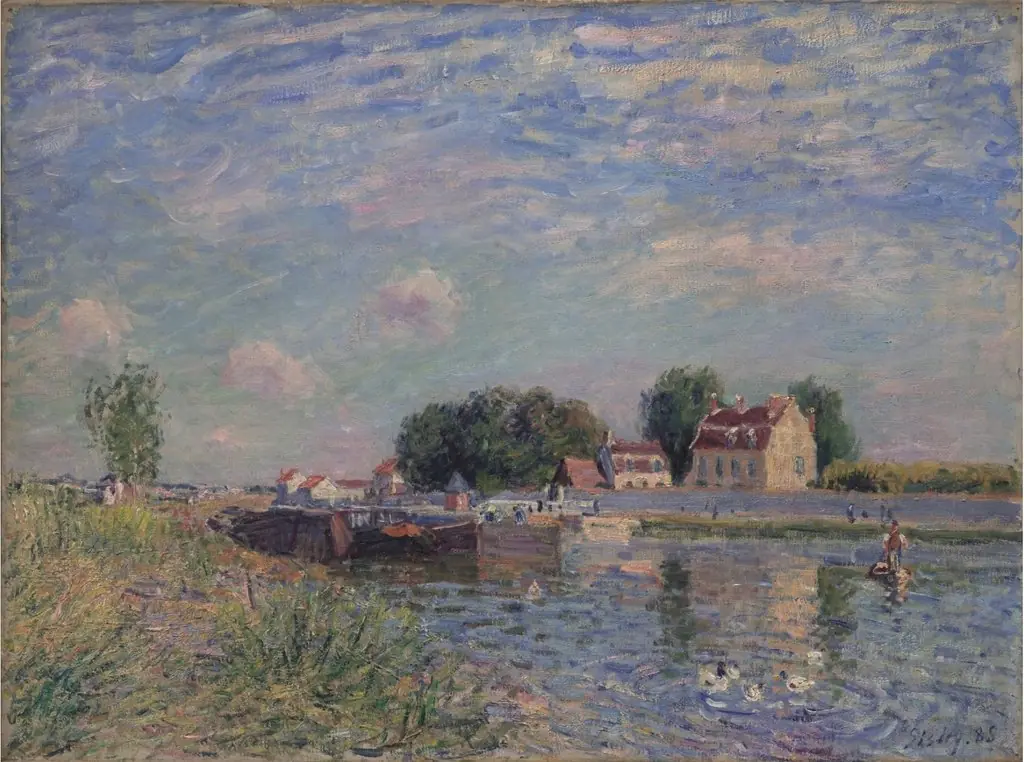
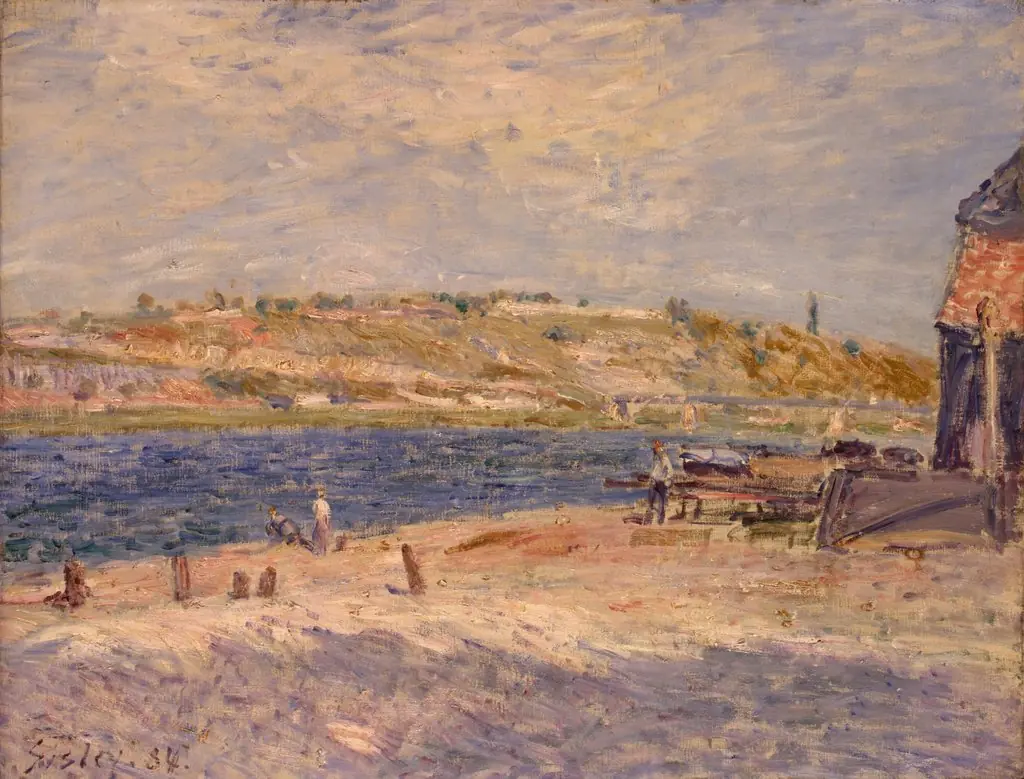
Saint-Mammès, Loing Canal
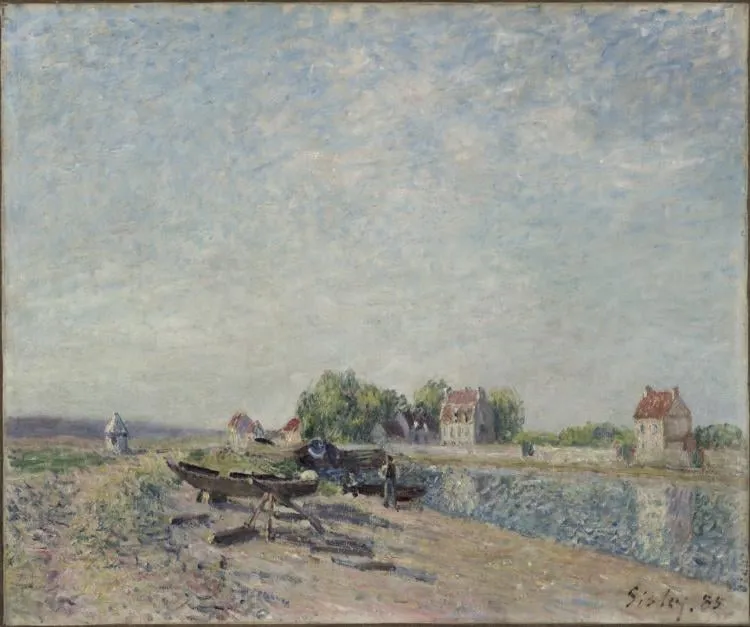
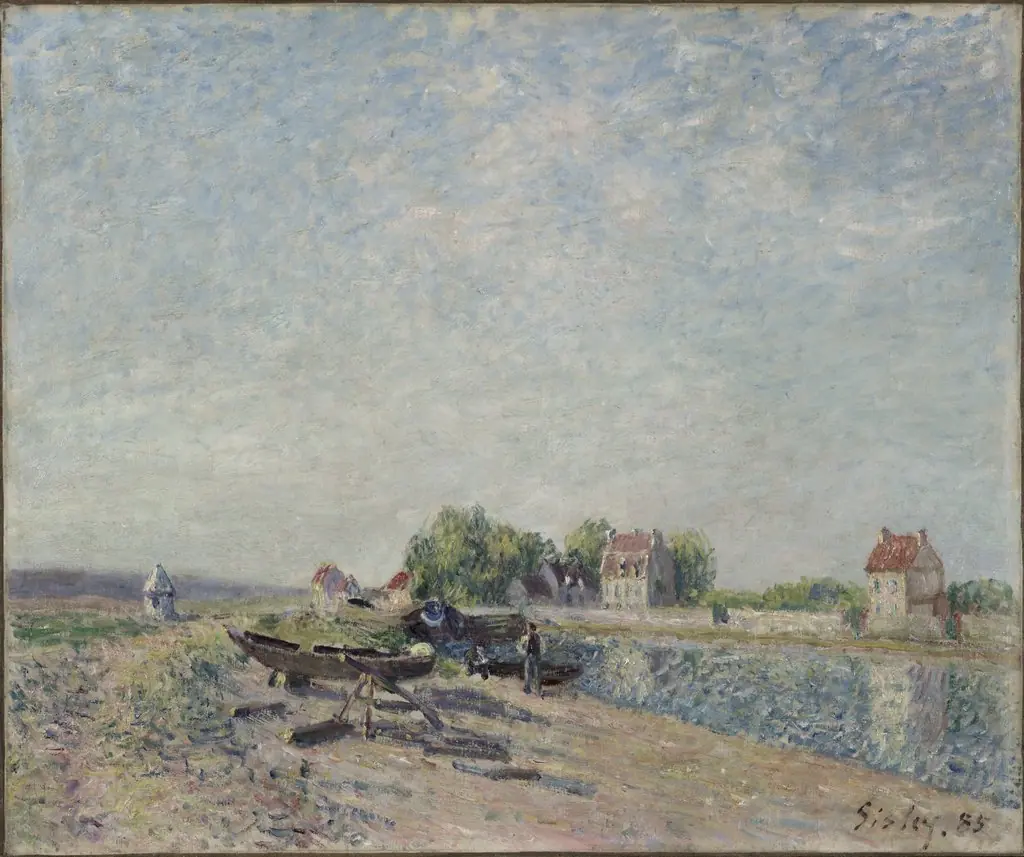
Saint-Mammès, Loing Canal is an unspecified painting by the Impressionist artist Alfred Sisley. It dates from 1885 and is held in the collection of the Cleveland Museum of Art.
About this work
Overview
Saint‑Mammès, a modest settlement about sixty kilometres south of Paris where the Seine meets the Loing and a canal, is depicted in this modestly sized canvas. The scene shows a tranquil waterway bordered by a row of poplar trees, their silhouettes mirrored on the surface beneath a gently lit sky.
Subject & Meaning
The composition captures a moment of quiet river traffic and natural reflection, emphasizing the interplay between water and foliage. By focusing on the subtle variations of light on the canal, the work conveys the everyday serenity of a riverside village without narrative embellishment, inviting viewers to contemplate the fleeting atmosphere of the place.
Technique & Style
Employing a hallmark Impressionist approach, the artist applied unmixed pigments directly onto the canvas, allowing colors to mingle optically. The brushwork is light and brisk, creating a shimmering effect that blurs distinct outlines into a luminous haze, mirroring the way bright daylight diffuses across the scene.
History & Provenance
Created in the 1880s, the painting reflects the artist’s repeated visits to Saint‑Mammès, drawn by the low cost of accommodation after personal financial setbacks. The work remained in private collections before entering a museum holding focused on 19th‑century French landscape painting, where it continues to illustrate the period’s plein‑air practices.
Artist & collection
Artist
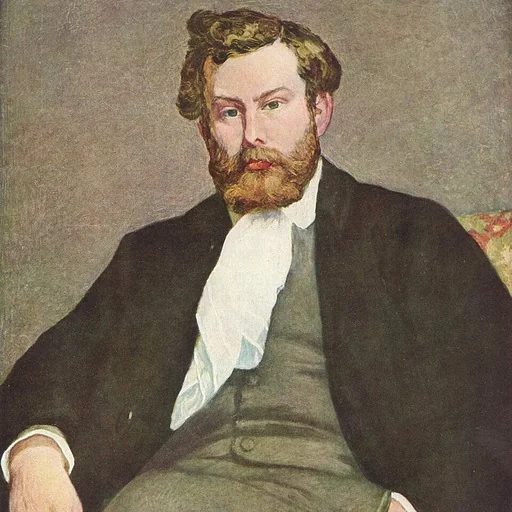
Alfred Sisley (; French: ; 30 October 1839–29 January 1899) was a French-Born British Impressionist landscape painter who was born to British parents, but spent most of his life in France.

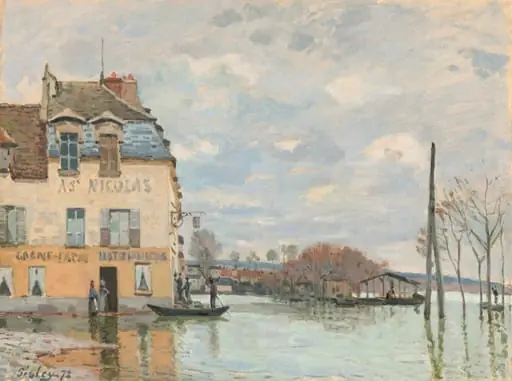
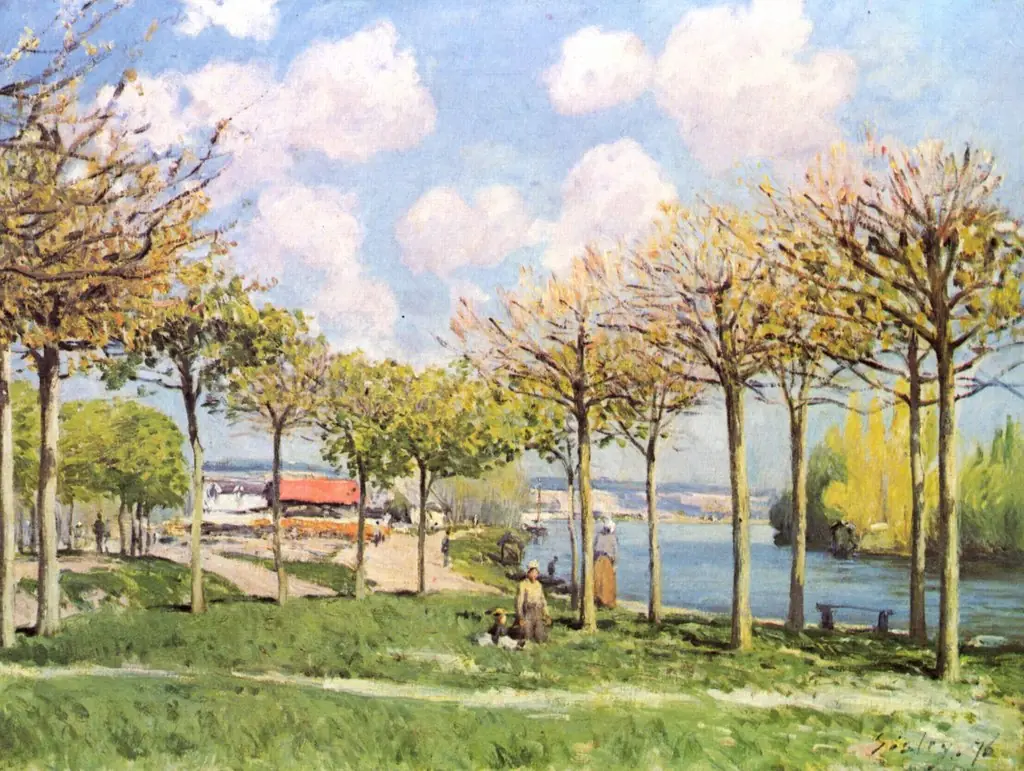
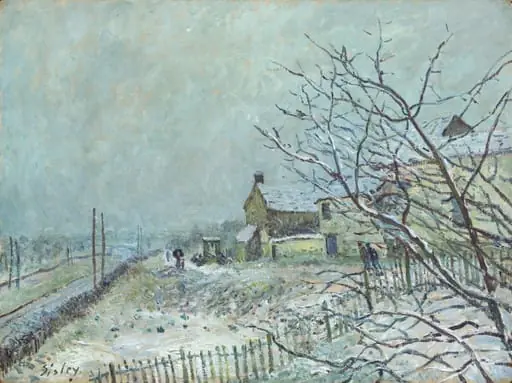
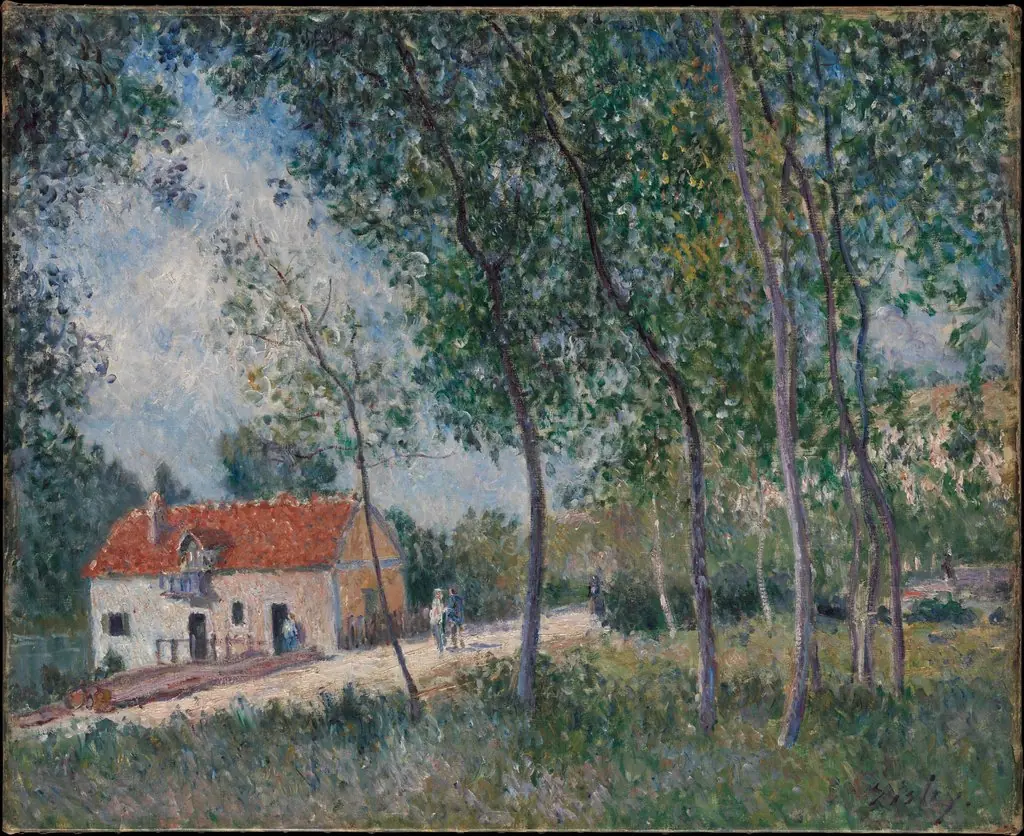
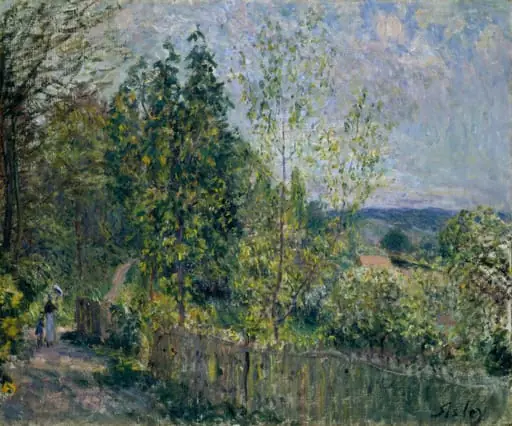
 The Canal at Saint-Mammes
 The Banks of the Canal du Loing at Saint-Mammès
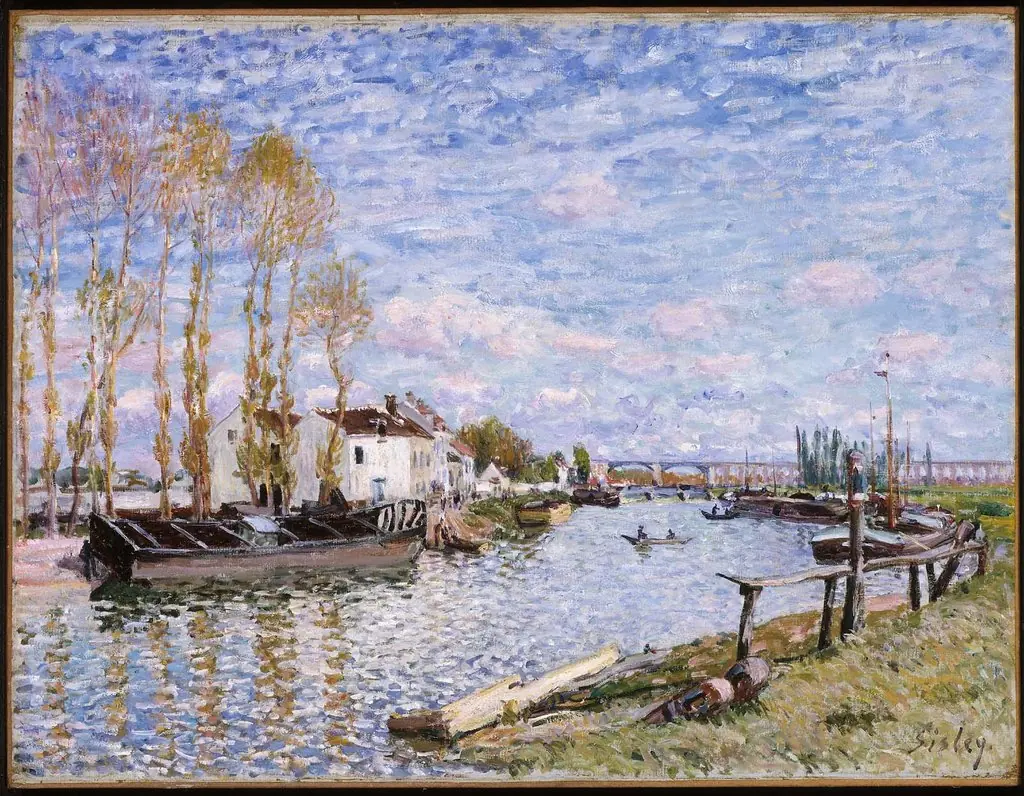 The Loing at Saint-Mammès
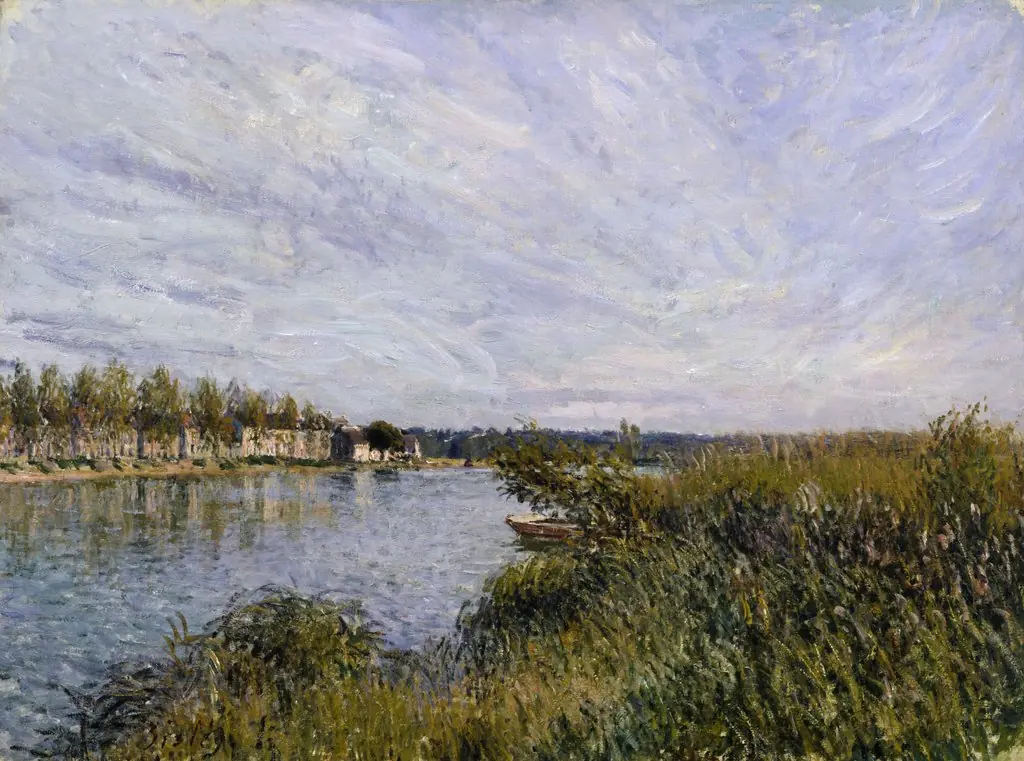 View of Saint-Mammès
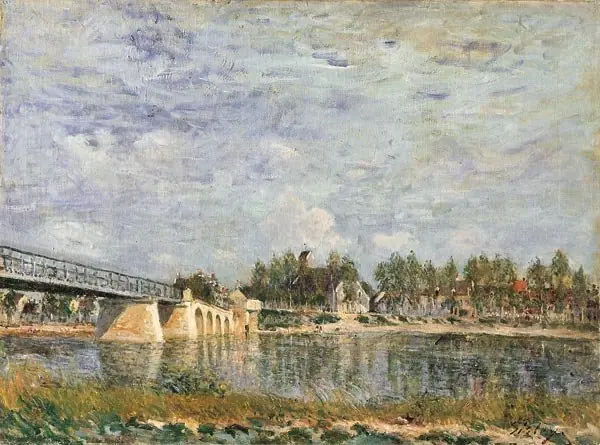 The Bridge at Saint-Mammès
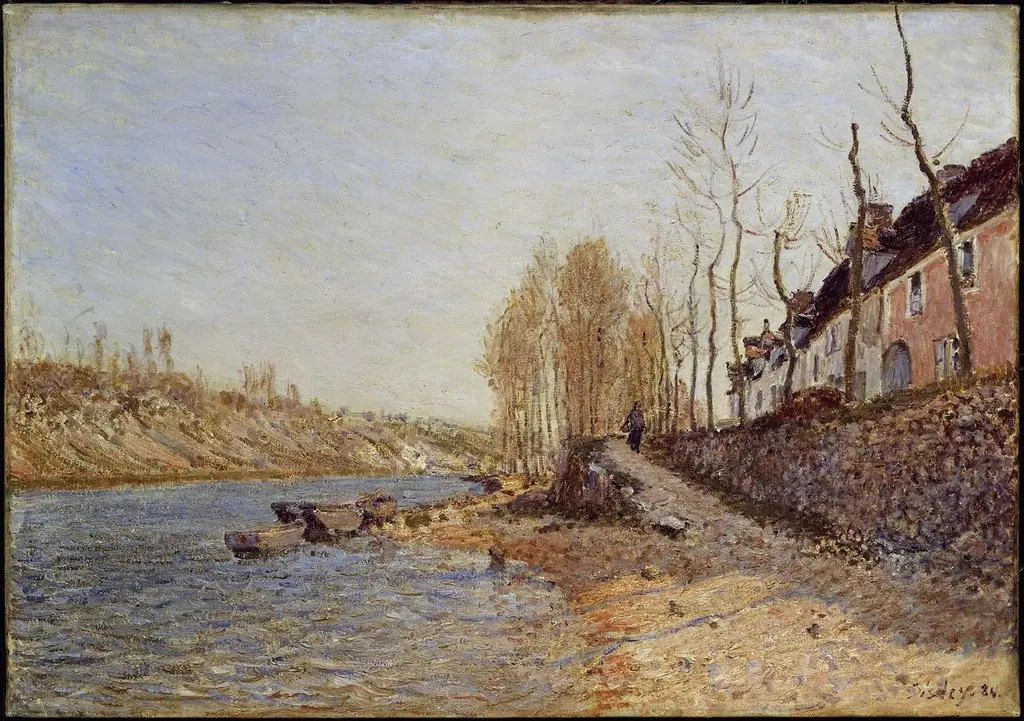 La Croix-Blanche at Saint-Mammès
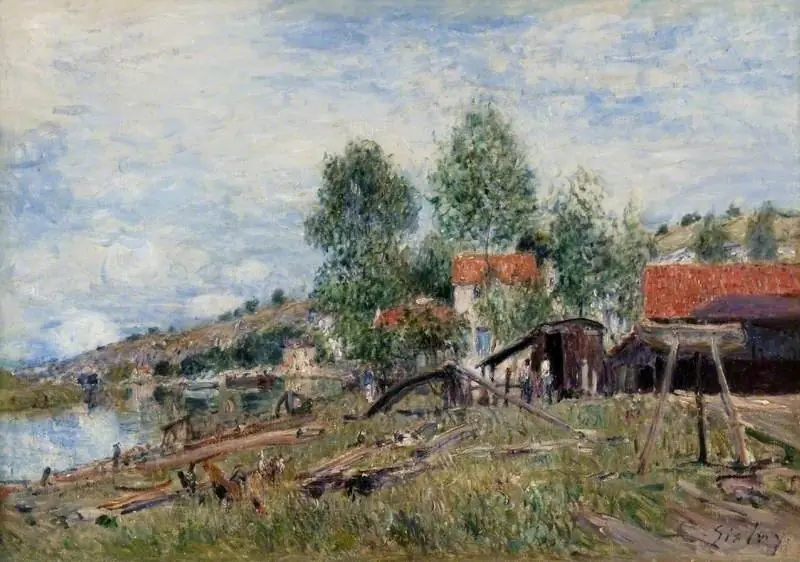 Boatyard at Saint-Mammès
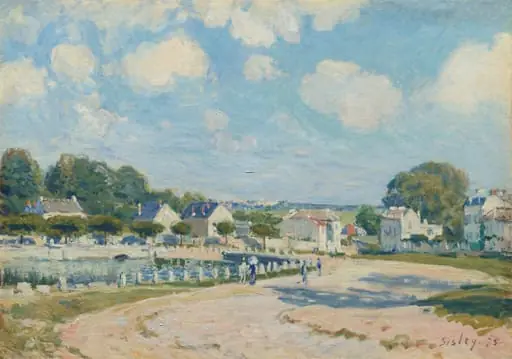 Watering Place at Marly
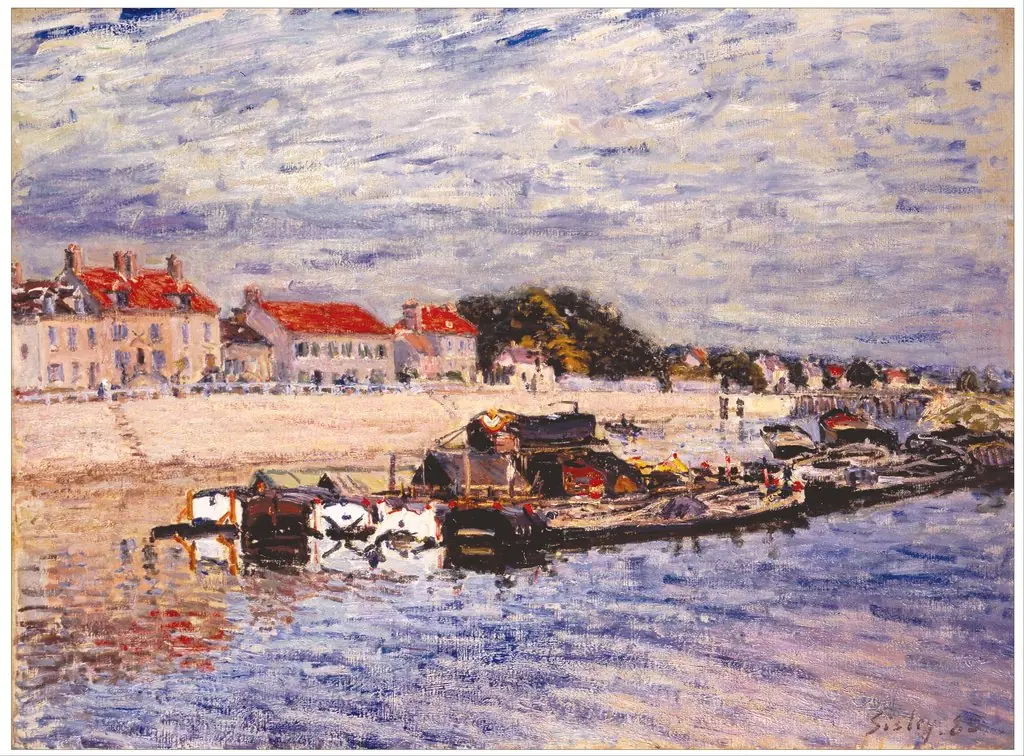 Barges on the Loing at Saint-Mammès
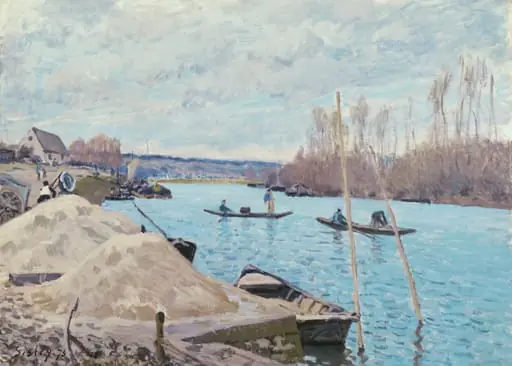 The Seine at Port-Marly, Piles of Sand
 Riverbank at Saint-Mammès