Artwork
Louveciennes in the Snow
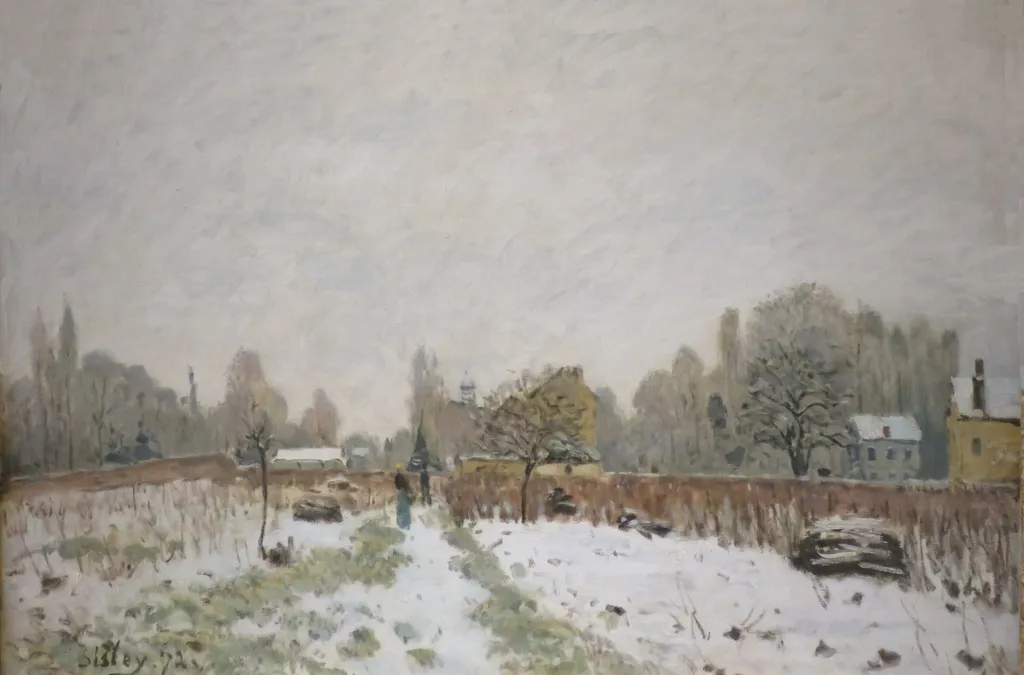
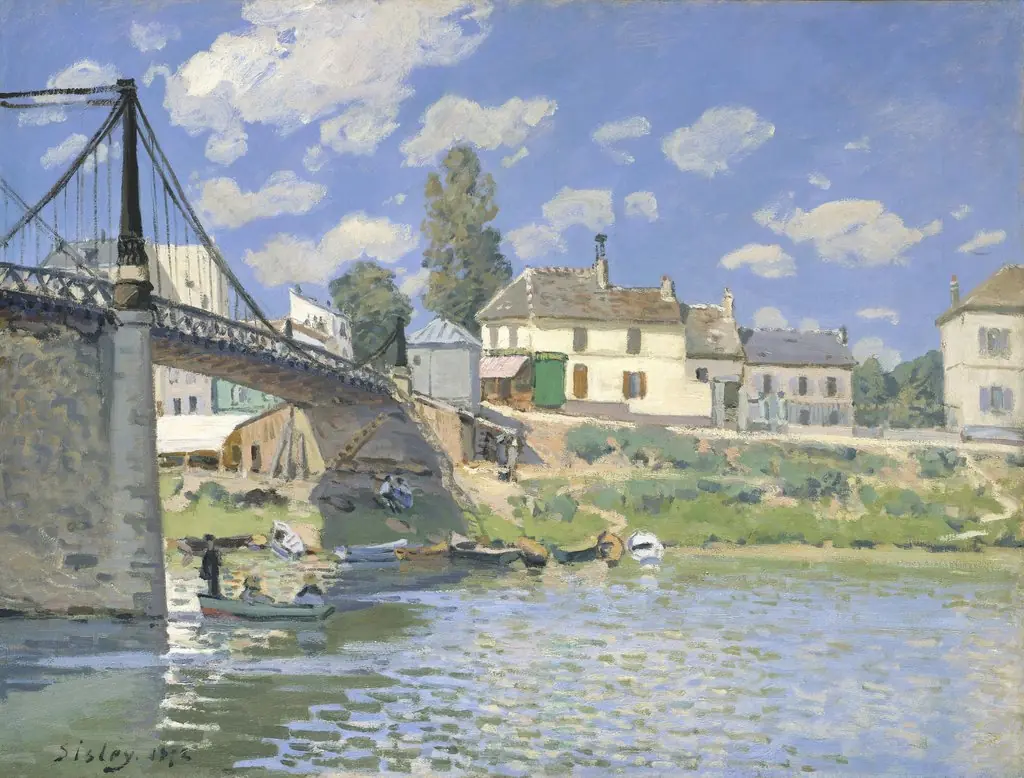
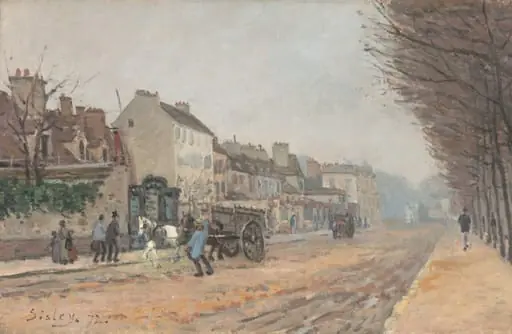
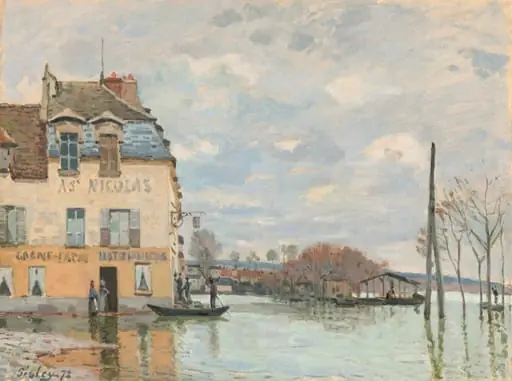
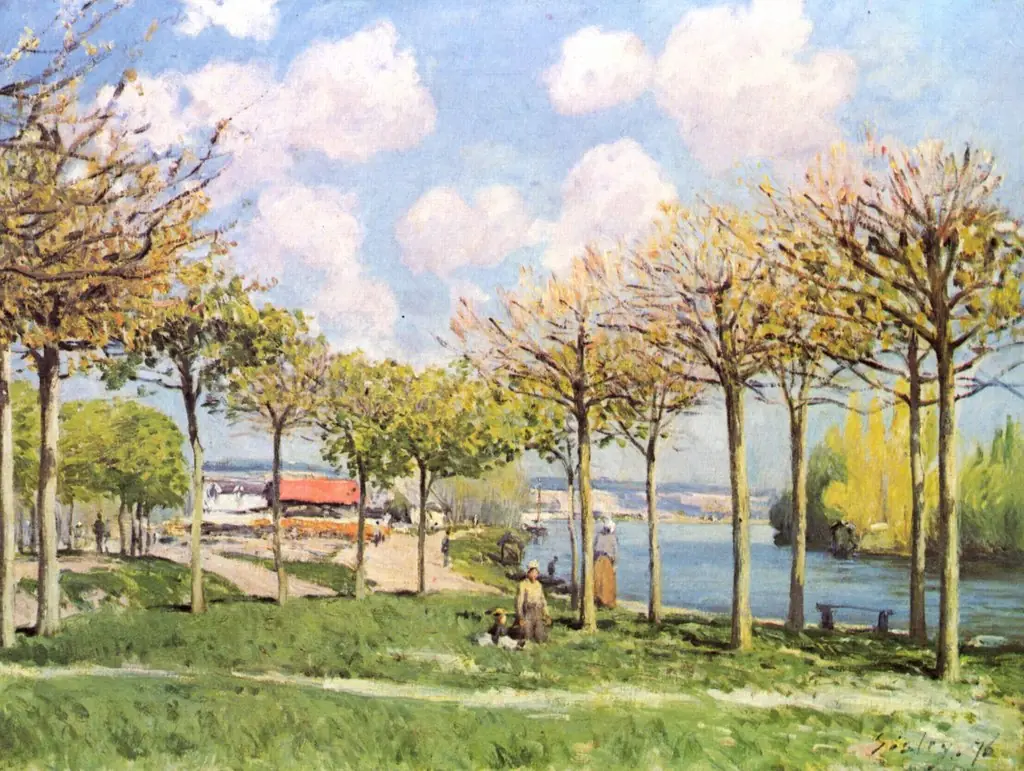
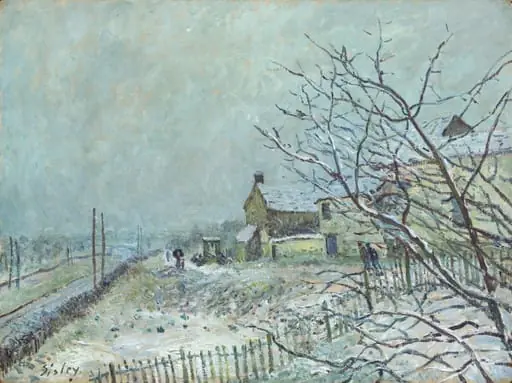
Louveciennes in the Snow is an oil painting by the Impressionist artist Alfred Sisley. It dates from 1872 and is held in the collection of the Norton Simon Museum.
About this work
Overview
Painted in 1872, *Louveciennes in the Snow* is an oil on canvas landscape by Alfred Sisley, a key figure in the Impressionist circle.
Painted in 1872, *Louveciennes in the Snow* is an oil on canvas landscape by Alfred Sisley, a key figure in the Impressionist circle. It captures the quiet village of Louveciennes, northwest of Paris, under a winter blanket. Sisley, who preferred outdoor painting over studio work, focused on atmospheric conditions rather than human activity. The work exemplifies his lifelong dedication to recording the subtle shifts of light and weather in natural settings.
Subject & Meaning
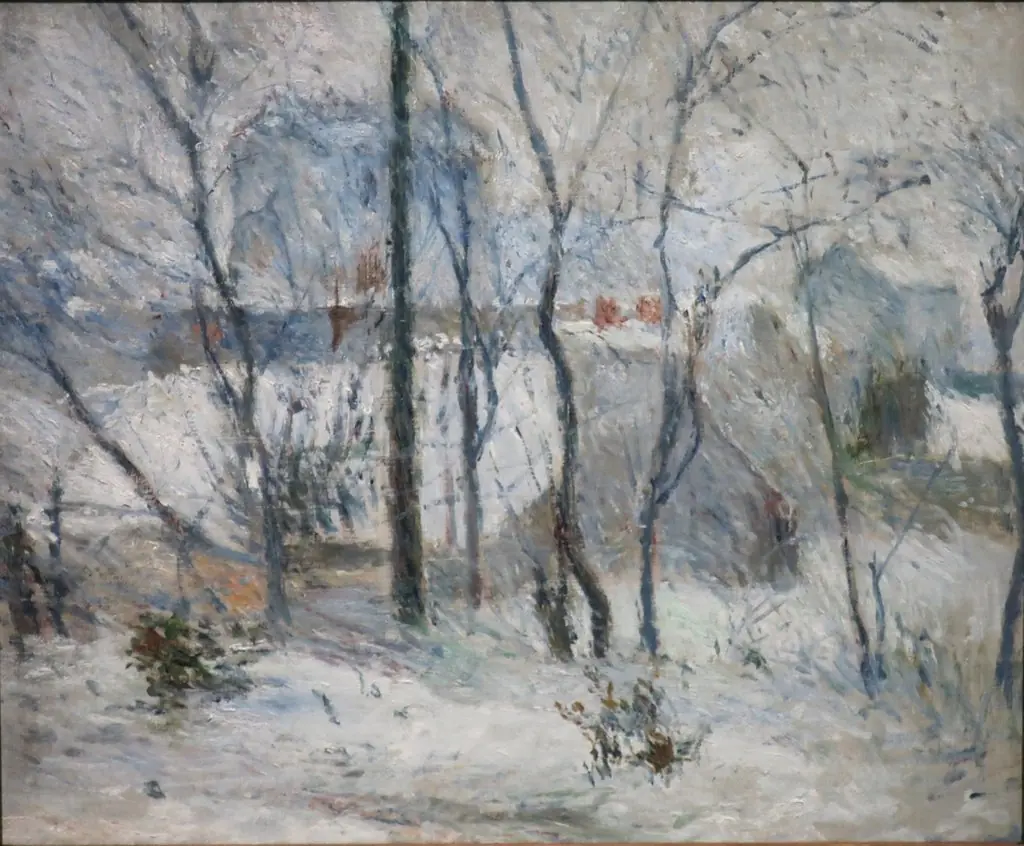
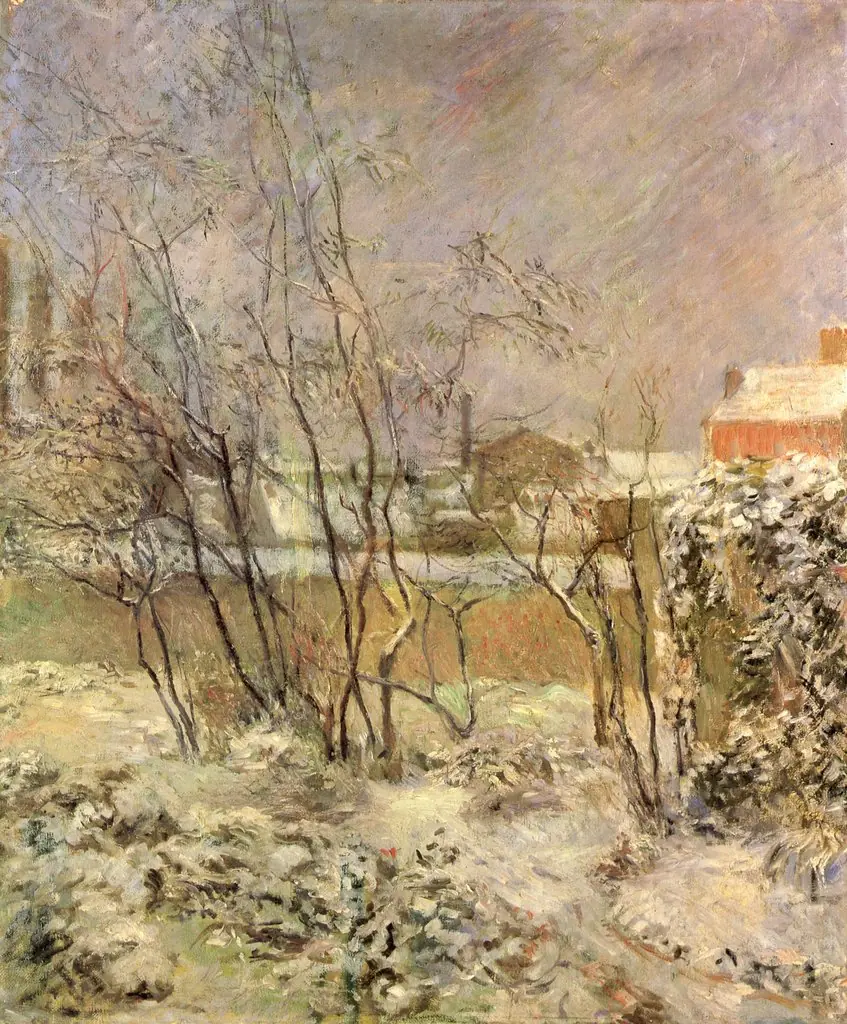
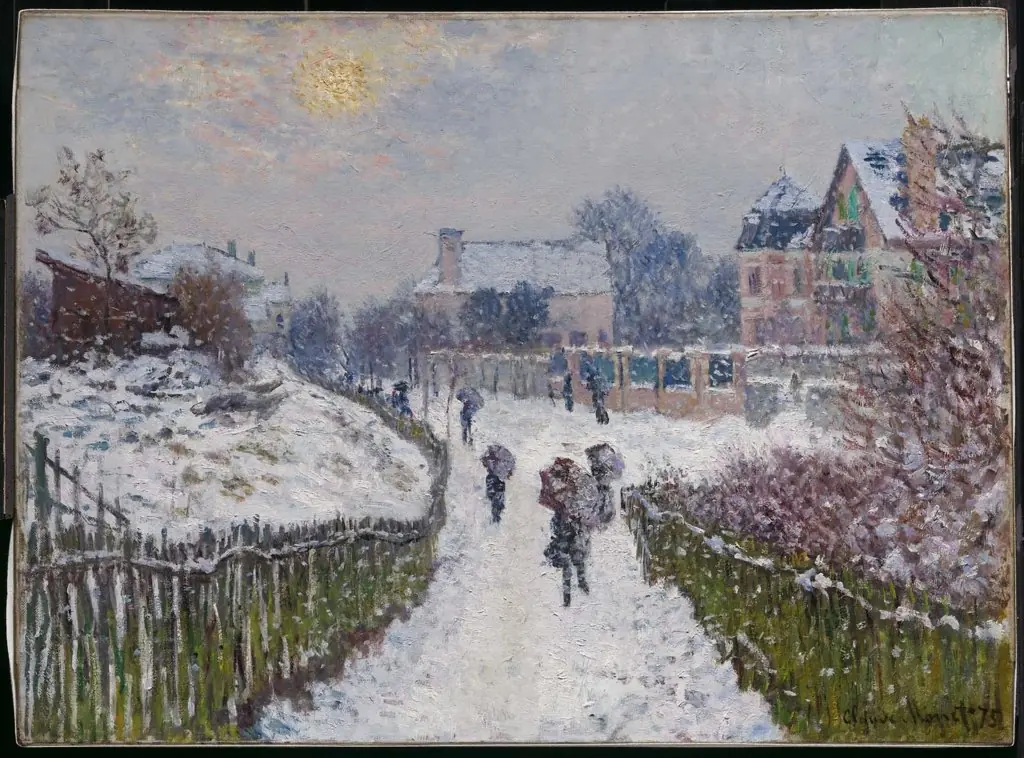
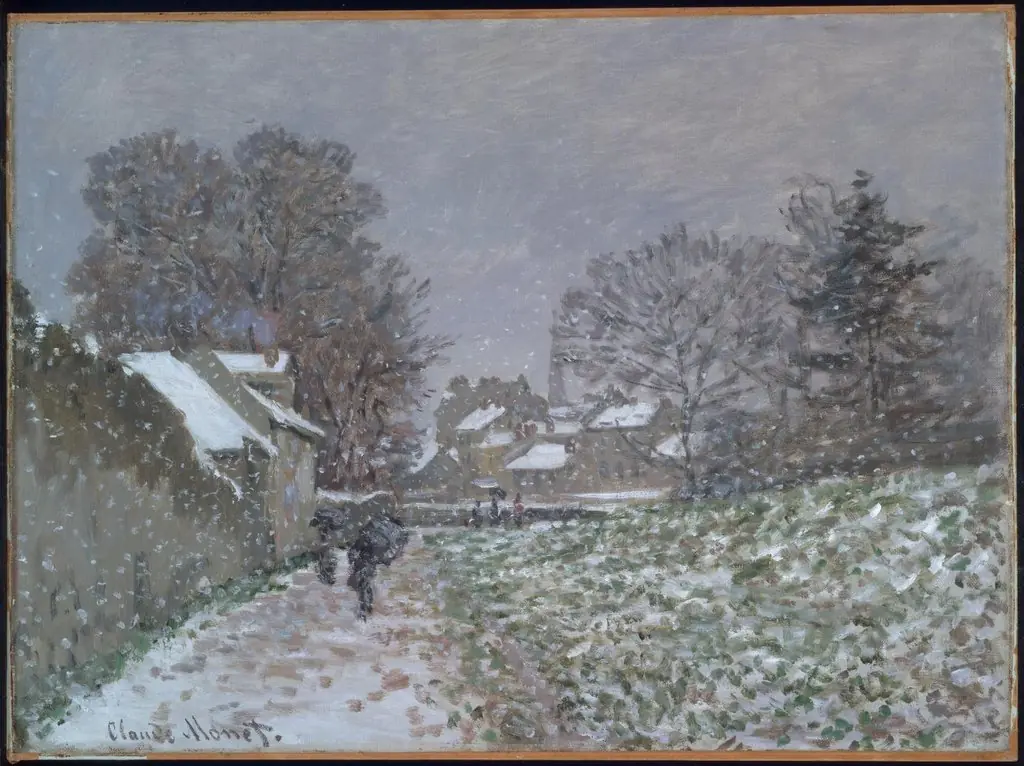
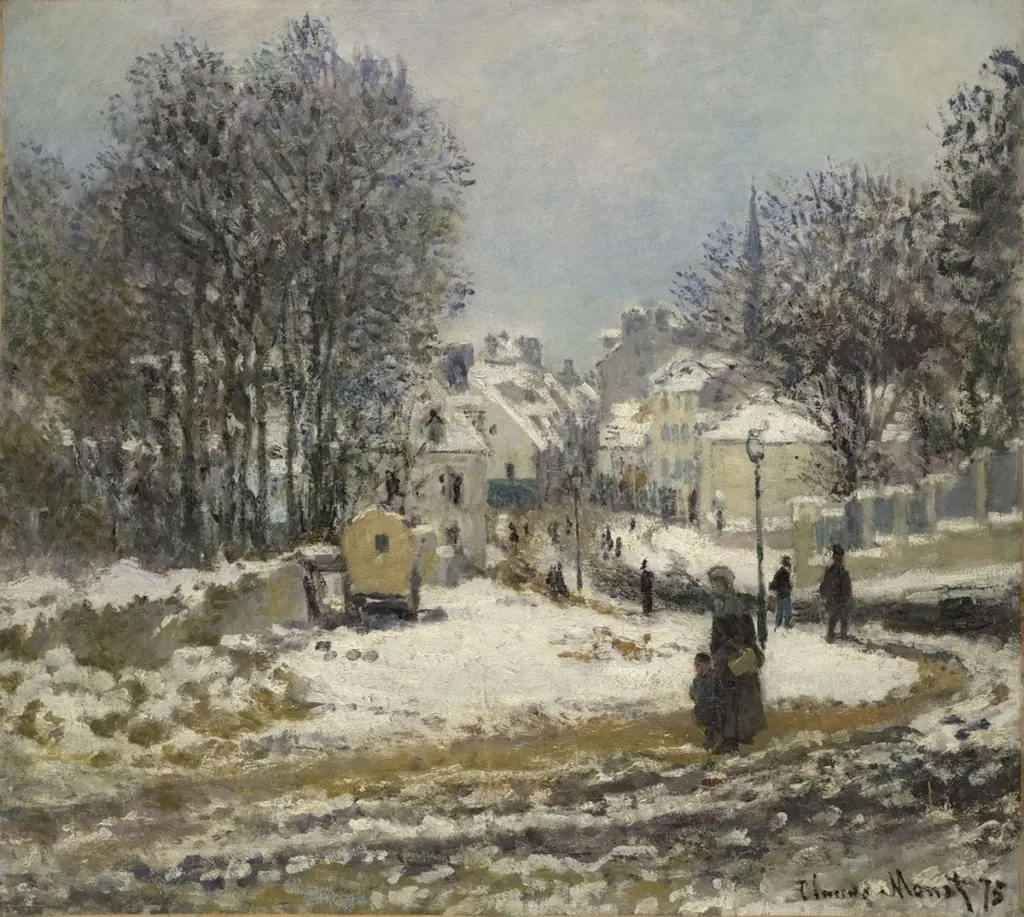
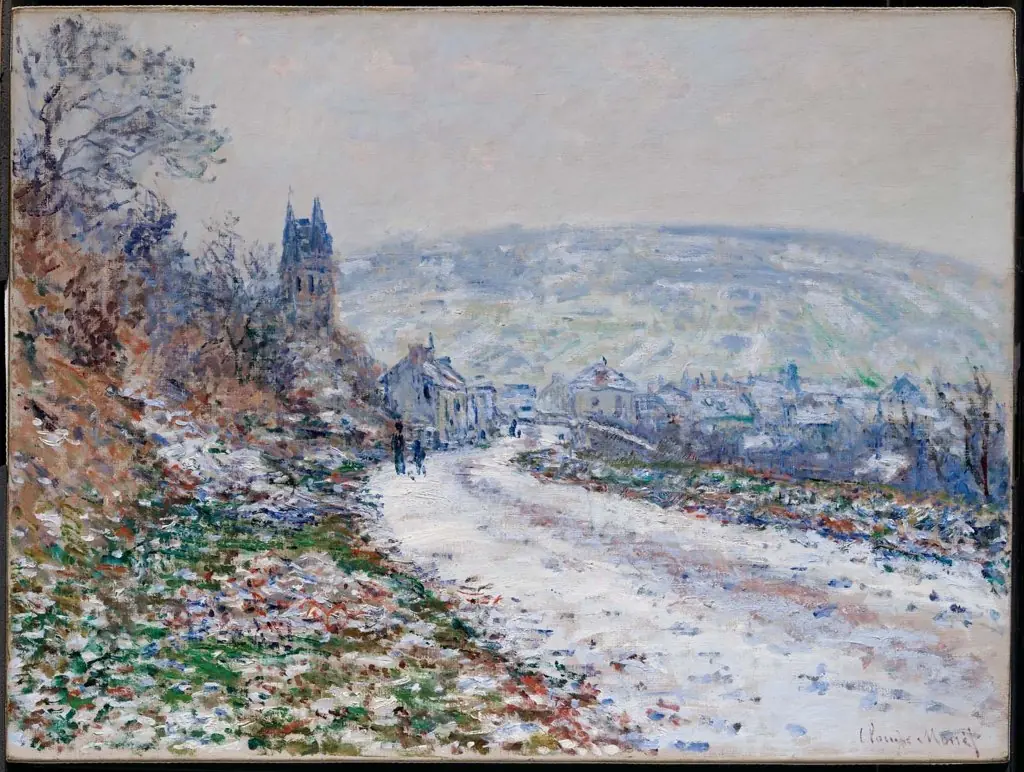
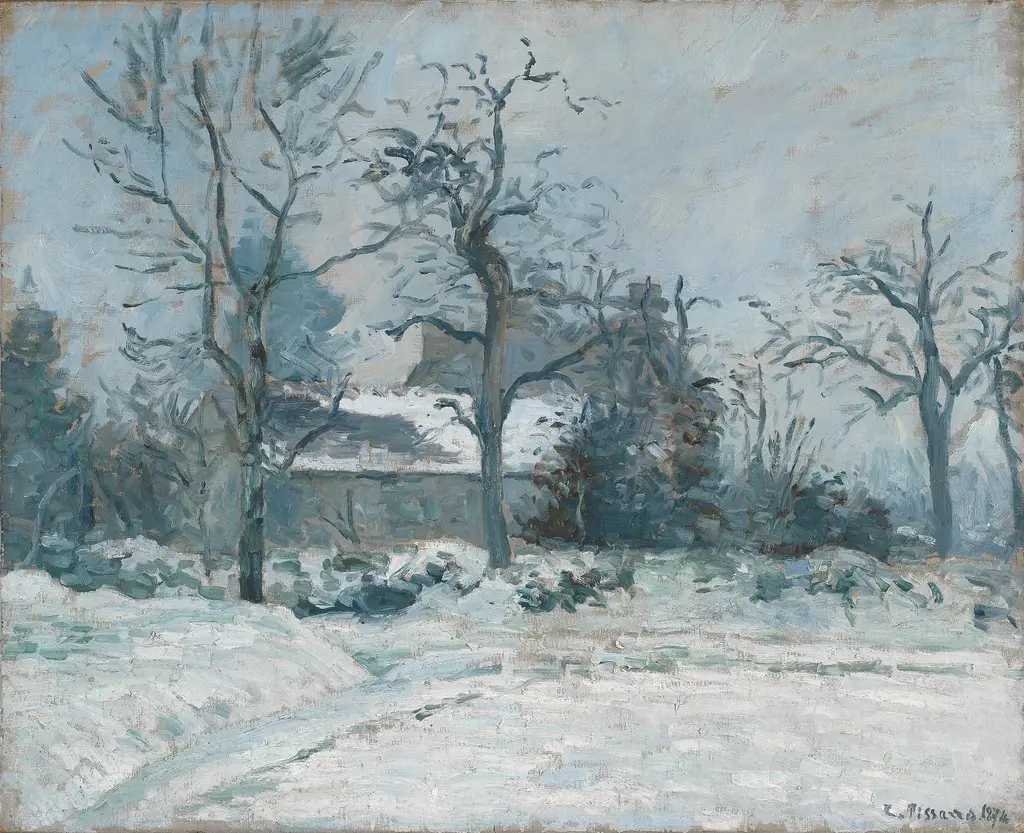
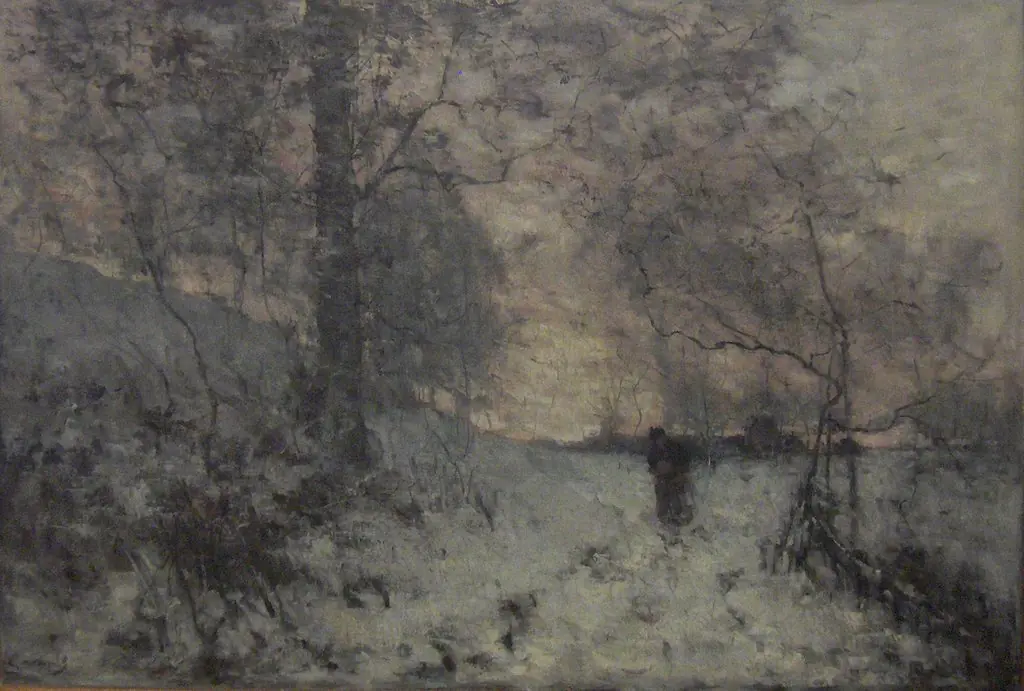
The painting depicts a modest rural hamlet blanketed in snow, with small dwellings featuring steep roofs designed to shed winter accumulation. Bare trees and a winding path guide the viewer’s gaze toward the distant structures. There is no human presence, emphasizing solitude and stillness. The scene conveys a sense of temporal pause, where snow has softened edges and silenced movement, reflecting Sisley’s interest in nature’s quiet rhythms rather than narrative drama.
Technique & Style
Sisley applied thin, layered washes of paint to suggest the diffused light of a winter day. Cool grays, muted whites, and faint blue undertones dominate the palette, with darker accents defining tree trunks and rooflines. Brushwork is delicate yet deliberate, avoiding sharp outlines in favor of tonal transitions. The composition uses recession through diminishing scale and atmospheric perspective, creating depth without dramatic contrast or bold brushstrokes.
History & Provenance
Created during Sisley’s most productive period in Louveciennes, the painting emerged from a series of winter scenes he made between 1870 and 1874. After years in private collections, it entered the Norton Simon Museum’s holdings in the 20th century. Its survival is notable: many of Sisley’s works from this era were lost or damaged during the Franco-Prussian War and subsequent economic hardship, making this one of the more intact examples of his early Impressionist phase.
Context
Sisley painted this during a time when Impressionists were challenging academic conventions by painting en plein air and prioritizing transient effects over idealized forms. While Monet and Renoir explored urban life and figures, Sisley remained focused on rural landscapes. *Louveciennes in the Snow* aligns with contemporaneous works by Pissarro and Cézanne, who also sought to document seasonal change with observational rigor, away from studio artifice.
Legacy
Though less widely known than some of his peers, Sisley’s winter landscapes like this one helped define the Impressionist approach to nature’s subtleties. His consistent focus on atmosphere over anecdote influenced later generations of landscape painters. The painting’s quiet intensity and technical restraint continue to be studied as exemplars of how modest subjects, rendered with sensitivity, can convey profound emotional resonance without spectacle.
Artist & collection
Artist
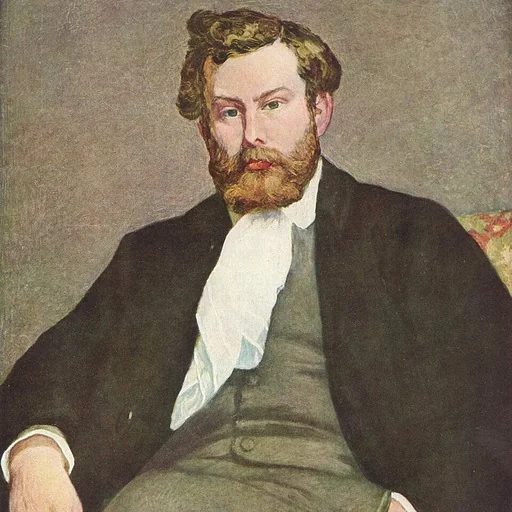
Alfred Sisley (; French: ; 30 October 1839–29 January 1899) was a French-Born British Impressionist landscape painter who was born to British parents, but spent most of his life in France.