Artwork
Entrance to the Village of Vétheuil in Winter
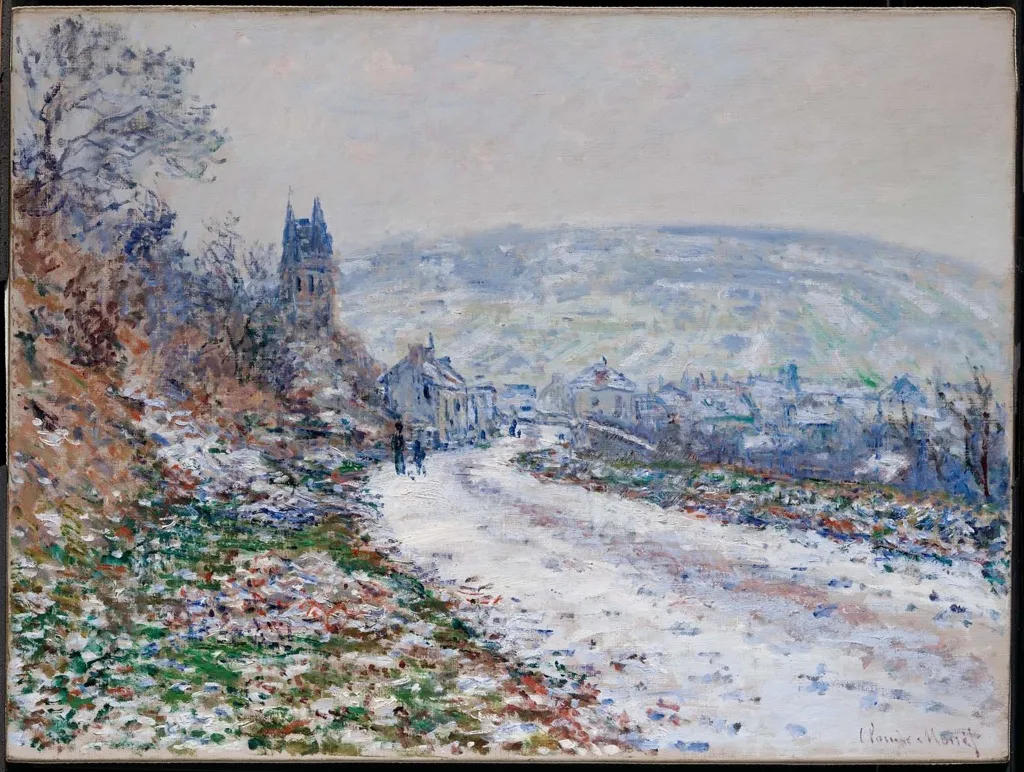
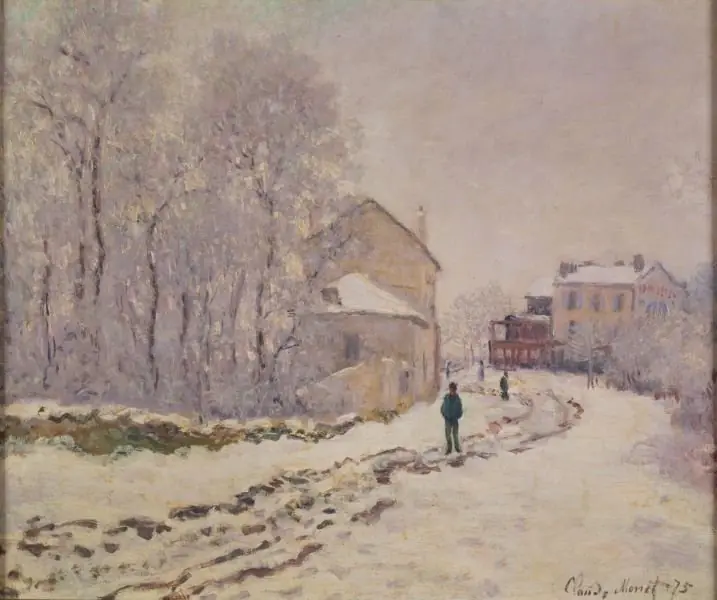
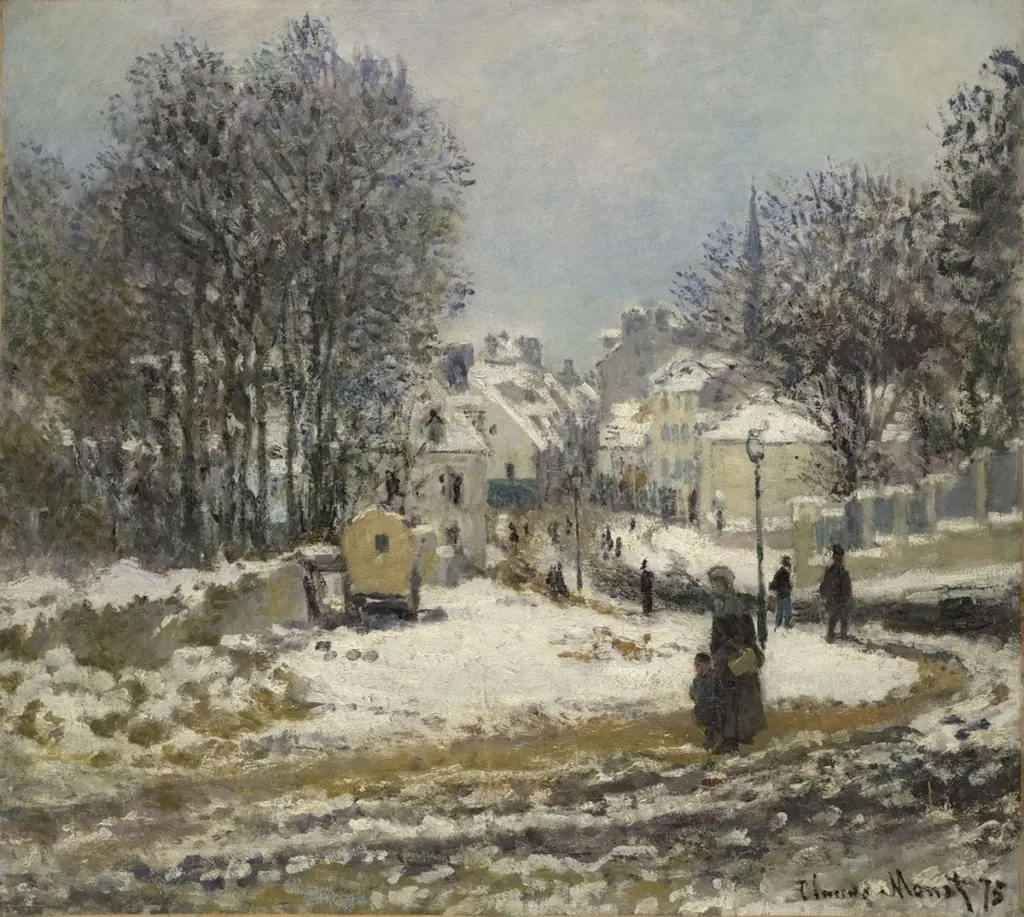
Entrance to the Village of Vétheuil in Winter is an oil painting by the Impressionist artist Claude Monet. It dates from 1890 and is held in the collection of the Museum of Fine Arts Boston.
About this work
Overview
Claude Monet’s 1890 oil painting titled Entrance to the Village of Vétheuil in Winter depicts a quiet, snow‑laden hamlet. The composition leads the eye along a white‑covered lane toward a cluster of modest houses, while a leafless tree and a church spire punctuate the skyline beneath a muted gray sky.
Subject & Meaning
The work captures a moment of winter stillness, emphasizing the interplay of light on snow and the subdued atmosphere of a rural French village. By focusing on the simple architecture and natural elements, Monet conveys a sense of quiet endurance amid the seasonal chill.
Technique & Style
Monet employs thick, impasto brushstrokes to render the snow, creating a tactile surface that suggests depth. A restrained palette of grays, whites, and faint greens and browns characterizes the scene, while the loose handling of paint reflects his Impressionist interest in fleeting light and atmospheric effects.
History & Provenance
Executed in 1890, the painting entered the collection of the Museum of Fine Arts, Boston, where it remains on display. Its acquisition reflects the museum’s early 20th‑century efforts to assemble a representative body of French Impressionist works.
Context
Monet painted Vétheuil during a period when he frequently revisited the Seine valley, exploring seasonal variations of the same locale. This winter study complements his broader series of river and village scenes, illustrating his systematic investigation of light, weather, and landscape.
Artist & collection
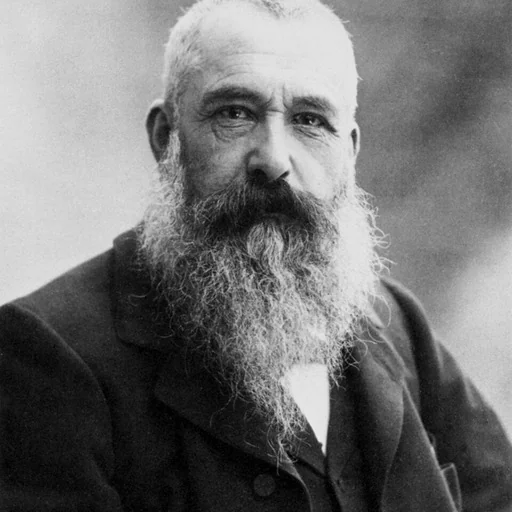
Artist
Oscar-Claude Monet was born in Paris on November 14, 1840, and raised from the age of five in Le Havre, where he began selling charcoal caricatures as a teenager.