Artwork
Departing for the Promenade (Will You Go Out with Me, Fido?)
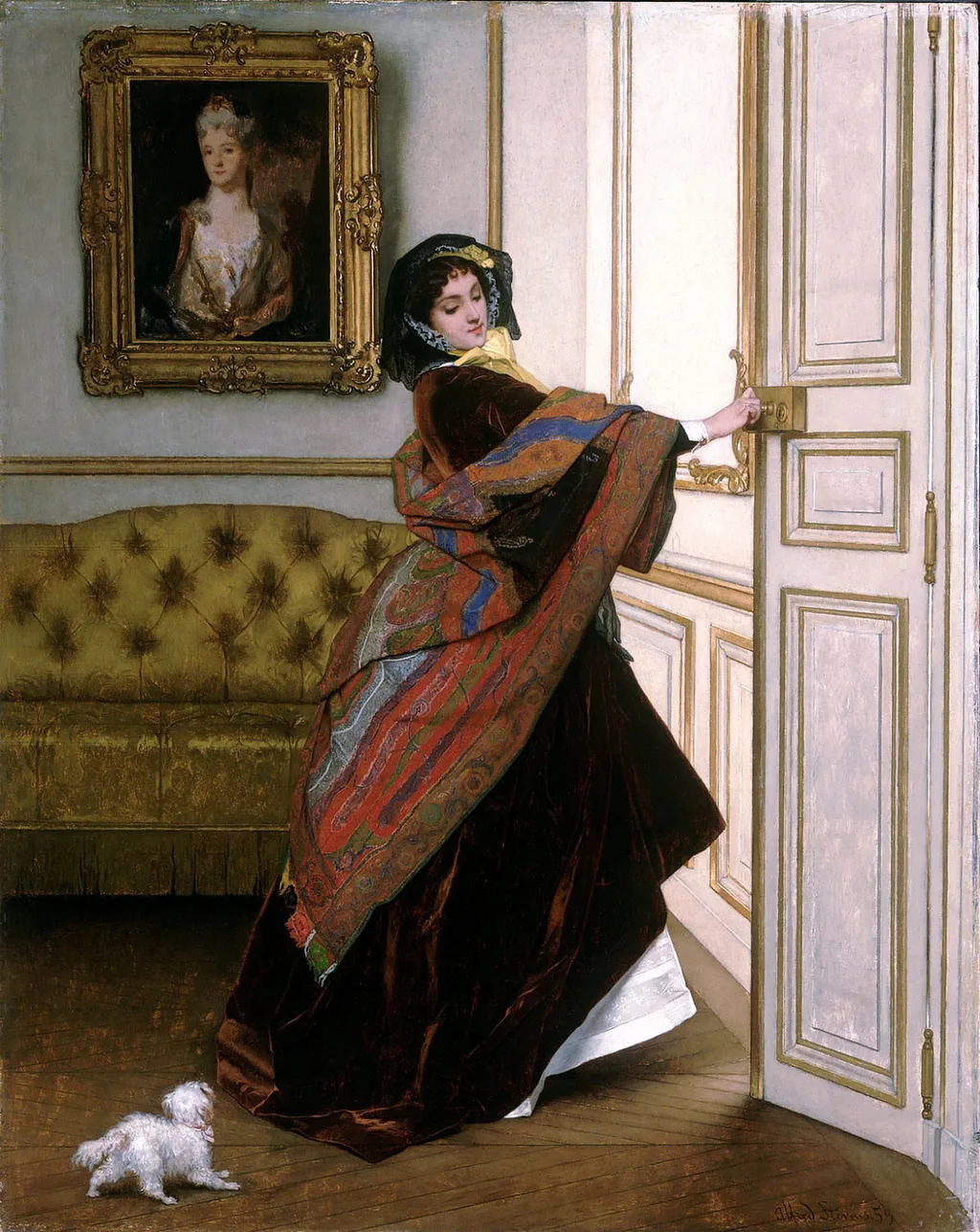
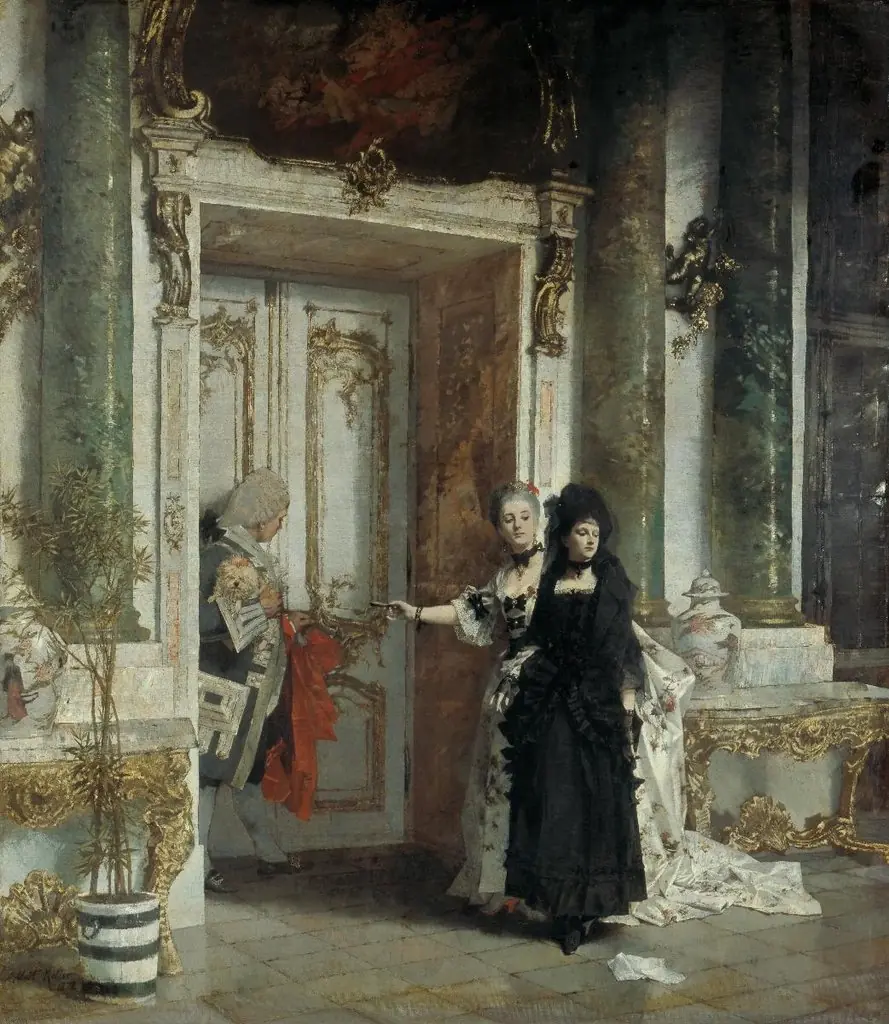
Departing for the Promenade (Will You Go Out with Me, Fido?) is an oil painting by Alfred Stevens. It dates from 1859 and is held in the collection of the Philadelphia Museum of Art.
About this work
Overview
The painting’s title, a playful question directed at a dog, hints at the subtle narrative tension between human routine and companionable presence.
Painted in 1859 by Belgian artist Alfred Stevens, this oil on canvas captures a quiet moment of departure in a Parisian interior. Stevens, who spent much of his career in France, specialized in scenes of upper-middle-class domestic life, rendered with meticulous attention to texture and light. The painting’s title, a playful question directed at a dog, hints at the subtle narrative tension between human routine and companionable presence.
Subject & Meaning
The scene centers on a woman pausing at a doorway, her hand on the handle as she glances toward an unseen presence—perhaps the viewer or the dog beside her. The small white terrier, alert and facing her, becomes both companion and silent participant. The moment suggests a daily ritual, framed not as grand drama but as intimate, unspoken connection. The dog’s presence softens the formality of the setting, introducing warmth into an otherwise restrained domestic space.
Technique & Style
Stevens employed fine brushwork and layered glazes to achieve a smooth, luminous surface, echoing the precision of Dutch Golden Age genre painting. The contrast between the woman’s dark dress and the vibrant shawl draws the eye, while the pale walls and wooden floor ground the composition in tangible space. Light falls naturally across the room, enhancing the texture of fabric, fur, and wood without theatricality. Every detail, from the framed portrait to the grain of the floorboards, is rendered with quiet deliberation.
History & Provenance
Created during Stevens’s early Parisian period, the painting reflects his growing reputation for depicting contemporary bourgeois life with psychological nuance. It was likely exhibited in Salon circles of the 1860s, where his refined style attracted collectors drawn to scenes of modern elegance. The work remained in private hands for much of the 20th century before entering a public collection, where its quiet realism continues to invite contemplation over overt narrative.
Context
In mid-19th-century Paris, domestic interiors became a favored subject among artists seeking to capture the rhythms of urban middle-class life. Stevens aligned with this trend, avoiding overt social commentary in favor of subtle observation. His work resonated with audiences familiar with the rituals of leisure, dress, and companionship among the affluent. The inclusion of a pet as a central figure reflects shifting attitudes toward animals as emotional companions rather than mere property.
Legacy
Though less celebrated than his Impressionist contemporaries, Stevens’s commitment to detailed realism influenced later genre painters who valued psychological subtlety over dramatic gesture. His ability to imbue ordinary moments with quiet dignity helped shape the trajectory of modern interior scenes. Today, the painting stands as a measured record of domestic life in Paris, where the smallest gestures—reaching for a door, glancing at a dog—carry the weight of daily existence.
Artist & collection
Artist
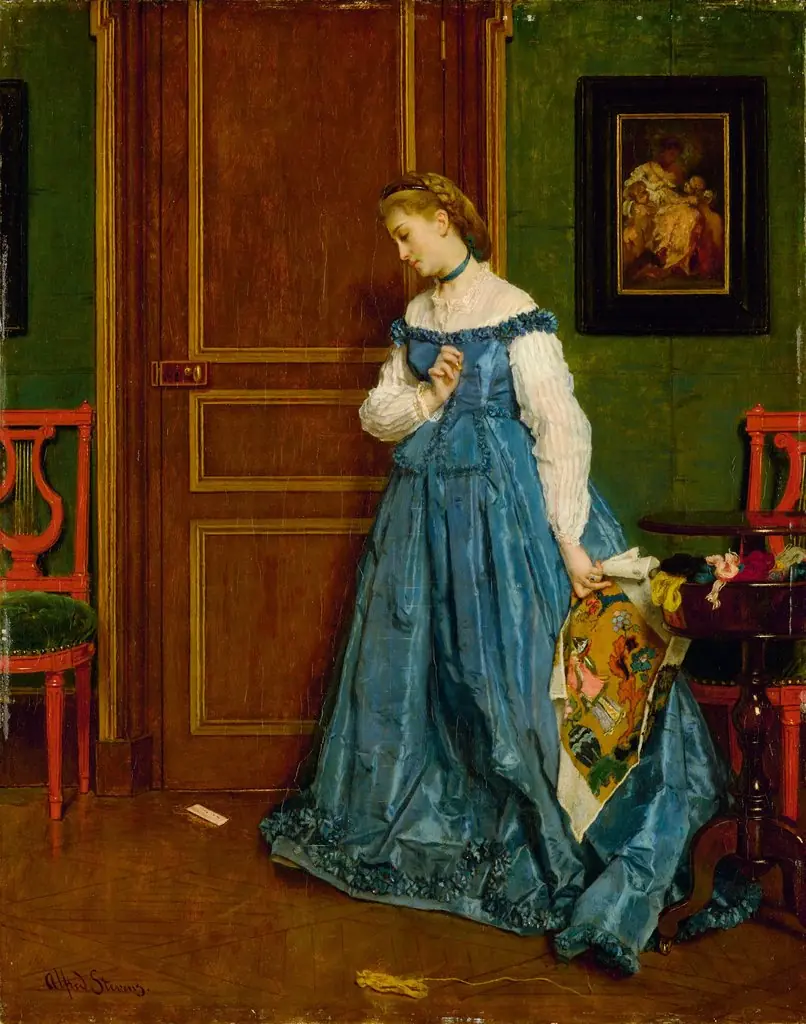
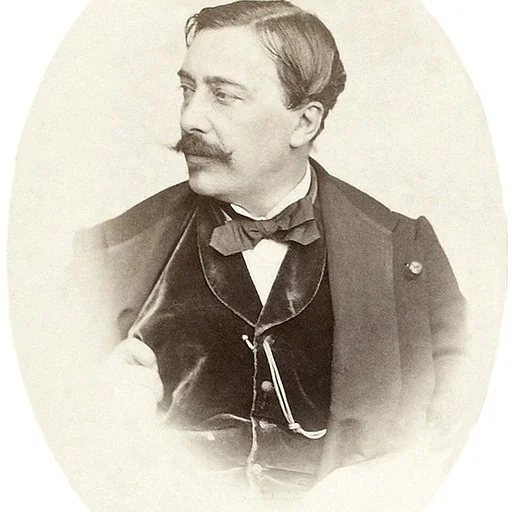
Alfred Émile Léopold Stevens (11 May 1823 – 24 August 1906) was a Belgian painter, known for his paintings of elegant modern women.