Artwork
Dunstanborough
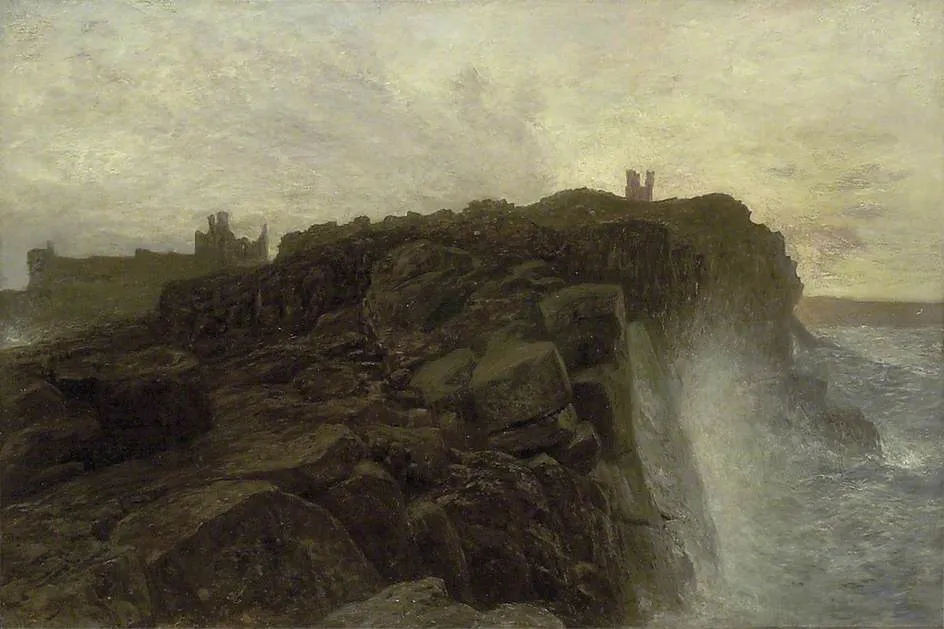
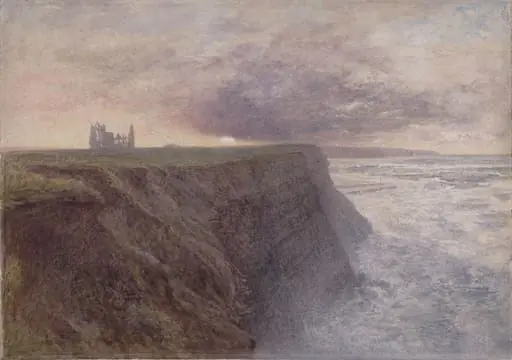
Dunstanborough is an oil painting by the Post-Impressionist artist Alfred William Hunt. It dates from 1894 and is held in the collection of the Ashmolean Museum.
About this work
Overview
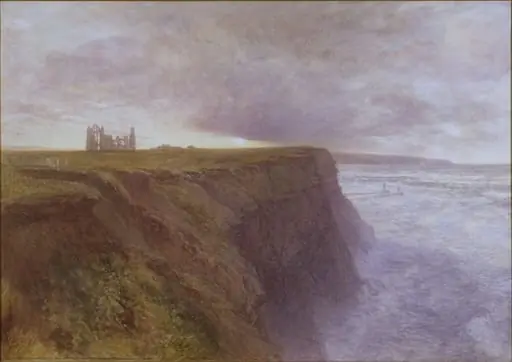
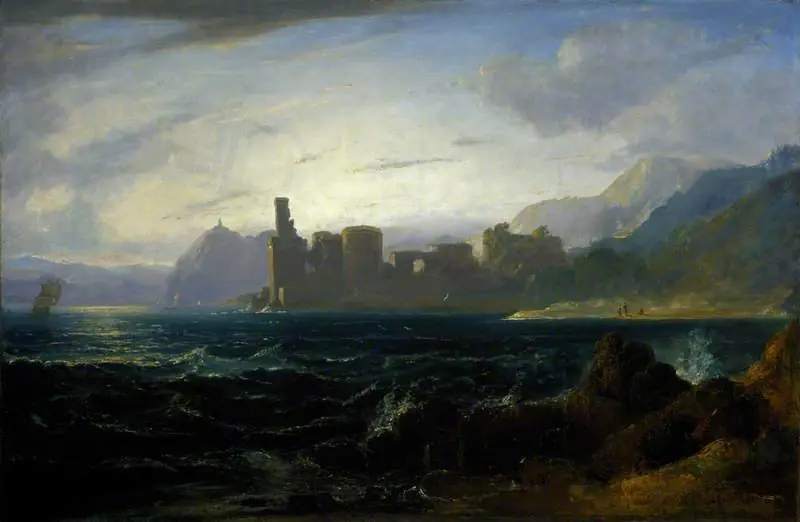
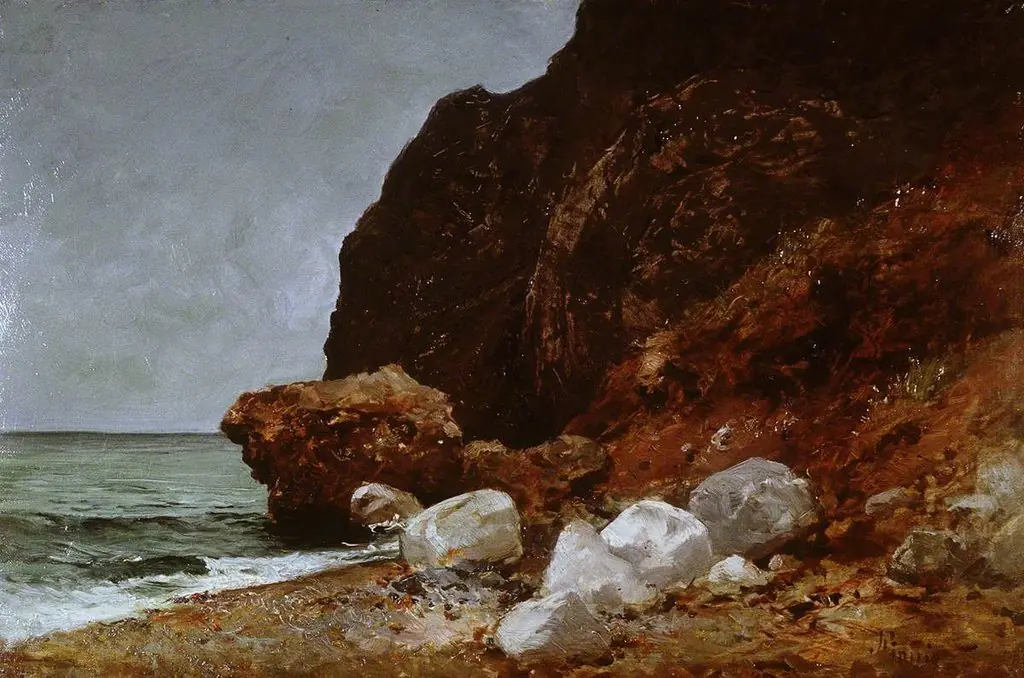
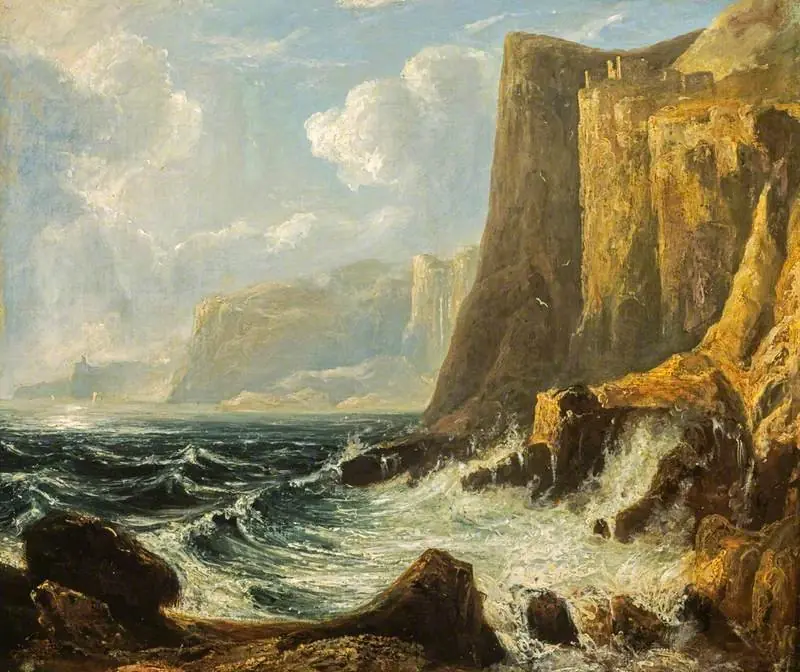
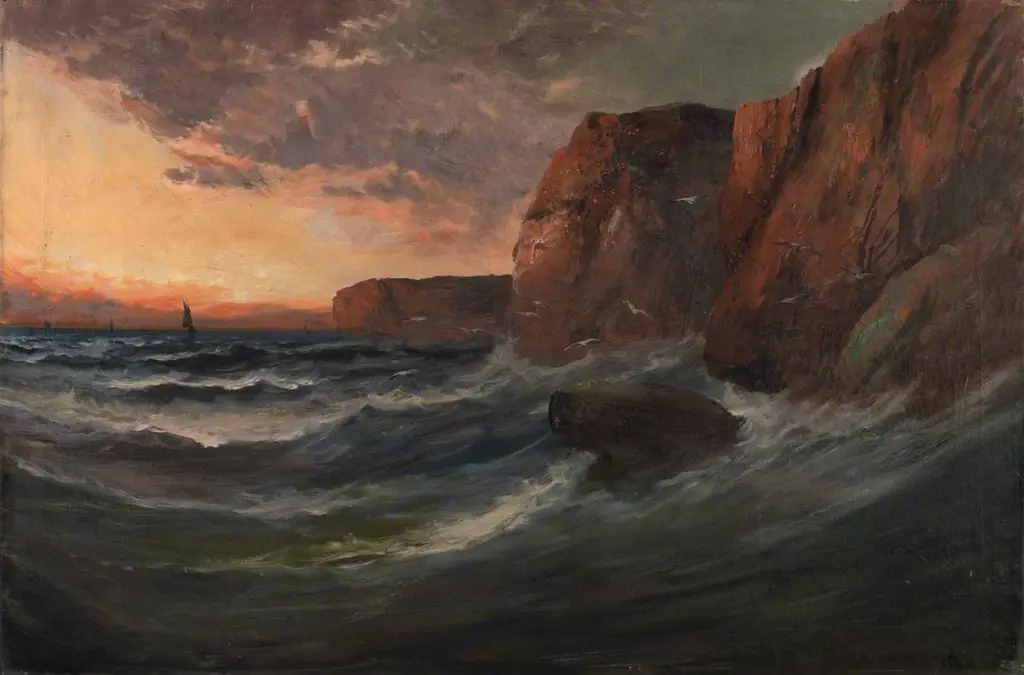
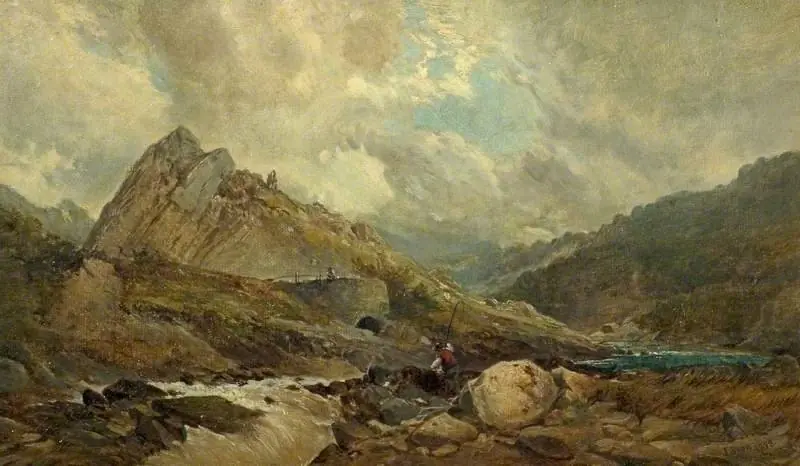
Dunstanborough is an 1894 oil painting by Alfred William Hunt, depicting a coastal scene in Northumberland. The work is part of the Ashmolean Museum’s collection and exemplifies Hunt’s interest in natural landscapes shaped by time and weather. Its composition balances rugged terrain with distant ruins, emphasizing quiet observation over dramatic narrative.
Subject & Meaning
The painting centers on the ruins of Dunstanburgh Castle, perched on a cliff above a rocky shore. The structure, partially obscured by clouds, suggests decay and endurance. The foreground’s textured rocks and calm sea invite stillness, evoking a sense of solitude and the passage of time rather than historical grandeur.
Technique & Style
Hunt employed layered oil paint to capture subtle shifts in light and texture. The rocks are rendered with fine, deliberate strokes, while the sky uses soft gradations to suggest atmospheric depth. Wave surfaces reflect muted tones, avoiding sharp highlights in favor of a subdued, unified tonality that reinforces the painting’s contemplative mood.
History & Provenance
Created in 1894, the painting was acquired by the Ashmolean Museum shortly after its completion. Hunt, known for his landscape studies, often visited northern England’s coastlines for sketching. Dunstanborough was likely painted en plein air, then refined in his studio, reflecting his commitment to direct observation of nature.
Context
In late 19th-century Britain, landscape painting retained cultural significance as industrialization reshaped the countryside. Hunt’s work aligned with a broader movement valuing naturalism and emotional resonance over idealization. His focus on remote, weathered sites like Dunstanburgh reflected a growing interest in Britain’s geological and historical layers.
Legacy
Though not widely exhibited beyond regional circles during his lifetime, Hunt’s landscapes, including Dunstanborough, contributed to a quieter tradition of British realism. The painting remains a quiet example of how artists of the period used nature to convey introspection, influencing later generations interested in place and memory.
Artist & collection