Artwork
Untitled
Untitled is a drawing by Alighiero Boetti. It dates from 1970 and is held in the collection of the Museum of Modern Art.
About this work
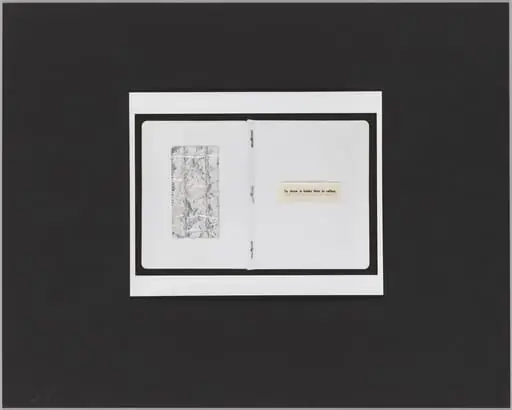
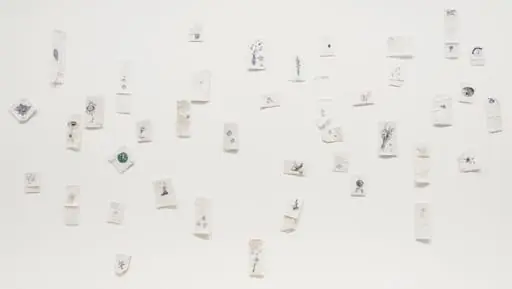
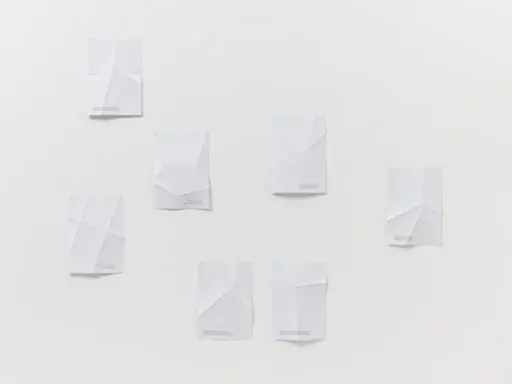
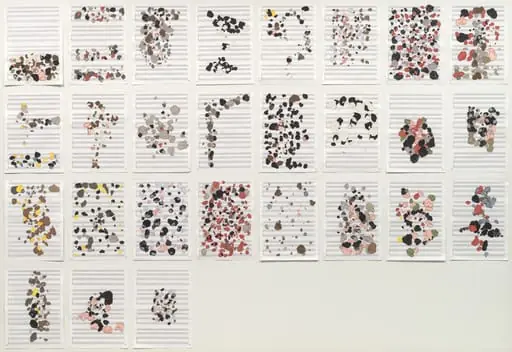
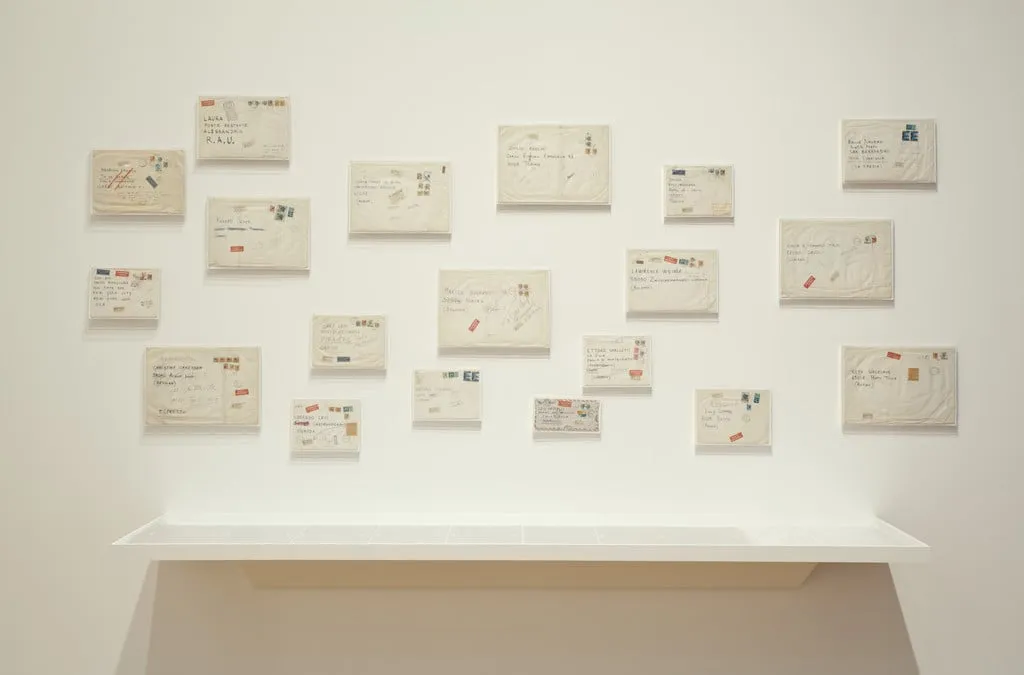
This work shows nineteen small and large envelopes with colorful stamps and postmarks.
This work shows nineteen small and large envelopes with colorful stamps and postmarks. They're pinned to a sheet of paper like a strange address book. Each stamp and postmark is real, sent from places Boetti visited or just imagined.
This is art as mail. He made it in 1969-70, long before email. The stamps show different countries, like a travel diary without travel.
Want to see more? Try Alighiero Boetti.
Overview
Created between 1969 and 1970, this work by Alighiero Boetti comprises nineteen physical envelopes bearing real postage stamps and postmarks. Mounted on a single sheet of paper, the pieces function as a quiet accumulation of postal artifacts. The arrangement suggests a deliberate ordering of disparate elements, transforming everyday mail into a structured visual field. No handwritten notes or contents are visible—only the surfaces of the envelopes and their official markings remain.
Subject & Meaning
The work engages with themes of distance, communication, and the passage of time through the physical traces of postal systems. Each envelope, though empty of text, carries the imprint of a journey—real or imagined—via its stamp and cancellation. Boetti uses the postal network as a metaphor for connection and control, reflecting how systems of bureaucracy can generate meaning through repetition and routine rather than narrative content.
Technique & Style
Boetti assembled the envelopes without alteration, preserving their original postal conditions. They are pinned flat to paper in a grid-like arrangement, emphasizing their uniformity and variation simultaneously. The technique is reductive: no drawing, painting, or fabrication is involved. The aesthetic arises from selection and arrangement, aligning with Arte Povera’s use of mundane materials to challenge traditional artistic production.
History & Provenance
The envelopes were collected during Boetti’s travels and through correspondence between 1969 and 1970. He sourced them from locations he had visited as well as those he had not, blurring the line between experience and fantasy. The work was produced during a period when Boetti increasingly turned to systems-based practices, distancing himself from expressive art forms. Its preservation as a single, unaltered unit reflects his interest in the integrity of found objects.
Context
Emerging from the Arte Povera movement, Boetti’s work responded to Italy’s postwar cultural climate, where artists questioned institutional structures and material hierarchies. In an era before digital communication, the postal system was a primary conduit for global exchange. By isolating its physical remnants, Boetti highlighted the quiet poetry of administrative processes, inviting viewers to consider the invisible networks shaping daily life.
Legacy
This work prefigures later conceptual practices that treat information, logistics, and systems as artistic material. It influenced artists exploring mail art, institutional critique, and the aesthetics of bureaucracy. By elevating ordinary postal objects into a contemplative composition, Boetti expanded the boundaries of what could be considered art, leaving a quiet but enduring mark on 20th-century conceptual practice.
Artist & collection
Artist
Alighiero Fabrizio Boetti, known as Alighiero e Boetti (16 December 1940 – 24 April 1994) was an Italian painter, sculptor and conceptual artist, considered to be a member of the art movement Arte Povera.