Artwork
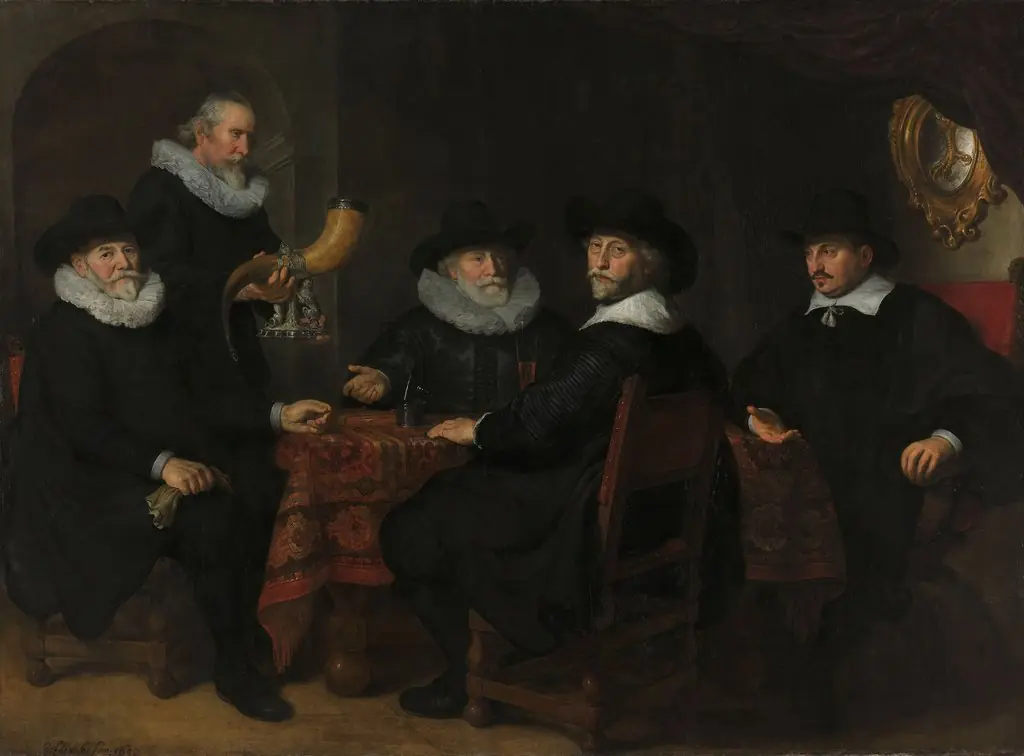
The regents of the Tuchthuis (house of correction) in Middelburg, 1643
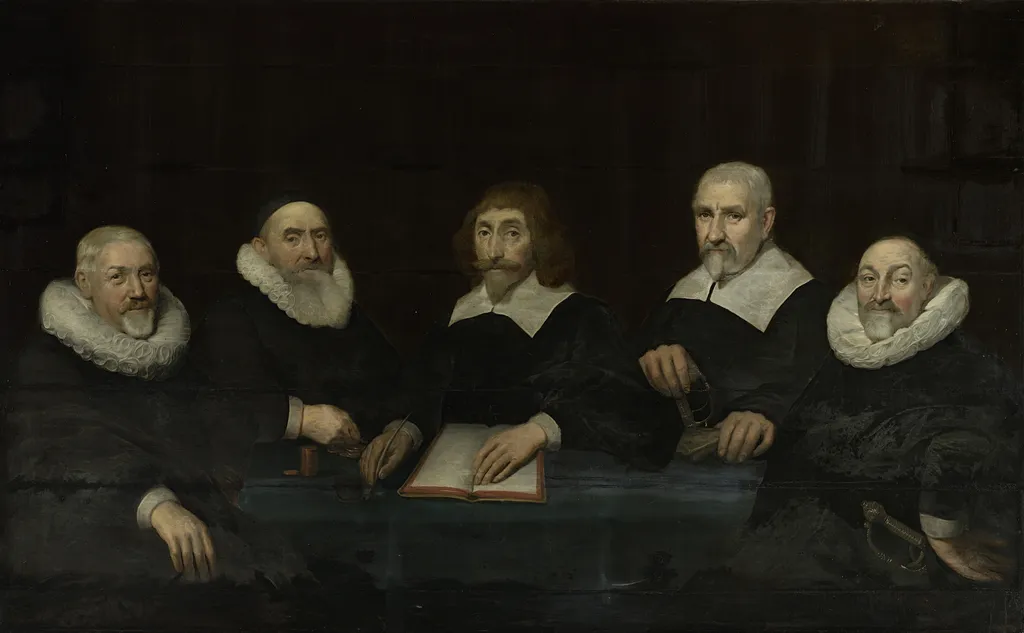
The regents of the Tuchthuis (house of correction) in Middelburg, 1643 is an oil painting by the Dutch Golden Age artist Allaert van Loeninga. It dates from 1643 and is held in the collection of the Rijksmuseum.
About this work
Overview
Created in 1643, this oil on canvas by Allaert van Loening portrays the governing board of Middelburg’s house of correction, known as the Tuchthuis. The work is part of the Rijksmuseum’s collection and presents five formally dressed men seated side by side, their gazes directed toward the viewer.
Subject & Meaning
The figures represent the regents responsible for overseeing the municipal penal institution. Their sober attire, white collars and bearded faces convey authority and solemnity, while the inclusion of an open book and other modest objects suggests administrative duties and the legal framework guiding the house of correction.
Technique & Style
Van Loening employs a pronounced chiaroscuro, using a dark, undefined background to heighten the contrast between the illuminated faces and the deep shadows. The crisp rendering of white collars and beards against the gloom creates a three‑dimensional effect, and the steady, restrained gestures of the hands reinforce the portrait’s dignified tone.
History & Provenance
The painting has remained in the Netherlands since its creation, eventually entering the Rijksmuseum’s holdings where it is displayed as a representative example of mid‑seventeenth‑century civic portraiture. Its provenance traces back to the original commission by the Tuchthuis regents, reflecting the common practice of municipal bodies preserving their leadership’s likenesses.
Own this work as a print
Artist & collection

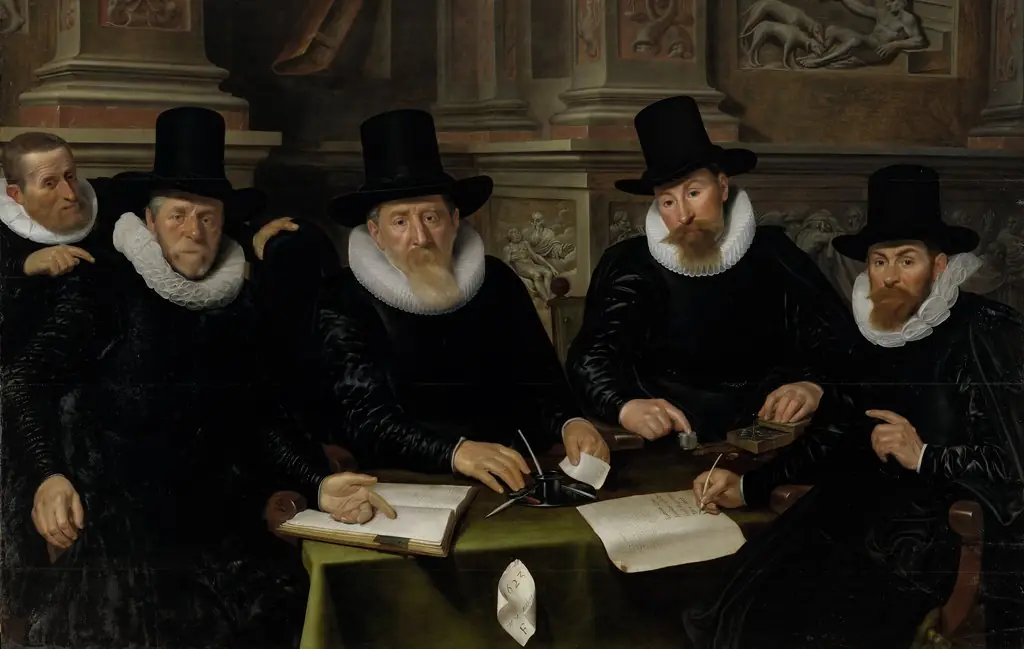 Four Regents and the ‘House Father’ of the Amsterdam Lepers’ Asylum
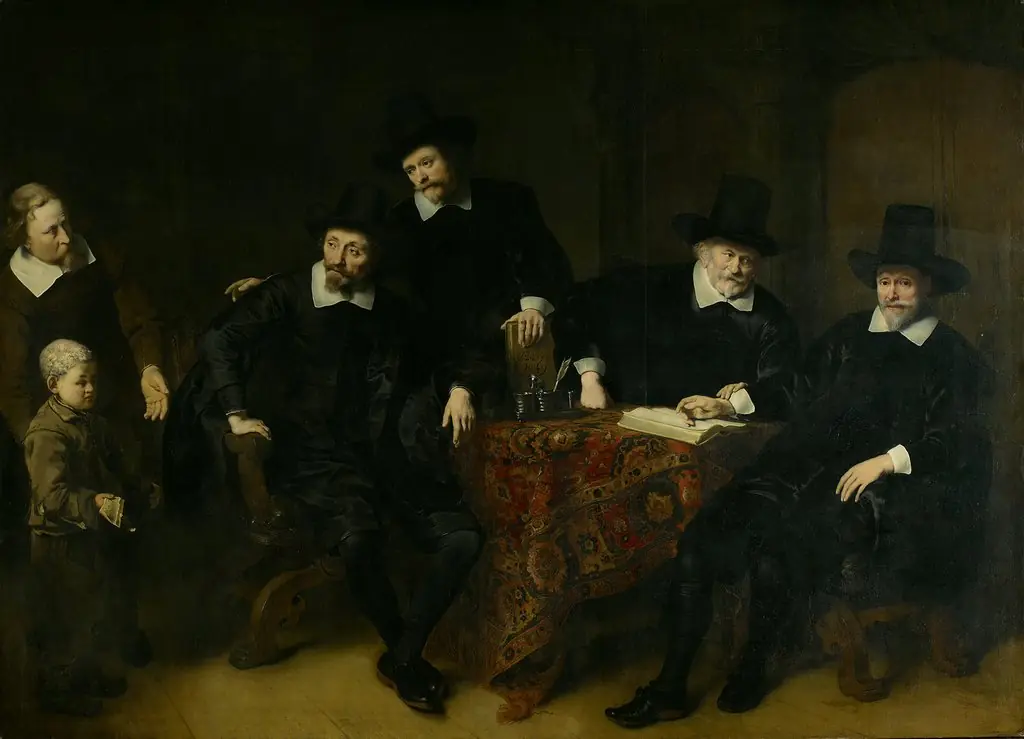 The Regents of the Leper's house in Amsterdam in 1649
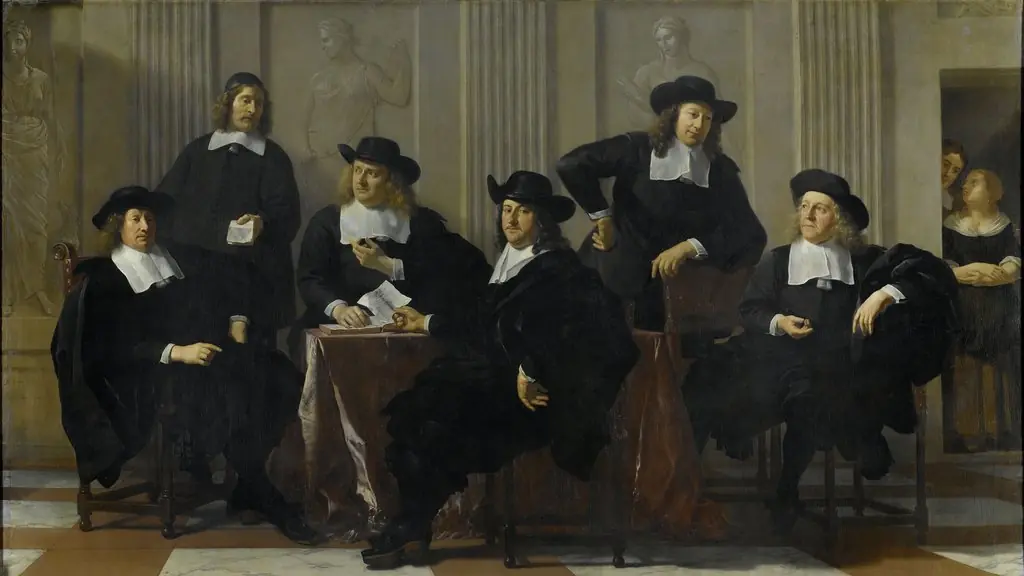 The Regents of the Spinhuis and Nieuwe Werkhuis, Amsterdam
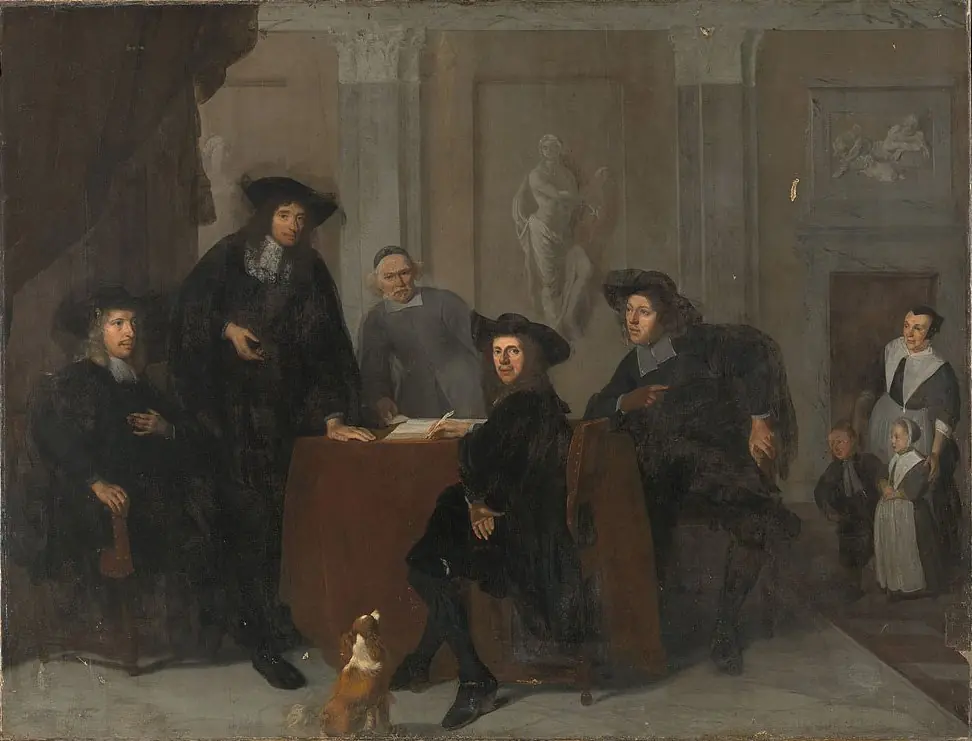 Regents of the Leper's house in Amsterdam
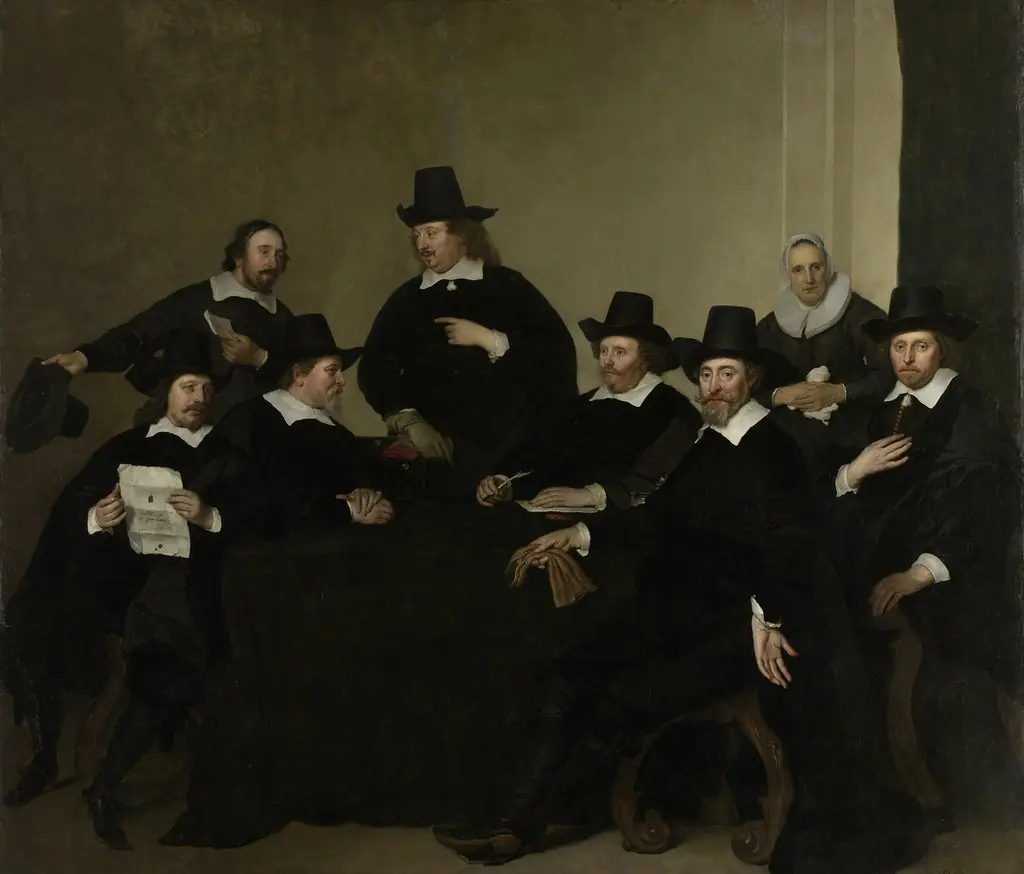 The regents of the Nieuwe Zijds institute for the outdoor relief of the poor, Amsterdam, ca 1650
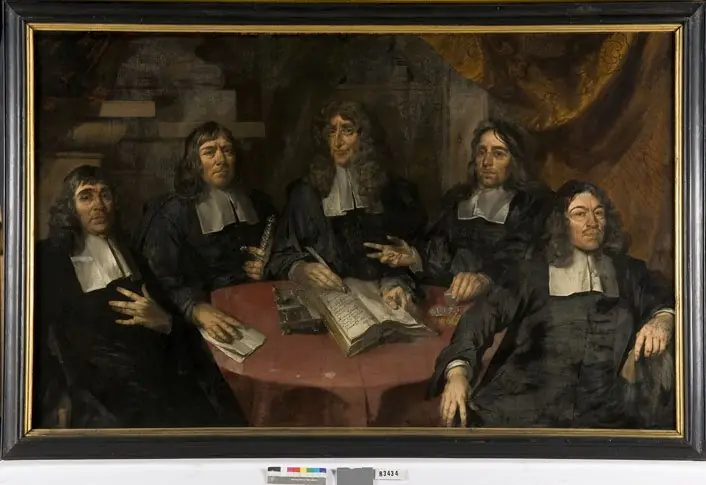 Five regents of the Tuchthuis (house of correction) in Middelburg