Artwork
The governors of the guild of St. Luke, Haarlem, 1675
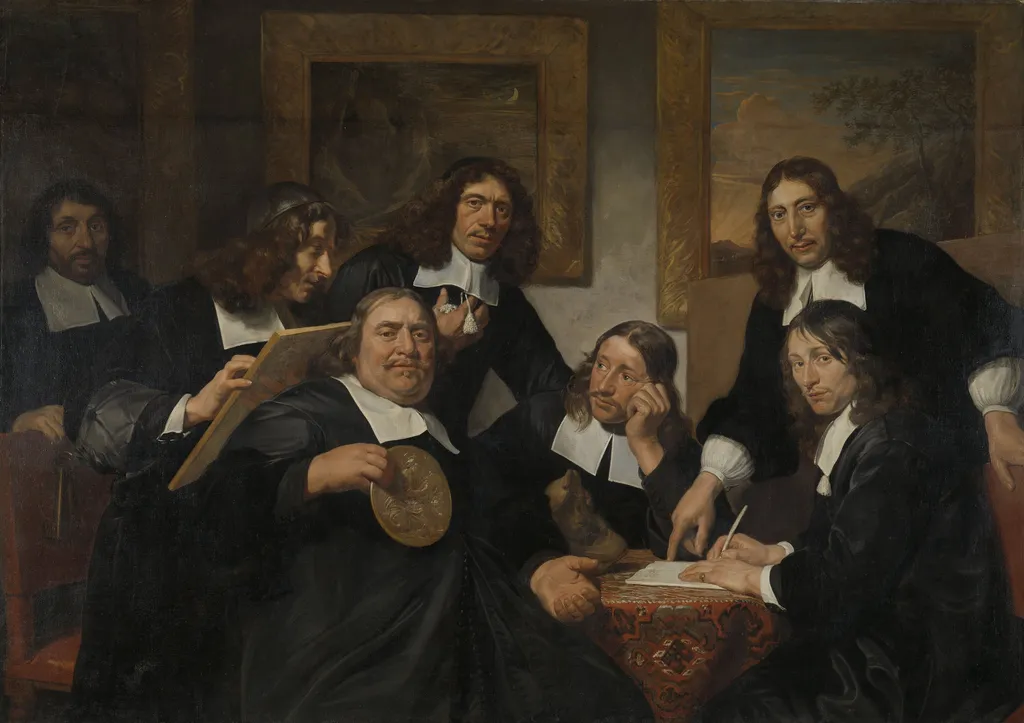
The governors of the guild of St. Luke, Haarlem, 1675 is an oil painting by the Dutch Golden Age artist Jan de Bray. It dates from 1675 and is held in the collection of the Rijksmuseum.
About this work
They are seated or standing, engaged in various activities such as writing, holding objects, or leaning on a table.
This painting shows a group of seven men in dark attire with white collars, gathered in a room. They are seated or standing, engaged in various activities such as writing, holding objects, or leaning on a table. The room has a few paintings on the wall and a patterned tablecloth.
One of the men is holding a circular object with an intricate design, while another is writing on a piece of paper. The atmosphere appears to be one of discussion or meeting, with the men focused on their tasks.
The painting is a representation of the governors of the guild of St. Luke in Haarlem, created by Jan de Bray in 1675. You can explore more works by the artist, Jan de Bray.
Overview
Jan de Bray's oil painting, *The governors of the guild of St. Luke, Haarlem, 1675*, captures a significant moment from the Dutch Golden Age. Completed in 1675, this work serves as a group portrait of the governing body of Haarlem's Guild of St. Luke. The artist, active in Haarlem, was known for his distinctive approach to portraiture, often infusing contemporary subjects with a sense of historical narrative. The painting is now housed in the Rijksmuseum.
Subject & Meaning
This painting presents seven men, identified as the governors of the Haarlem Guild of St. Luke, including Dirck de Bray, Wouter Knijff, and the artist himself, Jan de Bray. Dressed in dark clothing with white collars, they are depicted in a formal setting, engaged in various administrative tasks such as writing or examining objects. The scene conveys an atmosphere of focused discussion and official business, reflecting the guild's role in regulating artistic professions.
Technique & Style
De Bray's artistic approach in this work demonstrates his characteristic blending of individual portraiture with broader historical or institutional themes. Influenced by his father, Salomon de Bray, and prominent portraitists like Frans Hals and Bartholomeus van der Helst, Jan de Bray frequently incorporated contemporary figures into such compositions. The detailed rendering of the figures, their interactions, and the interior setting with its subtle background paintings and patterned tablecloth, exemplify the period's refined observational style.
Context
The Guild of St. Luke was a vital institution during the Dutch Golden Age, overseeing artists, artisans, and related trades. This group portrait, commissioned in 1675, underscores the guild's importance and the status of its leadership within Haarlem society. Such commissions were common, serving both as official records and as affirmations of the guild's authority and the collective identity of its members, often depicting them in a manner that conveyed their professional gravitas.
Own this work as a print
Artist & collection
Artist
Jan de Bray (c. 1627 – April 4, 1697) was a Dutch Golden Age painter. He lived and worked in Haarlem until the age of 60, when he went bankrupt and moved to Amsterdam. Jan de Bray was influenced by his father Salomon…

 Six regents and the beadle of the Nieuwe Zijds institute for the outdoor relief of the poor
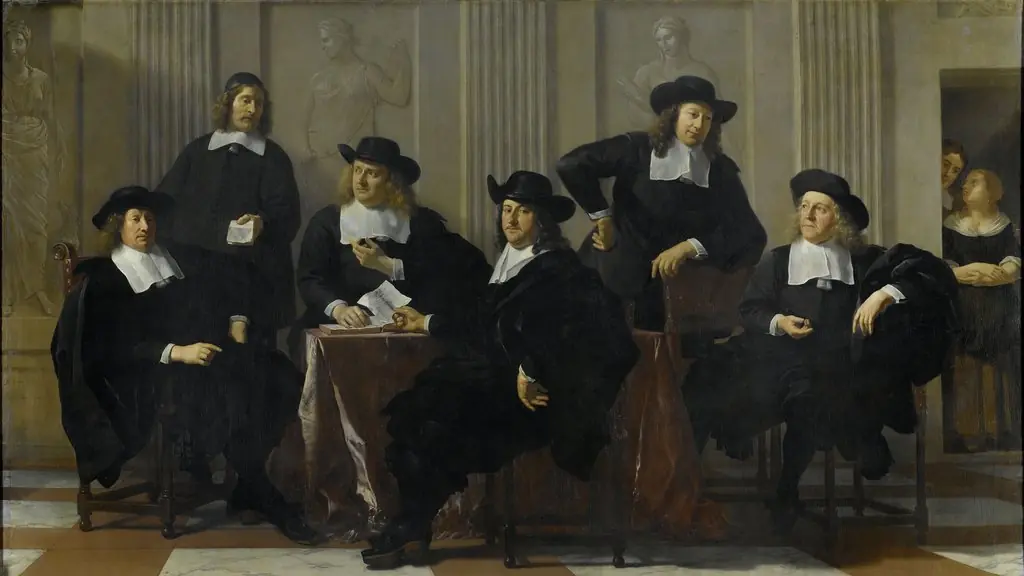 The Regents of the Spinhuis and Nieuwe Werkhuis, Amsterdam
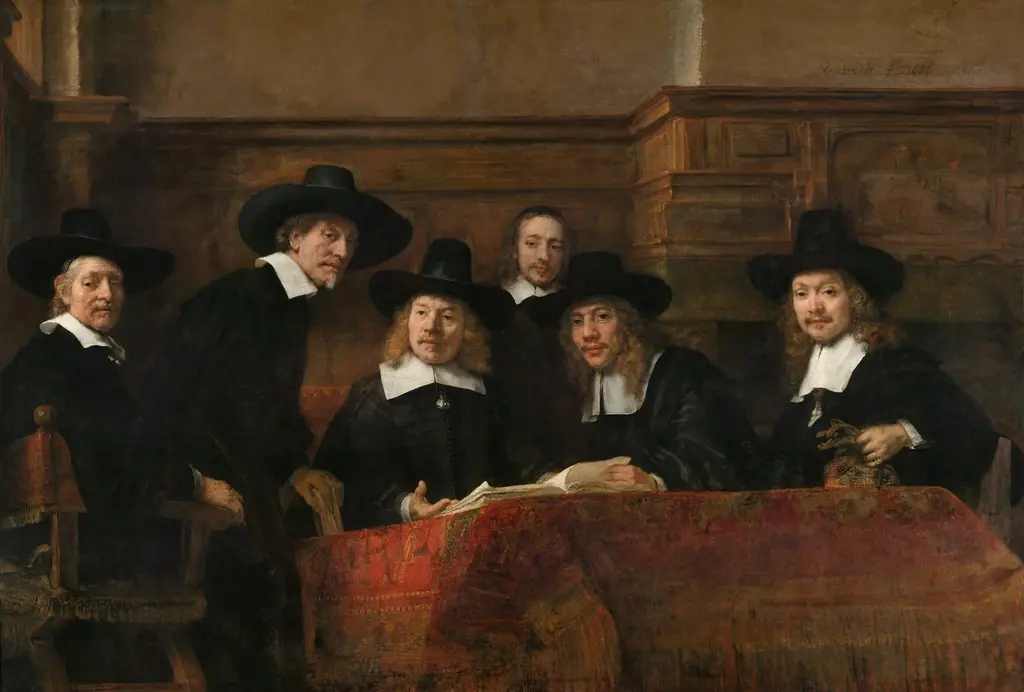 Syndics of the Drapers' Guild
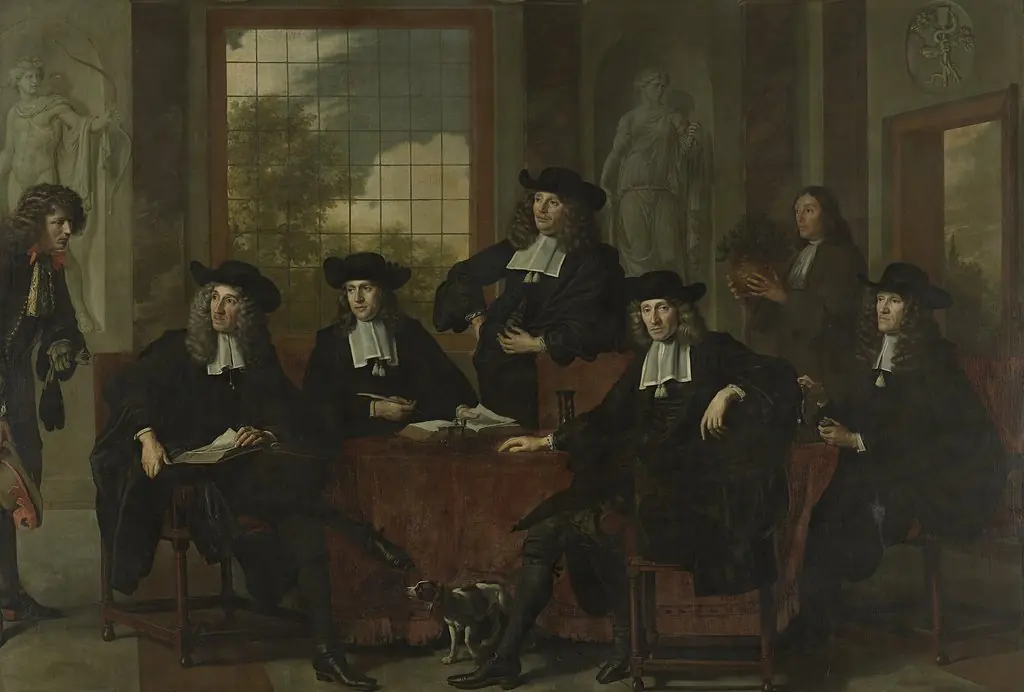 The superintendents of the Collegium Medicum in Amsterdam
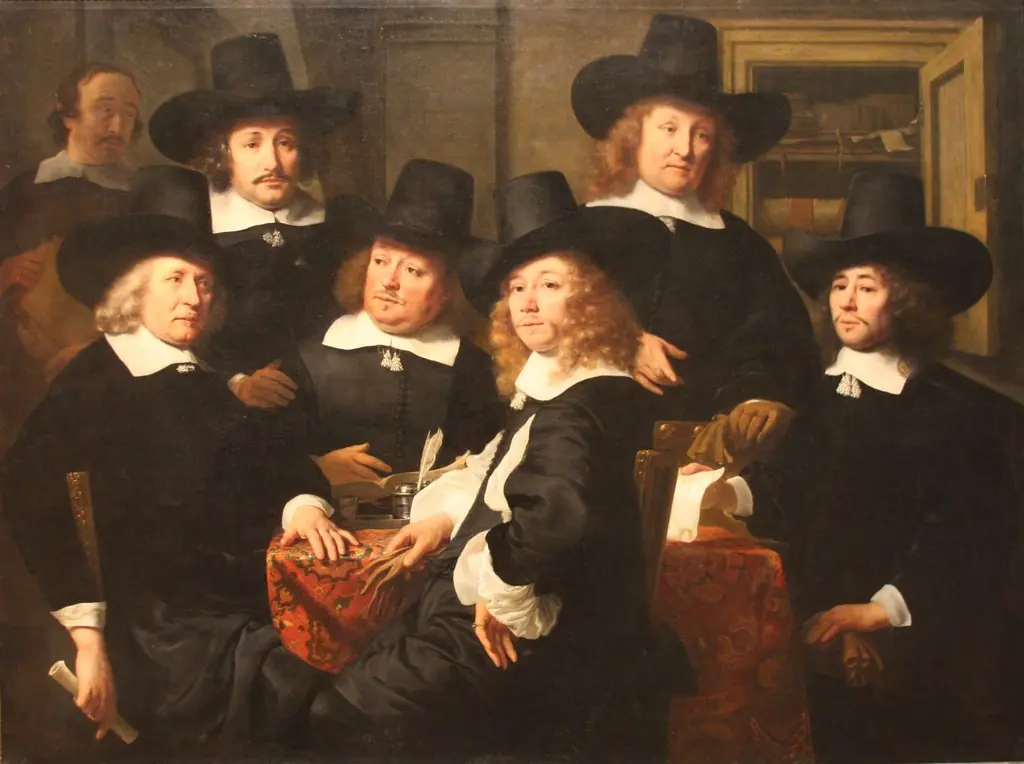
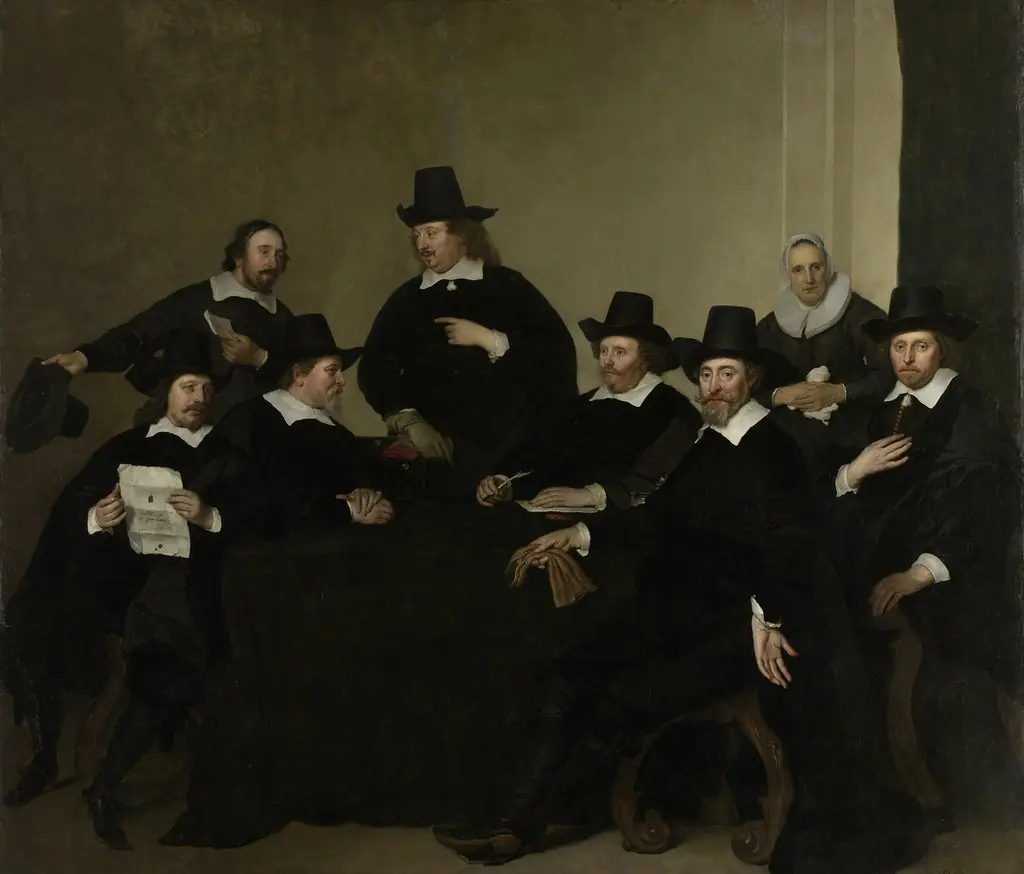 The regents of the Nieuwe Zijds institute for the outdoor relief of the poor, Amsterdam, ca 1650
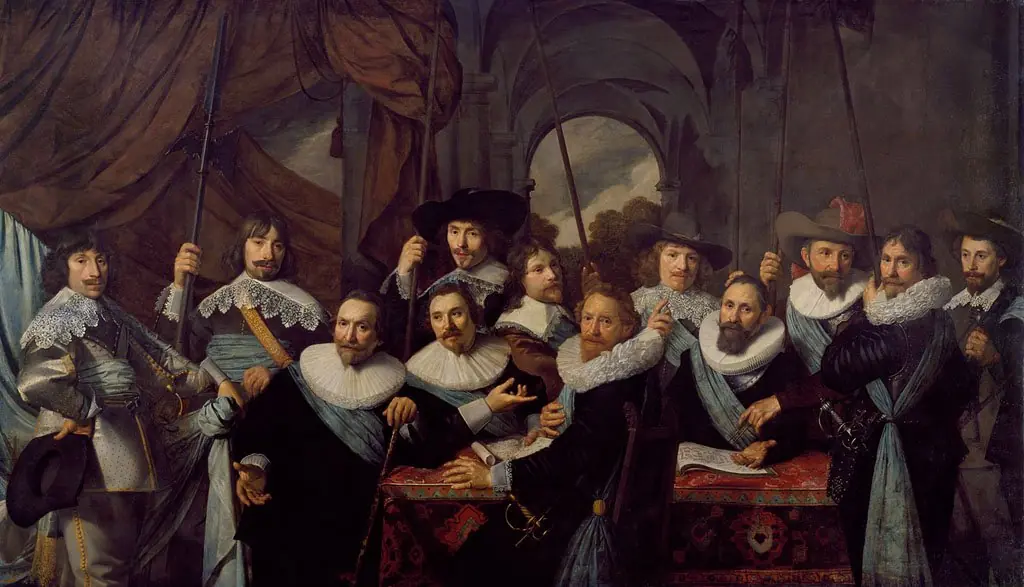 Members of the civic guard company of Captain Dirck Tholinx and Lieutenant Pieter Adriaenszn Raep