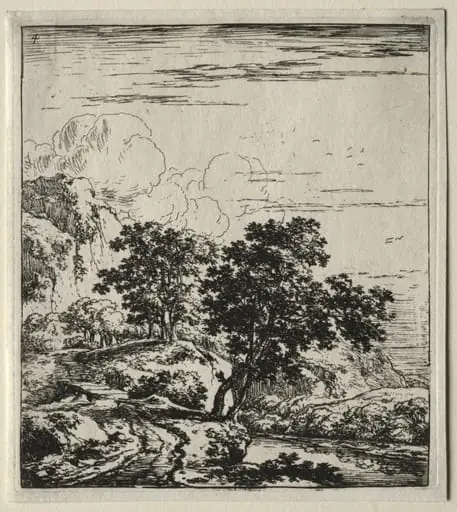
Artwork
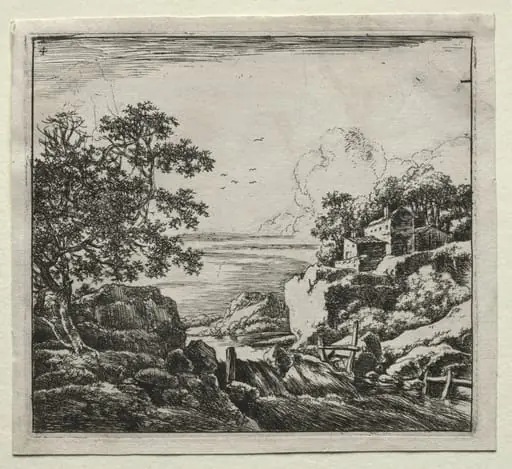
The Hut with the Rustic Fence
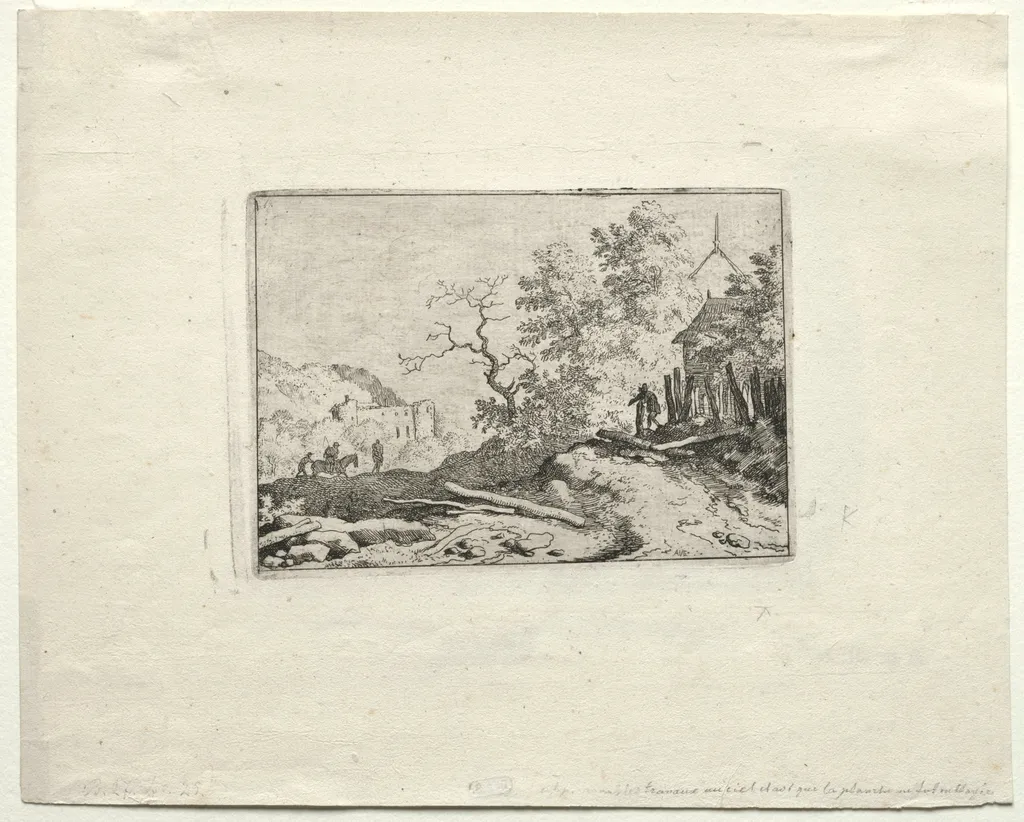
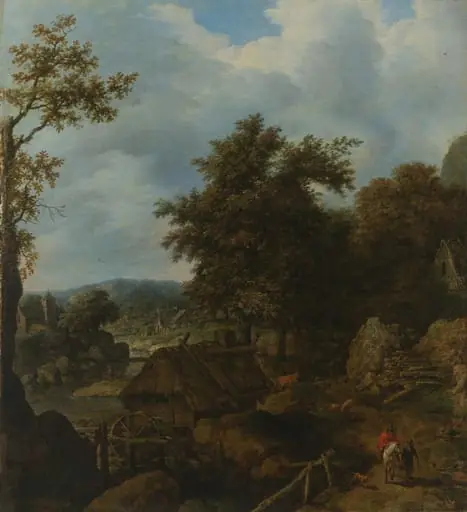
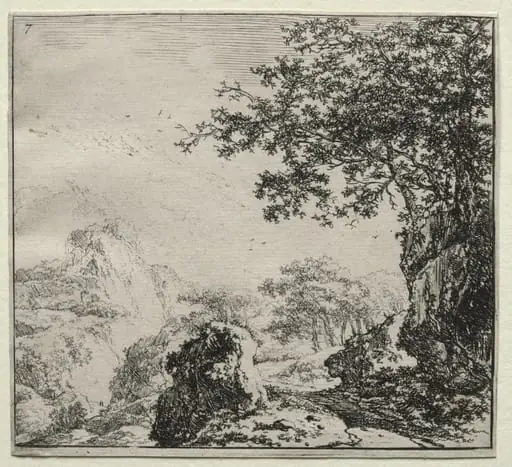
The Hut with the Rustic Fence is a print by the Baroque artist Allart van Everdingen. It dates from 1656 and is held in the collection of the Cleveland Museum of Art.
About this work
Overview
Executed in monochrome, the print reflects van Everdingen’s skill in capturing atmospheric depth through delicate line work.
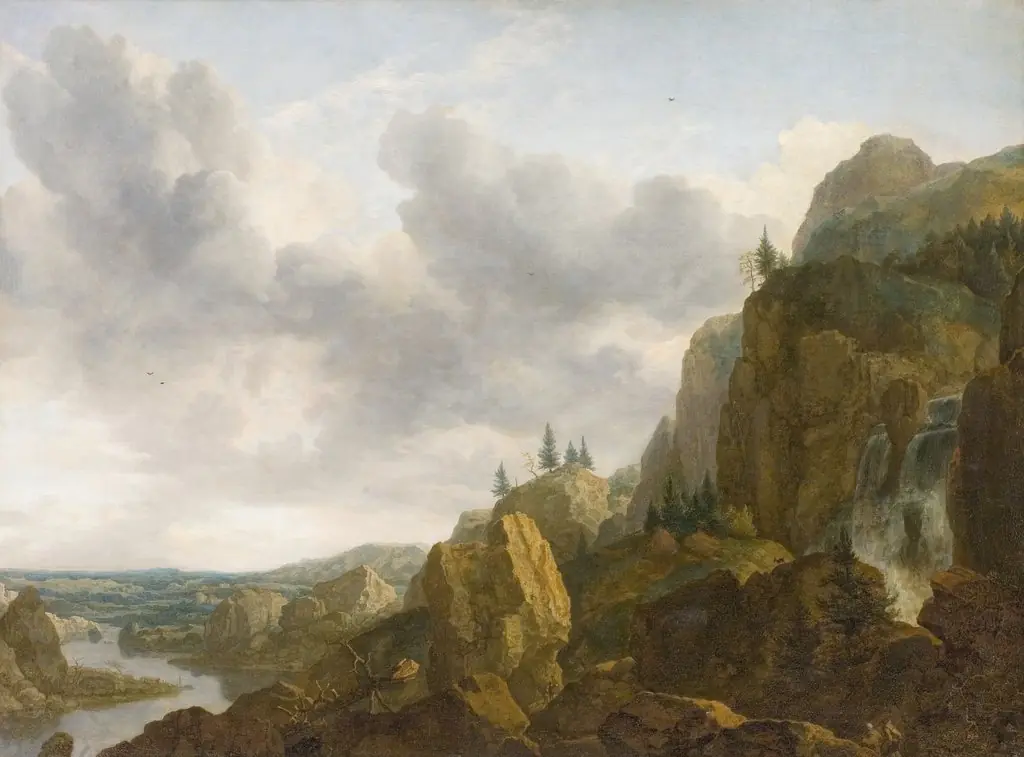
Created in 1656 by Dutch artist Allart van Everdingen, this etching depicts a tranquil rural scene in northern Europe. Executed in monochrome, the print reflects van Everdingen’s skill in capturing atmospheric depth through delicate line work. It is part of the collection at The Cleveland Museum of Art and exemplifies his interest in landscapes shaped by his travels to Scandinavia, a region that influenced many Dutch artists of the period.
Subject & Meaning
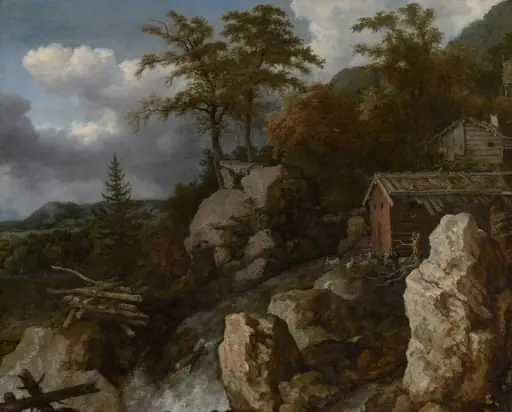
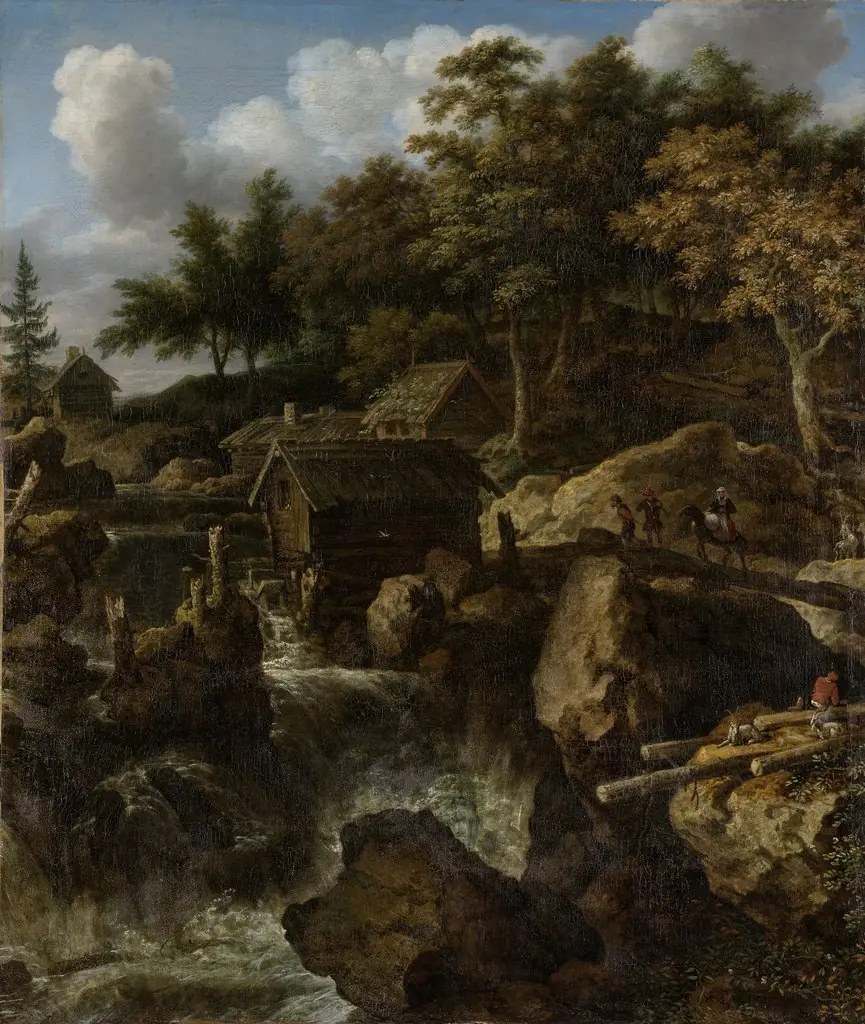
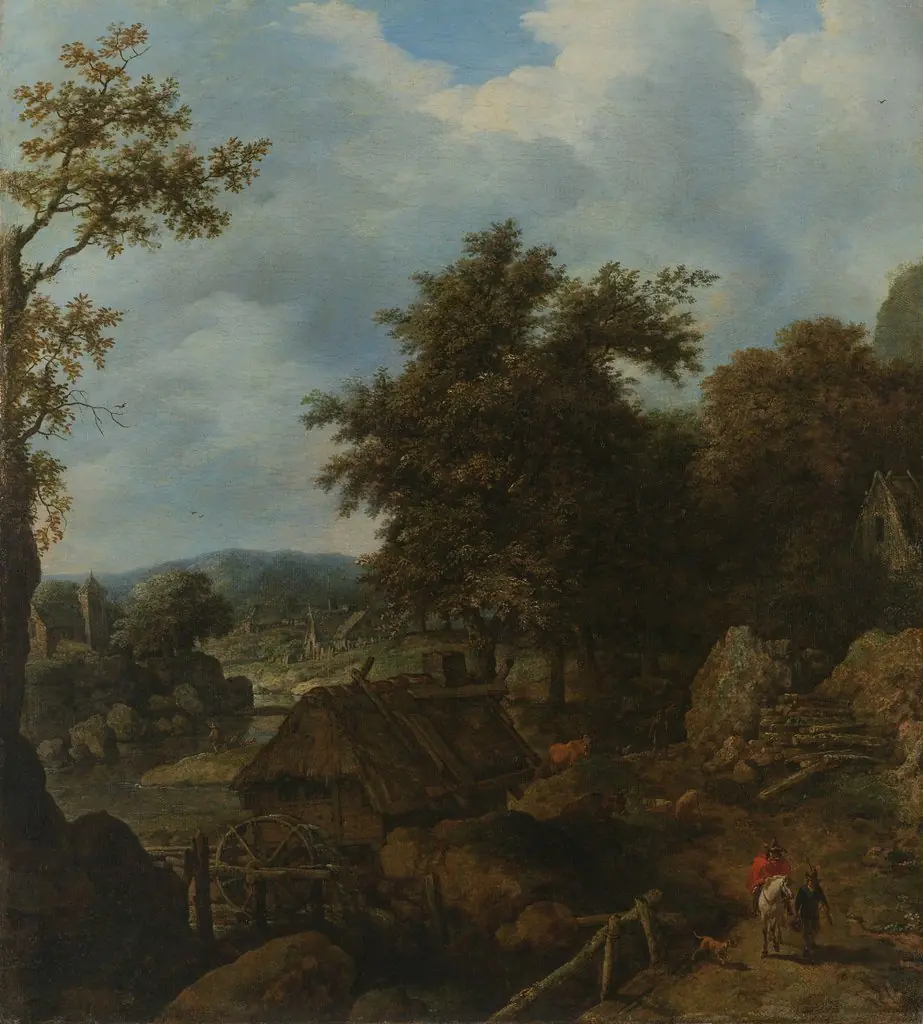
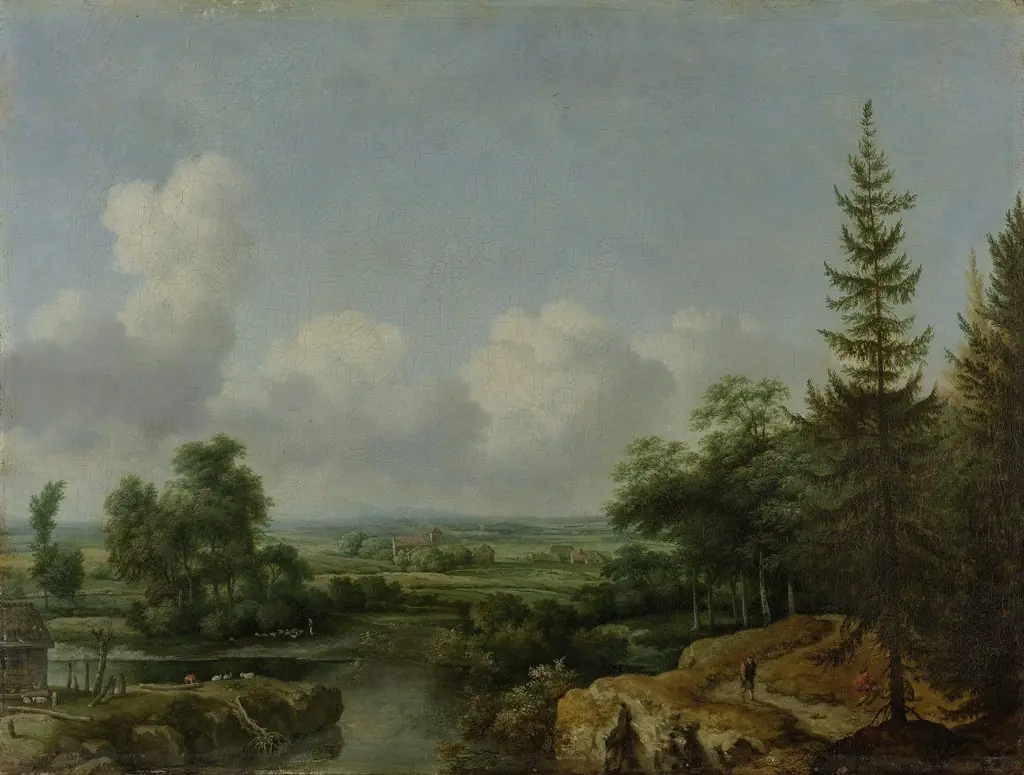
The scene centers on a modest thatched hut beside a weathered wooden fence, with a slender tree and a winding river in the foreground. Distant figures tread a dirt path, and a church spire rises above the trees, suggesting a quiet, inhabited countryside. The composition emphasizes solitude and harmony with nature, avoiding narrative drama in favor of stillness. The scale of the sky, dominating the upper third, reinforces a sense of calm and vastness.
Technique & Style
Van Everdingen employed fine, controlled etching lines to model form and suggest distance. The texture of the fence, the ripple of water, and the layered foliage are rendered with economical strokes that imply volume without heavy shading. The high horizon and reduced human scale align with Northern European landscape traditions, prioritizing mood over detail. The absence of color enhances the print’s meditative quality, focusing attention on structure and light.
History & Provenance
The print entered the collection of The Cleveland Museum of Art through documented acquisitions in the 20th century. While its immediate provenance before that is not fully recorded, it aligns with van Everdingen’s known output from the 1650s, a period when he produced numerous landscapes inspired by his journey to Norway and Sweden. These works circulated among collectors who valued foreign scenery as a reflection of broader European curiosity beyond the Netherlands.
Context
In mid-17th-century Dutch art, landscapes were not merely topographical but carried cultural weight, reflecting national identity and intellectual engagement with distant lands. Van Everdingen’s Scandinavian motifs responded to a market fascinated by exoticism, even as he retained the quiet realism characteristic of Dutch printmaking. His work bridged local tradition and international observation, offering viewers a glimpse of northern Europe through a domestic artistic lens.
Legacy
Van Everdingen’s prints, including this one, contributed to the evolution of landscape as an independent genre in Dutch art. His use of atmospheric perspective and restrained composition influenced later generations of printmakers who sought to convey emotion through natural settings. Though less celebrated than his contemporaries, his work remains a quiet testament to the value placed on stillness and observation in 17th-century Northern European visual culture.
Artist & collection
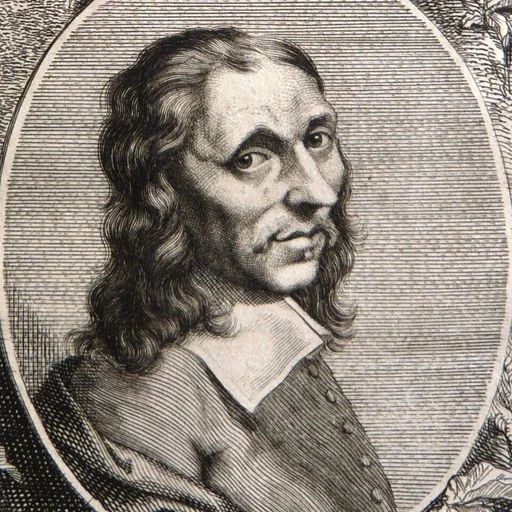
Artist
Allaert van Everdingen (Dutch pronunciation: ; bapt. 18 June 1621 – 8 November 1675 (buried)), was a Dutch Golden Age painter and printmaker in etching and mezzotint.