Artwork
Orlando and the Thieves
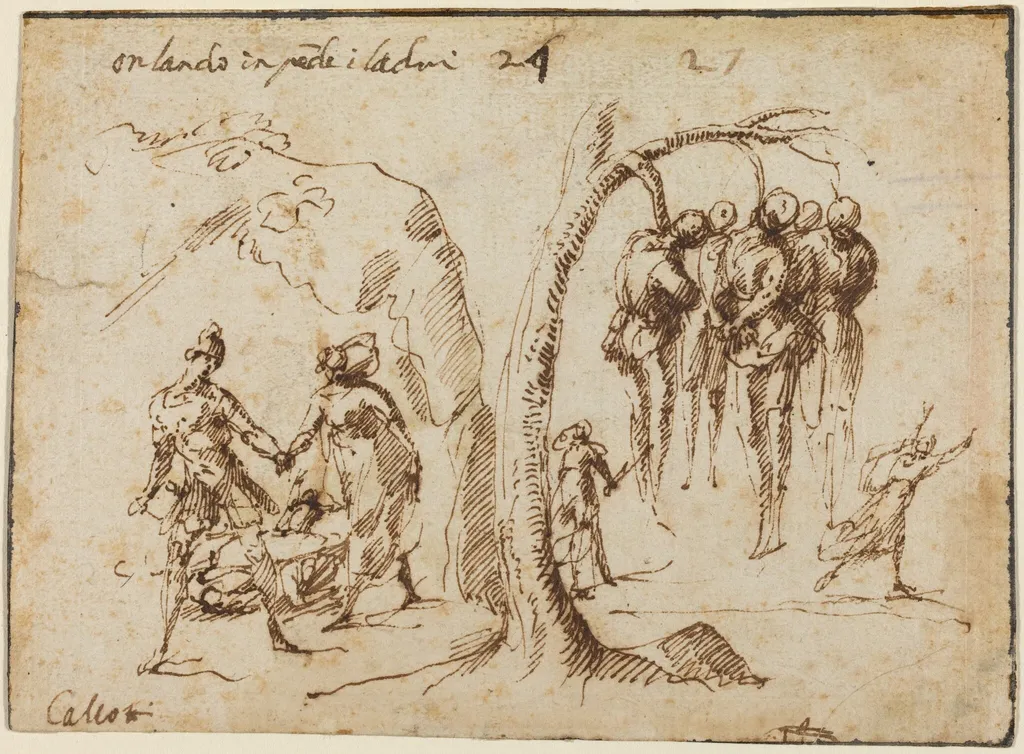
Orlando and the Thieves is an ink drawing by the Baroque artist Francesco Allegrini. It dates from 1647 and is held in the collection of the National Gallery of Art.
About this work
Overview
Created in 1647 by Francesco Allegrini, this ink drawing depicts a moment of turmoil drawn from literary or mythological narrative. Executed on laid paper with pen and brown ink, the work captures a fleeting, dynamic scene through rapid, expressive strokes. The composition lacks polished finish, suggesting it was made as a preparatory study or spontaneous observation rather than a finished piece.
Subject & Meaning
The scene illustrates a confrontation between figures entangled in dense, vine-like forms, evoking themes of capture, resistance, or divine retribution.
The scene illustrates a confrontation between figures entangled in dense, vine-like forms, evoking themes of capture, resistance, or divine retribution. Two figures on the left, clad in heavy garments and bound or clutching objects, appear subdued, while others on the right strain against the writhing vegetation. A solitary central figure, isolated and small, may symbolize helplessness or moral witness within the chaos.
Technique & Style
Allegrini employed swift, uneven pen strokes to convey motion and tension, with ink density varying from bold, saturated lines to faint, fading traces. The absence of shading through cross-hatching emphasizes line over volume, creating a sense of urgency. The sketchlike quality suggests the artist prioritized capturing gesture and emotional intensity over detailed rendering.
History & Provenance
The drawing is dated to 1647, placing it within Allegrini’s active period in Rome. While its early ownership is undocumented, it has remained in institutional collections since at least the 19th century. Its survival as a working sketch rather than a commissioned work offers insight into the artist’s private creative process during the Baroque era.
Context
Produced in mid-17th century Italy, the drawing reflects the period’s fascination with dramatic, narrative-driven compositions, often drawn from classical or literary sources. Allegrini, primarily known as a printmaker and illustrator, frequently translated literary scenes into visual form. This sketch aligns with contemporary practices of artists using quick studies to explore complex group dynamics before final execution.
Legacy
Though not widely exhibited, the drawing contributes to understanding Allegrini’s approach to narrative and movement. Its raw, unpolished character distinguishes it from more formal Baroque works, offering scholars a glimpse into the informal stages of artistic development. It remains a rare surviving example of a preparatory drawing that prioritizes emotional immediacy over finish.
Artist & collection


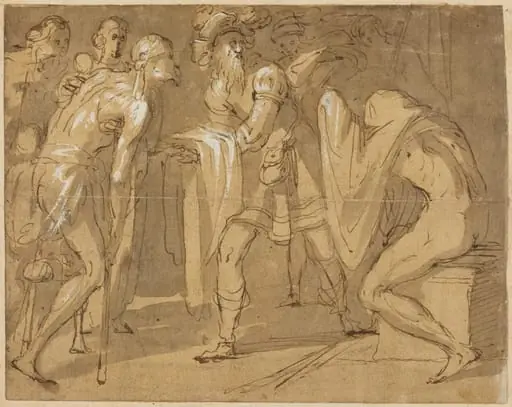 Saint Homobono
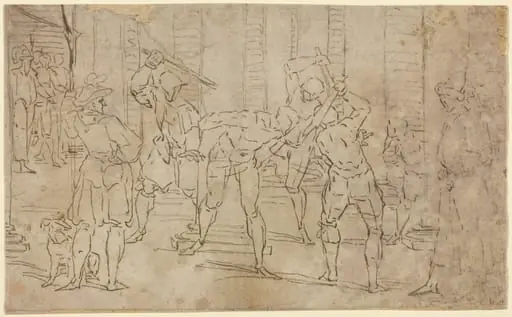 Flagellation of Christ
![Head of a Woman and Studies of a Male Nude [verso], by Francesco Fontebasso](https://artifactworldgallery.com/img/francesco-fontebasso--head-of-a-woman-and-studies-of-a-male-nude-verso--bba81b0c130c2863-w320.webp) Head of a Woman and Studies of a Male Nude [verso]
Head of a Woman and Studies of a Male Nude [verso]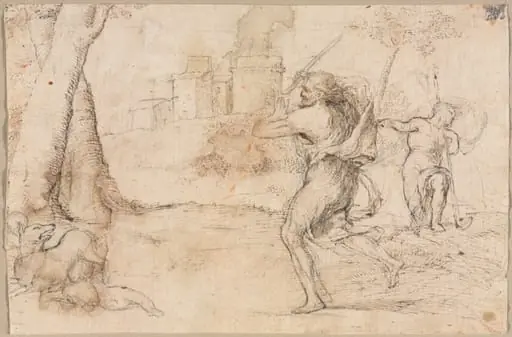 Romulus and Remus Found by Faustulus (recto)
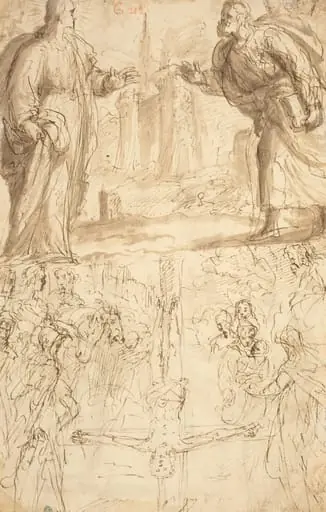 Crucifixion of Saint Peter
![Biblical Scene [verso], by Sebastiano Ricci](https://artifactworldgallery.com/img/sebastiano-ricci--biblical-scene-verso--d33f1e2abb3d29f7-w320.webp) Biblical Scene [verso]
Biblical Scene [verso]![The Adoration of the Magi [recto], by Donato Creti](https://artifactworldgallery.com/img/donato-creti--the-adoration-of-the-magi-recto--2cfd5d76b55e821e-w320.webp) The Adoration of the Magi [recto]
The Adoration of the Magi [recto]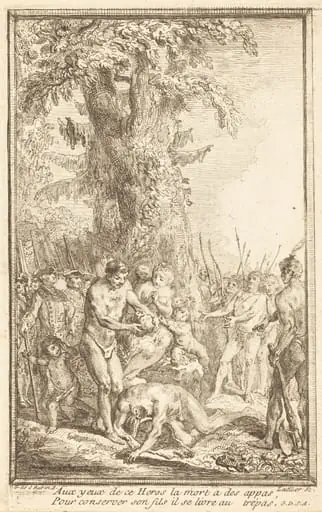 Heroic Act of a Father Who Sacrifices for His Son (Trait heroique d'un pere qui se sacrifie pour son fils)
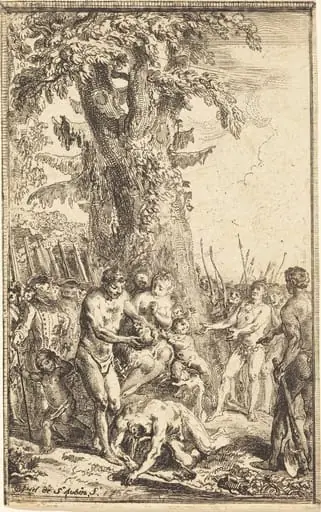 Heroic Act of a Father Who Sacrifices for His Son (Trait heroique d'un pere qui se sacrifie pour son fils)
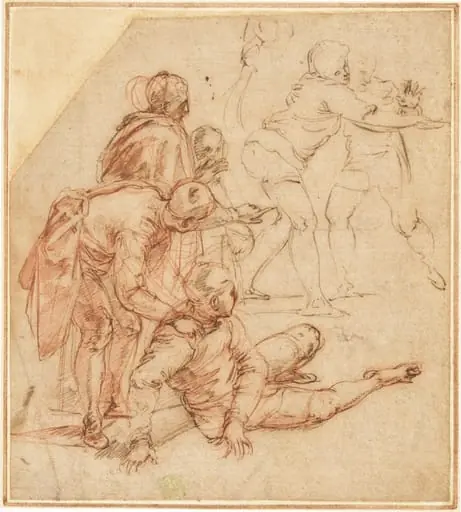 Spectators Amazed
![Figures Deciphering an Inscription, with Two Women Seated [Study for Oeuvres de Bossuet, IV], by Giovanni Battista Piazzetta](https://artifactworldgallery.com/img/giovanni-battista-piazzetta--figures-deciphering-an-inscription-with-two-women-seated-stu--24638de2183fad9c-w320.webp) Figures Deciphering an Inscription, with Two Women Seated [Study for Oeuvres de Bossuet, IV]
Figures Deciphering an Inscription, with Two Women Seated [Study for Oeuvres de Bossuet, IV]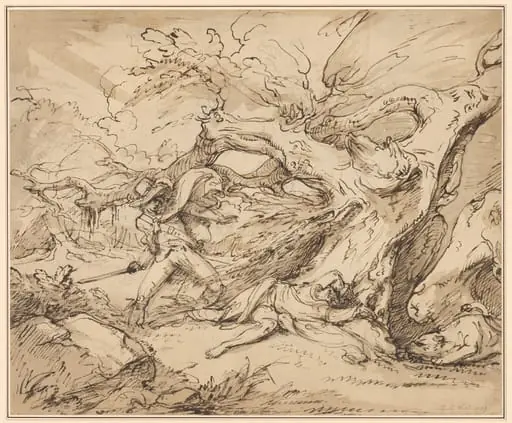 Orlando Rescuing Oliver from the Lion