Artwork
Untitled
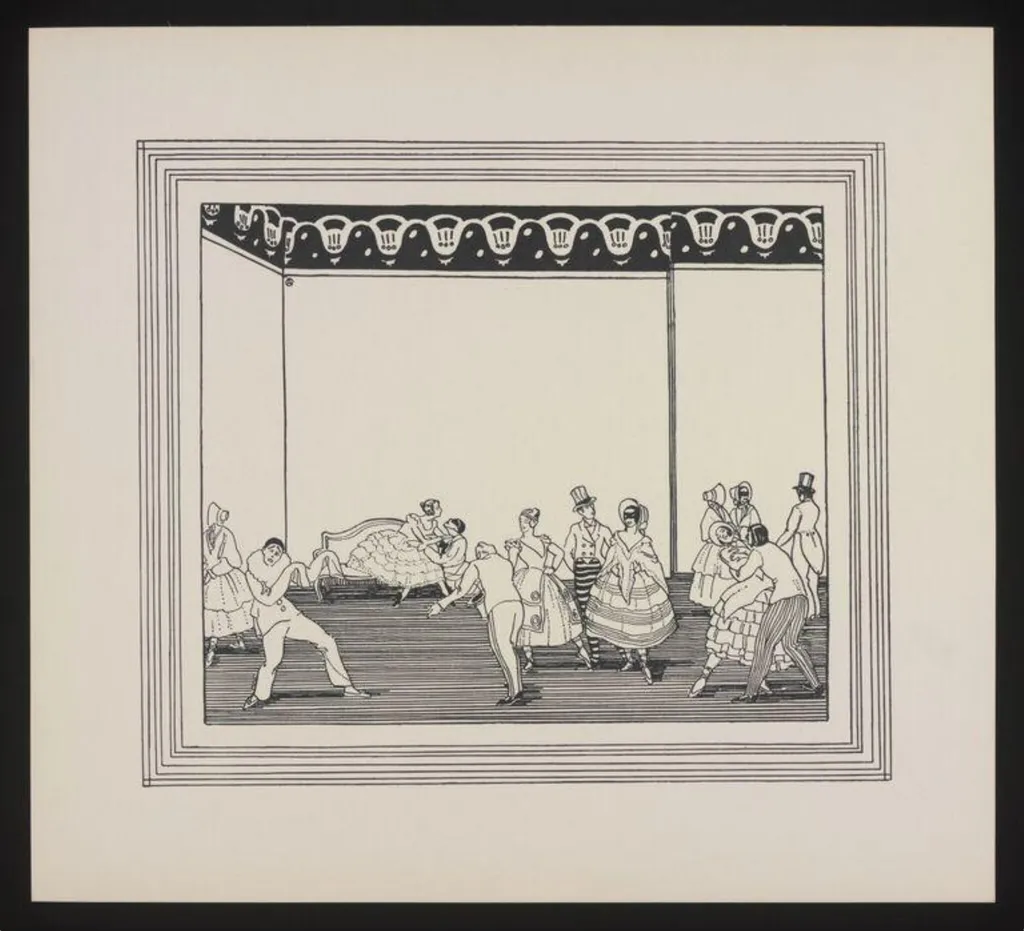
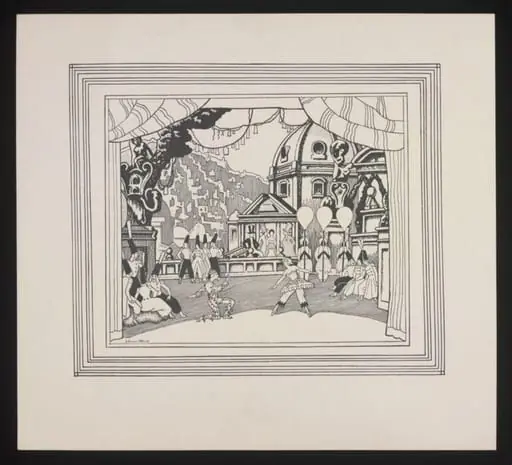
Untitled is a print by Adrian Allinson. It dates from 1924 and is held in the collection of the Victoria and Albert Museum.
About this work
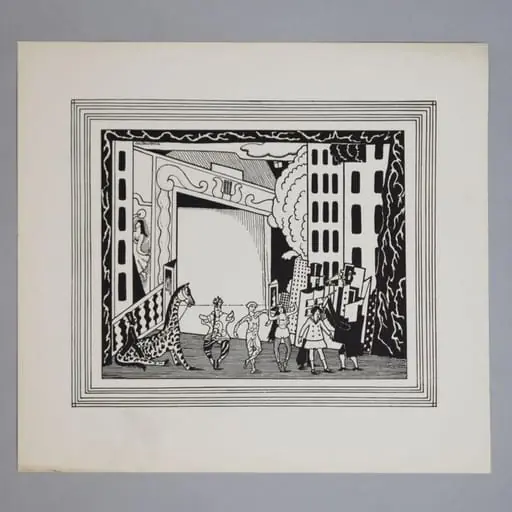
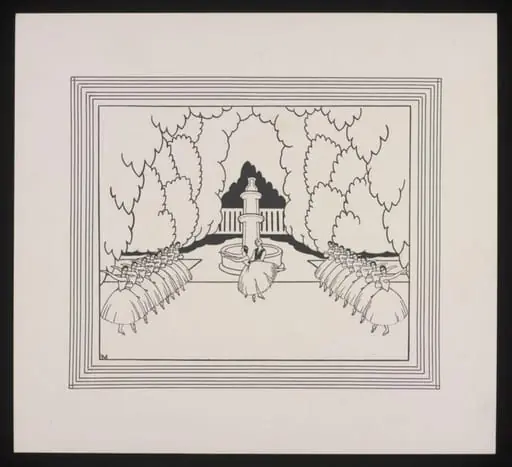
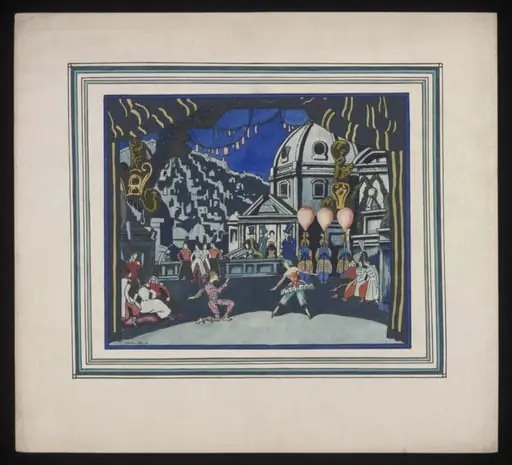
This print shows a quiet moment from a famous ballet. It’s based on a scene near the end of Le Carnaval, a ballet first staged in 1910.
The artist, Adrian Allinson, made this print in the late 1920s. The stage holds several characters watching two dancers downstage right.
Check out more prints by Adrian Allinson at the Victoria and Albert Museum.
Overview
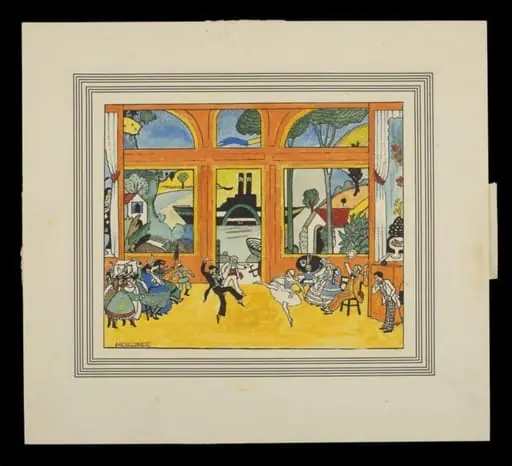
This print is one of twenty-two hand-colored lithographs produced in the late 1920s, depicting scenes from the Diaghilev Ballets Russes repertoire.
This print is one of twenty-two hand-colored lithographs produced in the late 1920s, depicting scenes from the Diaghilev Ballets Russes repertoire. Created by Adrian Allinson, it illustrates a moment from Le Carnaval, the 1910 ballet choreographed by Mikhail Fokine with music by Robert Schumann and designs by Leon Bakst. The work belongs to a series commissioned by Cecil Beaumont to document the visual essence of these performances, combining observational accuracy with artistic interpretation.
Subject & Meaning
The scene captures the quiet resolution of Le Carnaval’s romantic entanglements: Columbine rests on a sofa while Harlequin reclines at her feet, their intimacy contrasting with the stillness of onlookers. Pantalon, Papillon, and a grieving Pierrot observe from the periphery, while Eusebius and Chiarina dance softly in the foreground. The composition emphasizes emotional stillness amid theatrical drama, reflecting the ballet’s blend of comedy and melancholy.
Technique & Style
Executed as a hand-colored lithograph, the print uses delicate ink lines and subtle washes to suggest costume textures and spatial depth. Allinson’s style favors restrained tonality and precise figure placement, avoiding theatrical exaggeration. The uncolored state referenced in the catalog suggests the work was initially printed in monochrome before being individually tinted by hand, aligning with the series’ emphasis on artisanal reproduction.
History & Provenance
The print is part of a 1920s series commissioned by Cecil Beaumont, who previously produced the Impressions of the Russian Ballet booklets and wooden dancer cut-outs. Allinson, along with Ethelbert White, Randolf Schwabe, and Eileen Mayo, was selected for their prior involvement in these projects. The series aimed to preserve the visual language of Diaghilev’s productions, with each image meticulously researched to reflect specific staging details from the original performances.
Context
By the late 1920s, interest in the Ballets Russes had grown beyond its initial Parisian premiere, influencing British design and performance culture. Beaumont’s project responded to this fascination, positioning dance as a subject worthy of fine art documentation. The prints bridged ephemeral stage moments and permanent visual records, reflecting a broader interwar trend of preserving modernist performance through graphic art.
Legacy
The series remains a valuable resource for understanding the visual aesthetics of early 20th-century ballet. Allinson’s prints, held in institutions like the Victoria and Albert Museum, offer insight into how stage design and choreography were translated into print. Their restrained realism distinguishes them from more stylized contemporary illustrations, anchoring them in a tradition of documentary art rather than pure fantasy.
Artist & collection
Artist
Adrian Allinson spent his days in a London studio that smelled of turpentine and old books, sketching by day and printing posters by night.