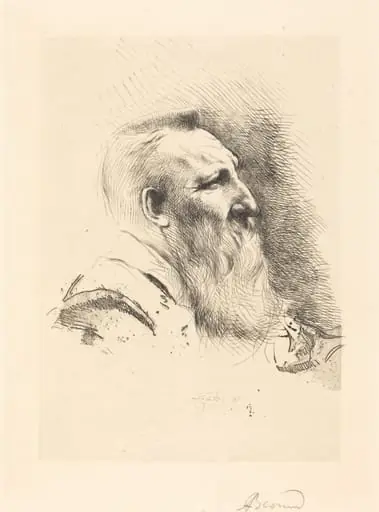
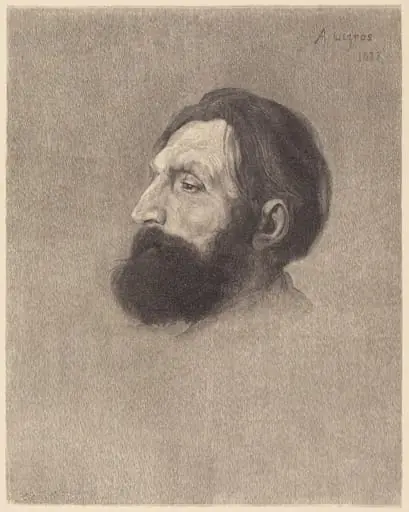
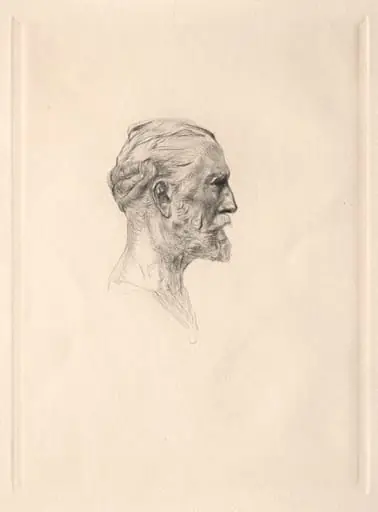
Artwork
Auguste Rodin
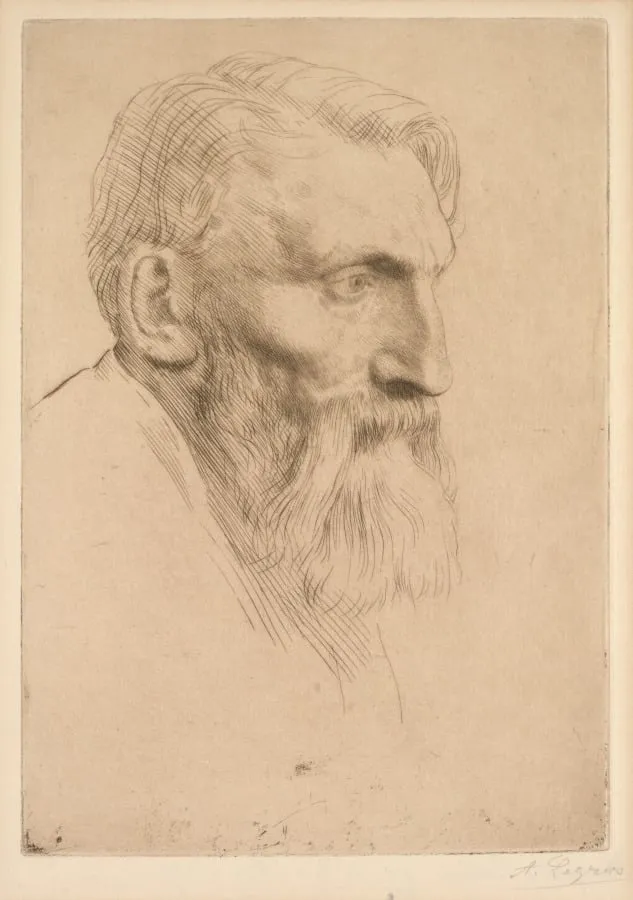
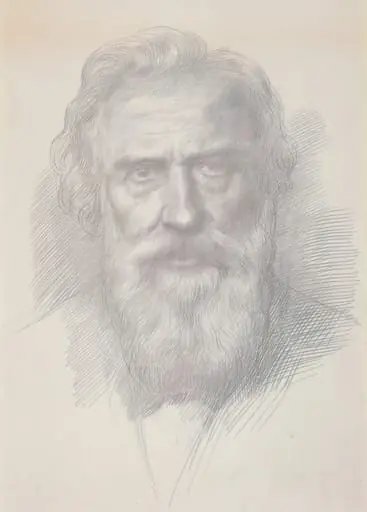
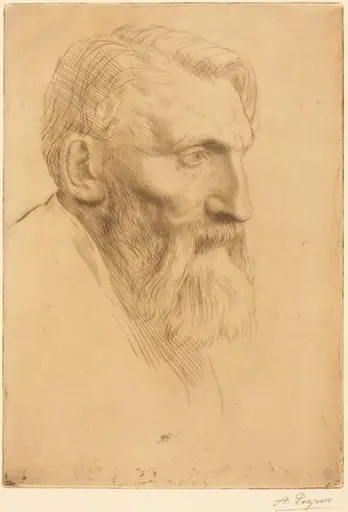
Auguste Rodin is a print by the Impressionist artist Alphonse Legros. It dates from 1881 and is held in the collection of the Cleveland Museum of Art.
About this work
This was made in 1881, when artists were exploring how light and shadow shape faces.
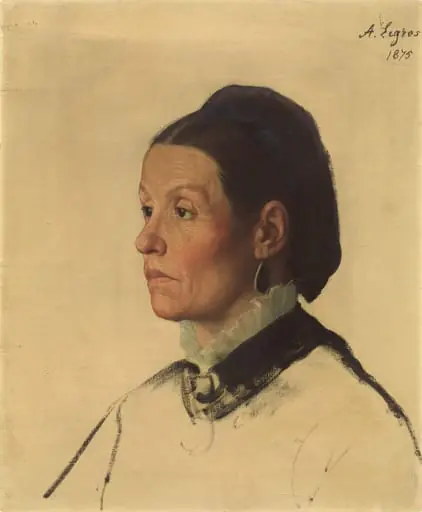
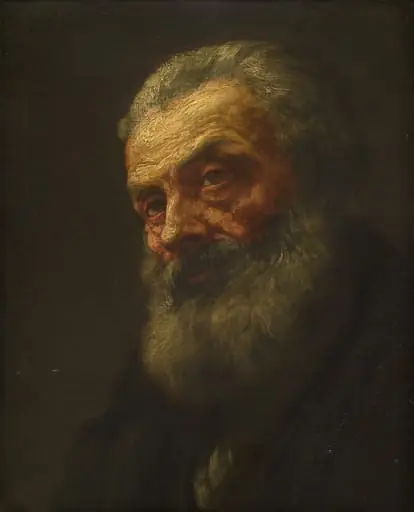
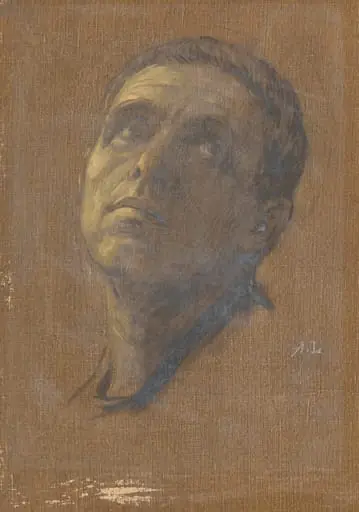
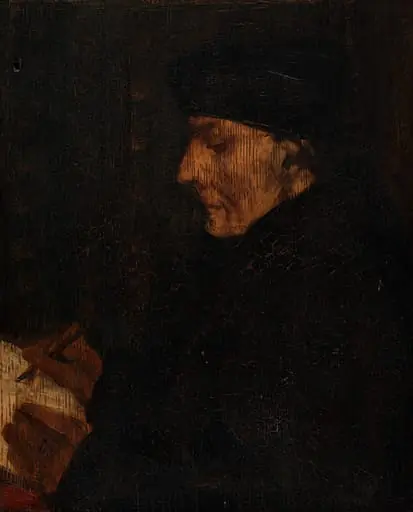
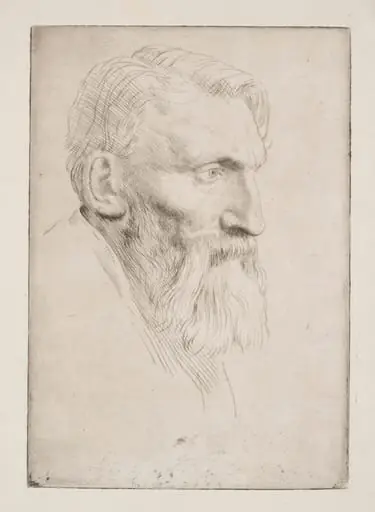
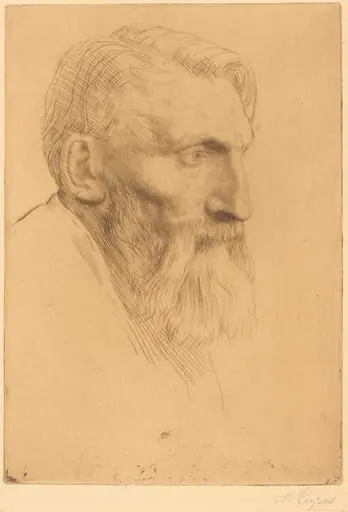
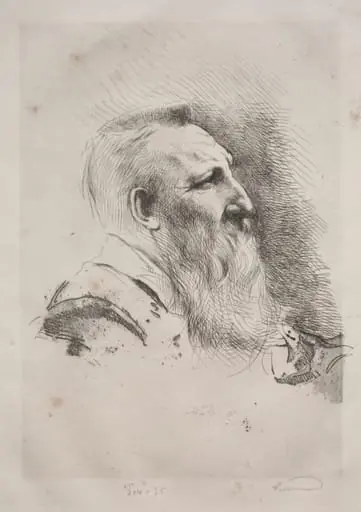
This sketch shows a man’s head turned slightly away, his face in profile. His thick beard and curly hair are drawn with quick, sketchy lines. The paper is light, and the marks are mostly dark, leaving some areas almost blank.
The artist focused on texture—notice how the beard looks almost three-dimensional. This was made in 1881, when artists were exploring how light and shadow shape faces.
If you like this style, check out chiaroscuro next.
Overview
Created in 1881 by Alphonse Legros, this ink drawing depicts the sculptor Auguste Rodin in profile. Executed on thin paper with minimal tonal variation, the work captures Rodin’s likeness through rapid, expressive strokes. The composition emphasizes texture over detail, focusing on the mass of his beard and curls rather than precise facial features. It resides in the collection of The Cleveland Museum of Art.
Subject & Meaning
The portrait portrays Auguste Rodin, then a rising figure in French sculpture, as a man of intense presence rather than formal dignity. His turned head and dense facial hair suggest introspection and physicality, aligning with Rodin’s reputation for embodying raw human emotion in his art. Legros avoids idealization, presenting him as a working artist—grounded, unpolished, and deeply tactile.
Technique & Style
Legros employed quick, directional ink lines to model form through contrast and texture rather than shading. The sparse use of ink leaves large areas of paper untouched, heightening the sense of volume through negative space. The beard and hair are rendered with layered, erratic strokes that mimic the irregularity of natural growth, creating a tactile, almost sculptural effect on paper.
History & Provenance
Made during Legros’s time in Paris, the drawing reflects his close association with Rodin and other artists of the period. It was likely produced as a study or personal tribute rather than a commissioned portrait. The work entered The Cleveland Museum of Art’s collection in the 20th century, where it remains as part of its holdings of 19th-century graphic art.
Context
In the 1880s, many artists moved away from polished academic portraiture toward more immediate, expressive modes. Legros’s drawing aligns with this shift, embracing sketchiness as a means of conveying character. The emphasis on light, shadow, and surface texture echoes broader interests in chiaroscuro and the physicality of form, particularly among those influenced by Realism and early Modernism.
Legacy
This drawing stands as a quiet testament to the personal and professional bonds between artists of late 19th-century France. Its unembellished approach influenced later generations seeking authenticity in portraiture. Though not widely exhibited, it remains a significant example of how graphic art could convey psychological depth without reliance on traditional finish.
Artist & collection

Artist
Alphonse Legros (French pronunciation: ; 8 May 1837 – 8 December 1911) was a French, later British, painter, etcher, sculptor, and medallist.