Artwork
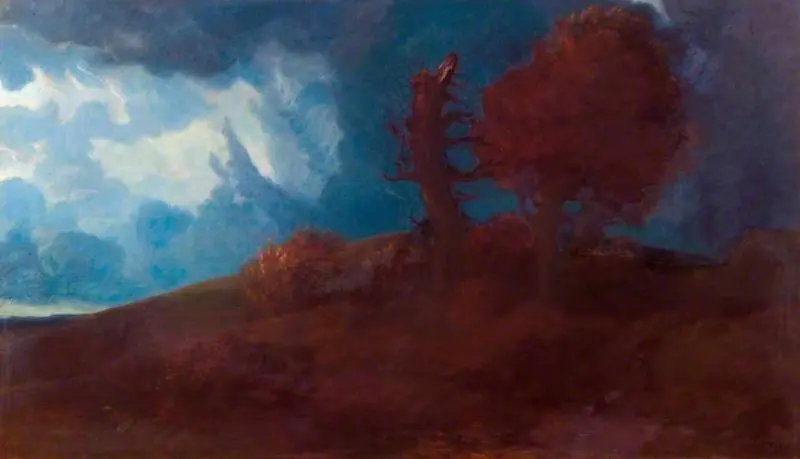
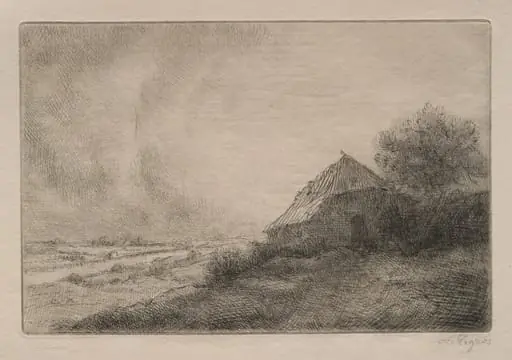
Chailli: End of a Storm (Effet d'orage)
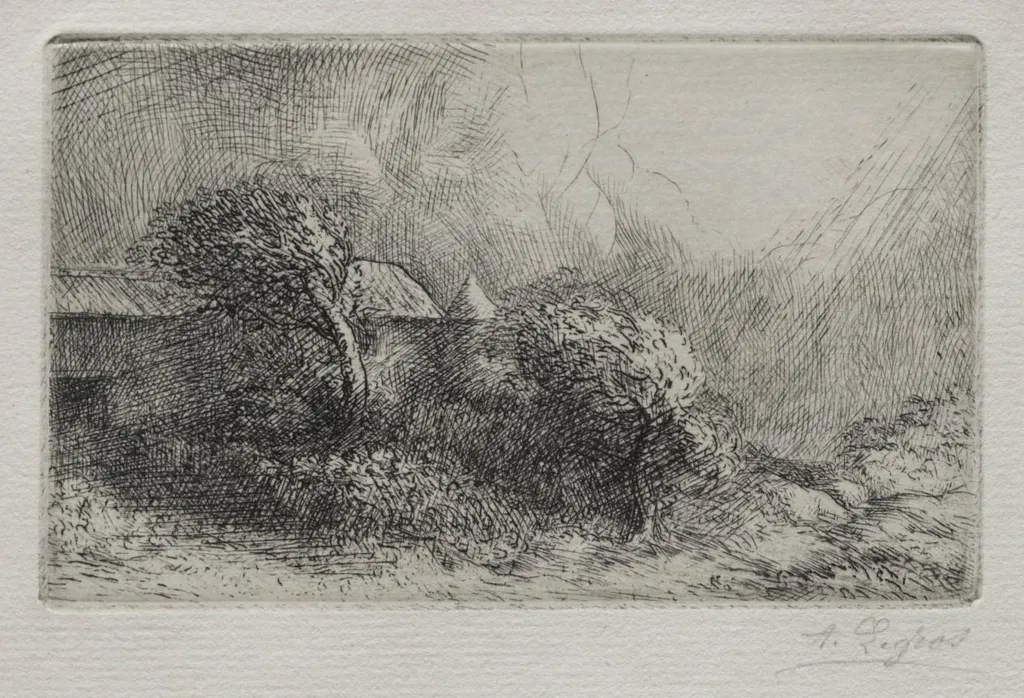
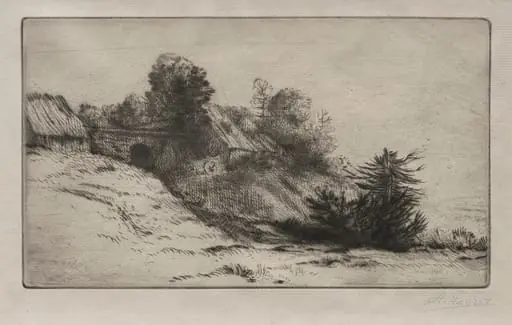
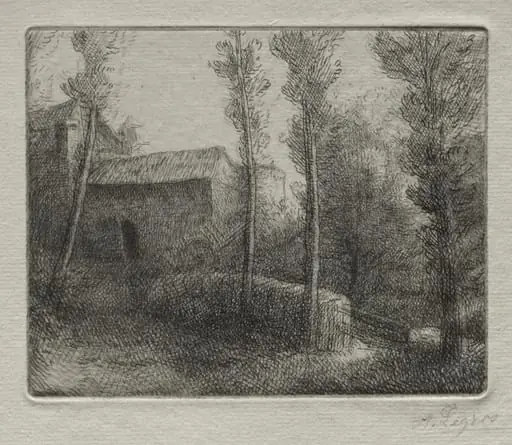
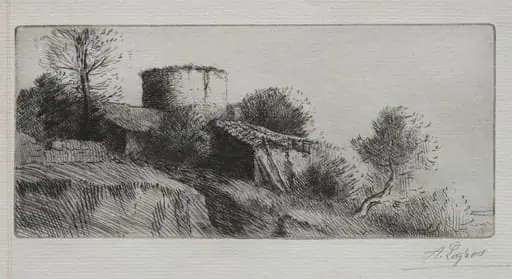
Chailli: End of a Storm (Effet d'orage) is a print by the Impressionist artist Alphonse Legros. It dates from 1884 and is held in the collection of the Cleveland Museum of Art.
About this work
Overview
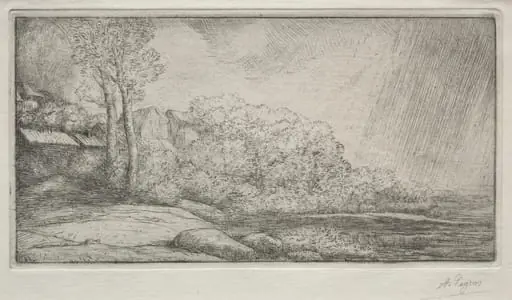
Created in 1884 by Alphonse Legros, Chailli: End of a Storm (Effet d'orage) is a print that captures a rural landscape moments after a storm.
Created in 1884 by Alphonse Legros, Chailli: End of a Storm (Effet d'orage) is a print that captures a rural landscape moments after a storm. The work is part of the collection at The Cleveland Museum of Art. Unlike traditional paintings, this piece relies on the tonal range and texture possible in printmaking to convey atmosphere and motion, reflecting Legros’s interest in natural phenomena and quiet, transient moments.
Subject & Meaning
The scene centers on a gnarled tree in the foreground, its limbs angled sharply leftward as if bent by recent winds. Behind it, undulating hills and a clearing sky suggest the storm’s passage. The composition evokes resilience and renewal rather than drama, emphasizing nature’s quiet recovery. The absence of human figures reinforces a sense of solitude and the indifference of the landscape to human presence.
Technique & Style
Legros employed drypoint and etching to achieve fine, incised lines and rich, velvety blacks. The tree’s bark and foliage are rendered with dense, cross-hatched strokes, while the sky uses softer, sweeping lines to suggest shifting clouds. Light emerges not through bright highlights but through the absence of ink, allowing the paper’s white to act as the sun’s glow. This restrained use of contrast aligns with his preference for subtle tonal gradations over dramatic chiaroscuro.
History & Provenance
The print was made in 1884 during Legros’s time in England, where he taught at Slade School of Art. It was likely produced in a small edition, typical of his printmaking practice. The Cleveland Museum of Art acquired the work in the 20th century as part of its growing collection of 19th-century European prints, valuing Legros’s quiet, observational approach amid the era’s more theatrical styles.
Context
In the 1880s, Legros stood apart from both academic tradition and emerging Impressionism. While contemporaries pursued color and light in oil, he turned to printmaking to explore mood through line and texture. His landscapes, often devoid of narrative, reflect a broader European interest in the sublime in everyday nature — influenced by Barbizon painters and Japanese woodcuts, yet uniquely restrained in expression.
Legacy
Legros’s prints, including Chailli: End of a Storm, influenced later generations of British and French printmakers who valued emotional restraint and technical precision. Though less celebrated than his contemporaries, his work contributed to the revival of etching as a serious artistic medium in the late 19th century, emphasizing contemplation over spectacle.
Artist & collection

Artist
Alphonse Legros (French pronunciation: ; 8 May 1837 – 8 December 1911) was a French, later British, painter, etcher, sculptor, and medallist.