Artwork
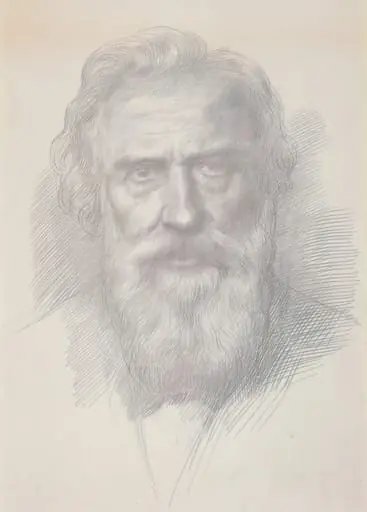
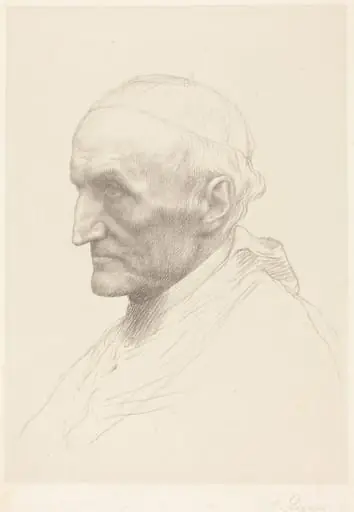
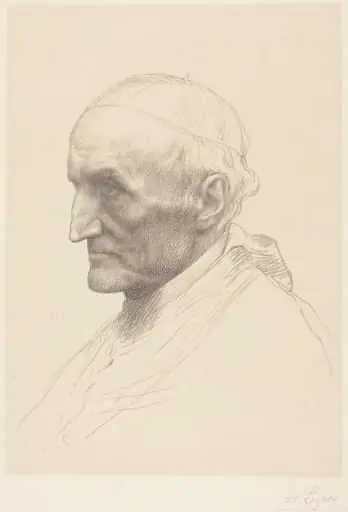
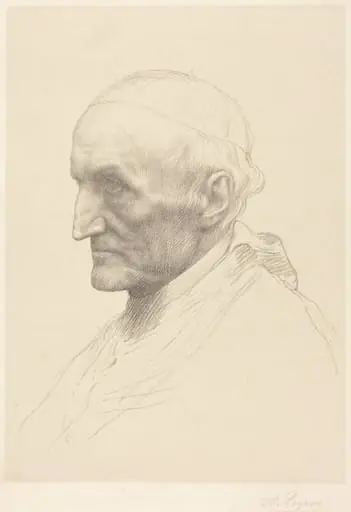
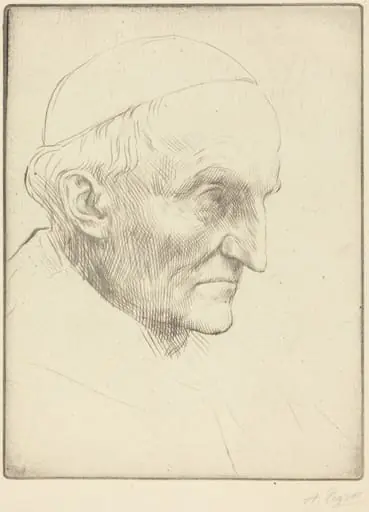
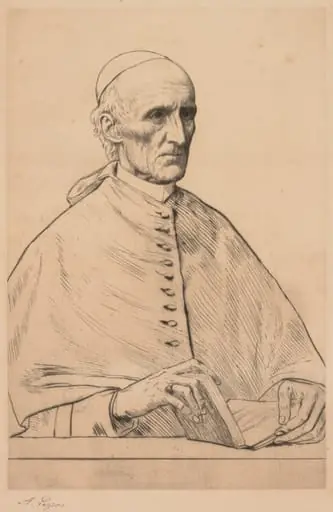
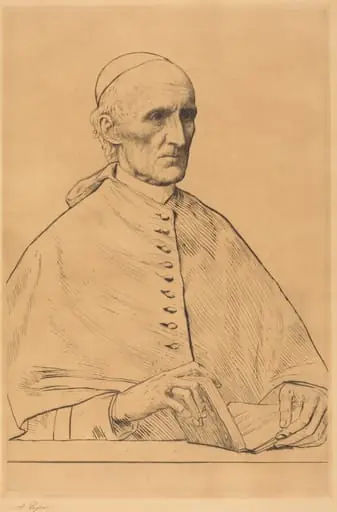
Portrait of Cardinal Manning (2nd Plate)
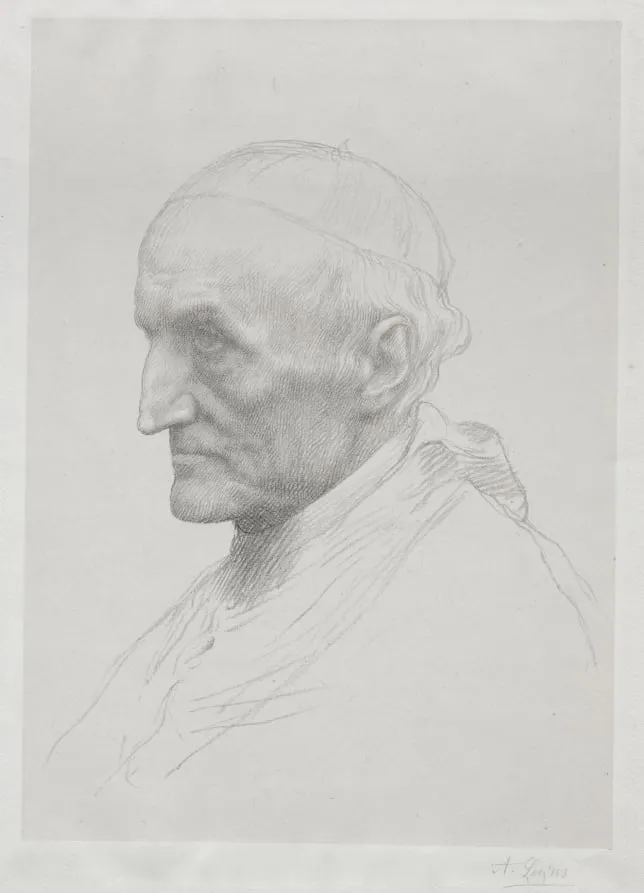
Portrait of Cardinal Manning (2nd Plate) is a print by the Impressionist artist Alphonse Legros. It dates from 1884 and is held in the collection of the Cleveland Museum of Art.
About this work
Overview
Created in 1884 by Alphonse Legros, this black-and-white print is the second version of a portrait of Cardinal Henry Edward Manning.
Created in 1884 by Alphonse Legros, this black-and-white print is the second version of a portrait of Cardinal Henry Edward Manning. Executed as a drawing, it was later reproduced as a print and is now part of The Cleveland Museum of Art’s collection. The work captures the cardinal in profile, emphasizing form through tonal contrast rather than color, reflecting Legros’s interest in traditional draftsmanship and the expressive potential of monochrome.
Subject & Meaning
The subject is Cardinal Henry Edward Manning, a prominent English Catholic leader known for his influence in Victorian religious and social circles. Rendered in profile, the portrait conveys dignity and introspection without overt symbolism. The focused rendering of his face and clerical attire—white collar and draped robe—highlights his ecclesiastical role while avoiding idealization, presenting him as a contemplative figure rather than a ceremonial one.
Technique & Style
Legros employed loose yet deliberate ink or charcoal lines to model the cardinal’s features, using deep shadows beneath the brow and chin to suggest volume. The absence of outlines and the soft gradation of tones reflect an awareness of sfumato, a Renaissance technique for blending edges. The result is a lifelike, atmospheric rendering that prioritizes light and mass over detail, aligning with 19th-century academic drawing practices that valued tonal harmony.
History & Provenance
This print is the second of two versions Legros made of Manning, likely produced after an initial study. It was acquired by The Cleveland Museum of Art in the 20th century, though its earlier ownership history remains undocumented. The existence of two plates suggests the artist refined his approach, possibly in response to feedback or evolving compositional goals, a common practice among printmakers of the period.
Context
In the 1880s, Legros was part of a movement in Britain and France that revived interest in direct, hand-drawn portraiture amid the rise of photography. His work stood apart from photographic realism by emphasizing the artist’s interpretive hand. Portraits of religious figures like Manning were rare in fine art prints, making this work a quiet but significant example of how ecclesiastical authority was visually represented outside official iconography.
Legacy
Legros’s portrait of Manning exemplifies the enduring value of tonal drawing in an age of mechanical reproduction. Though not widely exhibited, the print remains a reference for studies in 19th-century printmaking and the transition from academic tradition to modernist simplicity. Its restrained aesthetic continues to inform discussions on how portraiture can convey presence without embellishment.
Artist & collection

Artist
Alphonse Legros (French pronunciation: ; 8 May 1837 – 8 December 1911) was a French, later British, painter, etcher, sculptor, and medallist.