Artwork
Self-Portrait (Third Plate)
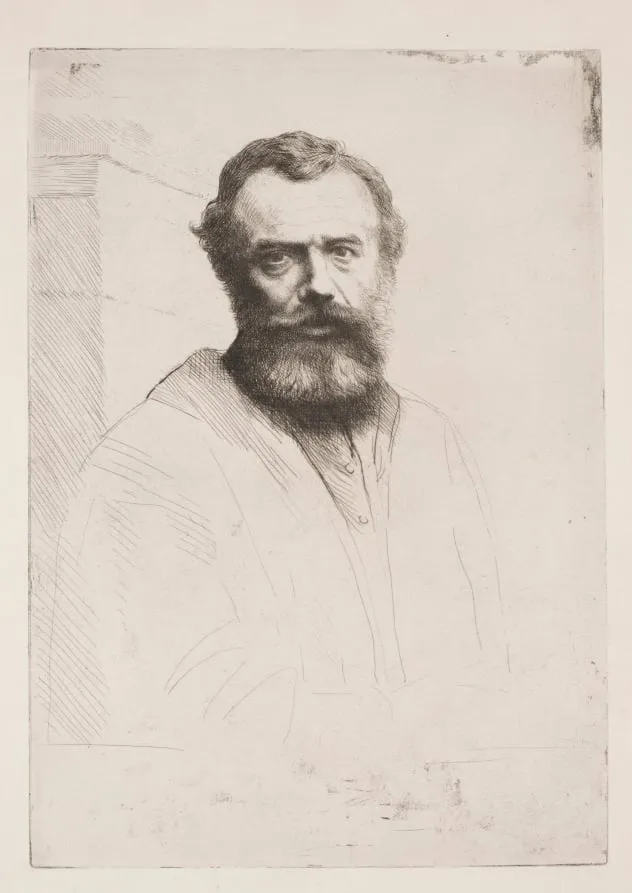
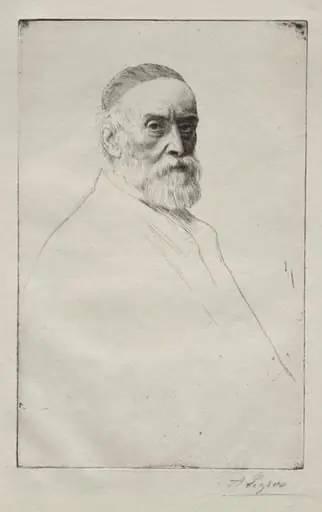
Self-Portrait (Third Plate) is a print by the Impressionist artist Alphonse Legros. It dates from 1880 and is held in the collection of the Cleveland Museum of Art.
About this work
Overview
Executed in a tonal medium, the work presents the artist in a direct, unadorned pose, emphasizing introspection over theatricality.
Created in 1880, this print by Alphonse Legros is one of three self-portraits he produced that year. It is held in the collection of The Cleveland Museum of Art. Executed in a tonal medium, the work presents the artist in a direct, unadorned pose, emphasizing introspection over theatricality. The composition is restrained, focusing attention on the face and upper torso against a neutral background.
Subject & Meaning
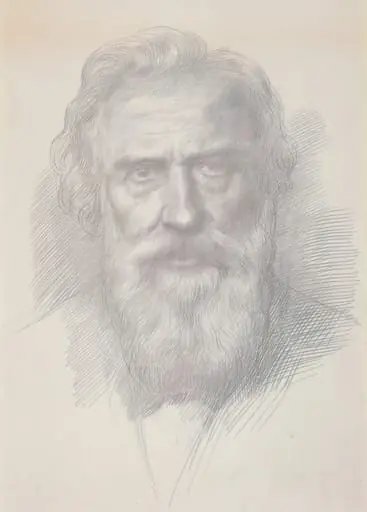
Legros depicts himself with a full, neatly trimmed beard and mustache, dressed in a high-collared shirt that suggests modesty and formality. His gaze is steady, directed beyond the viewer, evoking a sense of inward reflection rather than engagement. The absence of symbolic objects or elaborate setting reinforces a focus on personal presence, suggesting an artist’s quiet self-assessment rather than public persona.
Technique & Style
The print employs subtle gradations of tone to model the face and beard, demonstrating Legros’s command of chiaroscuro. Soft transitions between light and shadow define the contours of his features without harsh lines. The background remains uniformly pale, isolating the figure and enhancing the psychological weight of the portrait. The medium favors nuance over detail, aligning with the somber mood.
History & Provenance
This print was made during Legros’s time in England, where he taught at the Slade School of Art. It belongs to a small series of self-portraits he produced around 1880, likely for personal or pedagogical use. The Cleveland Museum of Art acquired it as part of its broader collection of 19th-century European prints, reflecting interest in artists who bridged French and British traditions.
Context
In the late 19th century, artists increasingly turned to self-portraiture as a means of exploring identity beyond idealized representation. Legros’s approach diverged from flamboyant Romantic types, favoring restraint and psychological depth. His prints, often made in drypoint or etching, aligned with a broader European trend toward intimate, tonal portraiture that valued mood over spectacle.
Legacy
Legros’s self-portraits, including this one, influenced students at the Slade School and contributed to the revival of printmaking as a serious medium for personal expression. His emphasis on tonal modeling and psychological presence helped shape a generation of British artists who sought authenticity over ornamentation in portraiture.
Artist & collection

Artist
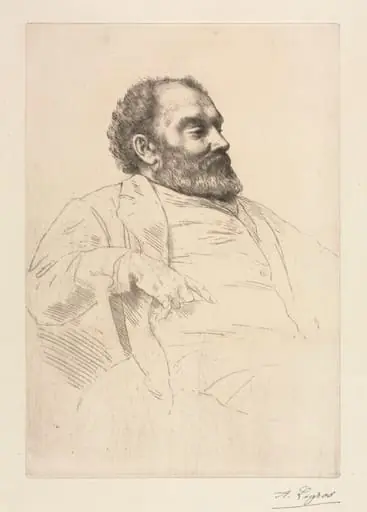
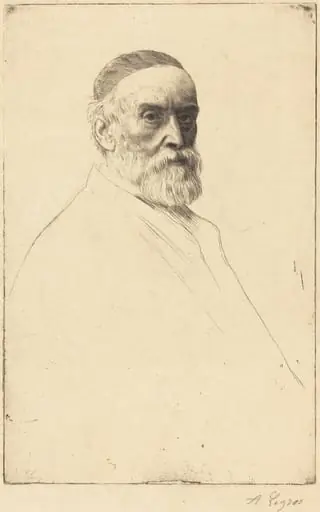
Alphonse Legros (French pronunciation: ; 8 May 1837 – 8 December 1911) was a French, later British, painter, etcher, sculptor, and medallist.

![Self-Portrait [recto], by William E. Winner](https://artifactworldgallery.com/img/william-e-winner--self-portrait-recto--33f2127f07962012-w320.webp)