Artwork
Christ Nailed to the Cross
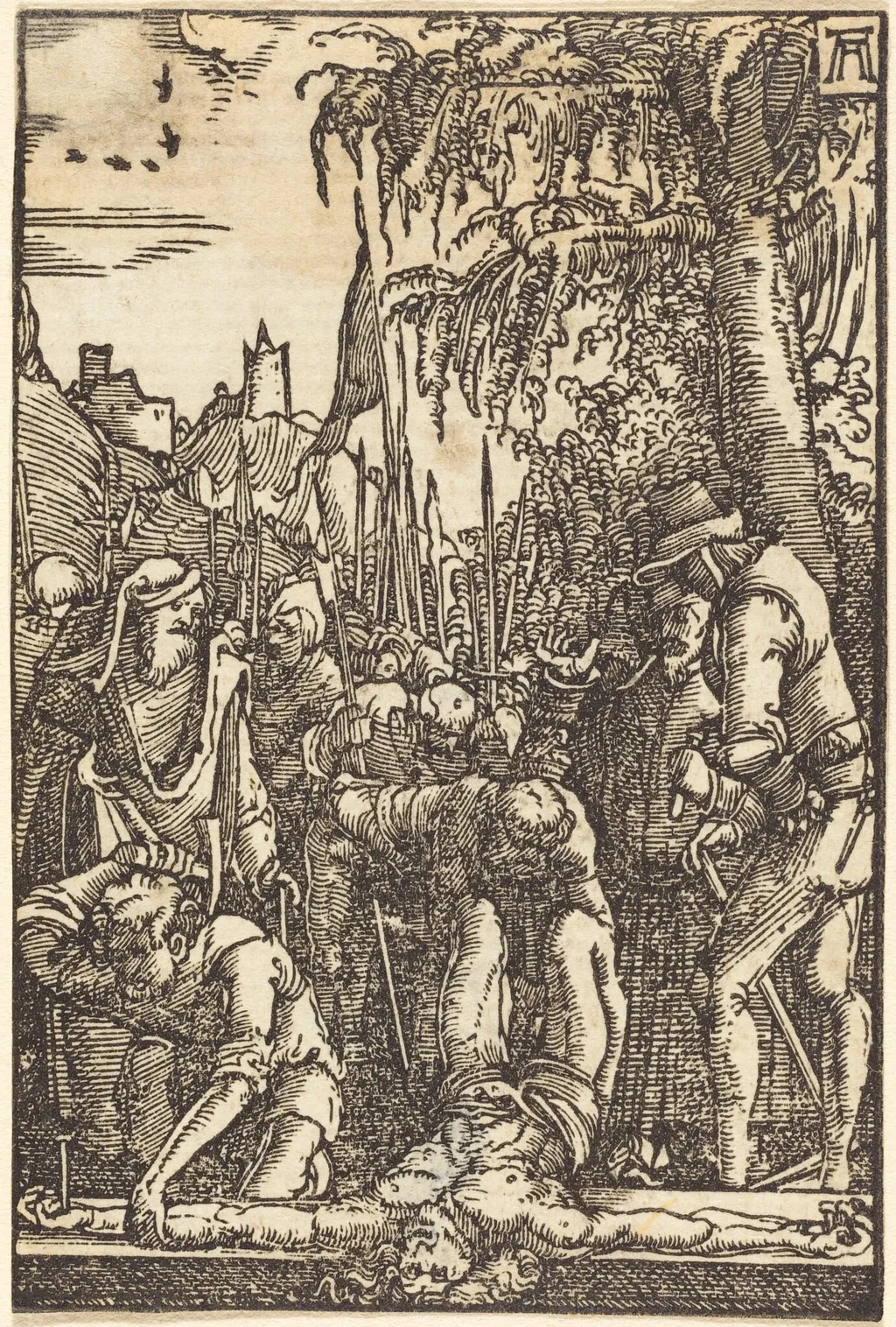
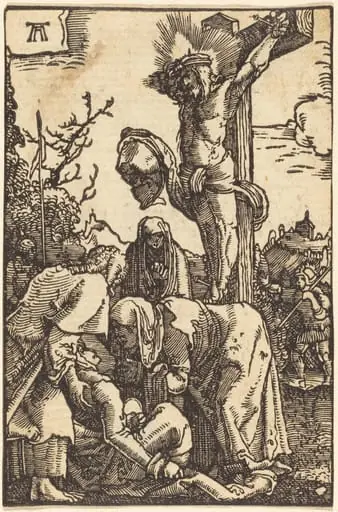
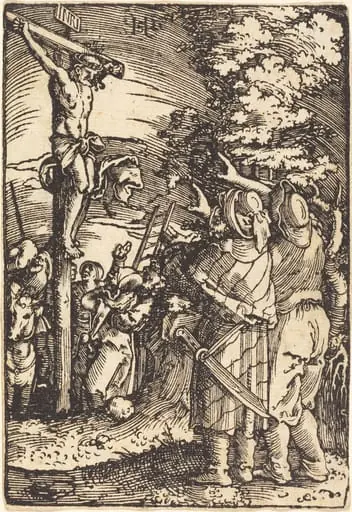
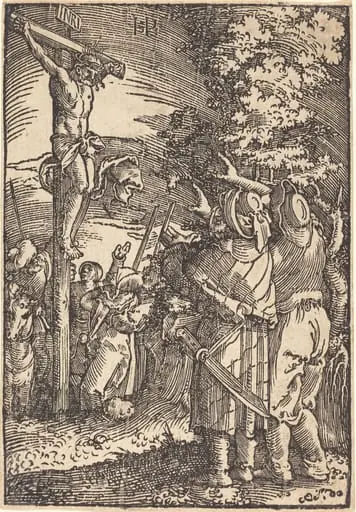
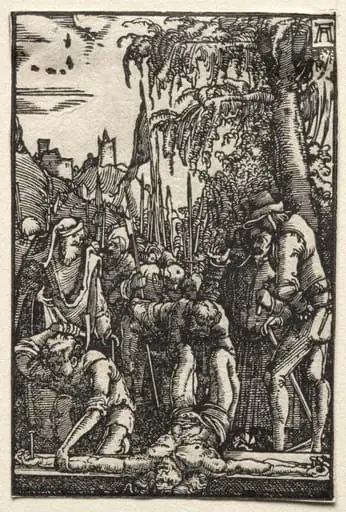
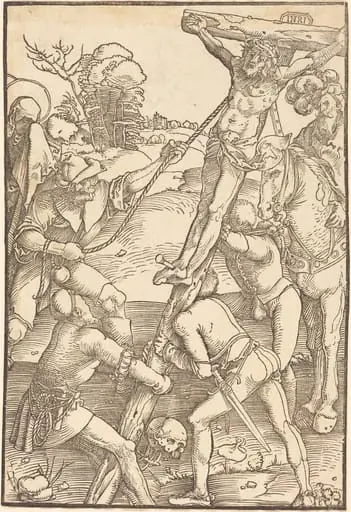
Christ Nailed to the Cross is an ink print by the Renaissance artist Albrecht Altdorfer. It dates from 1513 and is held in the collection of the National Gallery of Art.
About this work
Overview
Christ Nailed to the Cross is a woodcut on laid paper created by Albrecht Altdorfer around 1513. The work exemplifies the Danube School's characteristic blend of religious themes with expressive landscapes.
Subject & Meaning
The woodcut depicts a somber moment from the Crucifixion, with Christ being nailed to the cross amidst a group of men in the foreground, set against a dense, detailed forest backdrop. The scene conveys intense emotion through its dramatic rendering.
Technique & Style
Altdorfer's detailed and expressive style is evident in the intricate lines, textures, and use of dark shadows and highlights, which collectively create a sense of depth and dramatic effect, aligning with Renaissance aesthetics.
History & Provenance
Created circa 1513 by Albrecht Altdorfer, a prominent figure of the Danube School and the Nuremberg Little Masters, known for pioneering landscape as an independent subject and intricate woodcuts and engravings.
Context
This work reflects Altdorfer's dual influence: the Danube School's emphasis on landscapes in religious scenes and the meticulous craftsmanship of the Nuremberg Little Masters, situating it within the broader German Renaissance.
Legacy
Christ Nailed to the Cross stands as a representative example of Altdorfer's contribution to the Renaissance, particularly in woodcut techniques and the emotional depth achieved in religious subjects.
Artist & collection
Artist
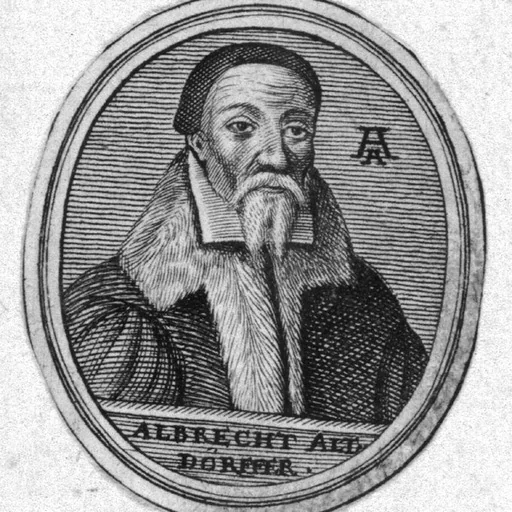
Albrecht Altdorfer (c. 1480 – 12 February 1538) was a German painter, engraver and architect of the Renaissance working in Regensburg. Along with Lucas Cranach the Elder and Wolf Huber he is regarded to be the main…