Artwork
The Death of the Virgin
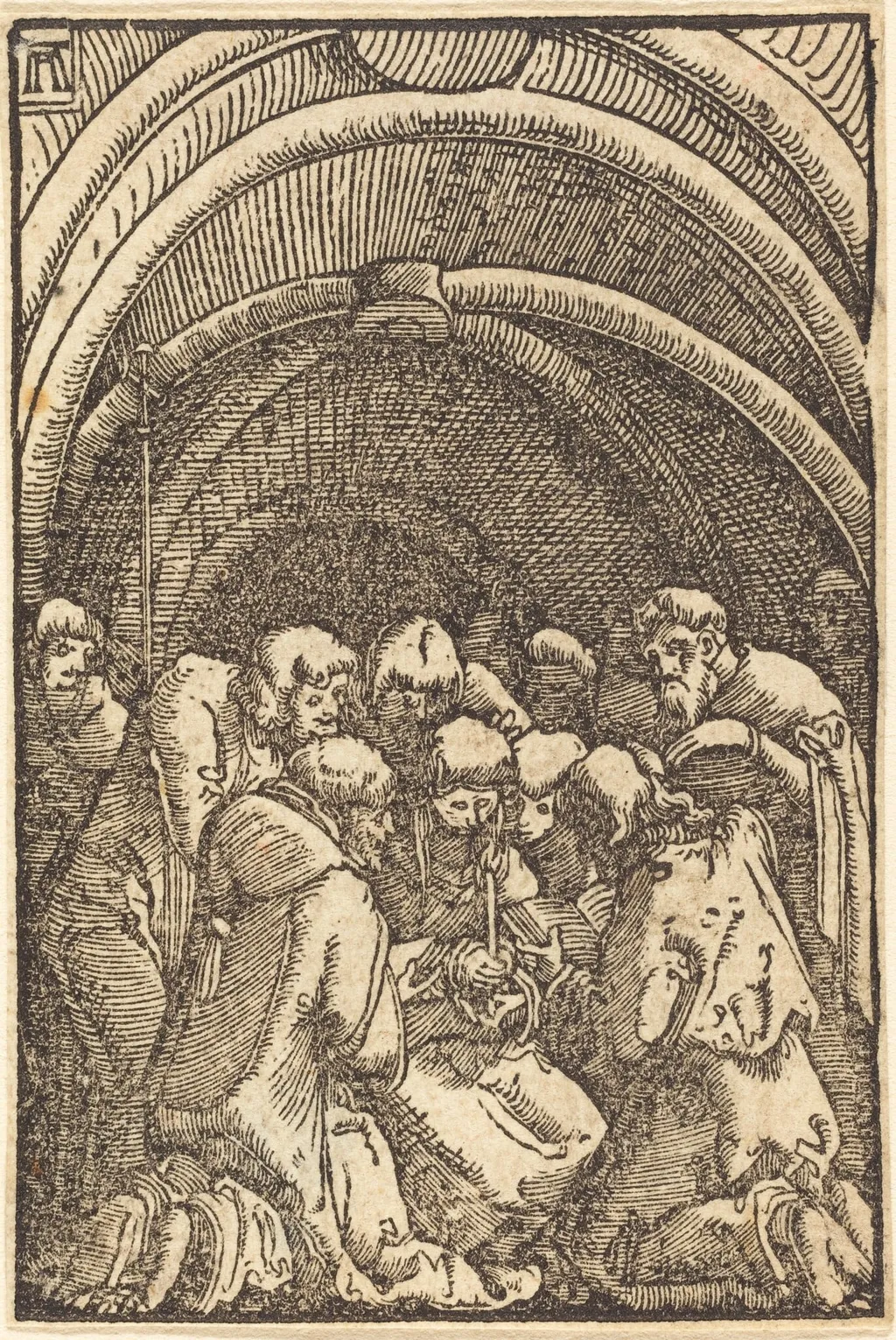
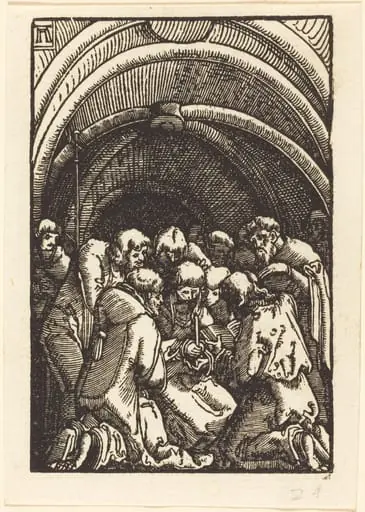
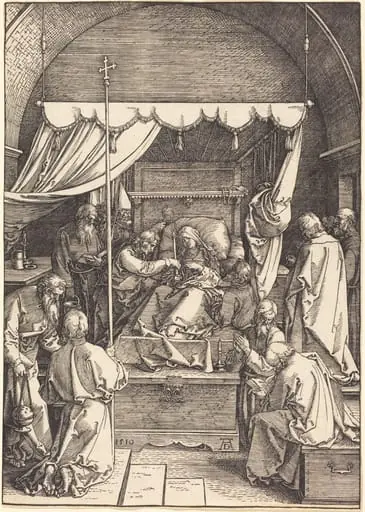
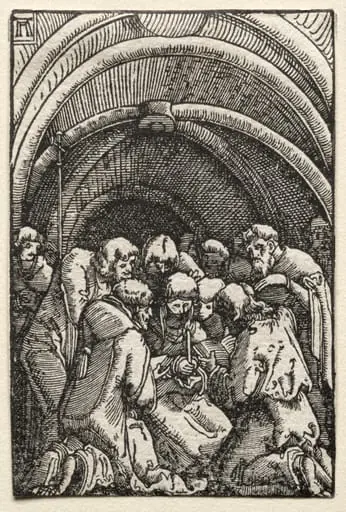
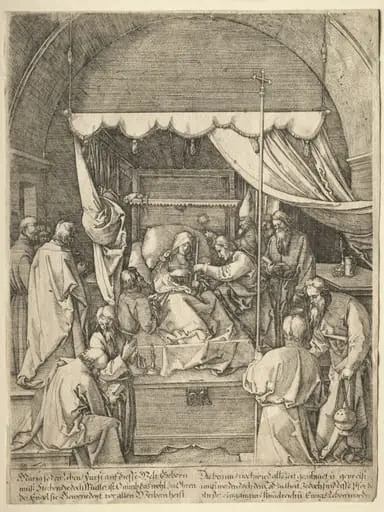
The Death of the Virgin is an ink print by the Renaissance artist Albrecht Altdorfer. It dates from 1513 and is held in the collection of the National Gallery of Art.
About this work
Overview
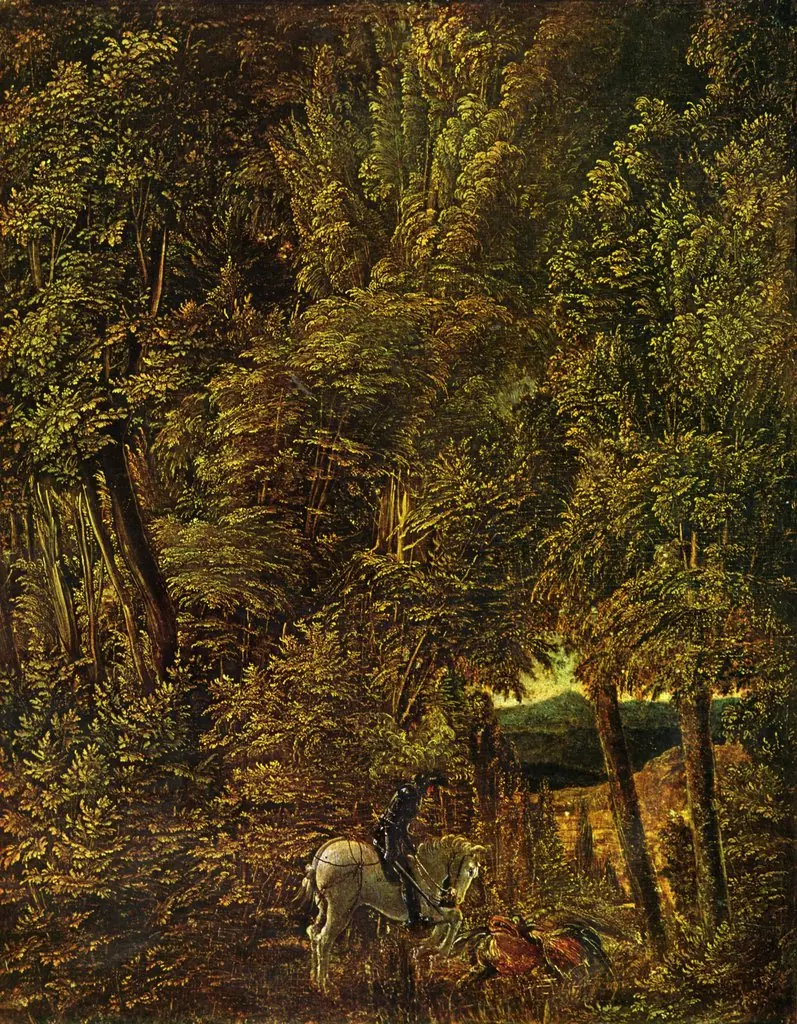
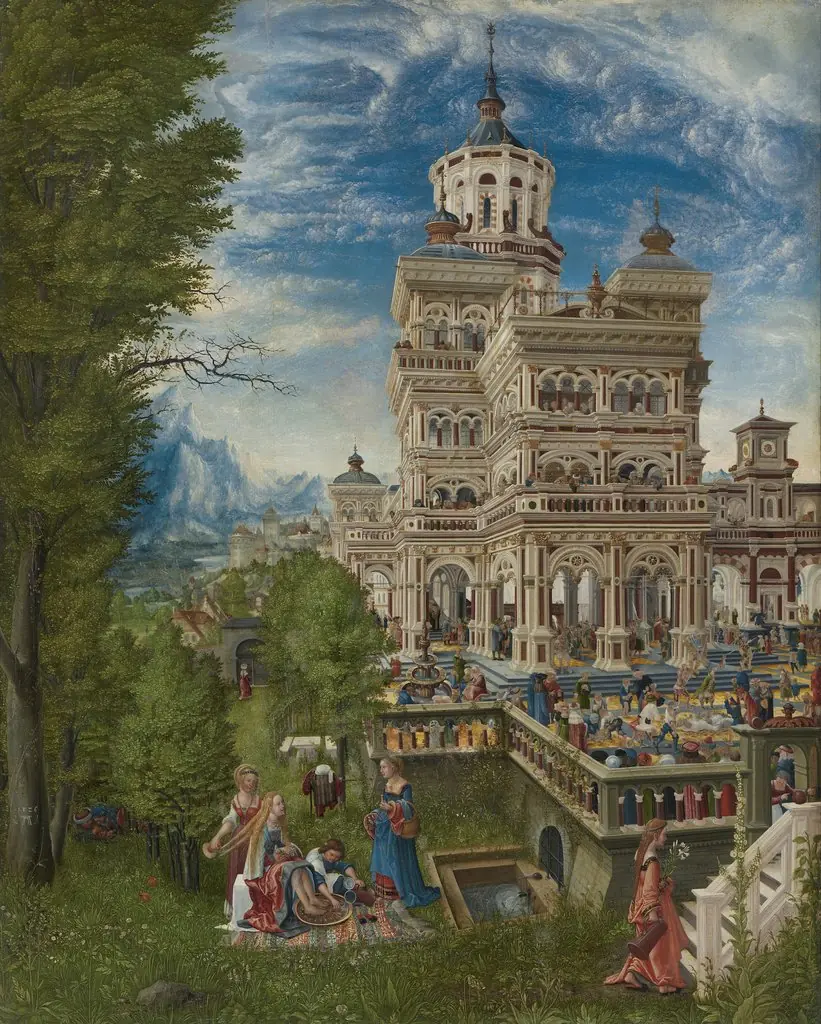
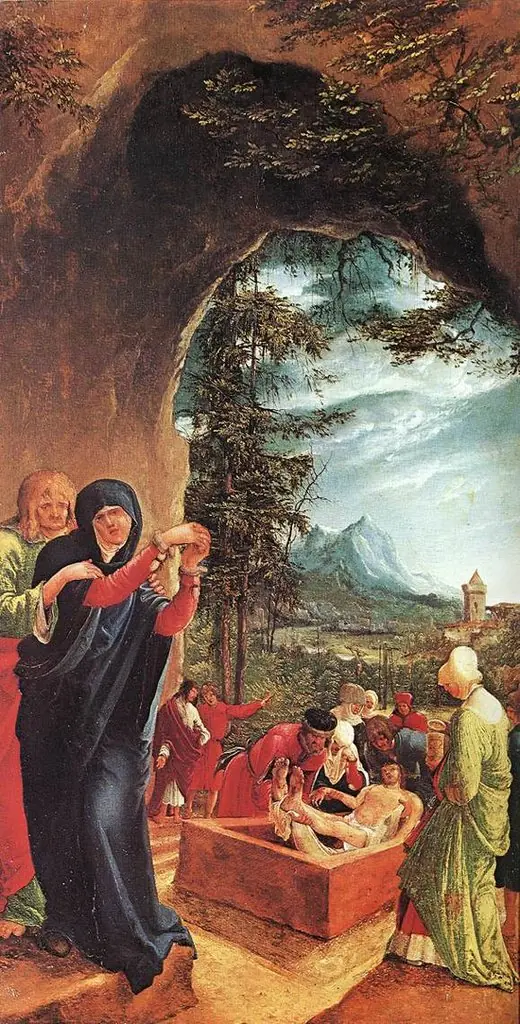
Altdorfer, based in Regensburg, was a central figure in the Danube School, known for integrating natural landscapes with religious narratives.
Created around 1513 by Albrecht Altdorfer, *The Death of the Virgin* is a woodcut printed on laid paper. Altdorfer, based in Regensburg, was a central figure in the Danube School, known for integrating natural landscapes with religious narratives. This print exemplifies his mastery of the woodcut medium, using incised lines to convey both emotional intensity and spatial depth, bridging devotional imagery with emerging landscape sensitivity.
Subject & Meaning
The scene captures the moment of the Virgin Mary’s passing, surrounded by mourners in flowing garments. Her hand clasps a cross, a symbol of her faith and the theological significance of her death. Figures are arranged in a semicircular arc beneath arches, suggesting a sacred stage. Their postures—bowed heads, clutching hands—convey grief and reverence, emphasizing the humanity of the event rather than its miraculous aspects.
Technique & Style
Altdorfer employed fine, sharp incisions to model form and express emotion, characteristic of his detailed woodcut technique. The texture of the paper and the bold, uneven lines of the carving lend the image a tactile urgency. Unlike earlier prints that treated backgrounds as mere settings, here the architecture and spatial framing function as active elements, enhancing the solemnity and intimacy of the moment.
History & Provenance
The print emerged during Altdorfer’s mature period in Regensburg, a center of artistic innovation in early 16th-century Germany. While specific early ownership records are sparse, the work aligns with the circulation of devotional prints among educated laypeople and clergy. Its survival in multiple impressions suggests it was widely distributed, reflecting demand for intimate religious imagery outside ecclesiastical contexts.
Context
Produced during the early Reformation, the image reflects a period when personal devotion and visual piety were gaining prominence. Altdorfer’s focus on emotional realism and atmospheric setting diverged from more formalized medieval depictions. His landscape-infused compositions, influenced by the Danube region’s topography, contributed to a broader shift in Northern Renaissance art toward naturalism and psychological depth.
Legacy
Altdorfer’s *The Death of the Virgin* helped redefine the potential of the woodcut as a medium for complex emotional and spatial narratives. His integration of landscape as more than backdrop influenced later printmakers and contributed to the evolution of the independent landscape genre. The work remains a key example of how religious subjects could be rendered with psychological nuance and environmental richness.
Artist & collection
Artist
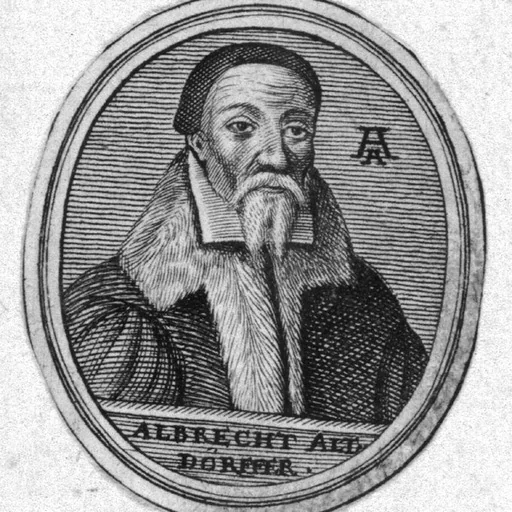
Albrecht Altdorfer (c. 1480 – 12 February 1538) was a German painter, engraver and architect of the Renaissance working in Regensburg. Along with Lucas Cranach the Elder and Wolf Huber he is regarded to be the main…