Artwork
The Death of the Virgin
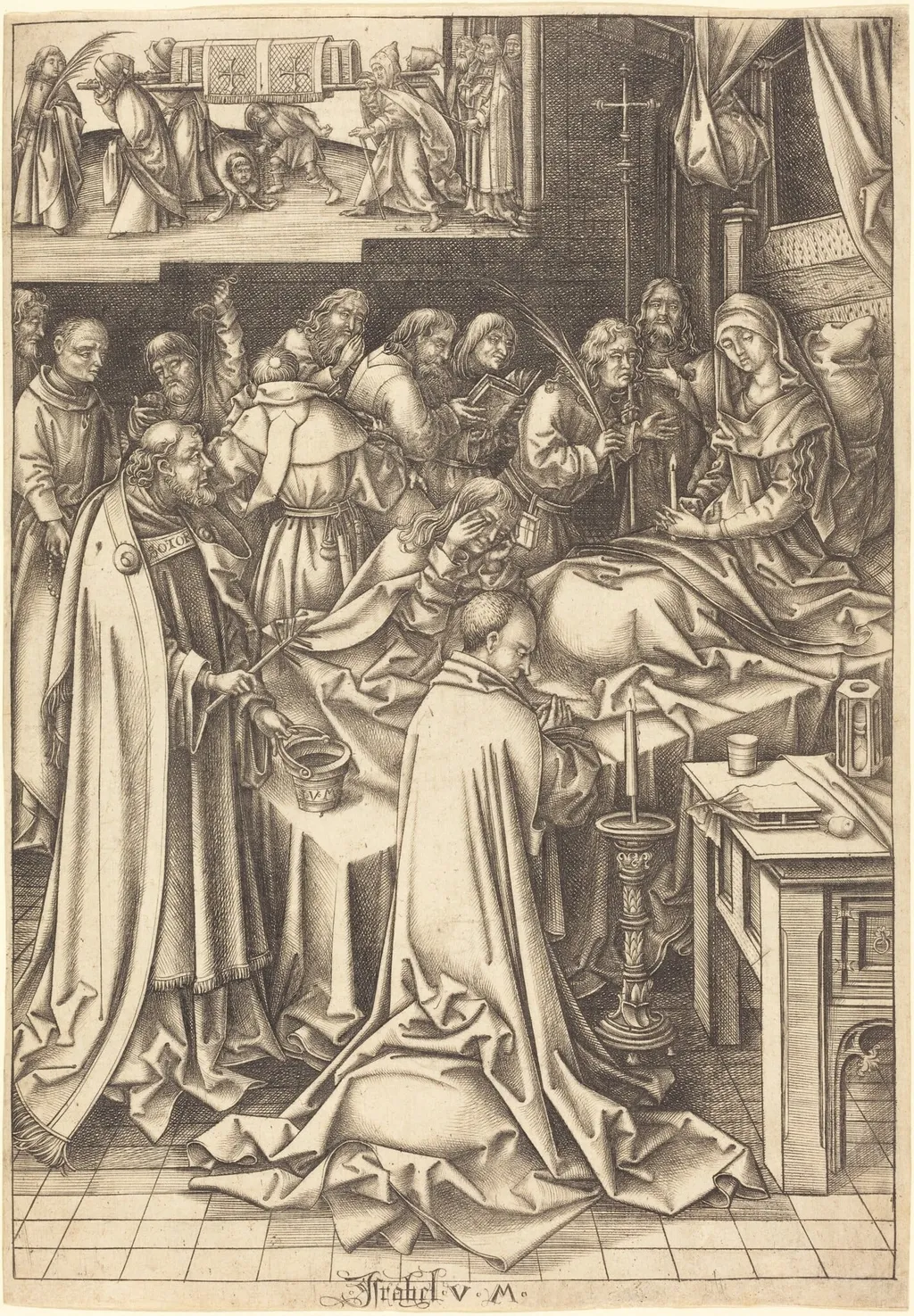
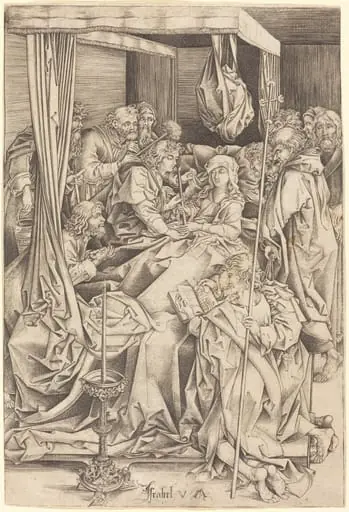
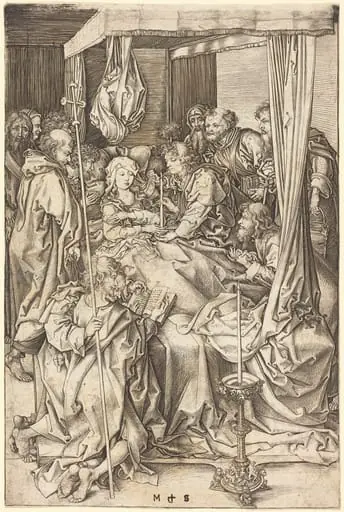
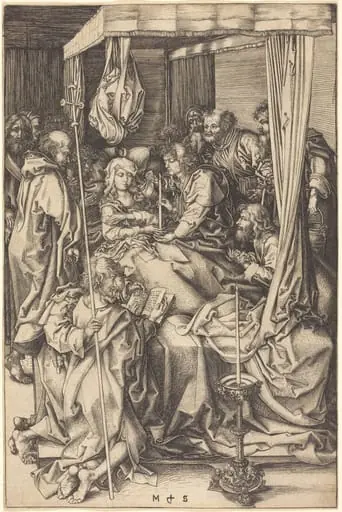
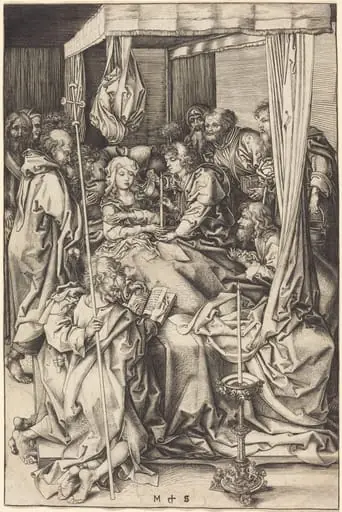
The Death of the Virgin is an ink print by the Renaissance artist Israhel van Meckenem. It dates from 1495 and is held in the collection of the National Gallery of Art.
About this work
Overview
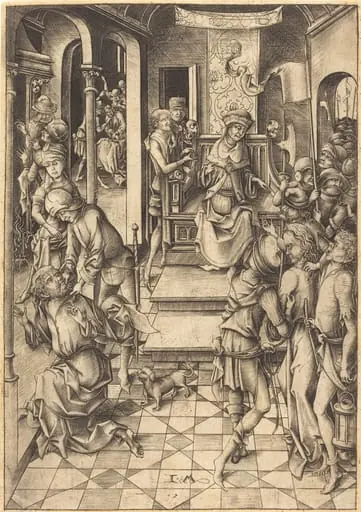
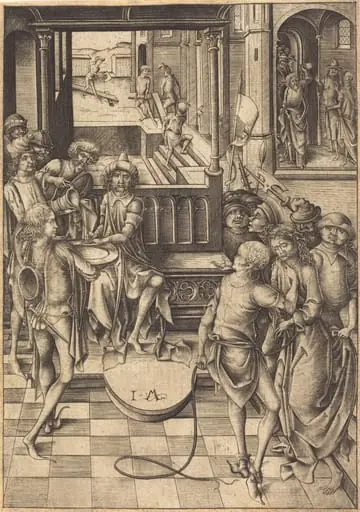
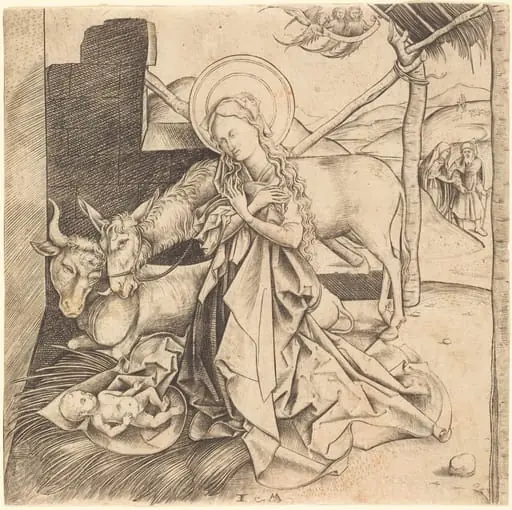
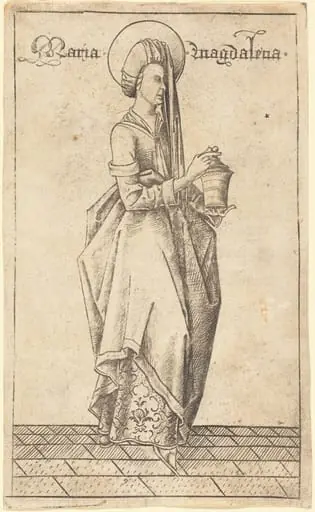
One of over 620 prints attributed to him, this work exemplifies his role as a prolific reproductive artist of the late 15th century.
Israhel van Meckenem, a German engraver and goldsmith active between 1465 and 1503, produced *The Death of the Virgin* around 1495. One of over 620 prints attributed to him, this work exemplifies his role as a prolific reproductive artist of the late 15th century. Though not an original composition, it reflects widespread devotional interest in the Virgin’s passing, rendered with precision typical of Northern European printmaking of the period.
Subject & Meaning
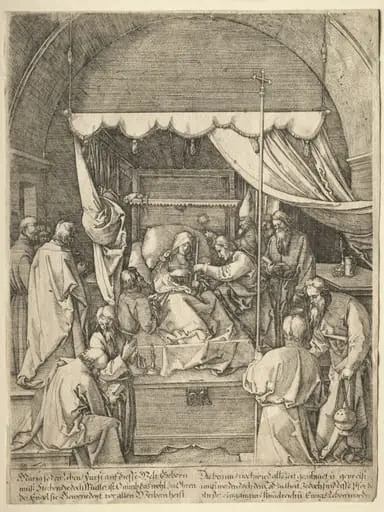
The scene portrays the Virgin Mary at the moment of her death, surrounded by apostles and mourners. She lies on a bed, crowned and clad in a long robe, signifying her status as Queen of Heaven. Figures hold lit candles, books, and a cross, symbols of prayer, scripture, and faith. The composition emphasizes quiet reverence rather than drama, aligning with medieval and early Renaissance traditions of depicting the Dormition as a peaceful transition to eternal life.
Technique & Style
Executed in engraving, the work displays fine, controlled lines characteristic of Meckenem’s hand. Delicate hatching defines folds of fabric, facial expressions, and architectural details like the curtained window and small table with a candle. The composition is tightly framed, focusing attention on the central group. While influenced by earlier painted models, the engraving’s clarity and rhythmic line work reflect the Northern tradition of detailed, intimate religious imagery.
History & Provenance
The print was made during Meckenem’s mature period in Bocholt, where he operated a successful workshop. Many of his engravings were circulated widely across Europe, often serving as devotional aids or models for other artists. Though no specific early ownership records survive for this impression, its survival in multiple copies suggests it was in demand among clergy and devout laypersons seeking accessible religious imagery.
Context
In the late 15th century, depictions of the Virgin’s death were common in both painting and print, rooted in the apocryphal *Transitus Mariae*. As literacy and private devotion grew, engravings like Meckenem’s allowed broader access to sacred narratives. His work existed alongside, and sometimes in response to, the rising influence of artists like Dürer, though Meckenem’s style remained more conservative and commercially oriented.
Legacy
Meckenem’s prolific output helped standardize religious imagery through print, influencing devotional practices across regions. While later artists surpassed him in originality, his technical consistency and distribution networks ensured his prints remained in use for decades. *The Death of the Virgin* stands as a representative example of how printmaking extended the reach of sacred themes beyond elite patrons to ordinary households.
Artist & collection
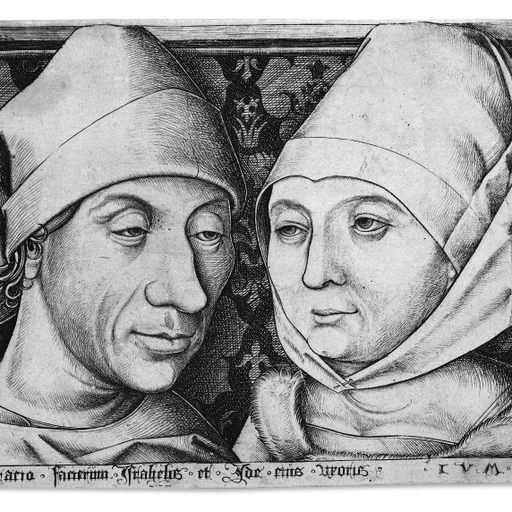
Artist
Israhel van Meckenem (c. 1445 – 10 November 1503), also known as Israhel van Meckenem the Younger, was a German printmaker and goldsmith, perhaps of a Dutch family origin. He was the most prolific engraver of the…