Artwork
Pentecost table (6 panels)
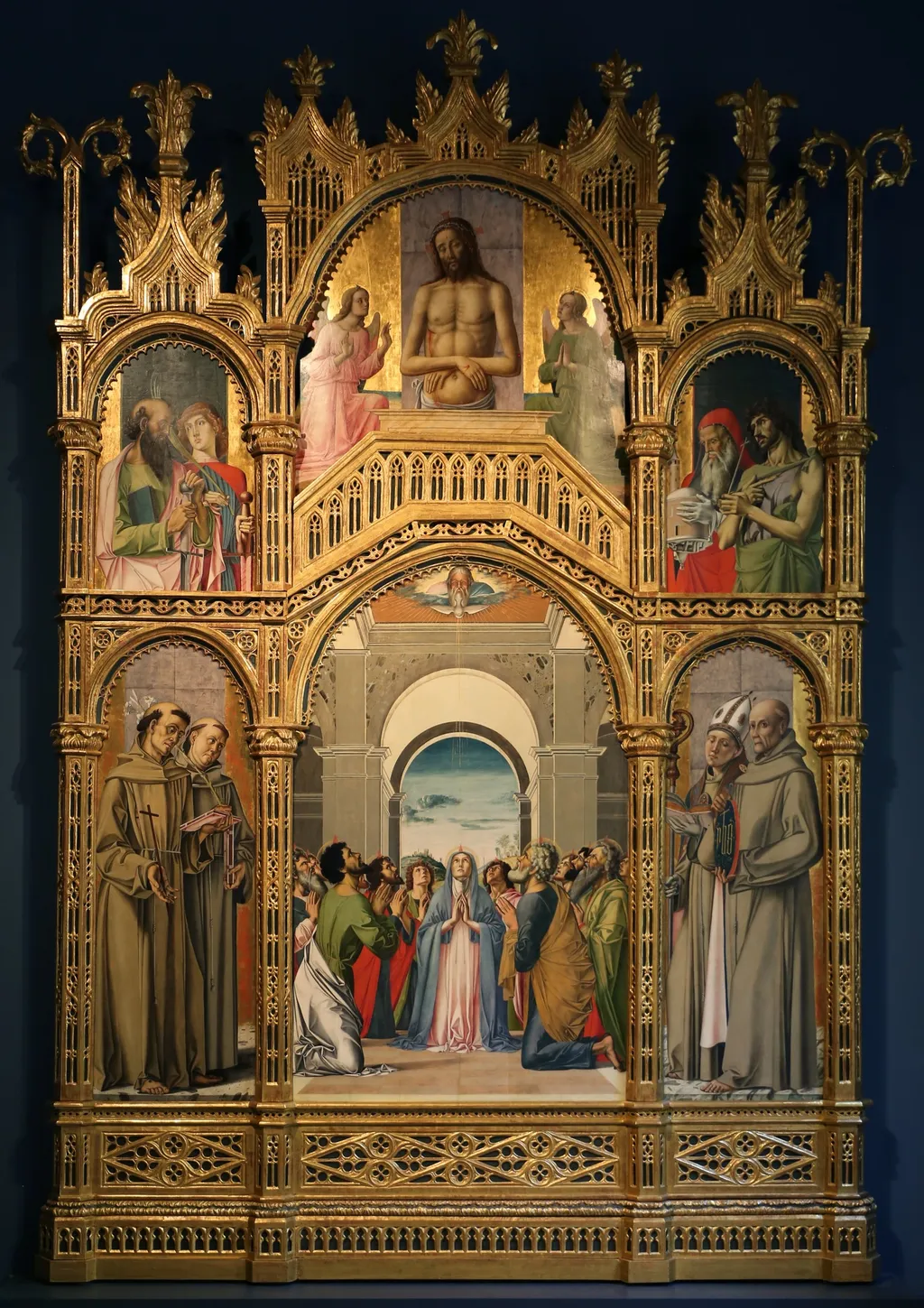
Pentecost table (6 panels) is a paint painting by the Early Renaissance artist Alvise Vivarini. It dates from 1490 and is held in the collection of the Bode Museum.
About this work
Overview
This six-panel painting, created by Alvise Vivarini in 1490, is a significant work from the early Renaissance period. It is part of a collection at the Gemäldegalerie Berlin.
Subject & Meaning
The painting depicts the biblical event of Pentecost, a pivotal moment in Christian tradition. The six scenes show various figures, including a bearded man with a crown of thorns, likely representing Christ, and a woman in blue, probably the Virgin Mary, surrounded by kneeling figures.
Technique & Style
The work is characterized by its gold frame and detailed trim, featuring intricate patterns. The style is typical of the early Renaissance, with figures depicted in robes and halos, conveying a sense of reverence and spirituality.
History & Provenance
Alvise Vivarini was a member of a prominent Venetian family of artists. He may have trained or collaborated with other notable artists, such as Jacopo de' Barbari, and was influenced by his relatives, including his father Antonio and uncle Bartolomeo.
Artist & collection

Artist
Alvise or Luigi Vivarini (1442/1453–1503/1505) was an Italian painter, the leading Venetian artist before Giovanni Bellini.


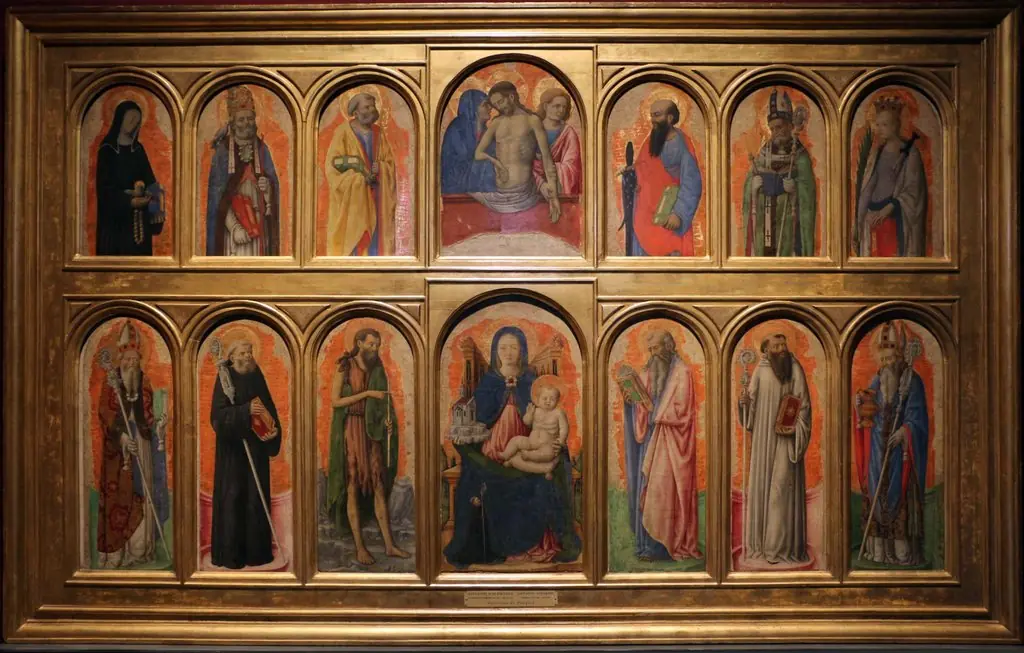 Polyptych of Praglia
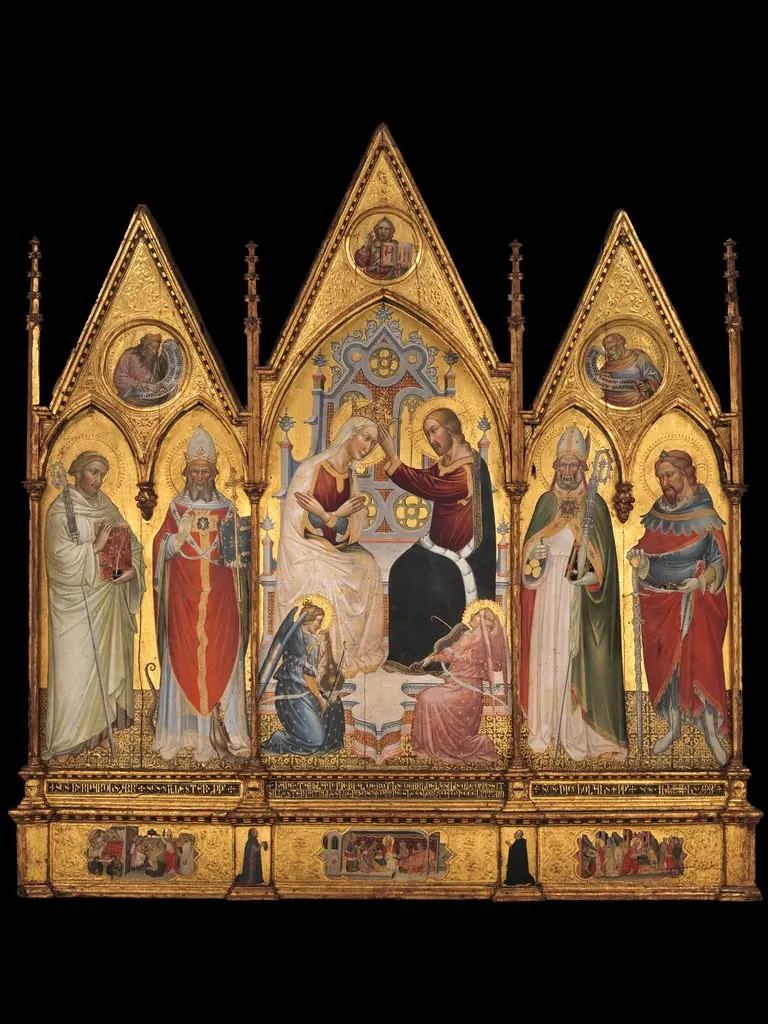 The Coronation of the Virgin, and Saints
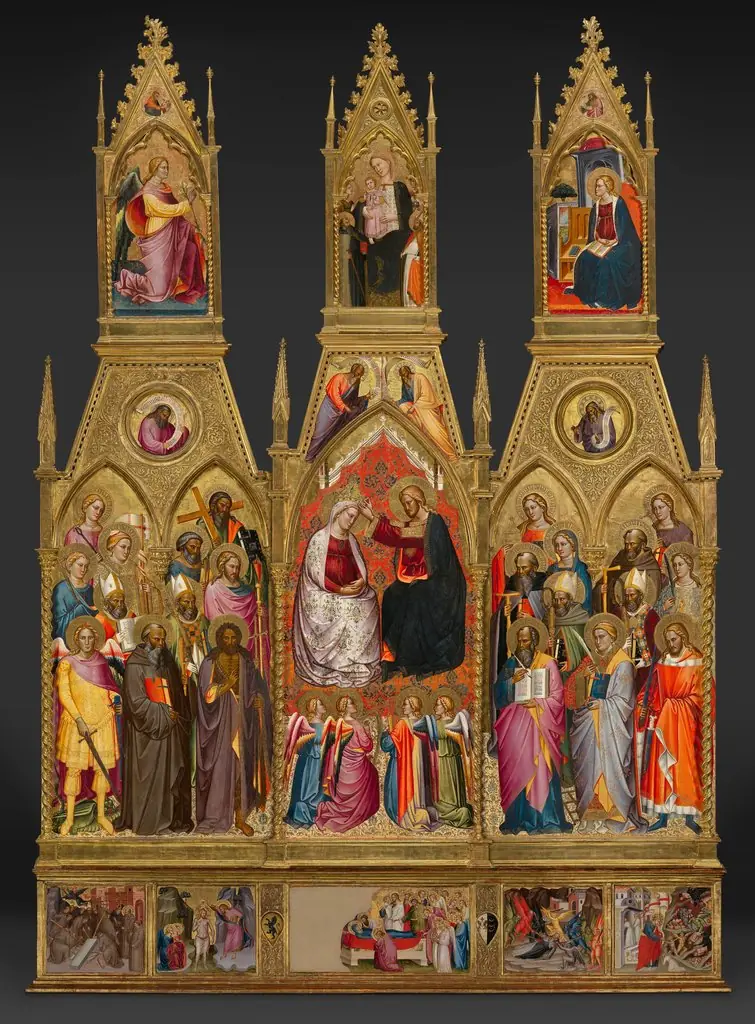 Polyptych with Coronation of the Virgin and Saints
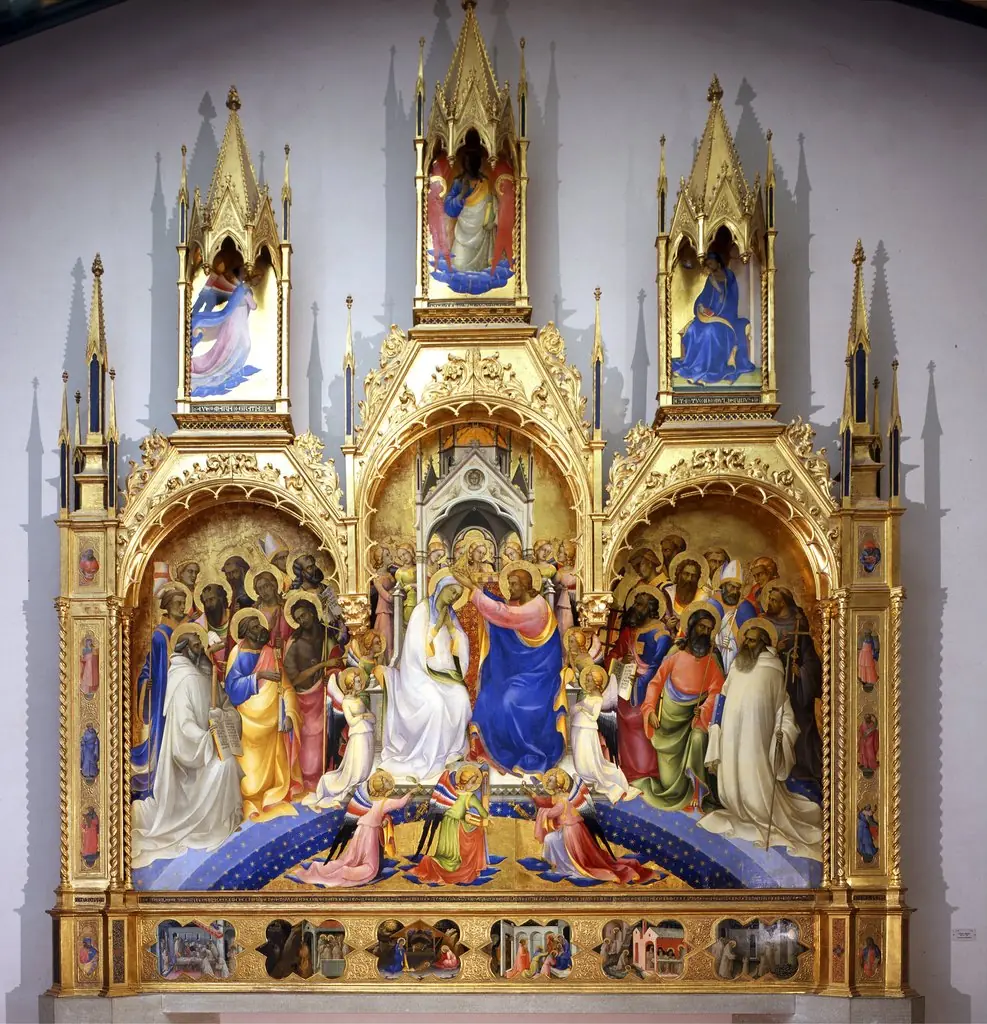 Coronation of the Virgin
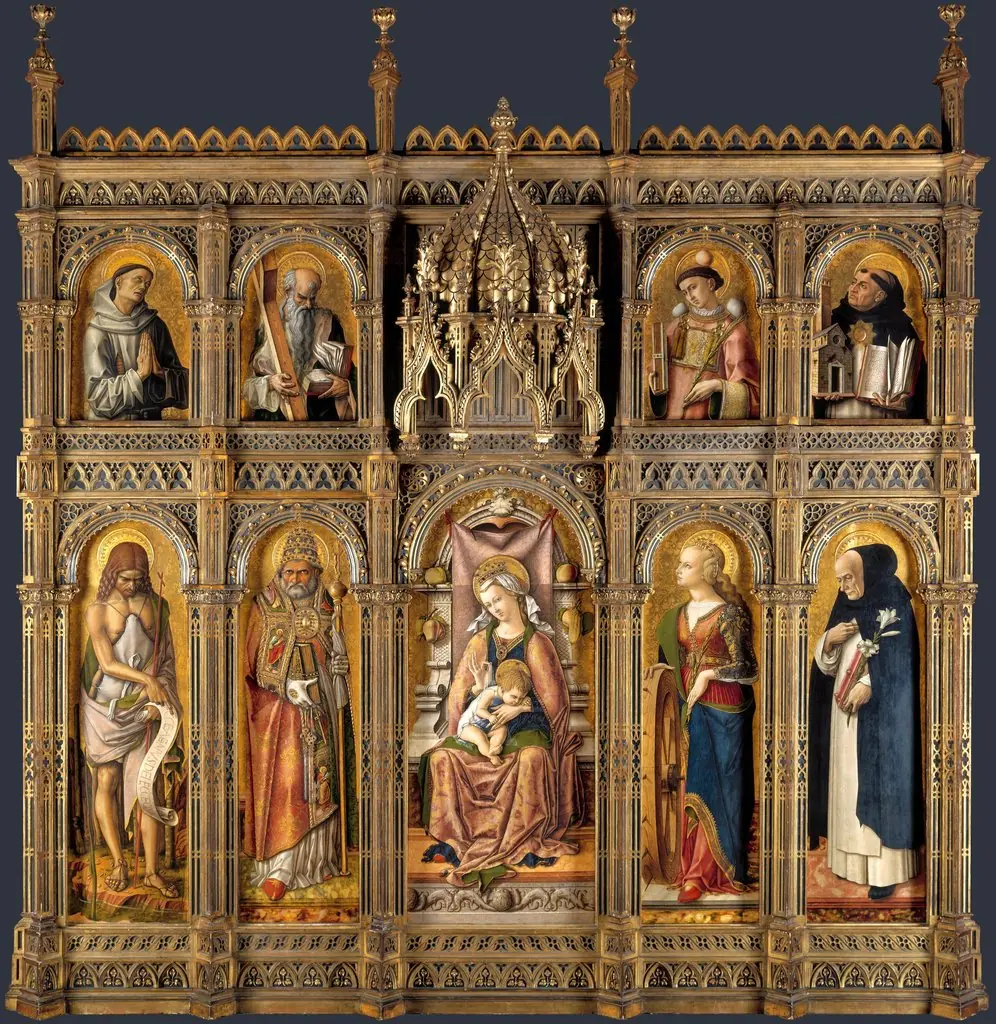 Demidoff Altarpiece
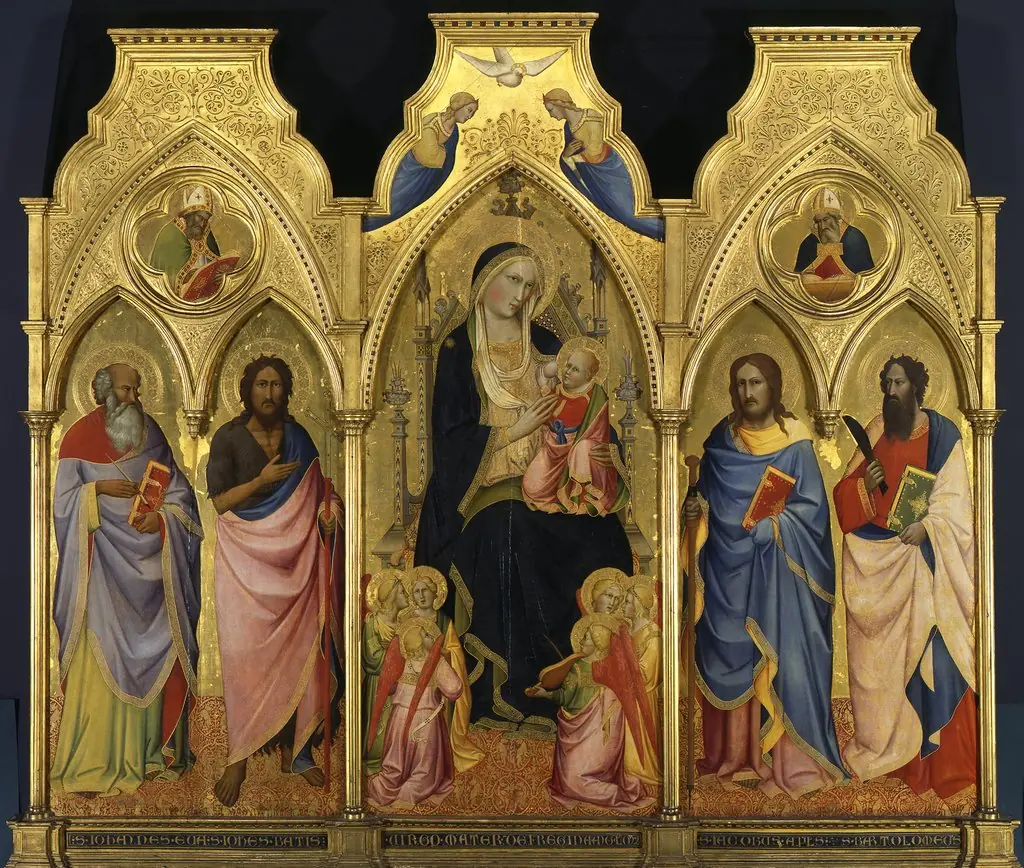 Triptych
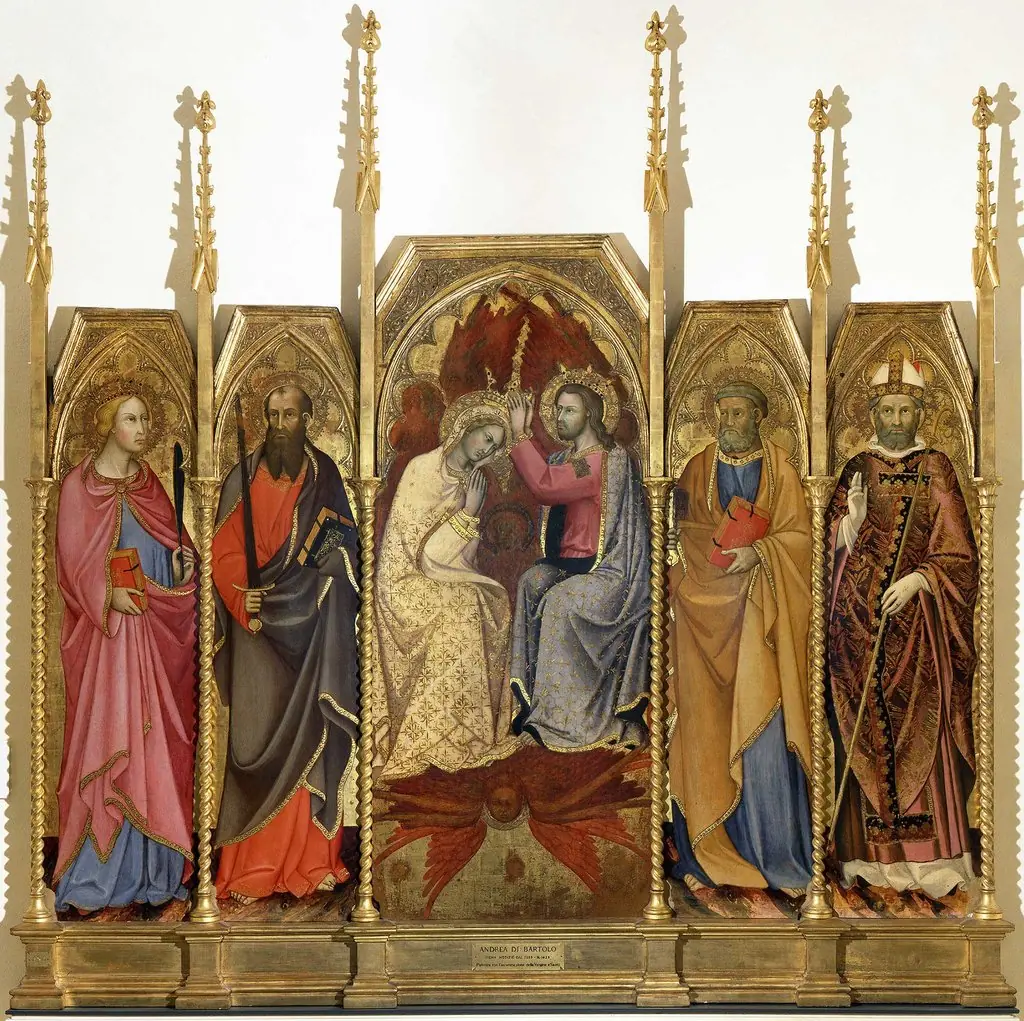 Coronation of the Virgin
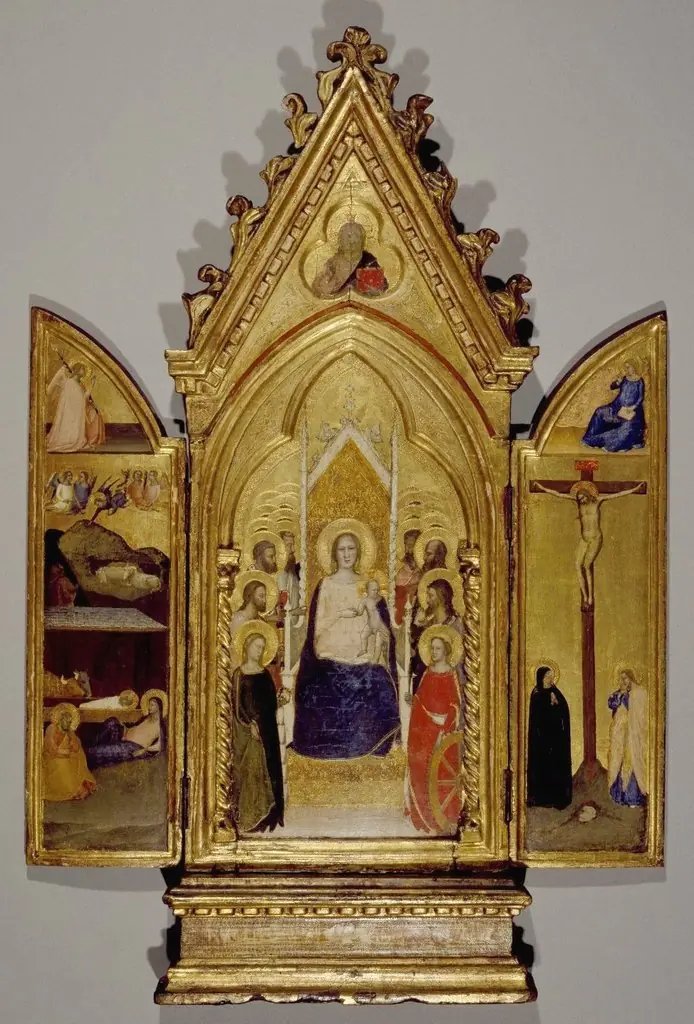 Triptych: Madonna with Saints and Christ Blessing (Center); The Nativity and the Annunciate Angel (Left Wing); Crucifixion and the Virgin Annunciate (Right Wing)
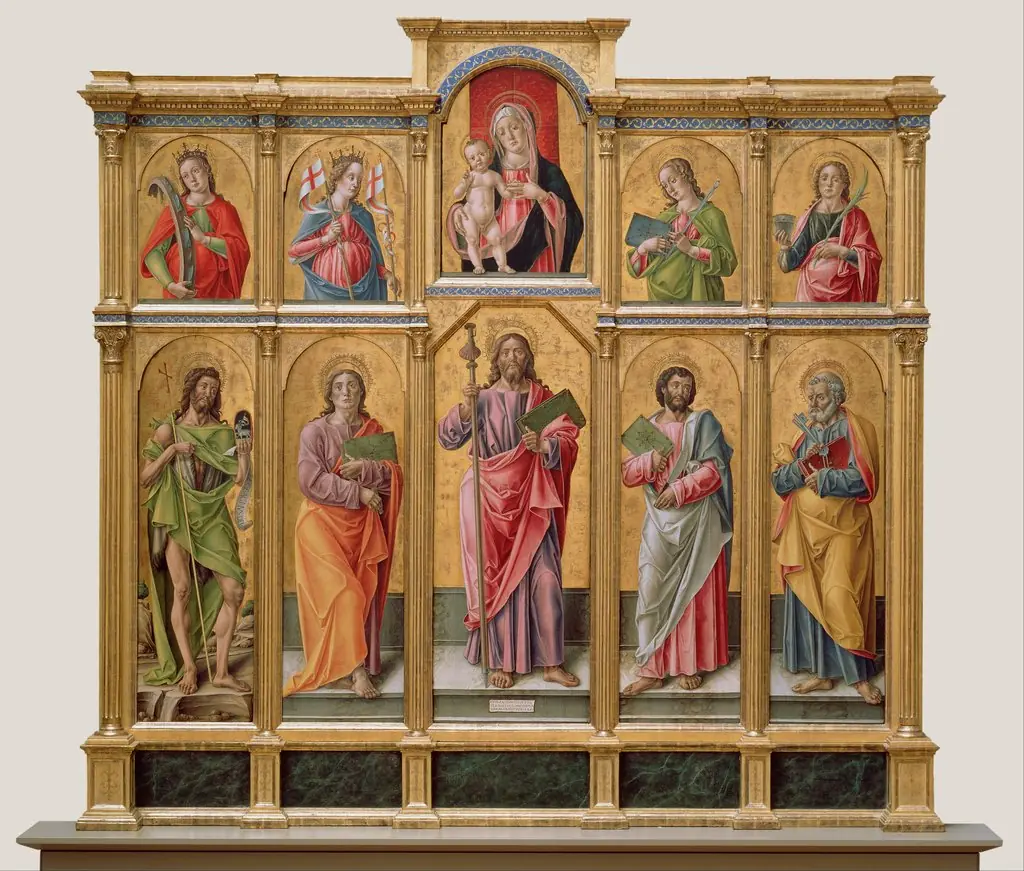 Polyptych with Saint James Major, Madonna and Child, and Saints
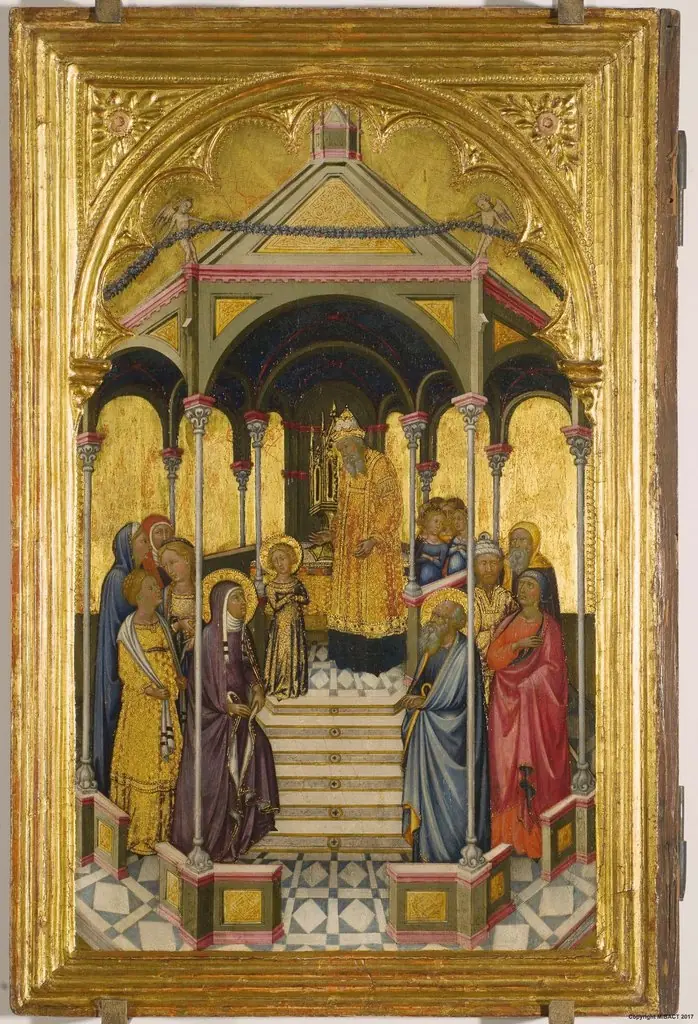 The Presentation of the Virgin at the Temple
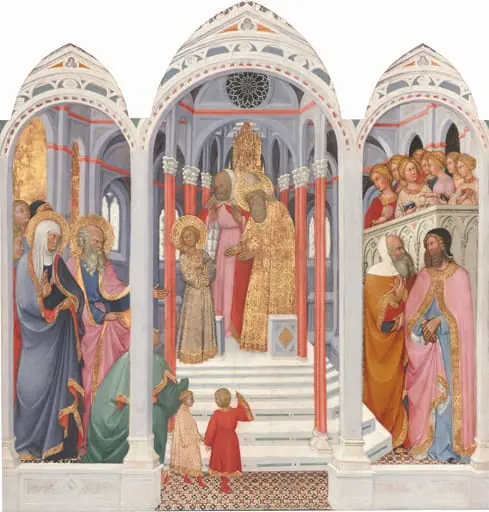 The Presentation of the Virgin in the Temple
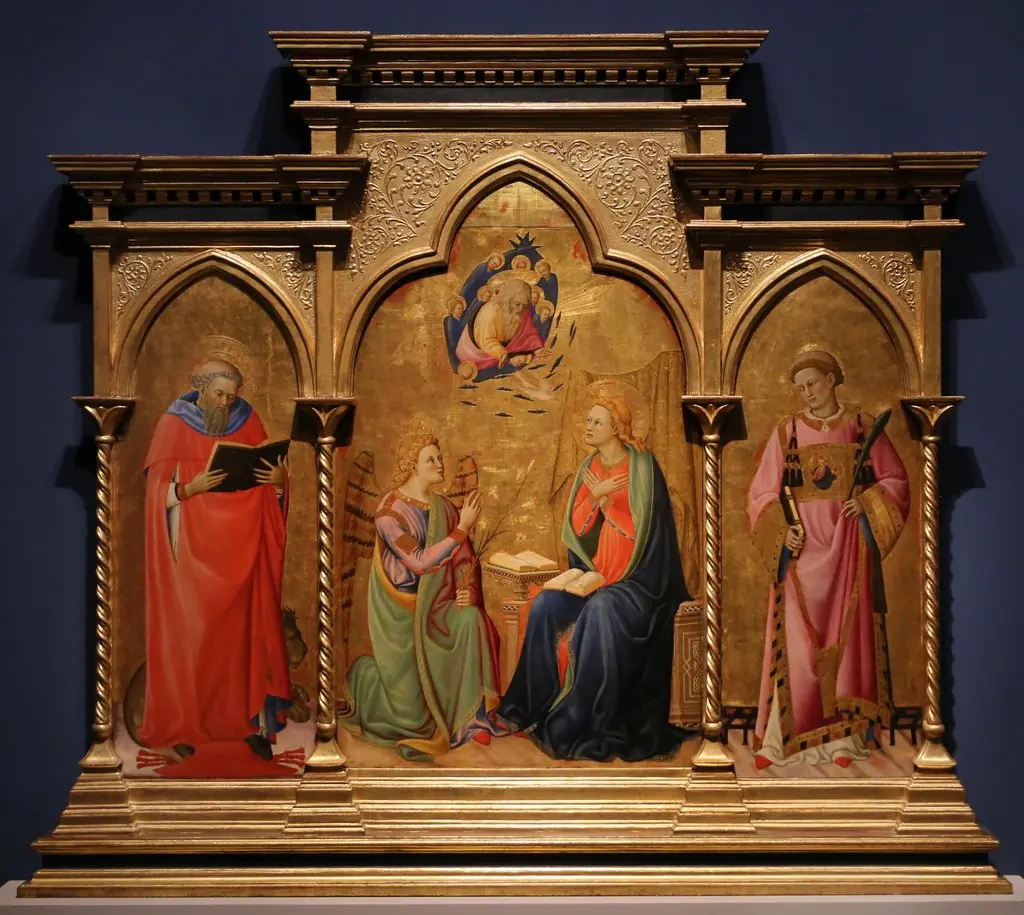 Parts of a triptych: Annunciation and saints Jerome and Lawrence