Artwork
Coronation of the Virgin
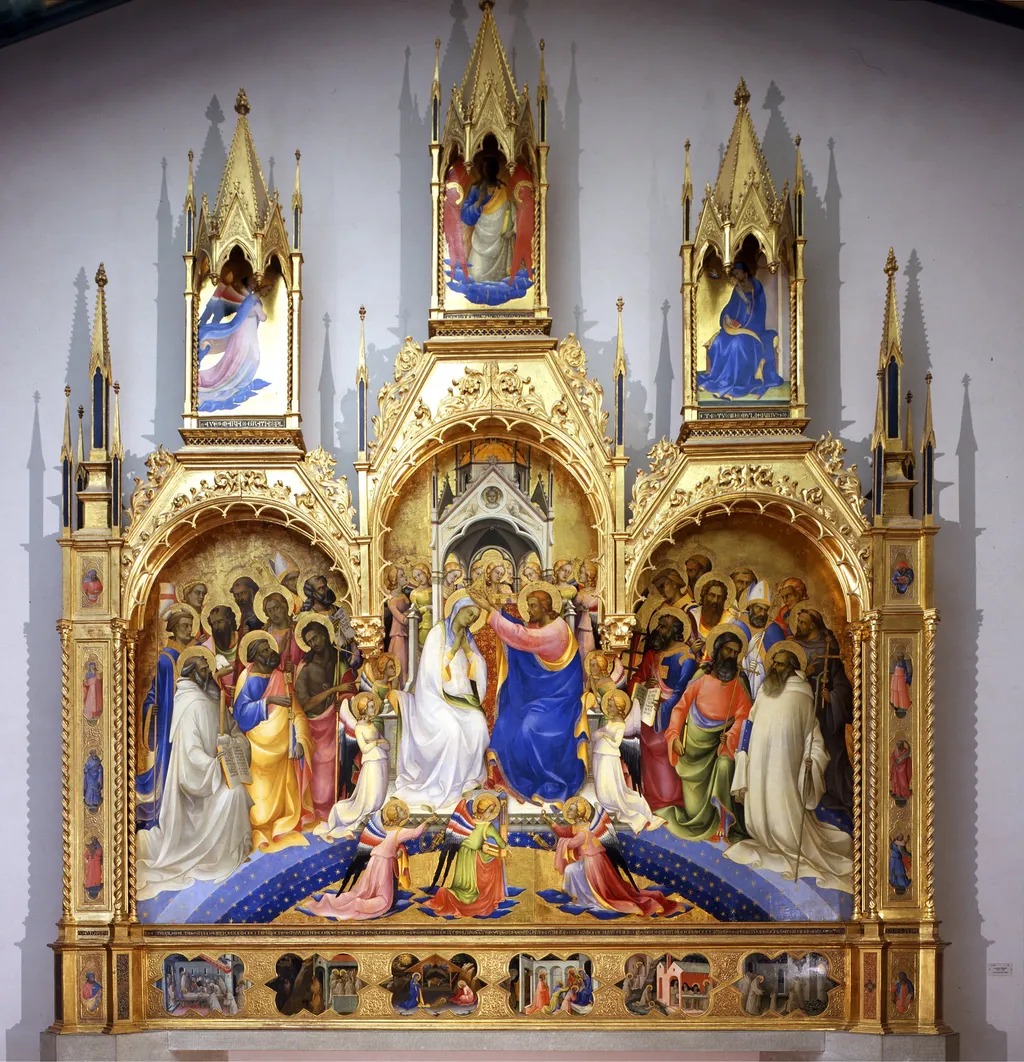
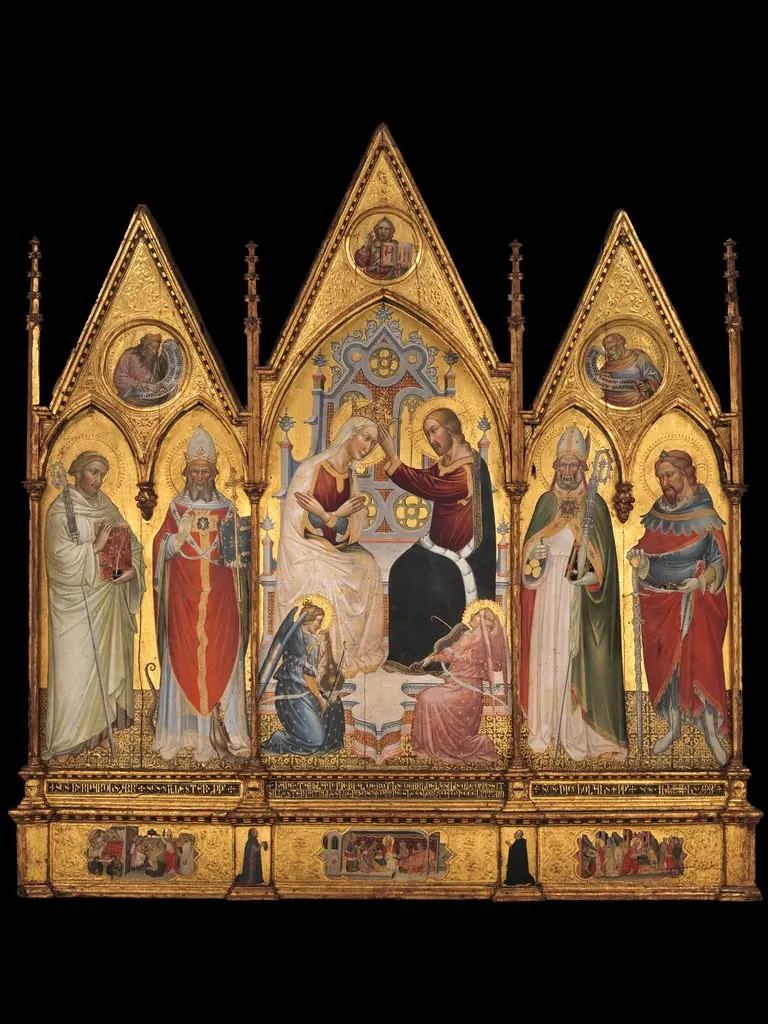
Coronation of the Virgin is a tempera painting by the Early Renaissance artist Lorenzo Monaco. It dates from 1414 and is held in the collection of the Uffizi Gallery.
About this work
Lorenzo Monaco painted a tempera polyptych called *Coronation of the Virgin* in 1414.
It shows Mary being crowned by Jesus.
The work was made for a monastery before moving to the Uffizi in Florence.
Here’s the odd part: the date says February 1413, but in Florence’s calendar, that year was 1414.
So artists back then had their own way of counting time.
Look up the artist Lorenzo Monaco next.
Overview
Lorenzo Monaco’s tempera polyptych entitled *Coronation of the Virgin* was completed in early 1414. Executed on wooden panels, the work depicts the Virgin Mary receiving a crown from the Christ Child. The composition centers on this sacred moment, reflecting the devotional focus of the period and serving as a visual celebration of Marian exaltation.
Subject & Meaning
The central narrative portrays the Virgin being crowned by the infant Jesus, a theme that underscores her role as Queen of Heaven. This iconography, popular in late medieval spirituality, emphasizes the intercessory power of Mary and the promise of heavenly reward for the faithful.
Technique & Style
Monaco employed tempera, a fast‑drying pigment mixed with egg yolk, to achieve luminous colors and fine detail on the panel surfaces. The figures are rendered with the elegant linearity and delicate drapery characteristic of the Italian Gothic style, while the gold leaf background enhances the work’s devotional aura.
History & Provenance
Originally commissioned for the Camaldolese monastery of Santa Maria degli Angeli, the polyptych remained there until it entered the Uffizi Gallery’s collection in Florence. Its relocation reflects the broader movement of monastic artworks into public museums during the modern era.
Context
The dating inscription records February 1413, but according to the Florentine calendar that year is counted as 1414. This discrepancy illustrates the regional variations in medieval timekeeping, where civic and ecclesiastical calendars could differ from the modern Gregorian system.
Artist & collection

Artist
Lorenzo Monaco was a Sienese painter and miniaturist of the late Gothic to early Renaissance age, active principally in Florence.

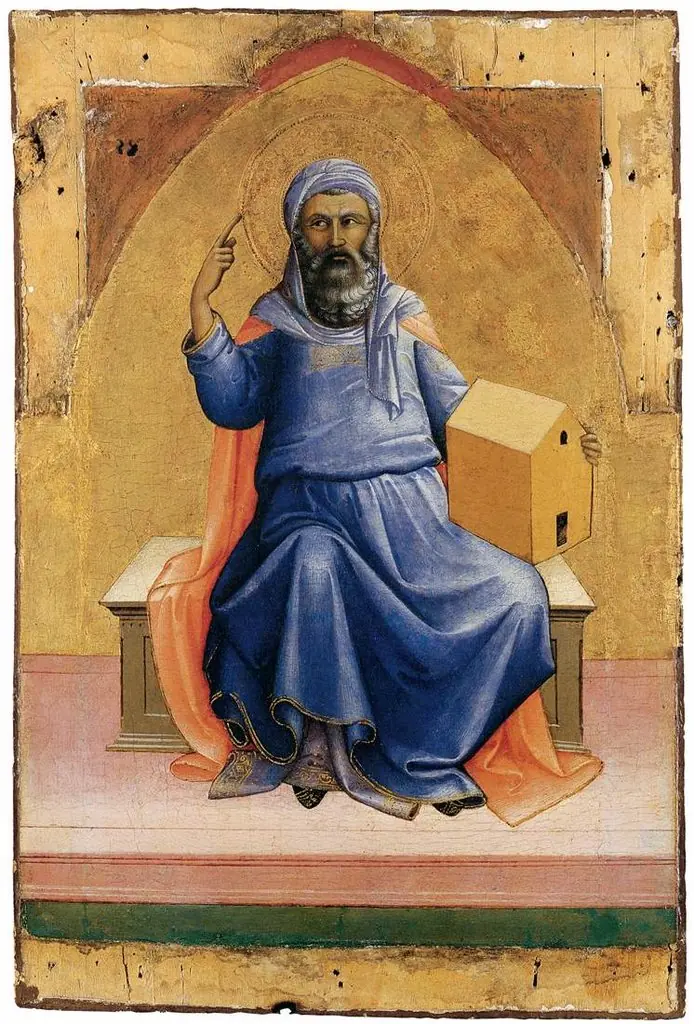
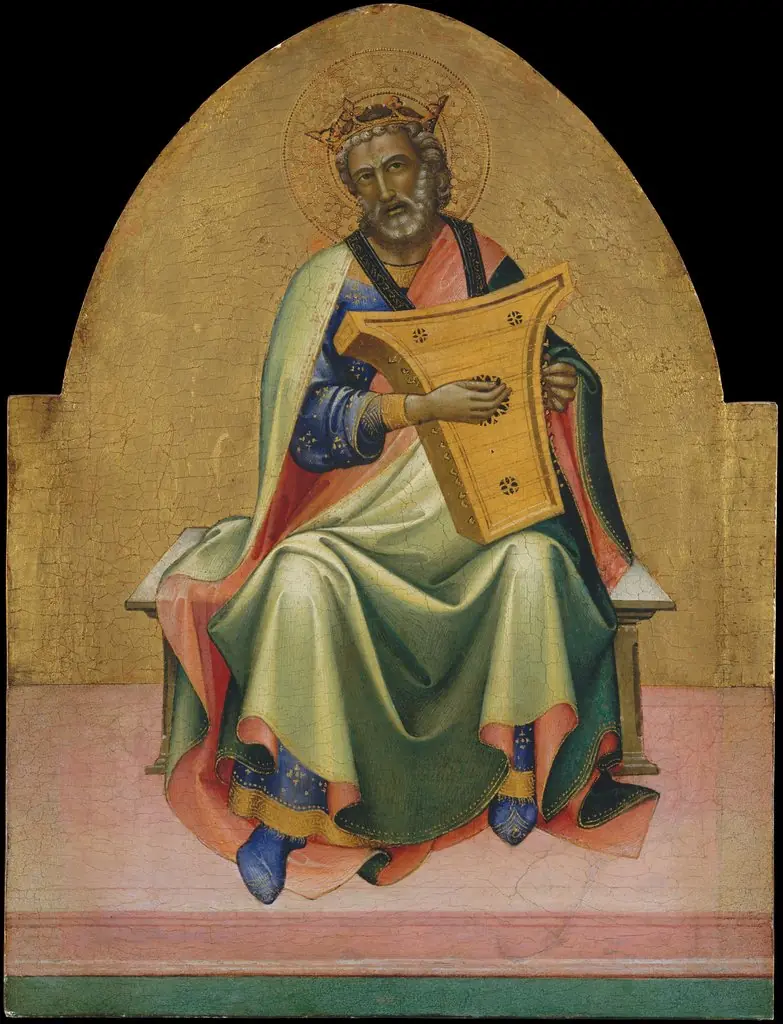
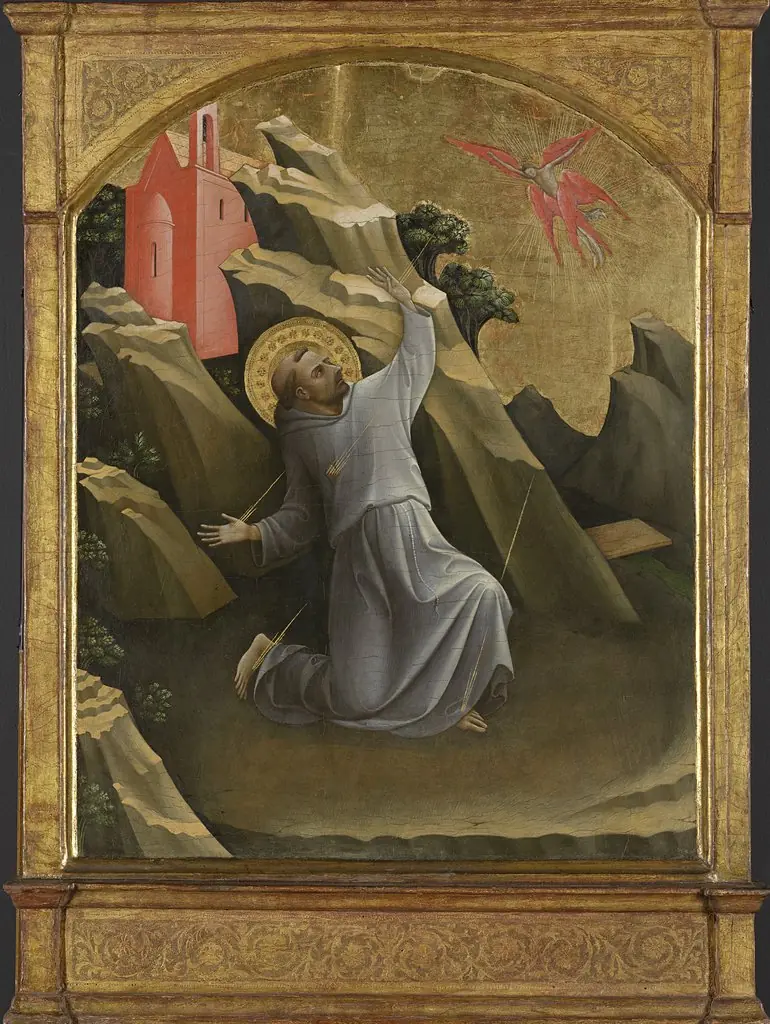
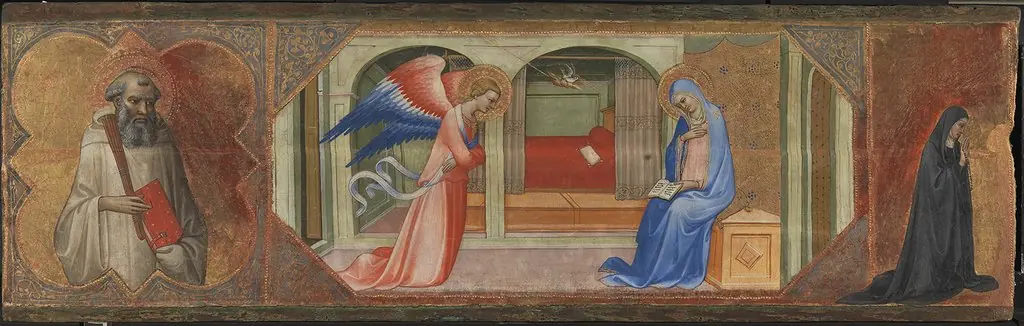
 The Coronation of the Virgin, and Saints
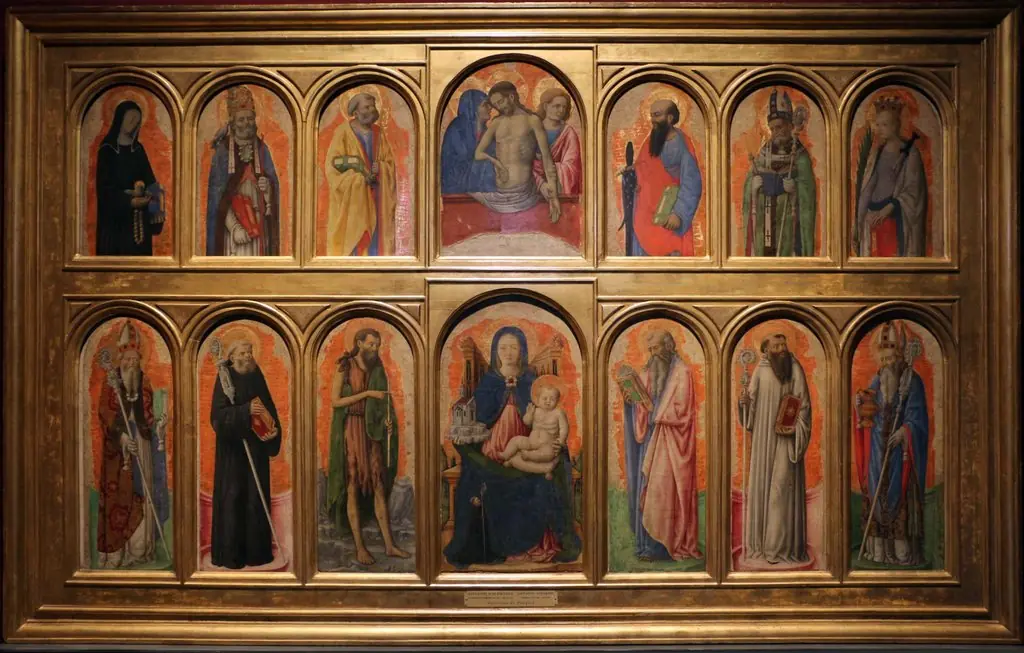 Polyptych of Praglia
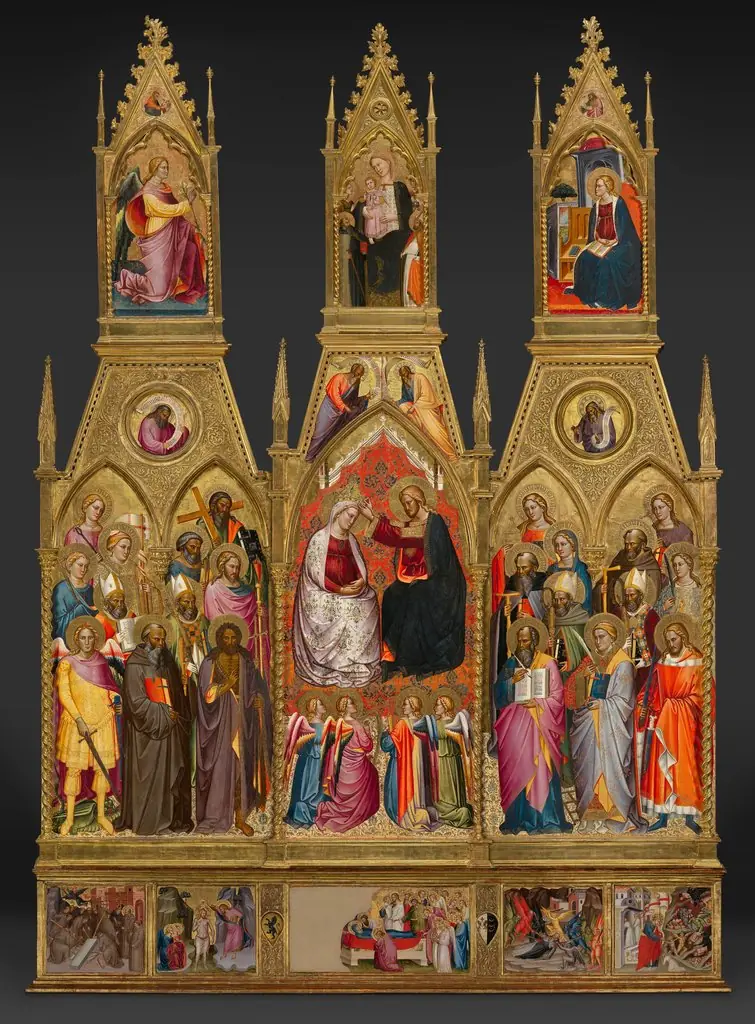 Polyptych with Coronation of the Virgin and Saints
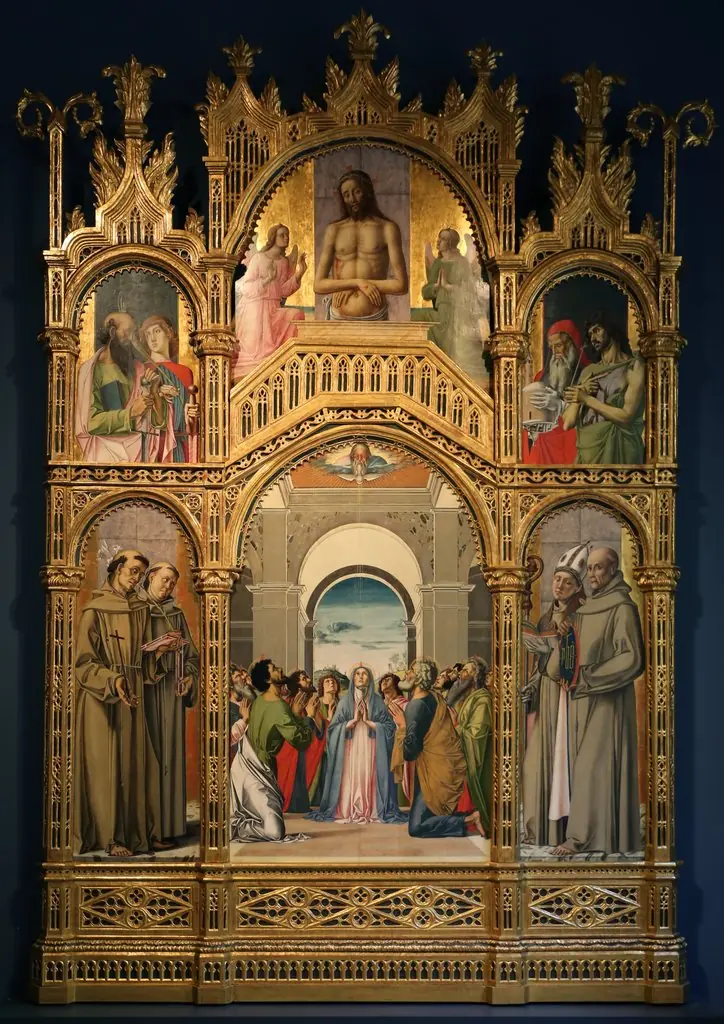 Pentecost table (6 panels)
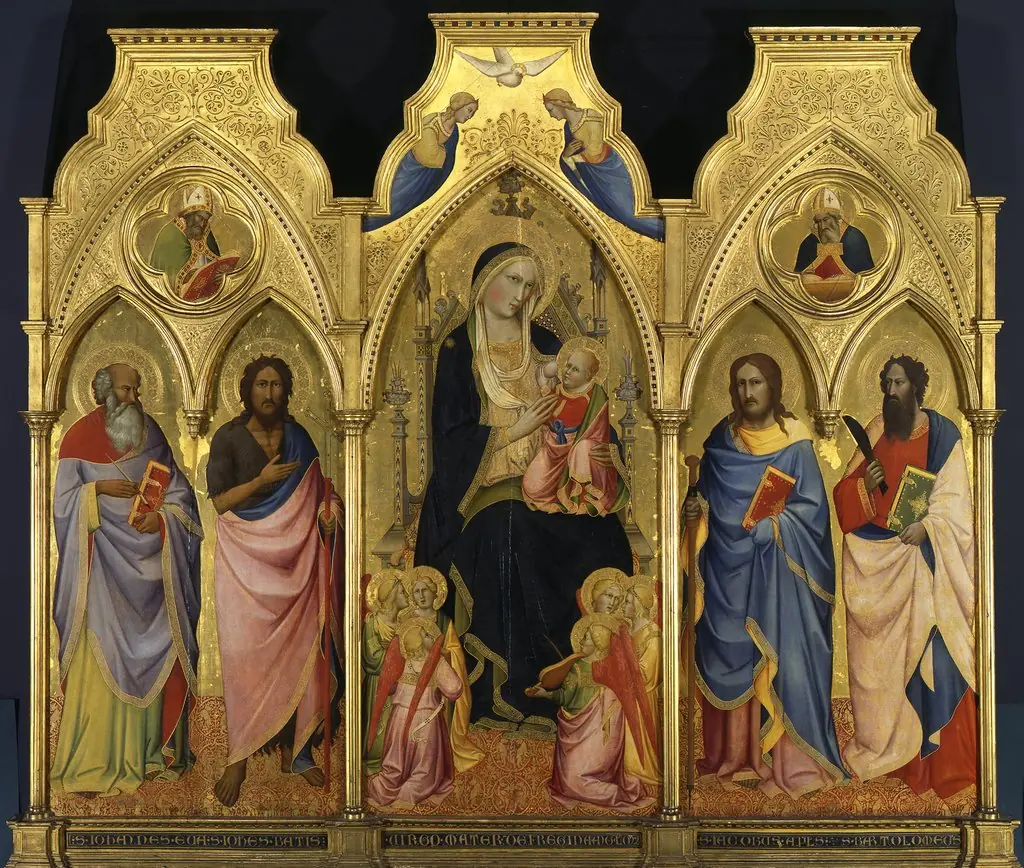 Triptych
![Madonna and Child with Saints Andrew, Benedict, Bernard, and Catherine of Alexandria with Angels [entire triptych], by Agnolo Gaddi](https://artifactworldgallery.com/img/agnolo-gaddi--madonna-and-child-with-saints-andrew-benedict-bernard-and-ca--93a6585f38530738-w320.webp) Madonna and Child with Saints Andrew, Benedict, Bernard, and Catherine of Alexandria with Angels [entire triptych]
Madonna and Child with Saints Andrew, Benedict, Bernard, and Catherine of Alexandria with Angels [entire triptych]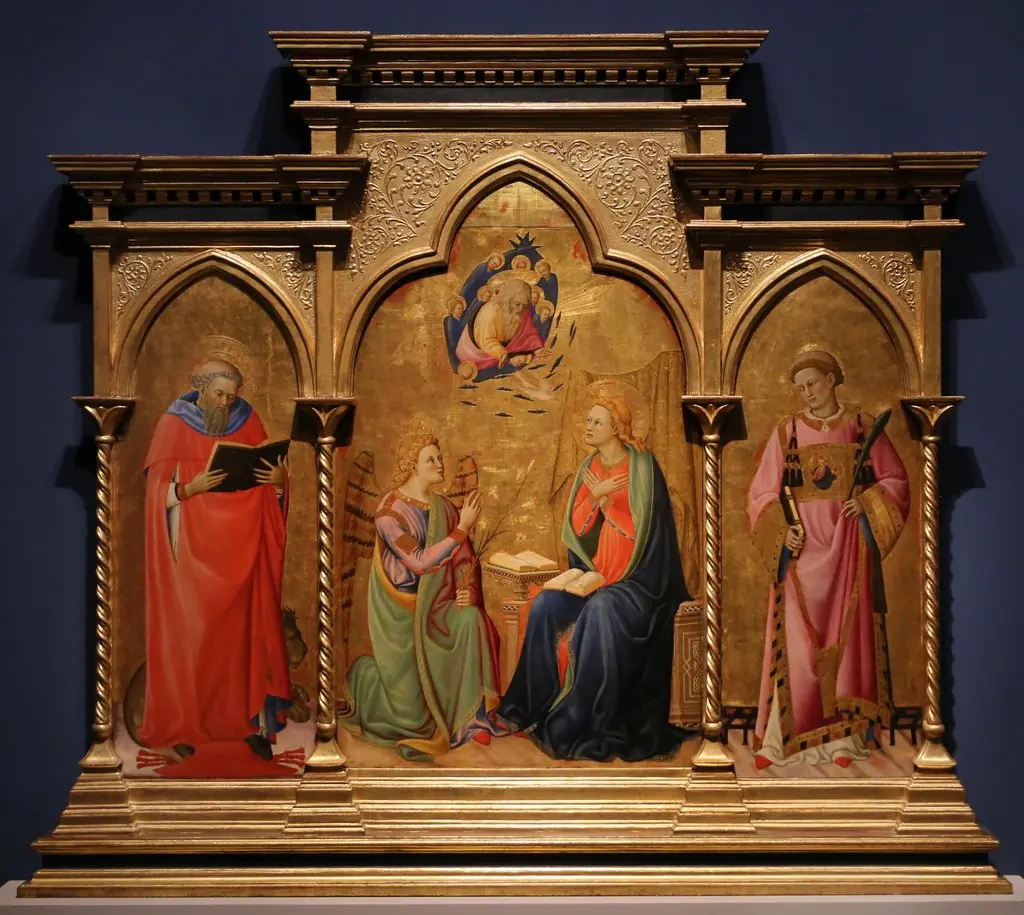 Parts of a triptych: Annunciation and saints Jerome and Lawrence
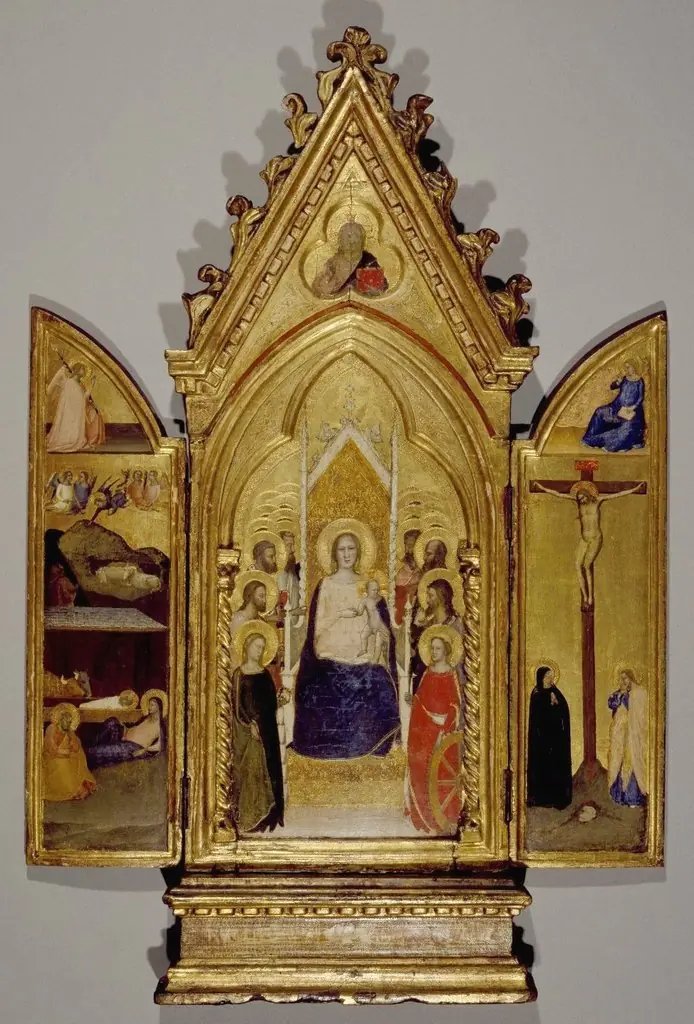 Triptych: Madonna with Saints and Christ Blessing (Center); The Nativity and the Annunciate Angel (Left Wing); Crucifixion and the Virgin Annunciate (Right Wing)
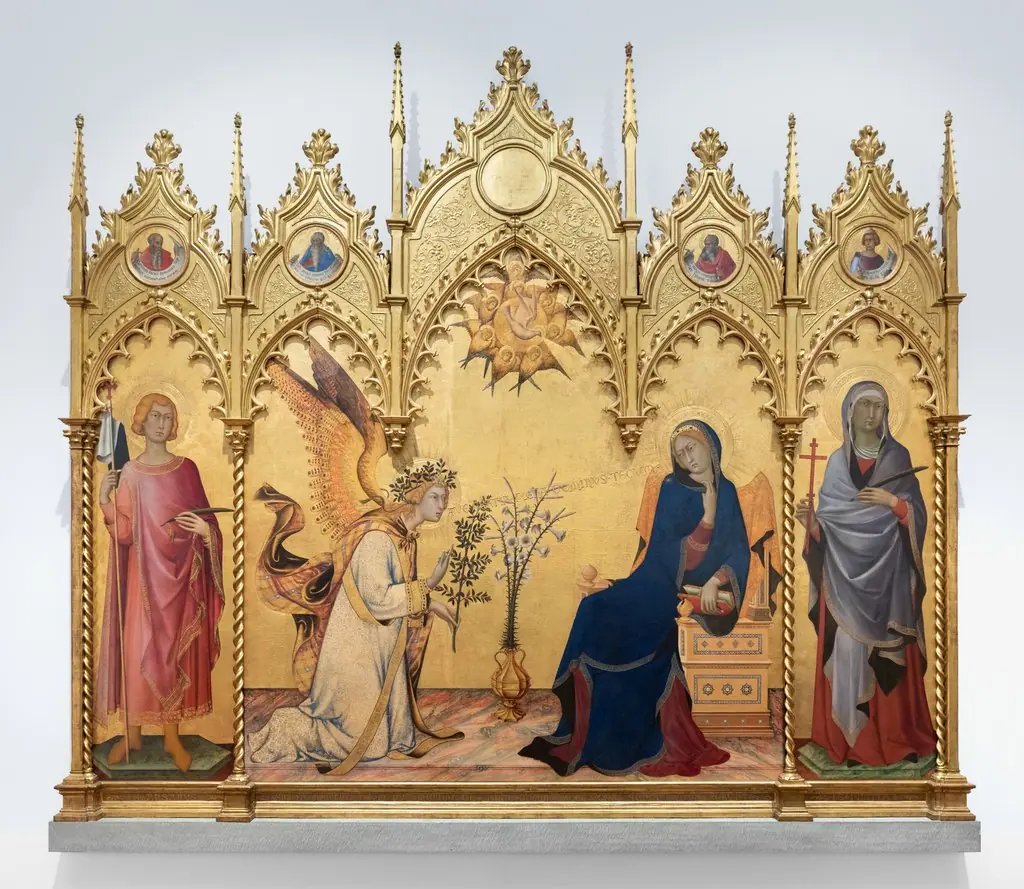 Annunciation with Saints Maxima and Ansanus
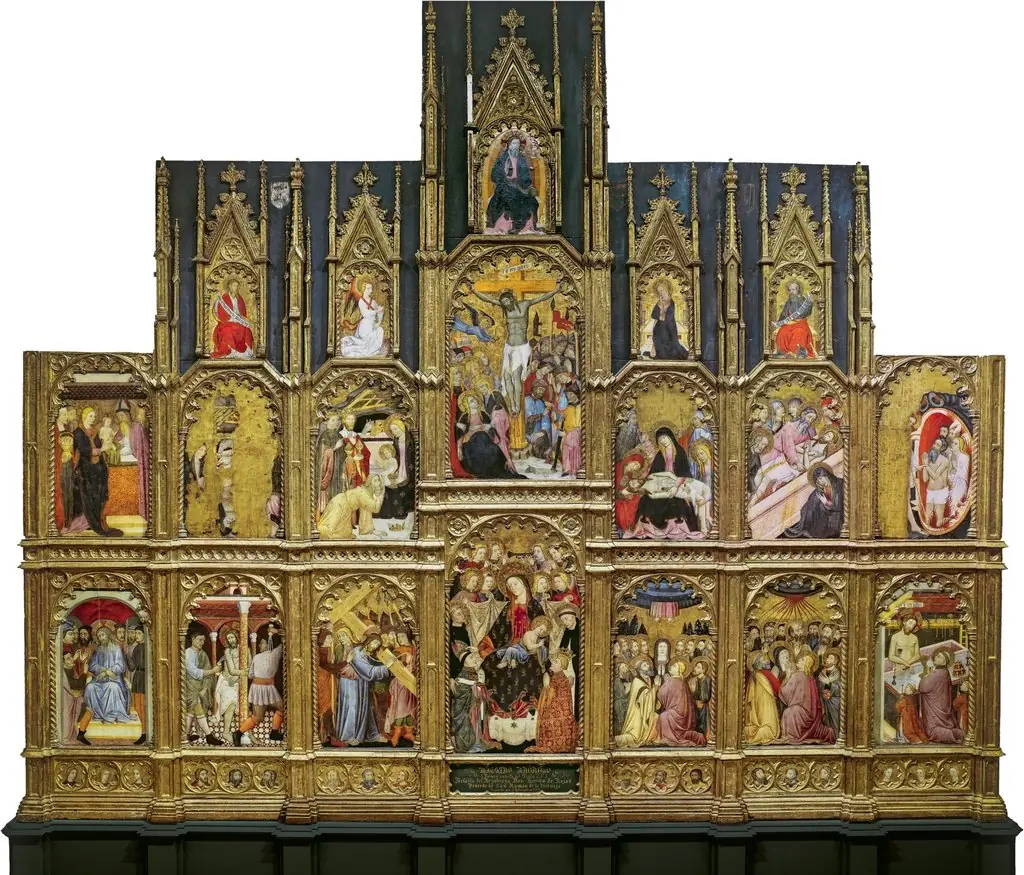 Altarpiece of Archbishop Sancho de Rojas