Artwork
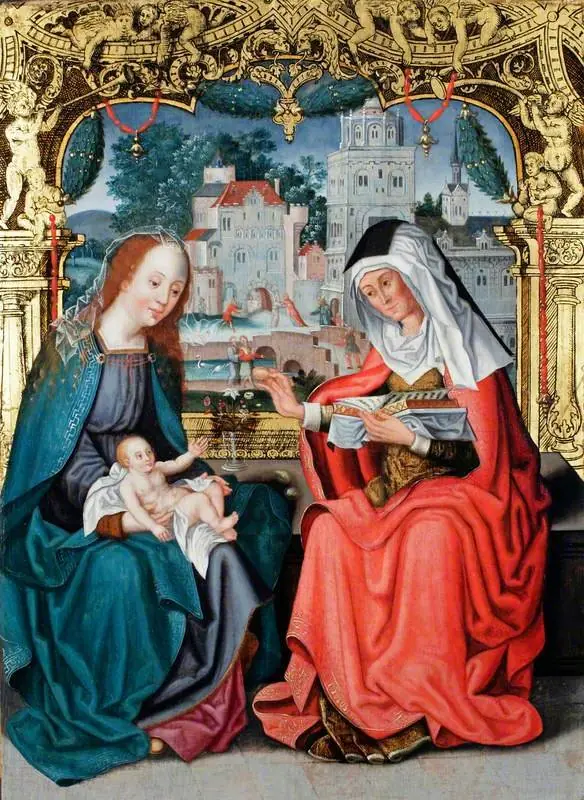
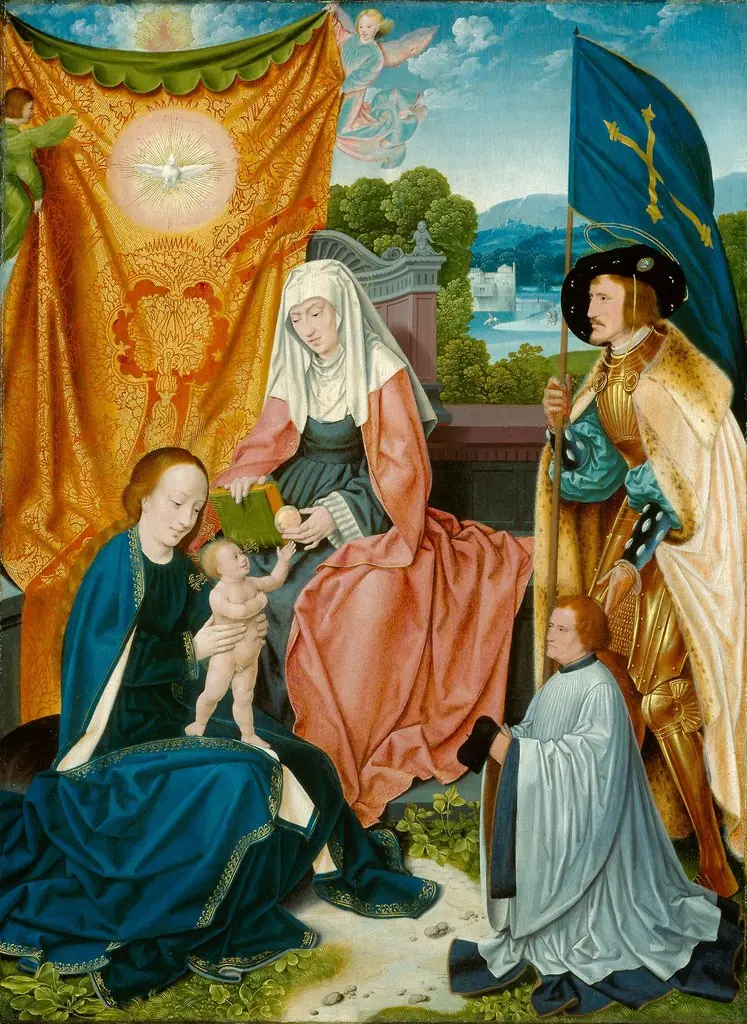
The Virgin and Child with Saint Anne
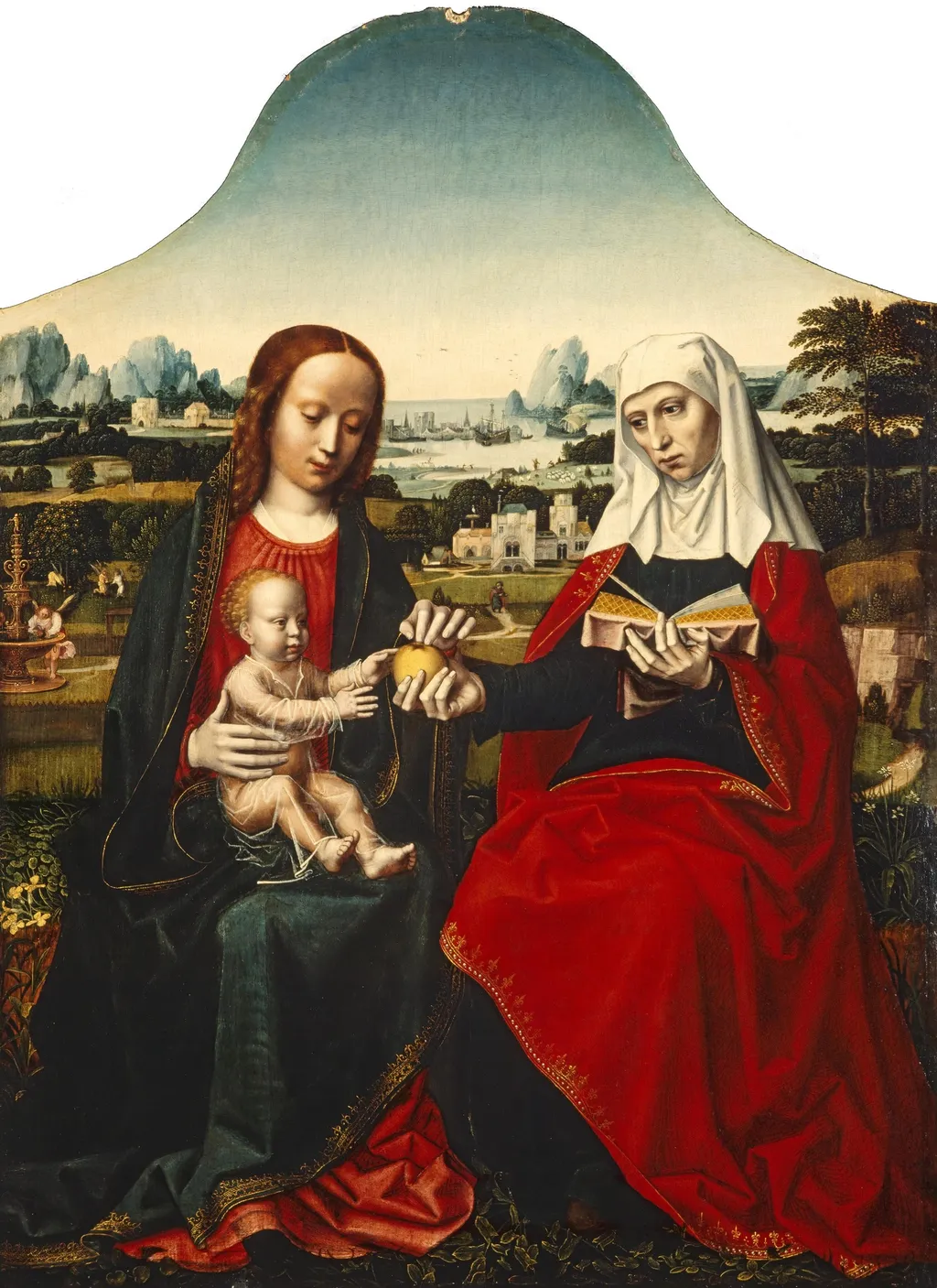
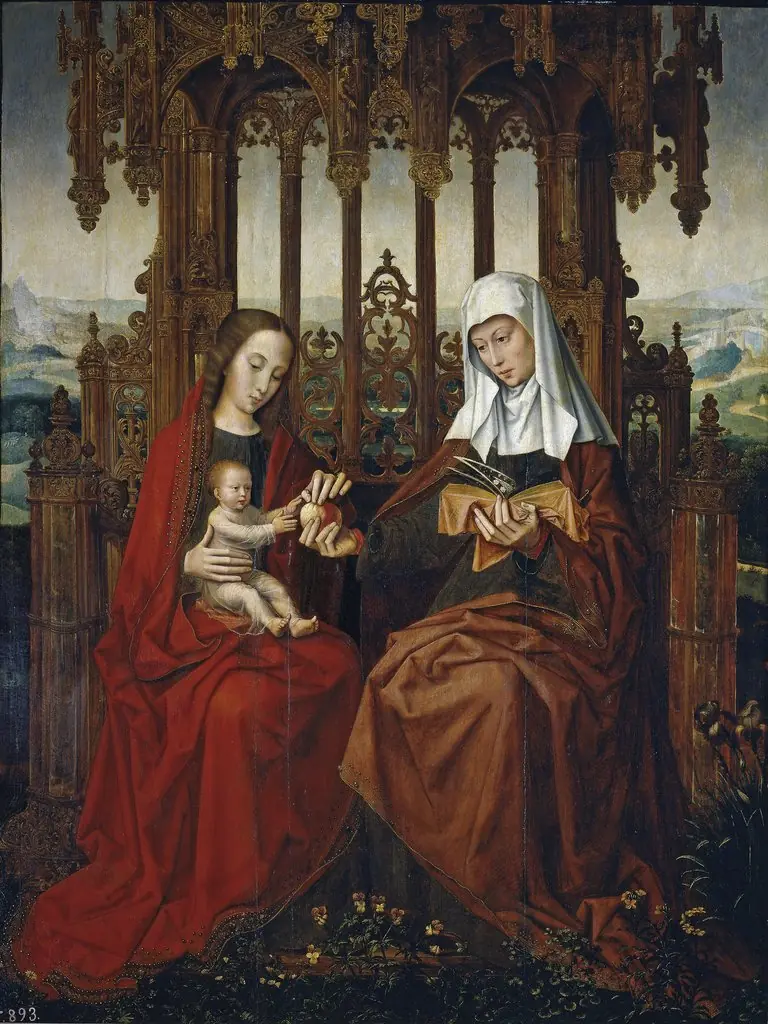
The Virgin and Child with Saint Anne is an oil painting by the Early Baroque Italian artist Ambrosius Benson. It dates from 1550 and is held in the collection of the National Galleries Scotland.
About this work
Overview
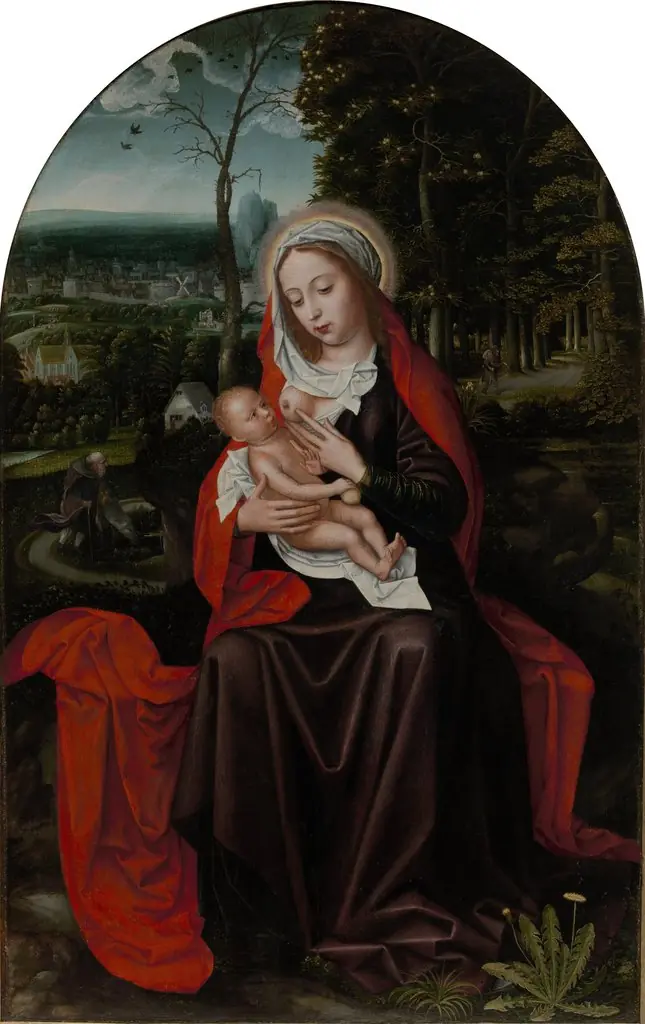
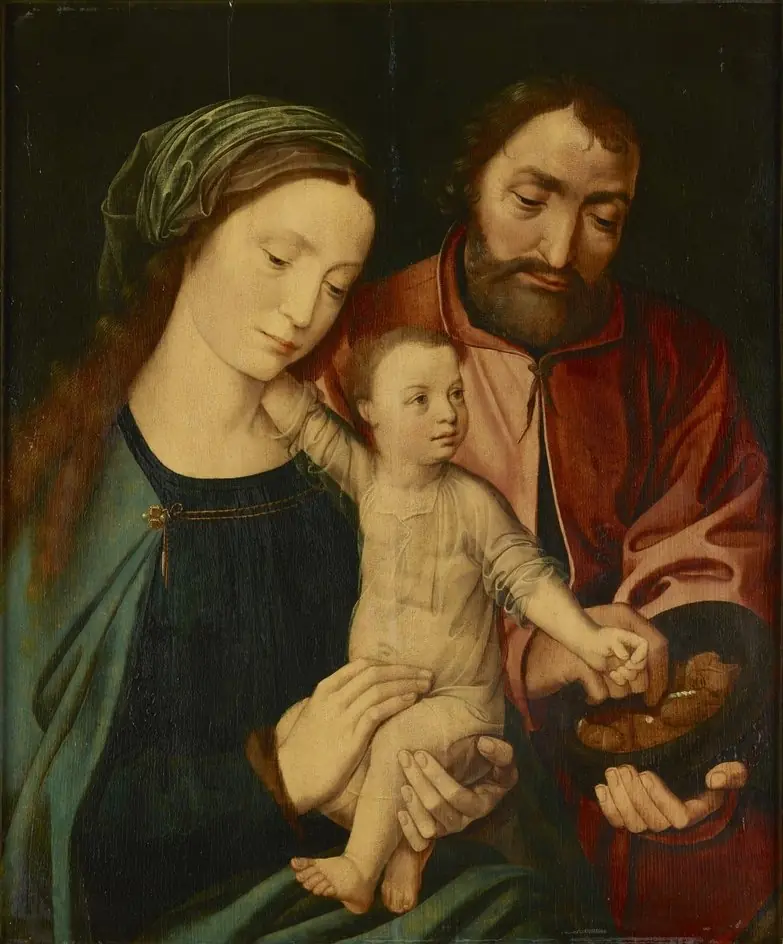
Painted around 1550, this oil-on-panel work by Ambrosius Benson depicts a devotional scene of the Virgin Mary, her mother Saint Anne, and the infant Jesus.
Painted around 1550, this oil-on-panel work by Ambrosius Benson depicts a devotional scene of the Virgin Mary, her mother Saint Anne, and the infant Jesus. Though Benson was active in the Northern Renaissance, the painting reflects a synthesis of Flemish detail and Italian compositional harmony. It resides today in the Scottish National Gallery, part of a broader corpus of religious imagery produced in his workshop and distributed across Europe.
Subject & Meaning
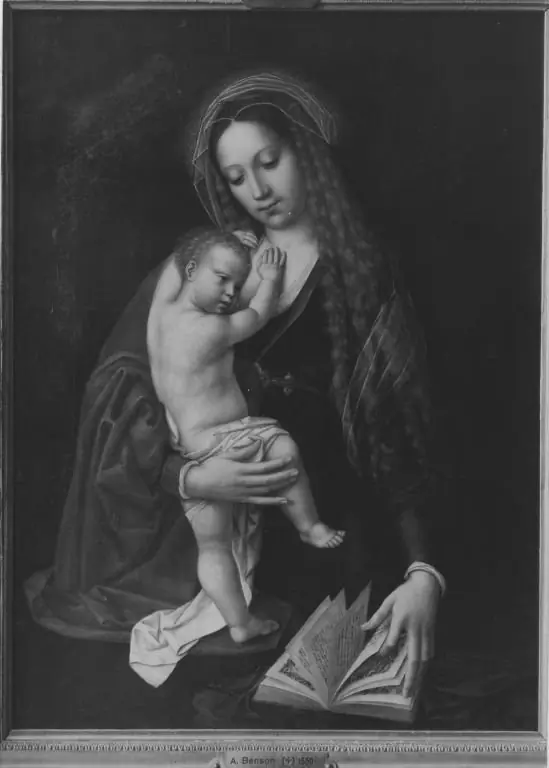
The composition centers on three generations of holy women: Saint Anne, the Virgin Mary, and the Christ Child. Mary and Anne gaze tenderly downward as Jesus reaches for an apple offered by his grandmother, a symbolic reference to the Fall and redemption. The intimate domestic setting transforms theological narrative into personal devotion, emphasizing familial bonds as a vessel for spiritual meaning.
Technique & Style
Benson employed fine brushwork and layered glazing to achieve rich color depth and lifelike textures, particularly in the folds of the figures’ garments. Facial expressions are subtly rendered, conveying quiet contemplation. The background landscape, with distant hills, water, and architecture, is rendered with meticulous detail but remains subordinate to the central figures, following Northern Renaissance conventions of spatial depth and symbolic environment.
History & Provenance
The painting entered the Scottish National Gallery’s collection in the 19th century, though its earlier ownership is undocumented. Benson’s workshop produced numerous variants of this subject, and similar compositions appear in Spanish collections, suggesting wide circulation. Despite limited biographical records, his output indicates a steady demand for devotional imagery among private patrons in the Low Countries and beyond.
Context
Created during the mid-16th century, the work emerges amid religious upheaval and shifting patronage. While Protestant reformers rejected elaborate religious imagery, Catholic patrons in the Southern Netherlands and Spain continued to commission such scenes. Benson’s adaptation of classical themes into contemporary settings reflects a broader trend of blending sacred narrative with everyday realism to enhance devotional engagement.
Legacy
Benson’s approach influenced later Northern artists through his precise technique and intimate religious compositions. Though less celebrated than contemporaries like Dürer or van Eyck, his works contributed to the persistence of devotional painting in regions resistant to iconoclasm. Surviving examples, including this one, offer insight into how religious imagery adapted to private worship in the decades before the full emergence of the Baroque.
Artist & collection
Artist
Ambrosius Benson (c. 1495/1500 – 1550) was an Italian painter who became a part of the Northern Renaissance. While many surviving paintings have been attributed, there is very little known of him from records, and he…