Artwork
A vase of flowers
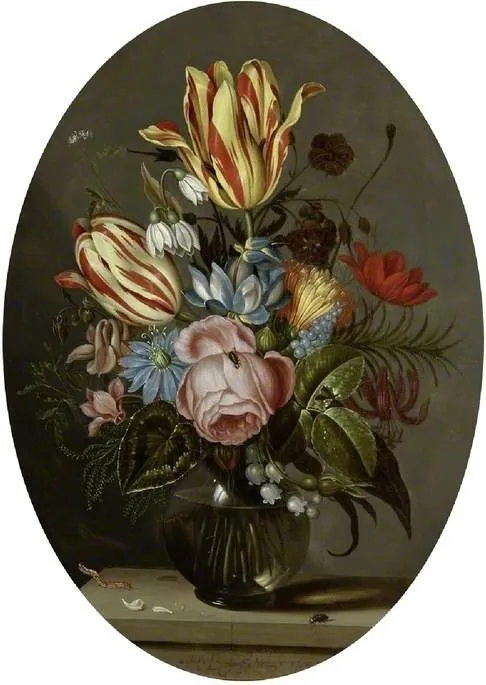
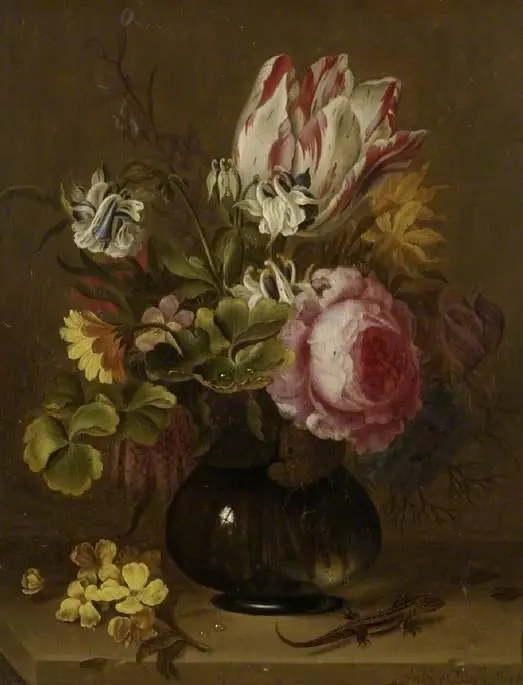
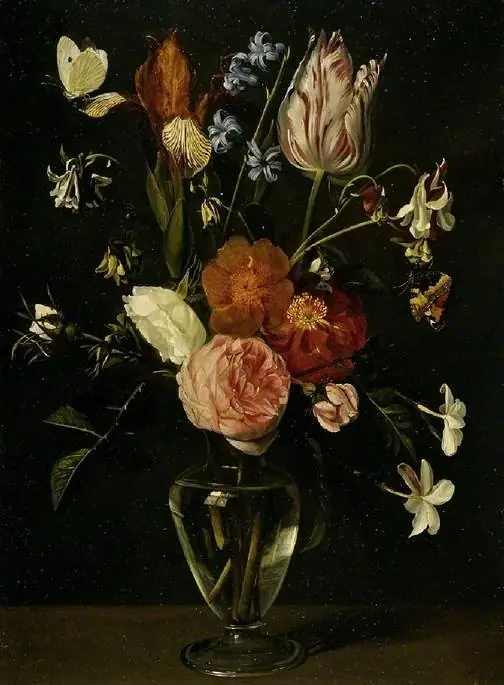
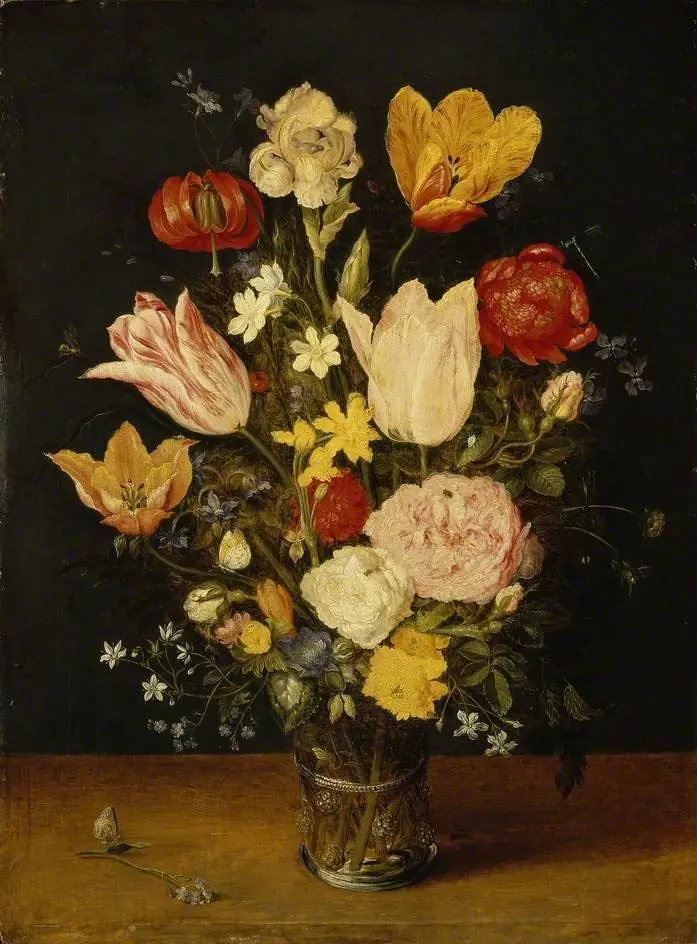
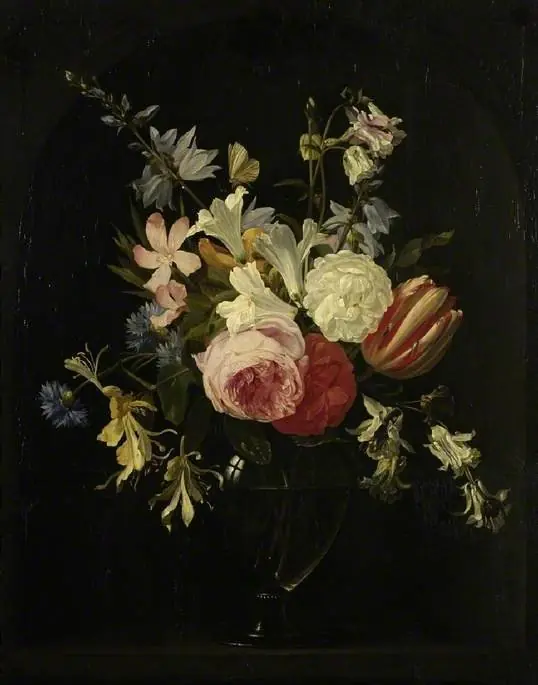
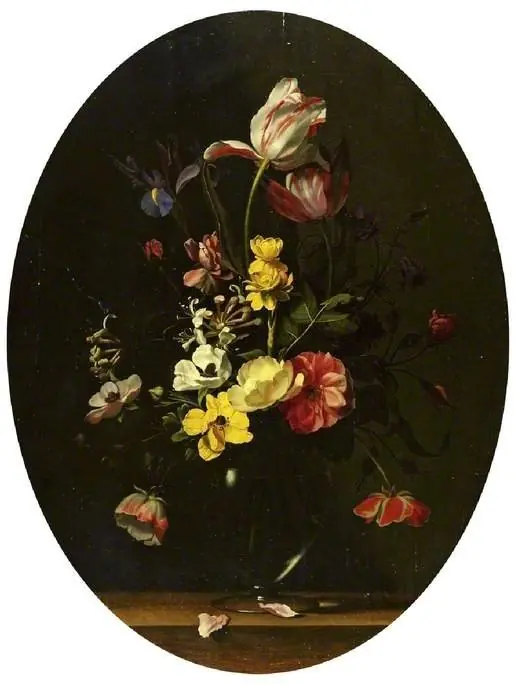
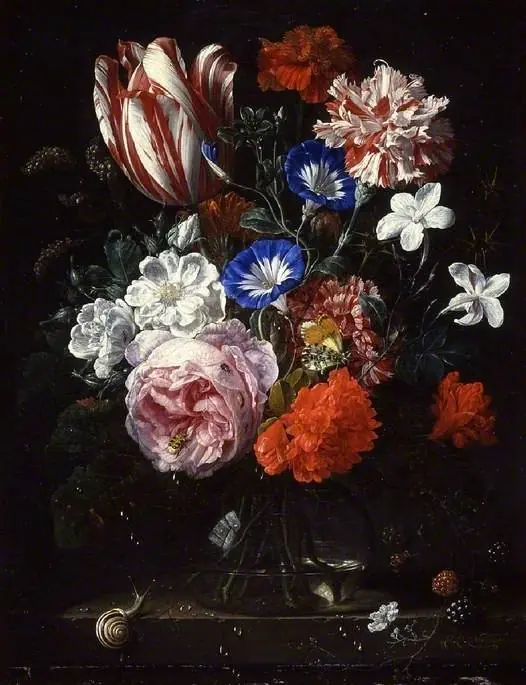
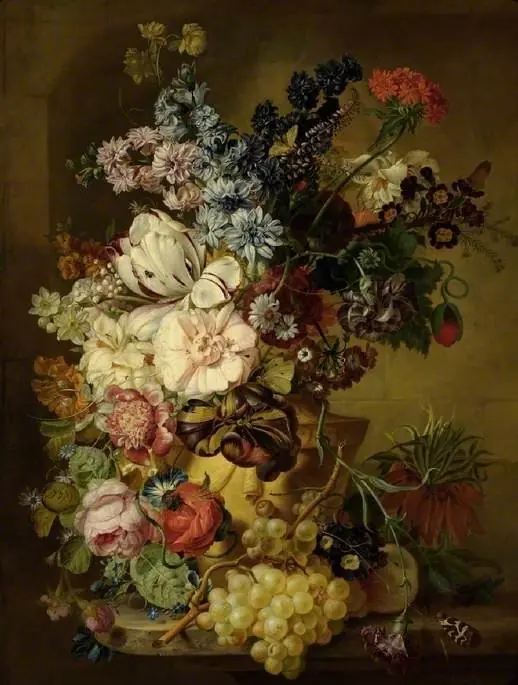
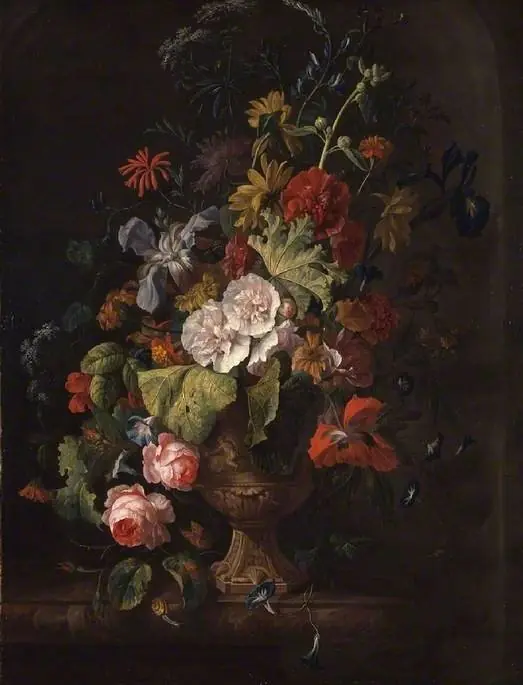
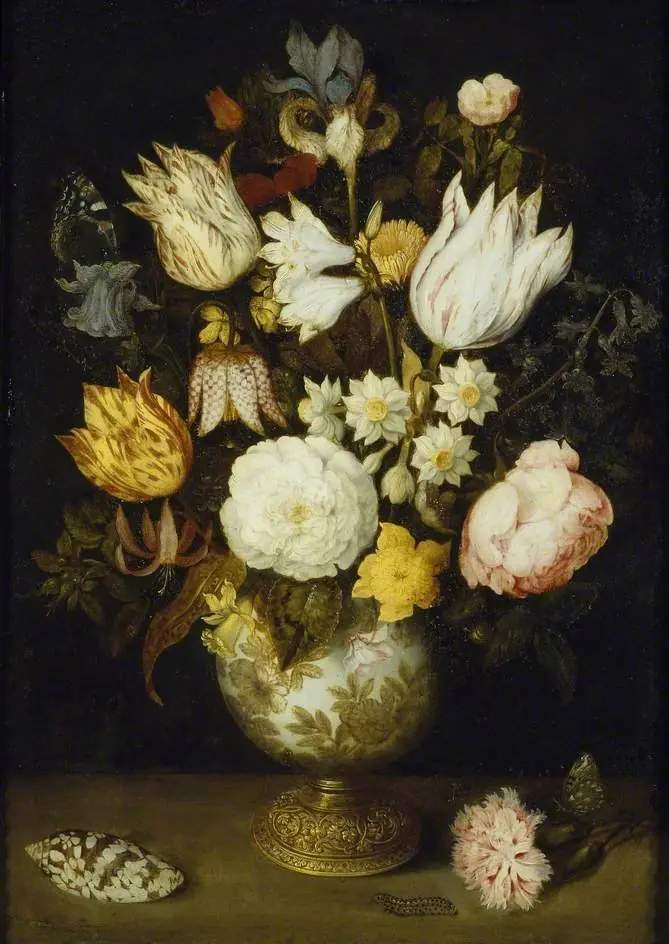
A vase of flowers is an oil painting by the Dutch Golden Age artist Ambrosius Bosschaert II. It dates from 1633 and is held in the collection of the Fitzwilliam Museum.
About this work
Overview
Painted in 1633 on a copper support, this still life by Ambrosius Bosschaert II presents a meticulously arranged bouquet of flowers in a dark, reflective vase.
Painted in 1633 on a copper support, this still life by Ambrosius Bosschaert II presents a meticulously arranged bouquet of flowers in a dark, reflective vase. Executed during the Dutch Golden Age, the work reflects the period’s fascination with natural detail and material precision. Copper, chosen for its smooth surface, allowed for fine brushwork and luminous effects, making it a favored medium for floral studies among Netherlandish artists of the time.
Subject & Meaning
The composition features a diverse array of blooms—tulips, roses, and other seasonal flowers—arranged with botanical accuracy. While visually harmonious, the selection includes species that bloom in different seasons, suggesting an idealized, rather than natural, arrangement. Such compositions often carried symbolic weight, alluding to the transience of life and the beauty of creation, common themes in Dutch still life traditions.
Technique & Style
Bosschaert employed fine brushwork to render individual petals, veins in leaves, and the glossy surface of the vase with striking clarity. Light is carefully modulated to create subtle highlights and soft shadows, enhancing the three-dimensionality of each element. This use of chiaroscuro, combined with precise linear detail, reflects the influence of his father’s style and the broader Netherlandish commitment to optical realism.
History & Provenance
The painting entered the collection of the Fitzwilliam Museum in Cambridge, where it remains today. Its attribution to Ambrosius Bosschaert II is supported by stylistic parallels with his known works and the dated signature typical of his output. The work’s survival in good condition offers insight into the preservation and collecting practices of Dutch still lifes in the centuries following their creation.
Context
During the early 17th century, the Netherlands saw a surge in still life painting, fueled by rising merchant wealth and scientific interest in botany. Flower paintings like this one catered to both aesthetic appreciation and intellectual curiosity, reflecting a culture that valued order, observation, and the display of rare, imported species. Such works were often commissioned by affluent patrons seeking to demonstrate taste and erudition.
Legacy
Ambrosius Bosschaert II’s work contributed to the codification of the floral still life as a distinct genre within Dutch art. His attention to botanical detail and technical refinement influenced later generations of painters, helping to establish conventions that persisted into the 18th century. While not widely known outside specialist circles, his paintings remain important examples of the period’s disciplined approach to natural representation.
Artist & collection
Artist
Ambrosius Bosschaert II (1609–1645) was a Dutch Golden Age painter who specialized in flower paintings in the manner of his father Ambrosius Bosschaert.