Artwork
Fire Works on the Night of the Fourth of July
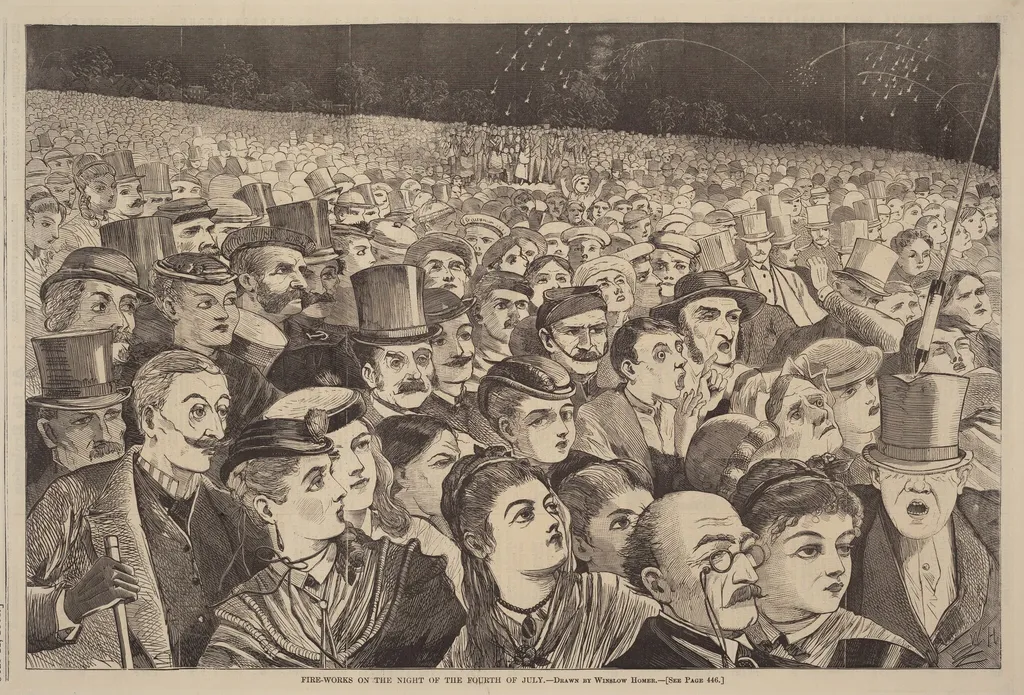
Fire Works on the Night of the Fourth of July is an ink print by the Impressionist artist American 19th Century. It dates from 1868 and is held in the collection of the National Gallery of Art. Created in 1868, this wood engraving captures a nighttime celebration of the Fourth of July.
About this work
This painting shows a night scene with fireworks exploding in the sky.
The scene is lively and full of energy. It's interesting that this wood engraving was published in 1868, which was a time when fireworks were a popular way to celebrate special events.
You can learn more about the technique used to create this image by looking into the technique: engraving.
Overview
Created in 1868, this wood engraving captures a nighttime celebration of the Fourth of July. The composition centers on fireworks bursting above a crowd, rendered with fine linear detail typical of the medium. As a printed image, it was likely distributed widely, reflecting the growing public interest in visual documentation of national holidays during the post-Civil War era.
Subject & Meaning
The scene depicts a communal observance of American independence, with fireworks symbolizing both celebration and national unity. The absence of identifiable figures emphasizes the collective experience rather than individual narratives. The dynamic explosions in the sky convey motion and spectacle, reinforcing the holiday’s role as a shared cultural ritual.
Technique & Style
Executed in wood engraving, the image relies on precise incisions into hardwood blocks to create fine lines and tonal contrasts. The artist used dense cross-hatching to suggest depth and the glow of fireworks, while leaving areas of the paper untouched to represent light. This method allowed for sharp, repeatable impressions suitable for mass publication in illustrated periodicals.
History & Provenance
Produced in 1868, the print emerged during a period of national reconstruction when public celebrations of independence gained renewed significance. Though the original publisher is unrecorded, similar engravings appeared in weekly magazines of the time, suggesting this work was part of a broader trend in illustrated journalism documenting civic life.
Context
In the late 1860s, fireworks displays became increasingly common in American towns as part of patriotic observances, aided by improved pyrotechnic technology and urban public spaces. Wood engravings like this one served as accessible visual records for audiences who may not have attended the events themselves, bridging local festivities with national identity.
Legacy
This engraving exemplifies how print media helped standardize visual representations of American holidays. While the specific image is not widely known today, its technique and subject reflect a broader 19th-century practice of using engraved illustrations to shape public memory of civic events, influencing later forms of photojournalism and holiday imagery.
Artist & collection

Artist
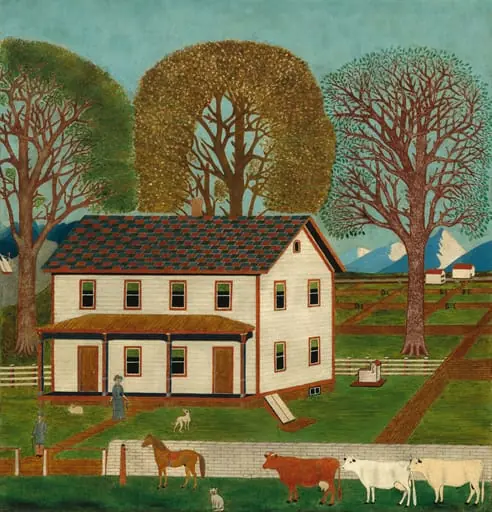
This artist painted everyday American life in the 1800s. Look at *Farmhouse in Mahantango Valley*—a quiet, sunlit scene of rural Pennsylvania. *Boy and Girl* shows two children standing close, their faces turned toward…

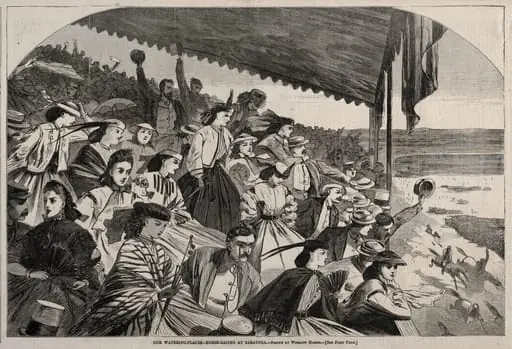 Our Watering Places - Horse Racing at Saratoga
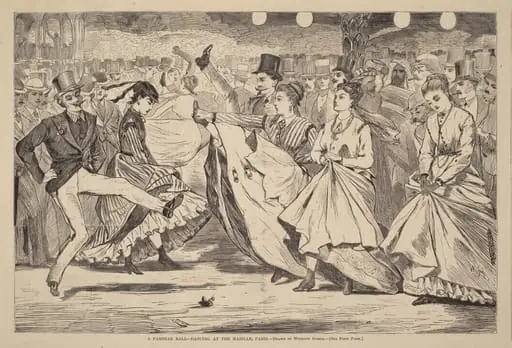 A Parisian Ball - Dancing at the Mabille, Paris
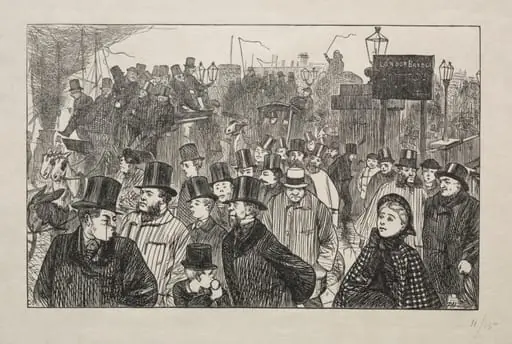 The Living Stream at London Bridge - On the Bridge
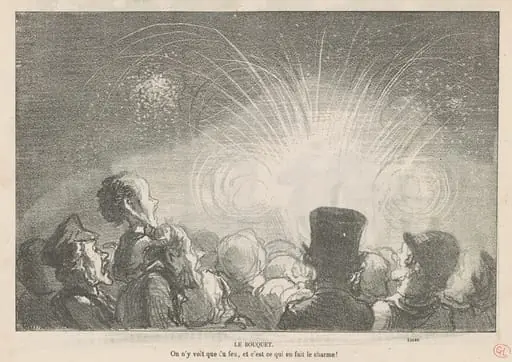 Le bouquet
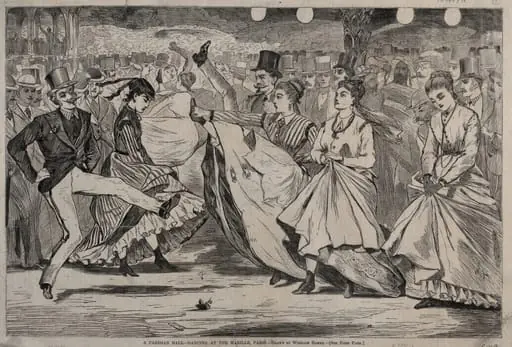 A Parisian Ball - Dancing at the Mabille, Paris
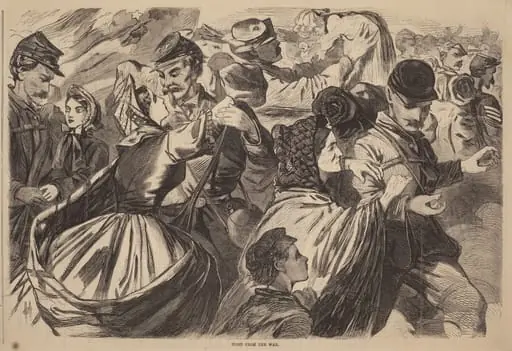 Home from the War
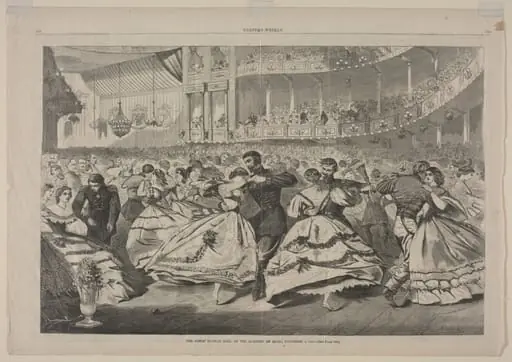 The Great Russian Ball at the Academy of Music, November 5, 1863
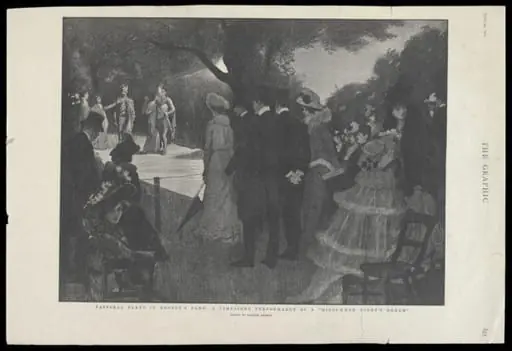 H Beard Print Collection
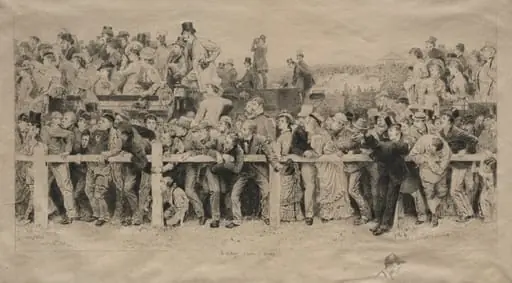 A Scene at the Derby
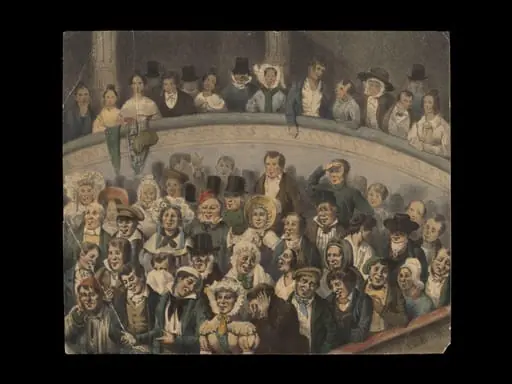 H Beard Print Collection