Artwork
A Parisian Ball - Dancing at the Mabille, Paris
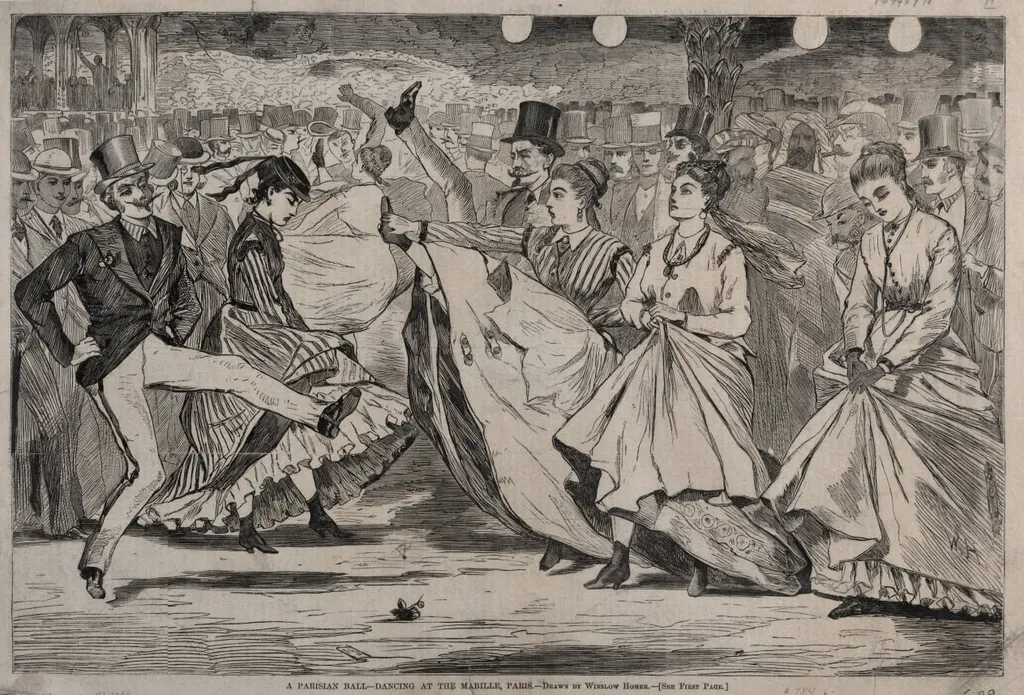
A Parisian Ball - Dancing at the Mabille, Paris is a print by the Impressionist artist Winslow Homer. It dates from 1867 and is held in the collection of the Cleveland Museum of Art.
About this work
Overview
Though best known for American marine scenes, Homer produced this work during a formative European sojourn, transitioning from illustration to fine art.
Created in 1867, this ink drawing by Winslow Homer captures a moment at the Mabille, a popular Parisian dance garden. Though best known for American marine scenes, Homer produced this work during a formative European sojourn, transitioning from illustration to fine art. The piece reflects his keen eye for social observation, rendered with rapid, fluid lines that convey motion and atmosphere without elaborate detail.
Subject & Meaning
The scene portrays a crowded ballroom where couples dance under the glow of natural light filtering through large windows. Men in formal attire and women in voluminous gowns move in synchronized rhythm, while spectators line the periphery. Homer avoids idealization, instead presenting a candid snapshot of urban leisure, suggesting the social rituals of Parisian middle- and upper-class life during the Second Empire.
Technique & Style
Homer employed ink and wash with loose, energetic strokes to suggest movement and depth. Dresses swirl, hats tilt, and bodies lean into the dance—all rendered with minimal detail but maximum dynamism. The contrast between the active center and the still, shadowed edges creates spatial tension. His approach retains the immediacy of journalistic sketching, adapted to convey the rhythm of a public gathering.
History & Provenance
Homer made this drawing during his 1866–67 trip to France, commissioned by Harper’s Weekly to document European life. It was likely intended as a preparatory study or standalone illustration. The work remained in private hands after publication, later entering institutional collections. Its survival as a finished drawing, rather than a printed reproduction, underscores its value as a personal record of Homer’s evolving artistic vision.
Context
The Mabille was one of Paris’s most fashionable open-air dance venues, frequented by the bourgeoisie and artists alike. In the 1860s, such spaces symbolized modern urban leisure, distinct from aristocratic salons. Homer’s depiction aligns with Realist tendencies in art, focusing on ordinary social activity rather than myth or grandeur, reflecting broader 19th-century interests in documenting contemporary life with honesty and precision.
Legacy
This drawing marks a transitional phase in Homer’s career, bridging his illustration roots and later mature works. While not widely exhibited during his lifetime, it demonstrates his early mastery of capturing motion and social nuance. Its influence is seen in later American artists who adopted similar observational methods, reinforcing the value of everyday scenes in fine art traditions.
Artist & collection
Artist
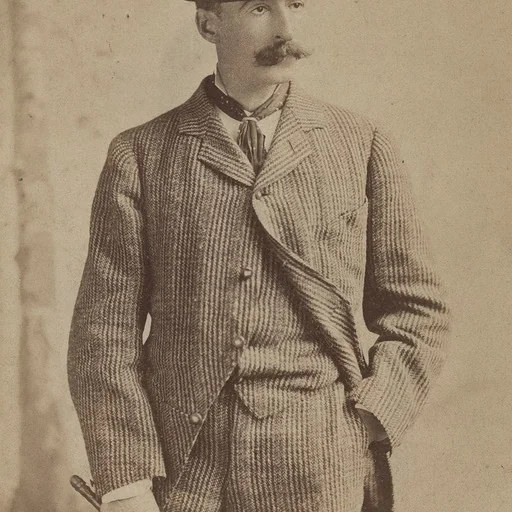
Winslow Homer (February 24, 1836 – September 29, 1910) was an American landscape painter and illustrator, best known for his marine subjects.

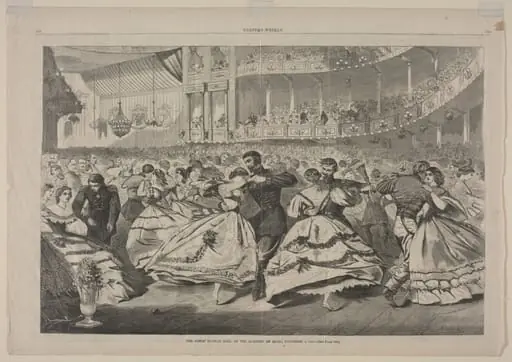 The Great Russian Ball at the Academy of Music, November 5, 1863
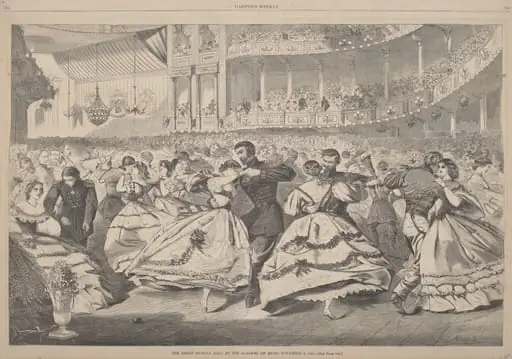 The Great Russian Ball at the Academy of Music, November 5, 1863
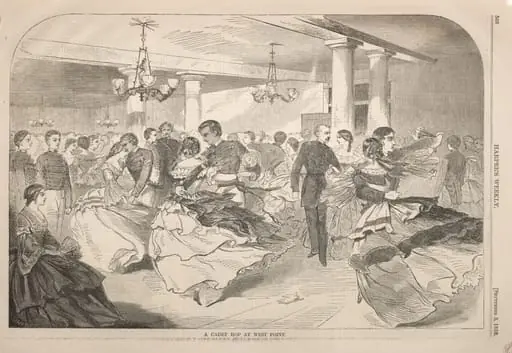 A Cadet Hop at West Point
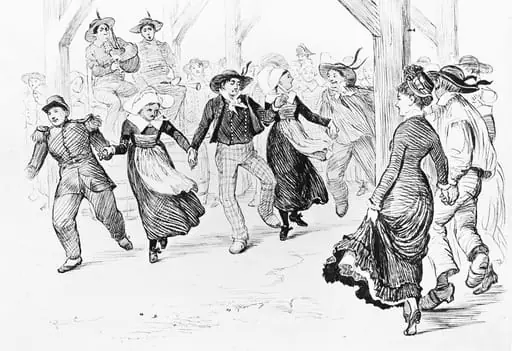 Breton Folk
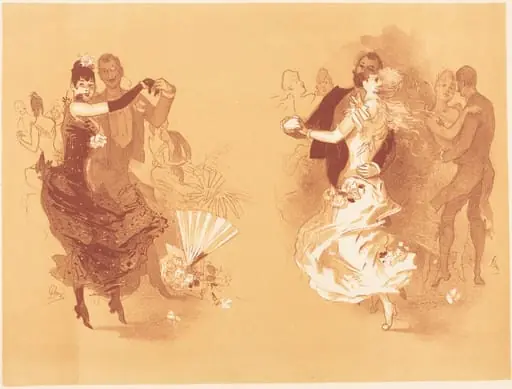 Waltz of the Blonde and Waltz of the Brunette
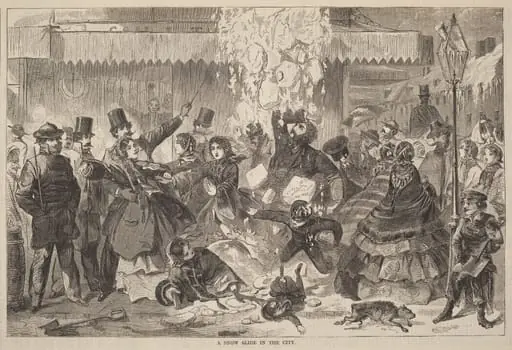 A Snow Slide in the City
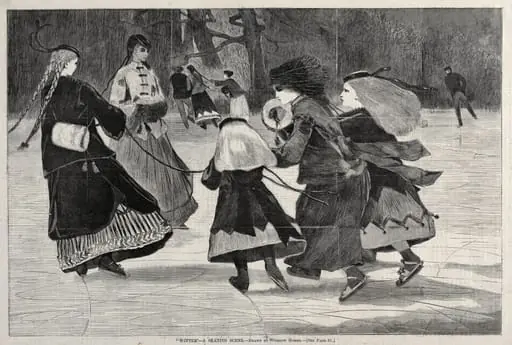 "Winter" - A Skating Scene
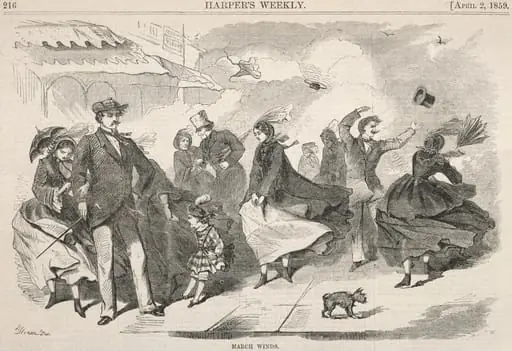 March Winds
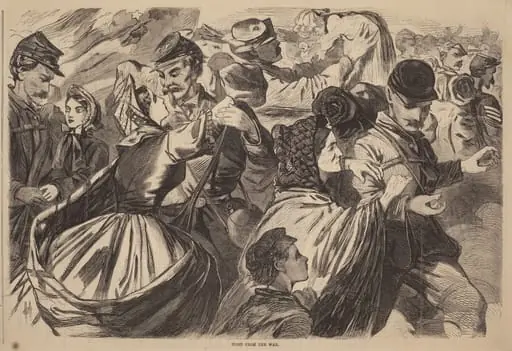 Home from the War
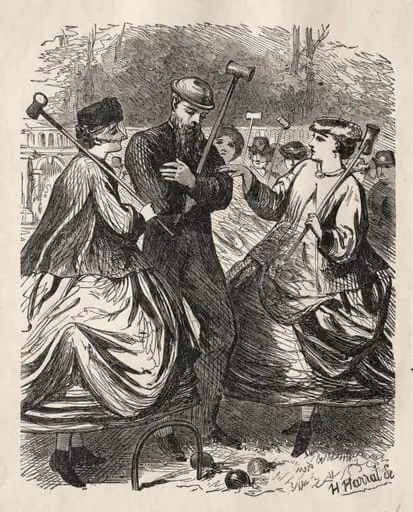 Our Croquet Party