Artwork
Herd of Cattle
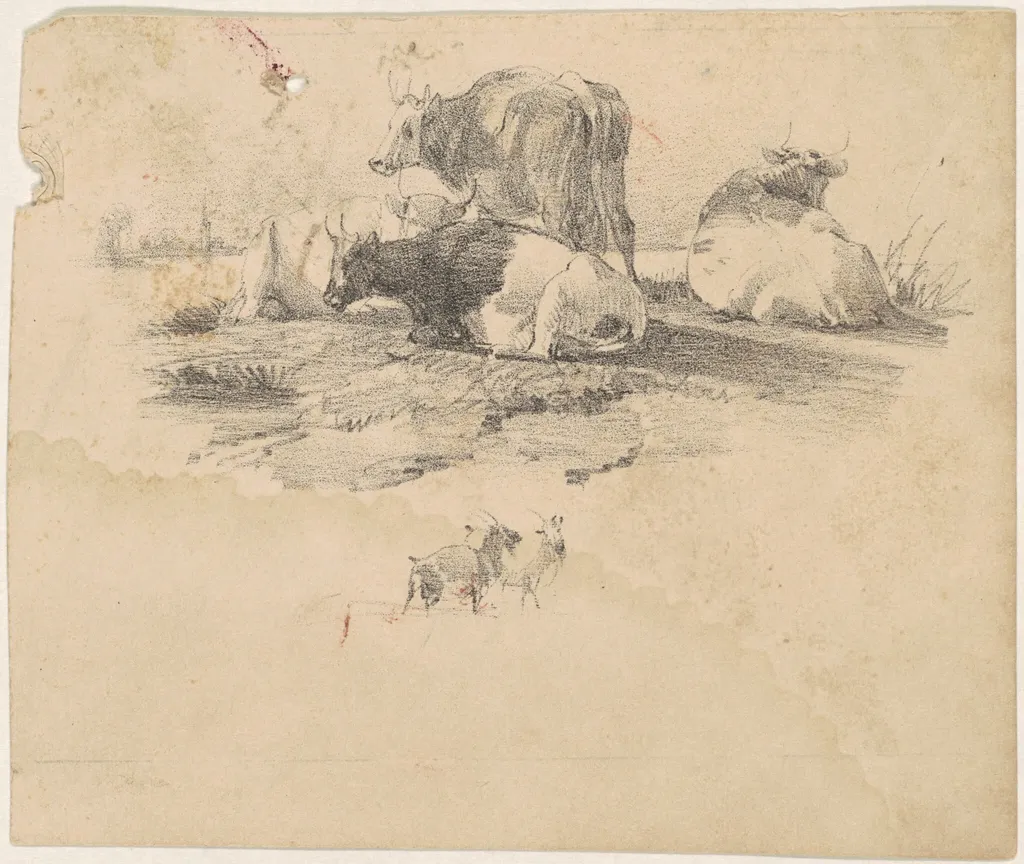
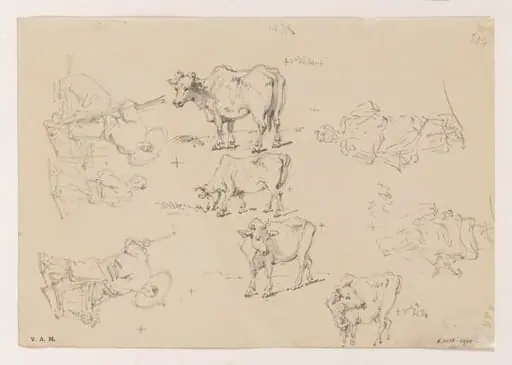
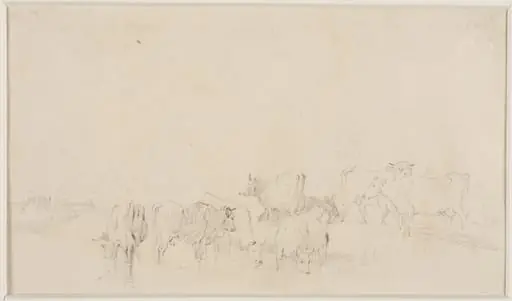
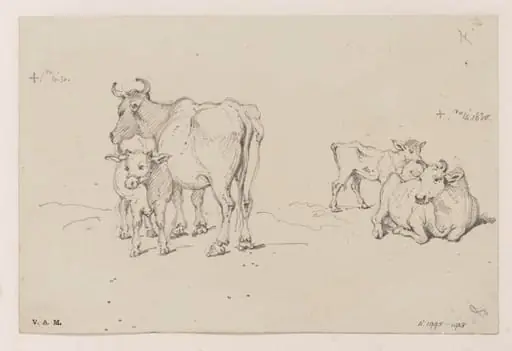
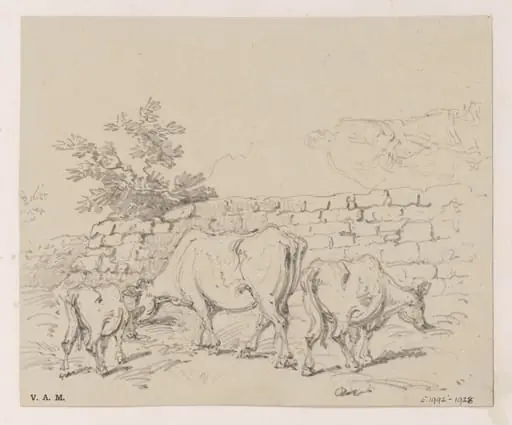
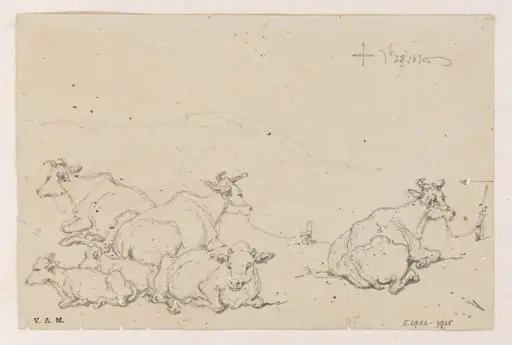
Herd of Cattle is an ink print by the Romanticist artist American 19th Century. It dates from 1801 and is held in the collection of the National Gallery of Art. This lithograph, created in the 19th century, presents a quiet pastoral scene rendered in black ink on wove paper.
About this work
Overview
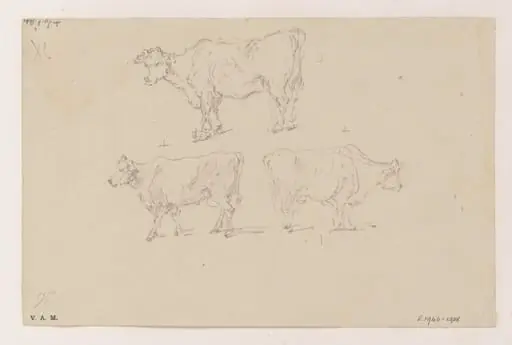
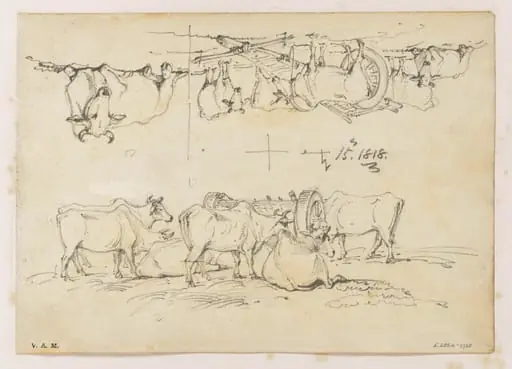
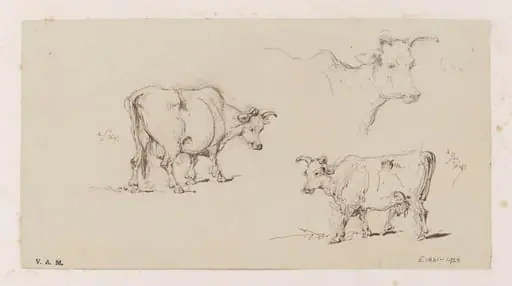
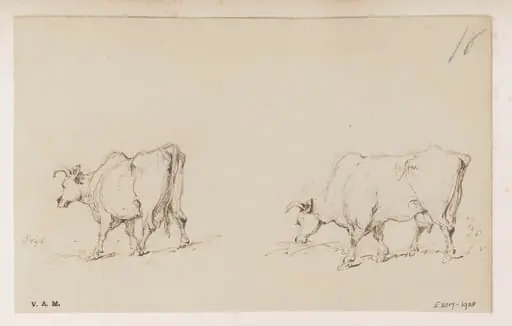
This lithograph, created in the 19th century, presents a quiet pastoral scene rendered in black ink on wove paper. The composition centers on a group of cattle at rest, their forms rendered with subtle tonal gradations. The medium’s capacity for fine line work allows for a gentle, atmospheric quality, reinforcing the stillness of the moment without overt drama or movement.
Subject & Meaning
The image captures a moment of repose among livestock, emphasizing tranquility over labor. The three cows in the foreground, positioned with heads lowered and bodies relaxed, suggest a pause in the daily rhythm of rural life. There is no human presence, allowing the animals themselves to embody the quiet dignity of the natural world as observed by the artist.
Technique & Style
Executed in lithography, the print relies on the artist’s use of delicate, controlled pencil strokes to build texture and volume.
Executed in lithography, the print relies on the artist’s use of delicate, controlled pencil strokes to build texture and volume. The monochromatic palette—soft grays on aged paper—enhances the muted mood, while the paper’s slight imperfections contribute to the work’s tactile, time-worn character. The technique avoids sharp contrasts, favoring nuanced transitions that mimic the softness of animal hides and earth.
History & Provenance
The work originates from a period when lithography was widely adopted for both commercial and artistic printmaking in Europe and America. Though the artist’s identity is not specified in available records, the piece aligns with 19th-century interest in rural subjects, often produced for private collections or illustrated periodicals seeking to document everyday life.
Context
During the 1800s, as industrialization reshaped landscapes, artists increasingly turned to pastoral themes as a counterpoint to urban growth. This lithograph reflects a broader cultural nostalgia for agrarian rhythms, where animals were not merely economic assets but symbols of endurance and harmony with nature, rendered with quiet observation rather than idealization.
Legacy
The print stands as a modest but thoughtful example of lithographic realism in the 19th century. It contributes to a body of work that documented rural life with sensitivity, influencing later generations of printmakers who valued understated composition and material subtlety over grand narrative. Its preservation highlights the enduring appeal of quiet, unadorned scenes from the natural world.
Artist & collection

Artist
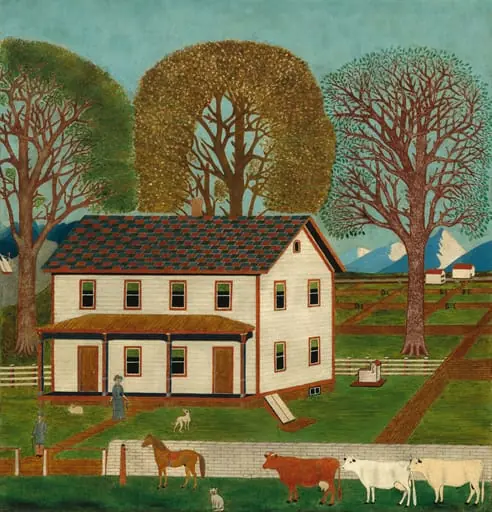
This artist painted everyday American life in the 1800s. Look at *Farmhouse in Mahantango Valley*—a quiet, sunlit scene of rural Pennsylvania. *Boy and Girl* shows two children standing close, their faces turned toward…