Artwork
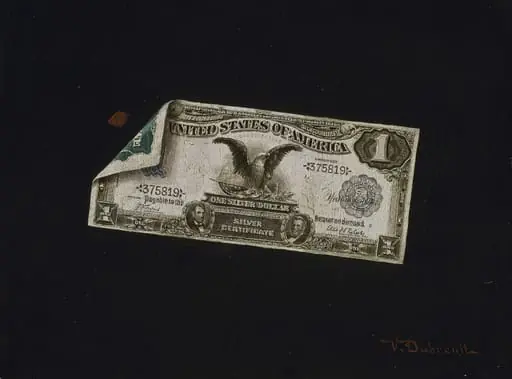
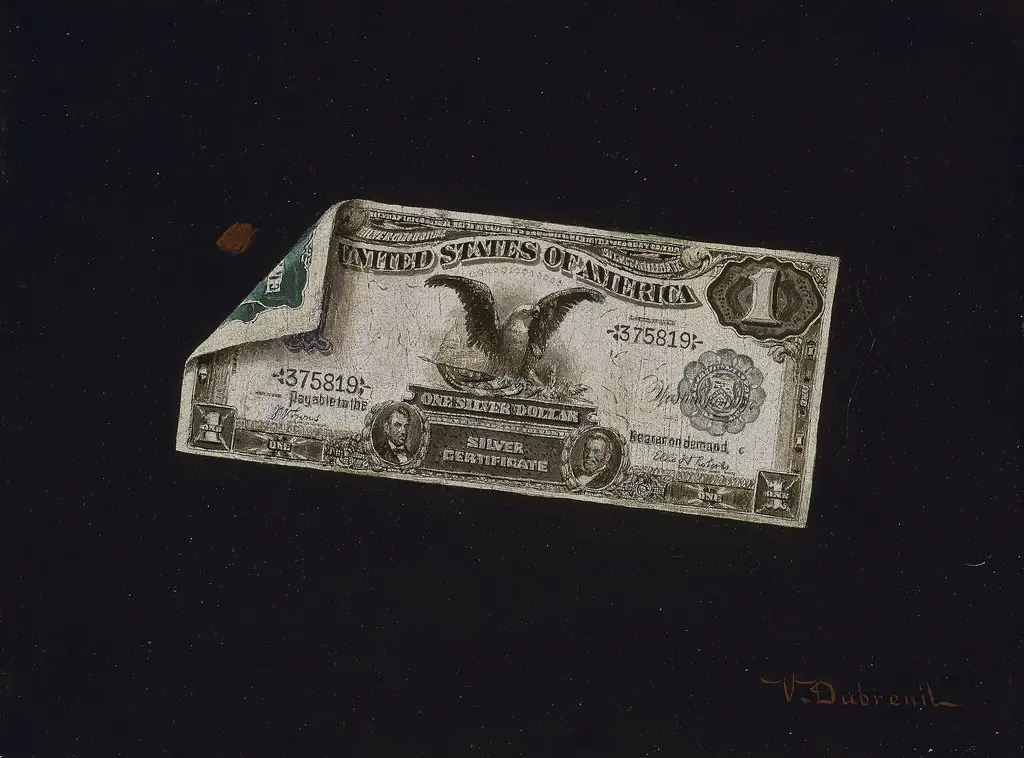
Trompe l'Oeil: A Full House with Chips and a $5 Bill
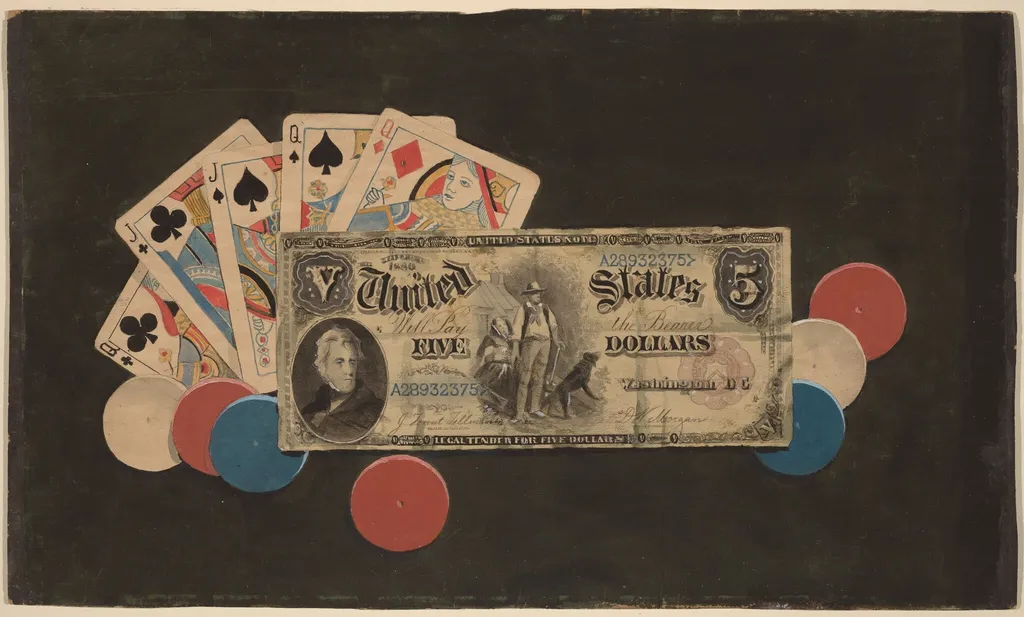
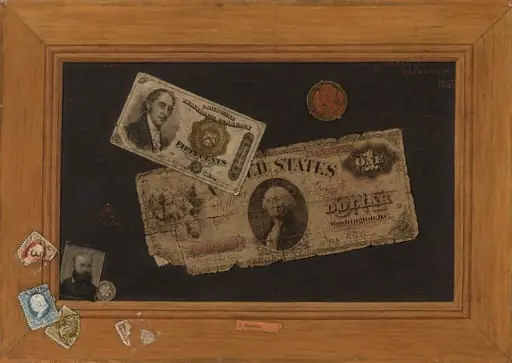
Trompe l'Oeil: A Full House with Chips and a $5 Bill is a watercolor drawing by the Impressionist artist American 19th Century. It dates from 1895 and is held in the collection of the National Gallery of Art. The work is a watercolor drawing executed over a graphite underdrawing, mounted on cardboard.
About this work
Overview
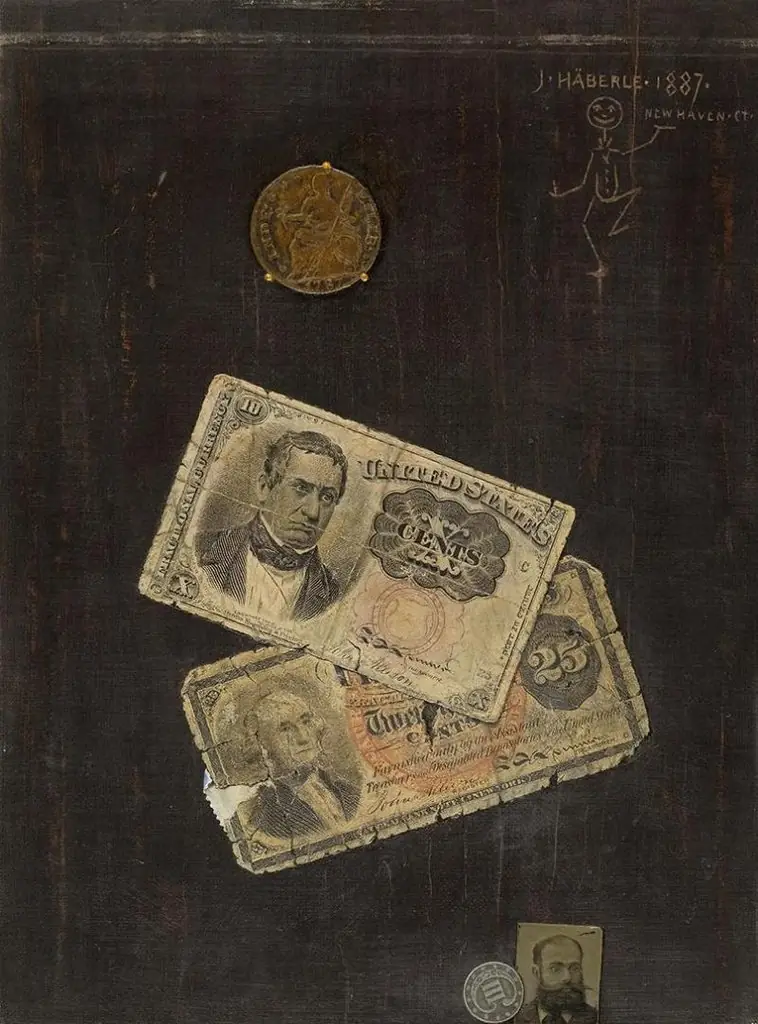
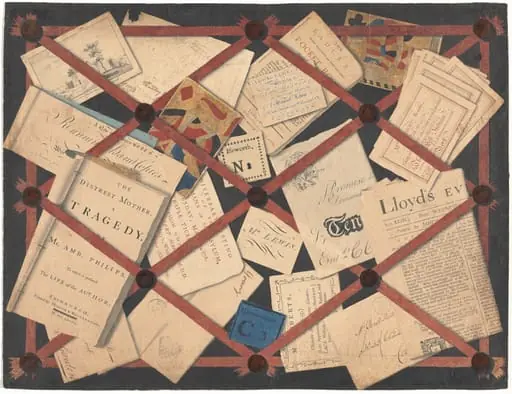
The work is a watercolor drawing executed over a graphite underdrawing, mounted on cardboard. It presents a grouping of commonplace items—such as potato chips and a five‑dollar bill—arranged as if they were affixed to a wall. The composition relies on visual illusion to suggest three‑dimensional reality.
Subject & Meaning
Everyday objects are depicted with meticulous detail, inviting viewers to question the boundary between representation and actual presence. By choosing mundane items, the artist highlights the ordinary, while the illusionary presentation prompts reflection on perception and the reliability of visual information.
Technique & Style
The piece employs trompe‑l’œil, a French term meaning “deceive the eye,” achieved through precise watercolor washes layered atop a graphite sketch. The medium’s translucency allows subtle gradations of light and shadow, reinforcing the illusion of depth and material texture on a flat surface.
Context
Trompe‑l’œil has a long history in Western art, from Baroque ceiling frescoes to modern still‑life studies. This drawing continues that tradition within a contemporary medium, using watercolor—a medium less commonly associated with the technique—to explore the interplay of illusion and everyday life.
Artist & collection

Artist
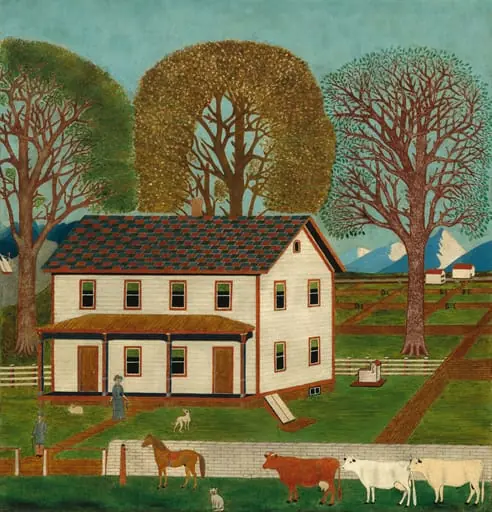
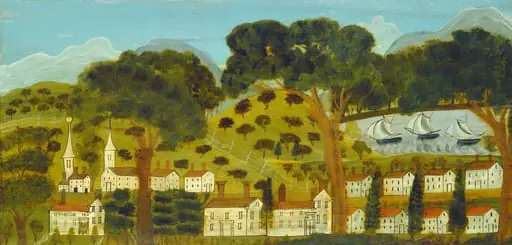
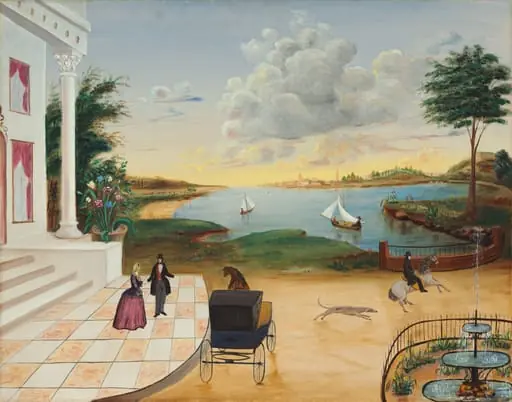
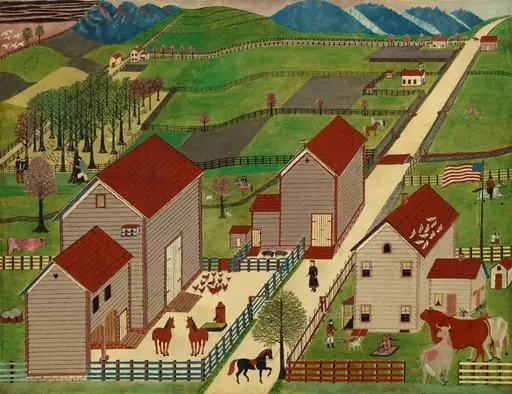
This artist painted everyday American life in the 1800s. Look at *Farmhouse in Mahantango Valley*—a quiet, sunlit scene of rural Pennsylvania. *Boy and Girl* shows two children standing close, their faces turned toward…