Artwork
Washington, the Mason
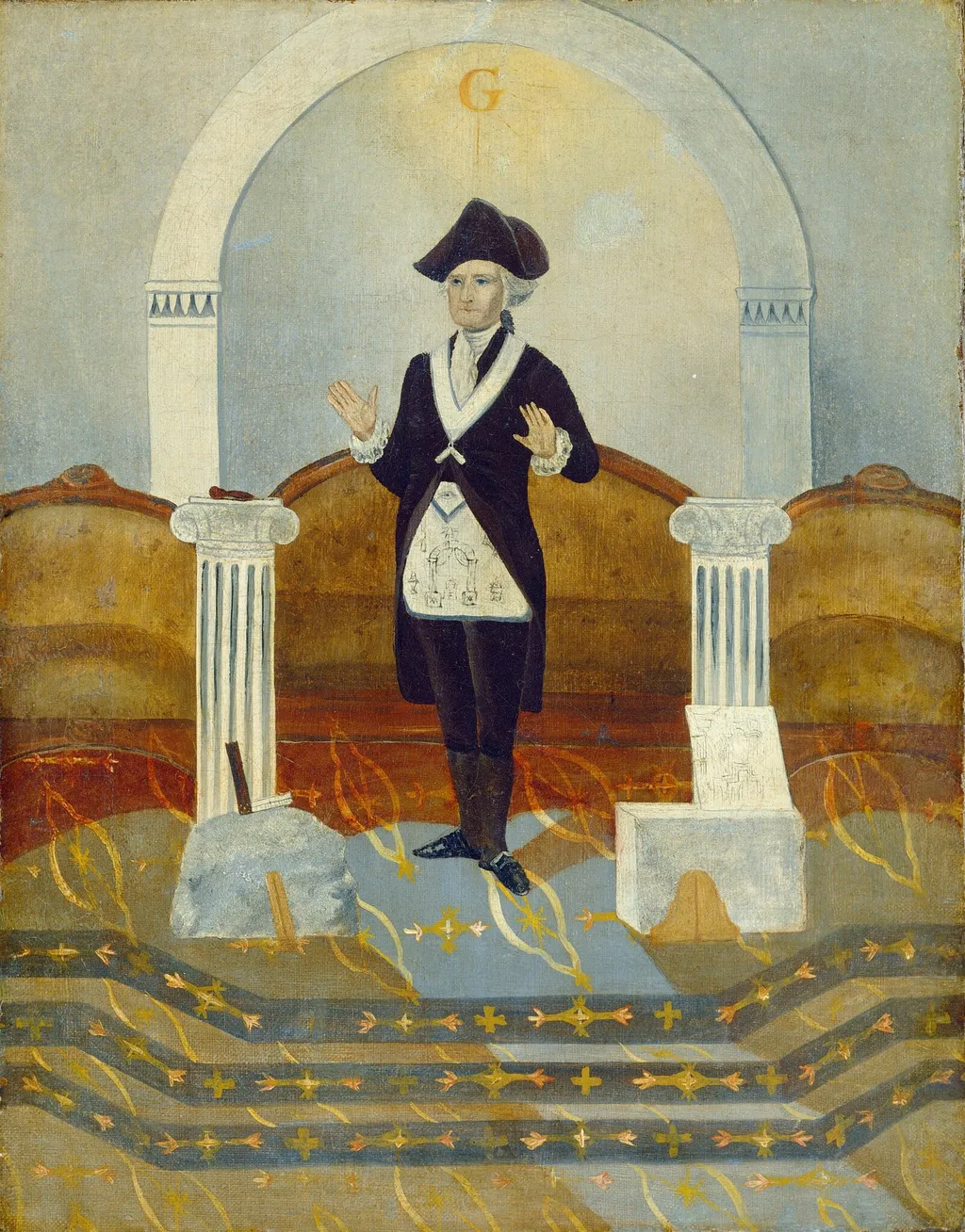
Washington, the Mason is an oil painting. It dates from 1868 and is held in the collection of the National Gallery of Art.
About this work
Overview
The canvas presents a solitary figure standing on an elevated platform, dressed in a dark coat over a white vest, his hands outstretched as if addressing an audience. Behind him rise two imposing columns and a partial arch bearing a prominent letter “G.” The floor is strewn with gold‑colored stars and leaf motifs, and the overall palette appears softened by age.
Subject & Meaning
The central figure’s vest bears the emblem of a square and compasses, a well‑known insignia of Freemasonry, suggesting the work depicts a mason in a ceremonial setting. The letter “G” and the architectural elements reinforce Masonic symbolism, indicating the painting may have been intended to honor or illustrate a Masonic ritual or gathering.
Technique & Style
Executed in oil, the painting employs loose brushwork and a relatively bright, though slightly muted, color scheme characteristic of late‑19th‑century academic realism that flirted with impressionistic tendencies. The handling of light on the figures and decorative ground treatment reflects a preference for atmospheric effect over meticulous detail.
Context
Created during a period when fraternal societies enjoyed considerable public visibility, the work aligns with contemporary interest in depicting civic and secretive institutions. Its visual language mirrors the broader European trend of integrating allegorical and symbolic content within genre scenes.
Artist & collection