Artwork
The Adoration of the Shepherds
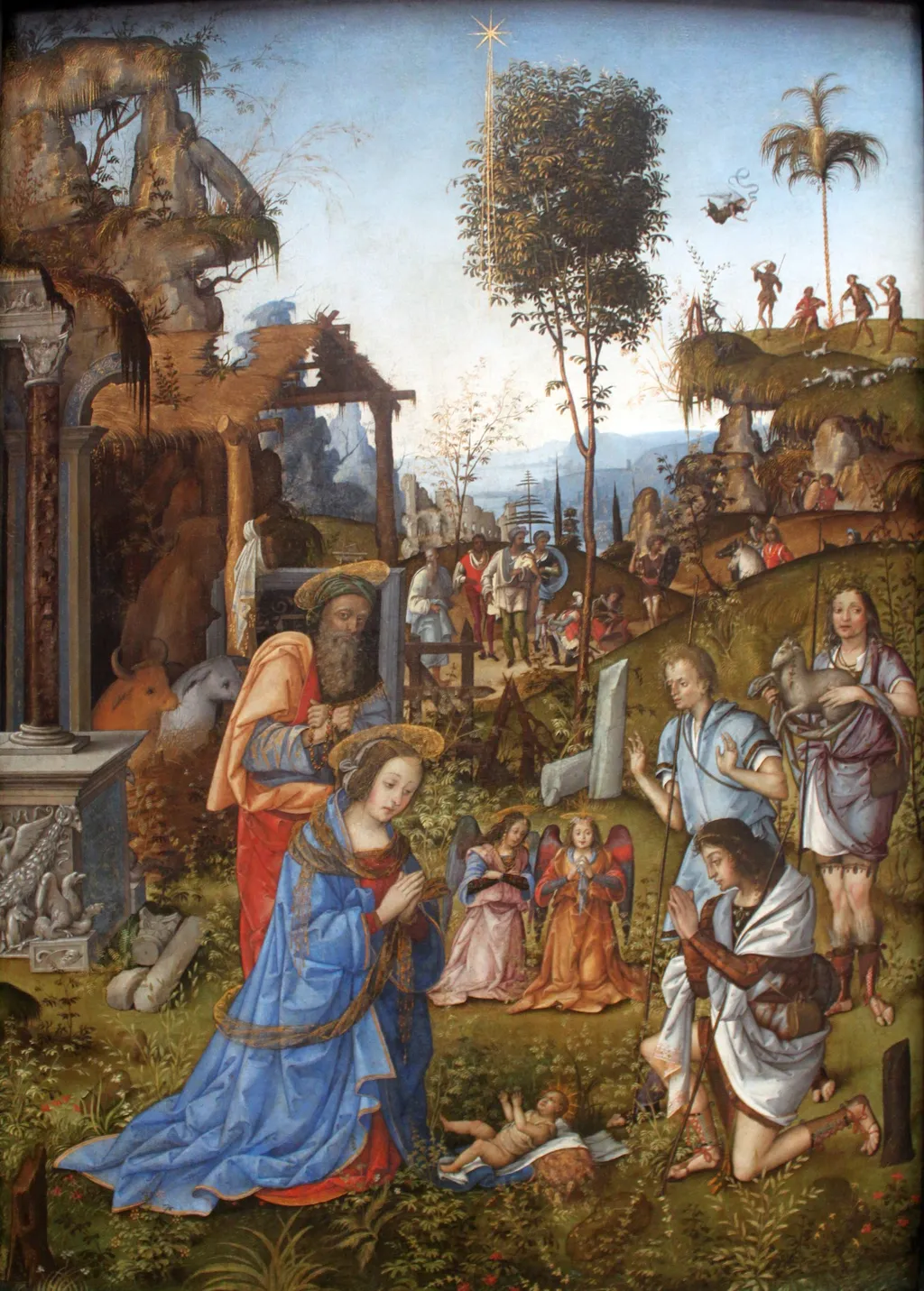
The Adoration of the Shepherds is a paint painting by the Early Renaissance artist Amico Aspertini. It dates from 1498 and is held in the collection of the Gemäldegalerie Berlin.
About this work
Overview
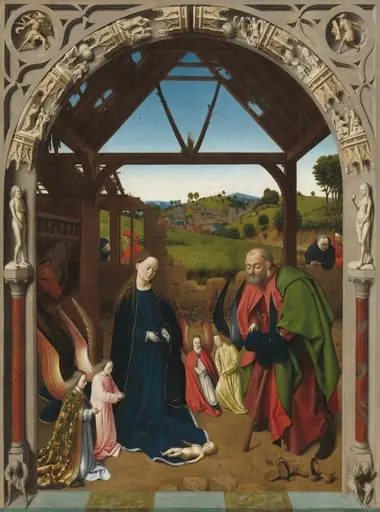
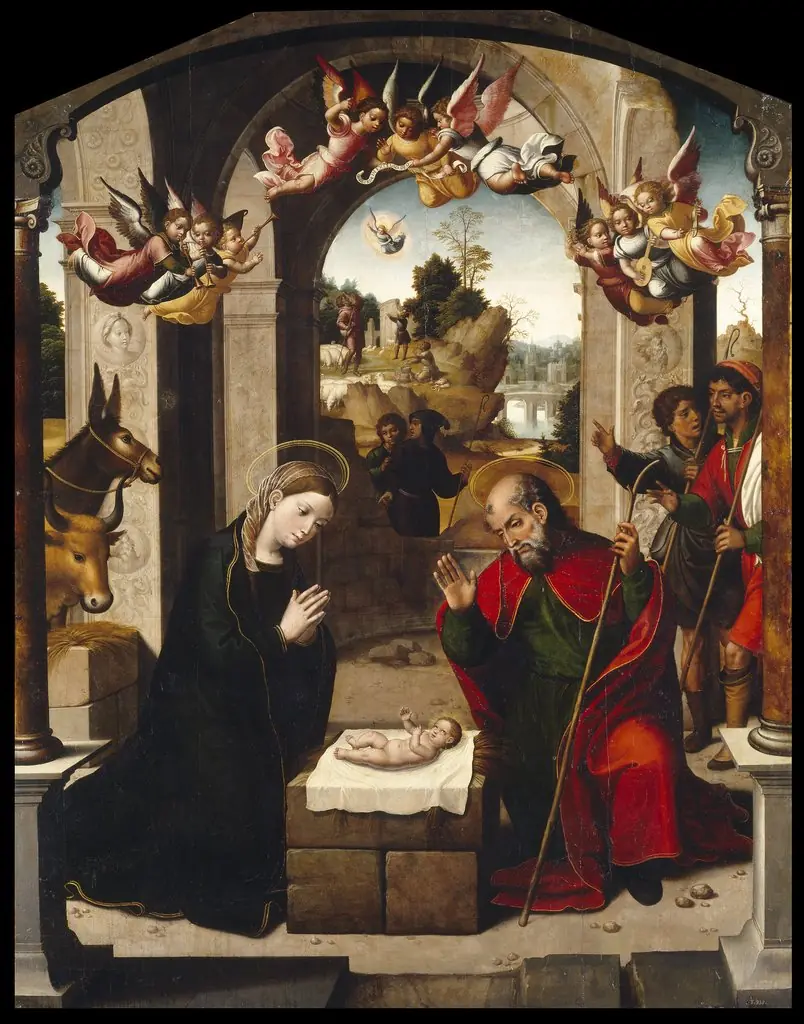
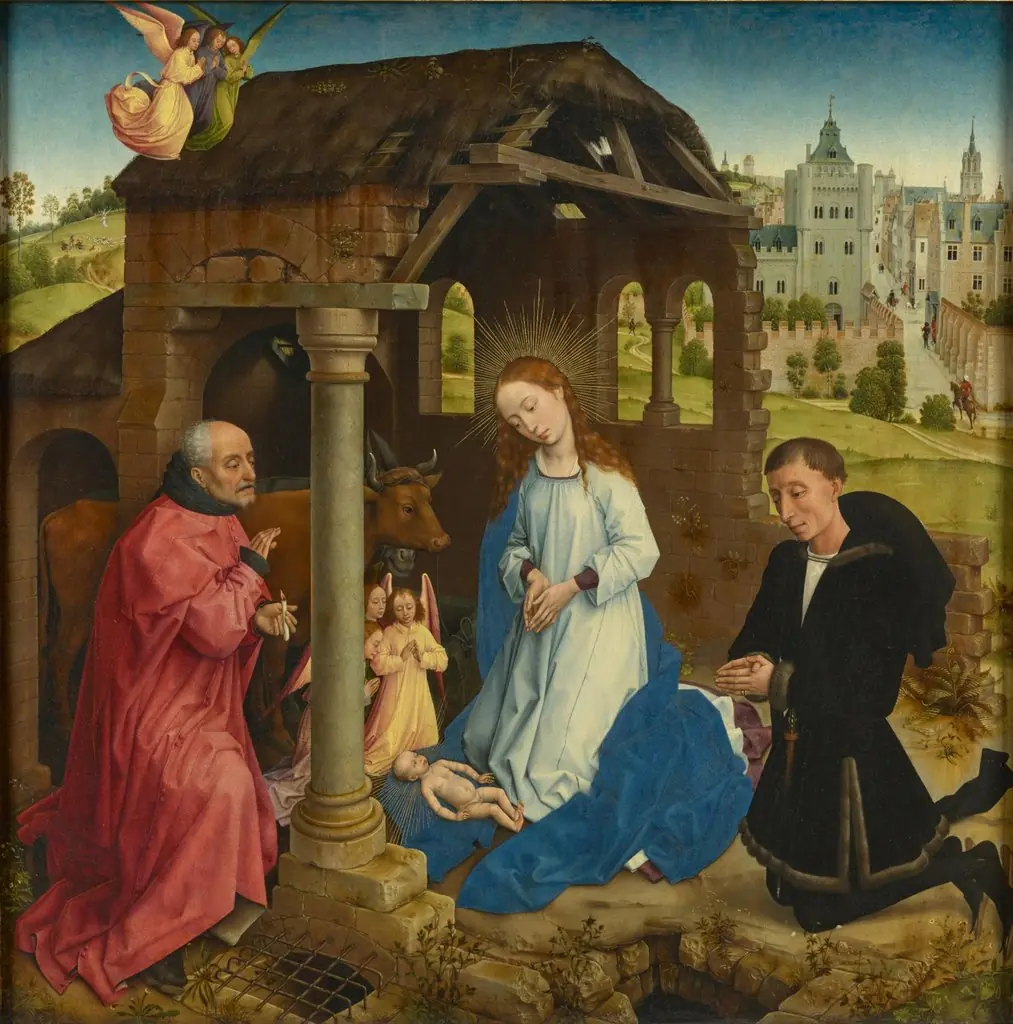
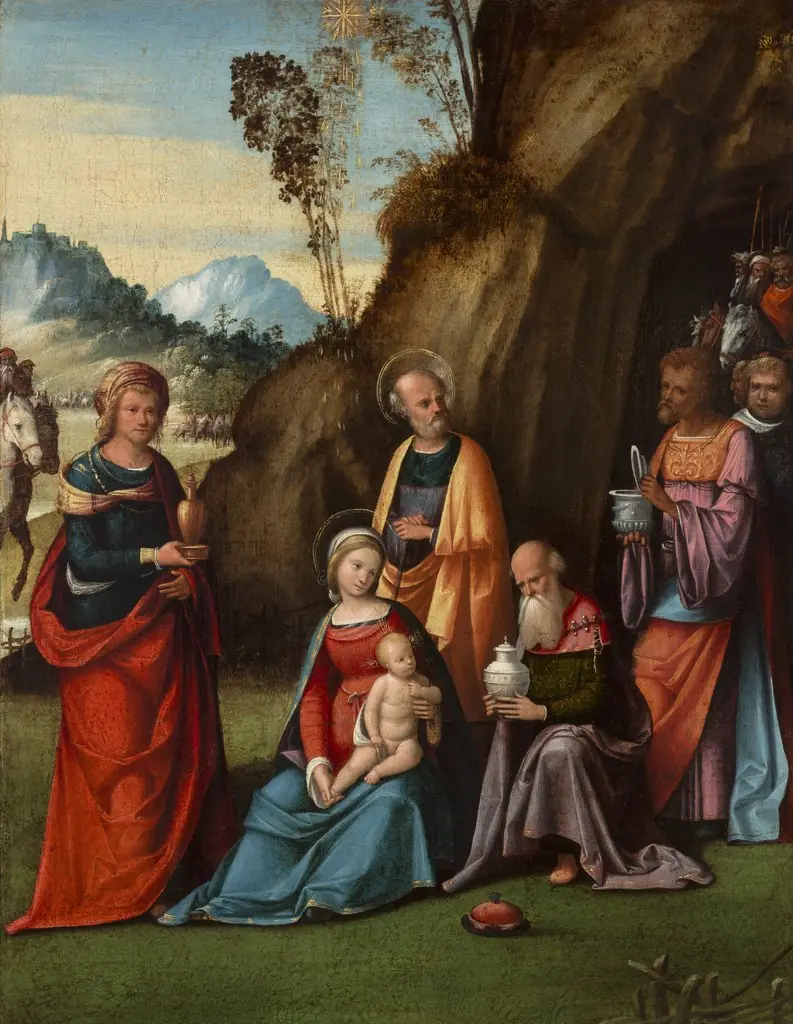
Created in 1498 by Amico Aspertini, a Bolognese painter and sculptor, this oil painting presents a nocturnal Nativity scene. The composition centers on the infant Jesus in a manger, attended by Mary, Joseph, and a luminous star overhead. The work is part of the collection of the Gemäldegalerie in Berlin.
Subject & Meaning
The image illustrates the biblical adoration of the shepherds, a moment when humble figures gather around the newborn Messiah. A woman in blue and a bearded man stand close to the child, while angels hover above, emphasizing the divine revelation. The bright star symbolizes the Star of Bethlehem, guiding the shepherds to the holy birth.
Technique & Style
Aspertini employs a nuanced chiaroscuro, allowing soft illumination to separate the figures from a dark, rocky landscape. Intricate detailing characterizes the clothing and animal forms, while the overall composition reflects an eclectic blend of realism and decorative flourish that anticipates later Mannerist tendencies.
History & Provenance
The painting has remained in European collections since its creation, eventually entering the holdings of Berlin’s Gemäldegalerie. Documentation traces its ownership through several private and institutional hands, confirming its attribution to Aspertini and its dating to the late 15th century.
Context
Produced during the early Renaissance, the work reflects the Bolognese school's emphasis on narrative clarity and anatomical observation. Aspertini’s willingness to combine precise detail with imaginative elements places the piece at a transitional point, bridging the naturalism of the period with the more stylized approaches that would emerge in Mannerism.
Own this work as a print
Artist & collection
Artist
Amico Aspertini, also called Amerigo Aspertini (ca 1474 – 1552), was an Italian Renaissance painter and sculptor whose complex, eccentric, and eclectic style anticipates Mannerism.