Artwork
The Nativity
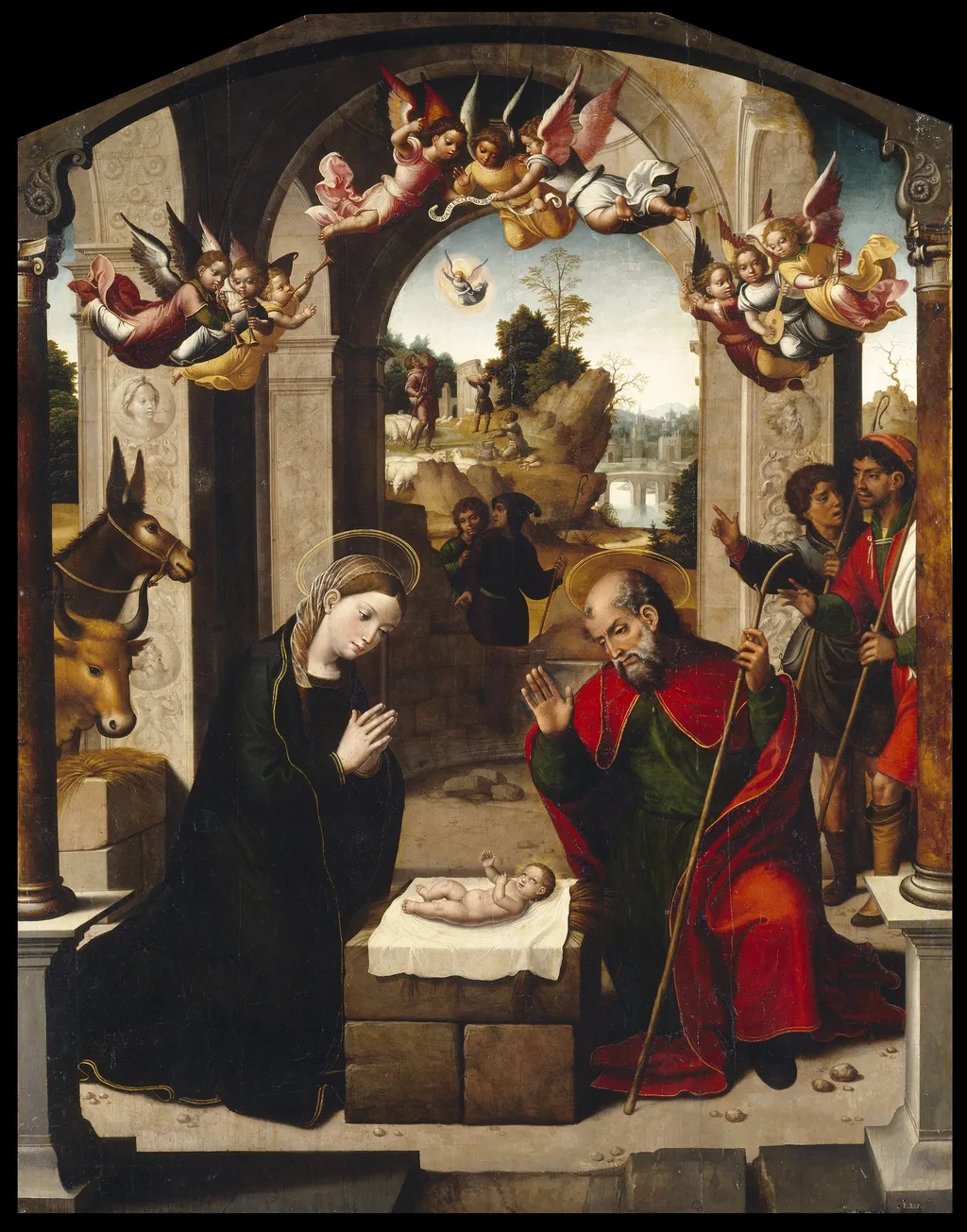
The Nativity is an oil painting by the Mannerist artist Juan Correa de Vivar. It dates from 1533 and is held in the collection of the Museo del Prado.
About this work
Overview
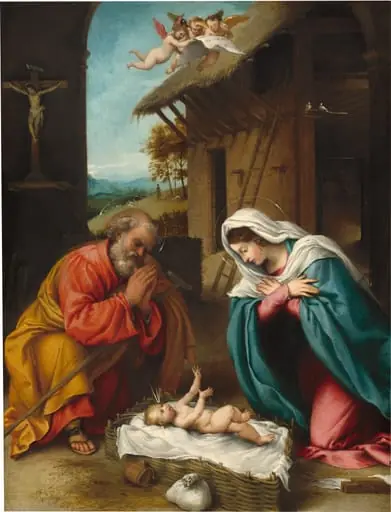
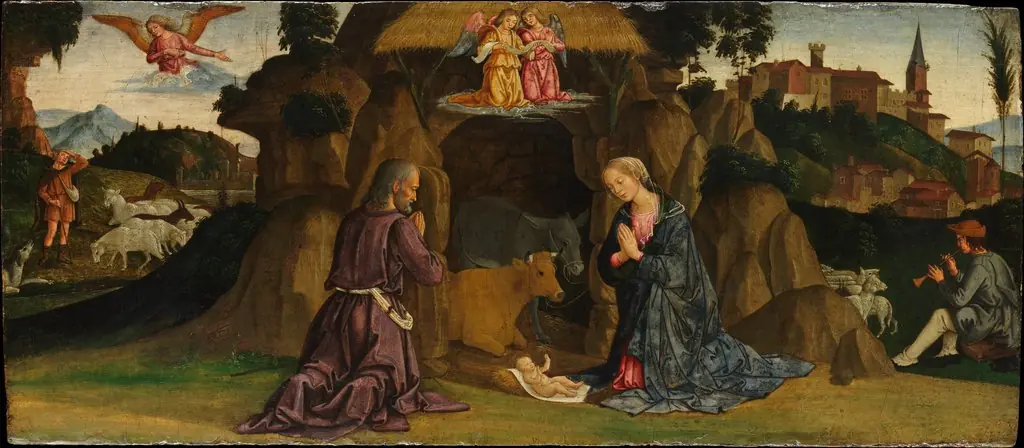
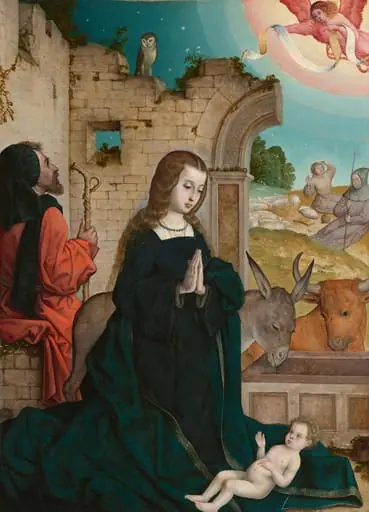
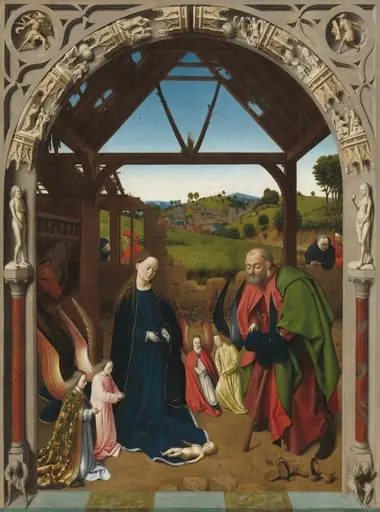
Juan Correa de Vivar’s oil painting titled *The Nativity* dates from 1533 and is part of the collection at the Museo del Prado. The work presents the biblical birth of Christ, arranging the central figures in a compact, illuminated space that draws the viewer’s eye to the infant on a white cloth.
Subject & Meaning
The composition centers on the Virgin Mary kneeling beside the newborn Jesus, who rests on a stone slab. Joseph stands nearby, both clothed in sombre hues, while a donkey and a cow occupy the left foreground. Three attendants in red and green garments flank the scene, and a host of angels above play a lute, a vihuela, and a natural trumpet, suggesting a celebratory, heavenly chorus.
Technique & Style
Correa de Vivar employs chiaroscuro to model forms, creating a convincing sense of volume and spatial recession. The contrast between the dark garments of the human figures and the brighter, pastel tones of the angels’ robes enhances the drama of the moment. Fine brushwork renders the textures of the animals’ fur and the stone surface with subtle realism.
History & Provenance
The painting was executed in the early sixteenth century, a period when Spanish artists were integrating Italian Renaissance influences. It entered the Museo del Prado’s holdings through the museum’s acquisition program, where it remains on display as part of the institution’s early Spanish religious art collection.
Context
*The Nativity* reflects the Counter‑Reformation emphasis on clear, didactic religious imagery. The inclusion of musical angels and richly colored garments aligns with contemporary Spanish devotional art, which sought to engage viewers emotionally while reinforcing theological narratives about the incarnation.
Artist & collection