Artwork
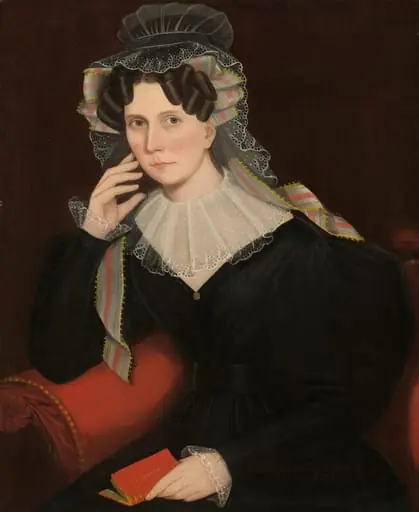
Woman in Black Ruffled Dress
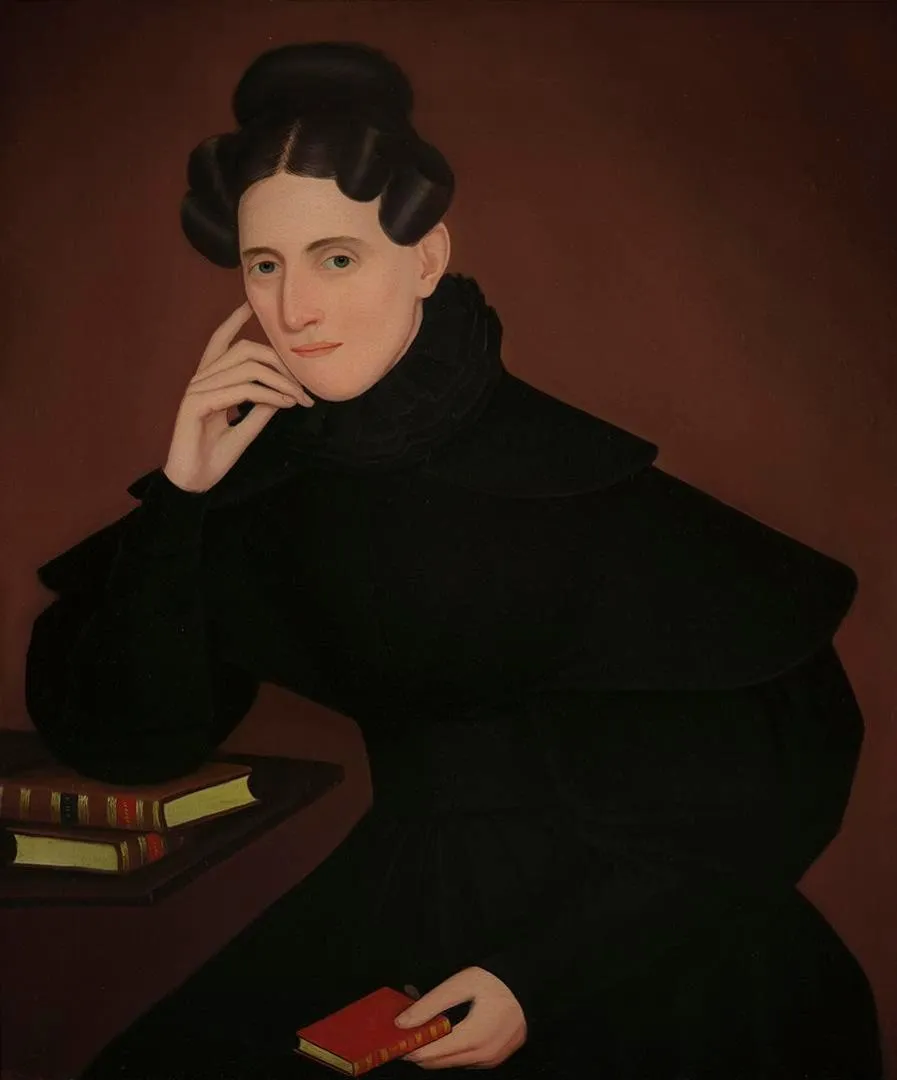
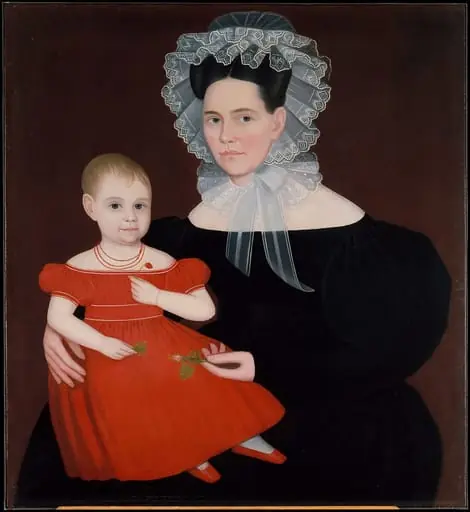
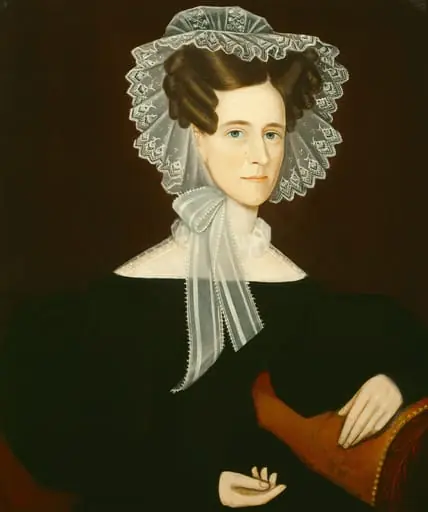
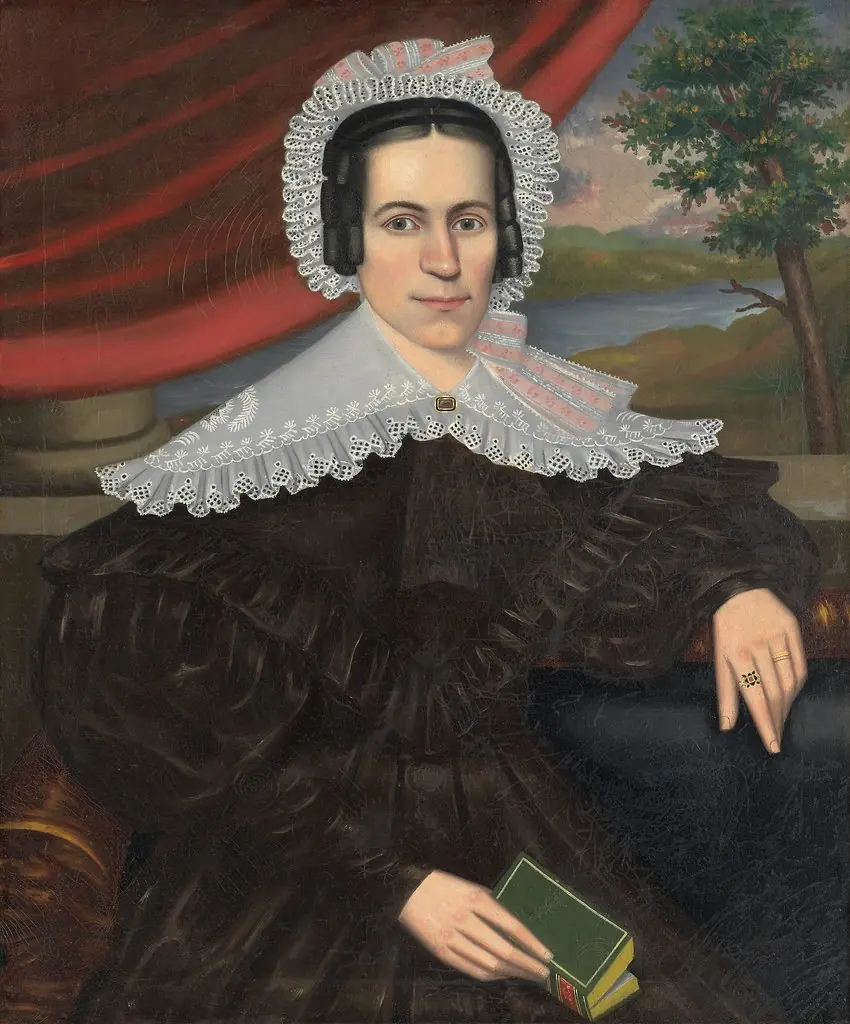
Woman in Black Ruffled Dress is an oil painting by the American Folk Art artist Ammi Phillips. It dates from 1835 and is held in the collection of the Crystal Bridges Museum of American Art.
About this work
Overview
Phillips, a traveling portraitist active across New England and New York, produced hundreds of works during his career, many of which lack signatures.
Painted in 1835, this oil portrait by Ammi Phillips captures a seated woman in a black ruffled dress, her posture still and introspective. Phillips, a traveling portraitist active across New England and New York, produced hundreds of works during his career, many of which lack signatures. This piece exemplifies his approach: straightforward composition, muted tones, and an emphasis on quiet dignity over elaborate detail. It resides today in the Crystal Bridges Museum of American Art.
Subject & Meaning
The woman, dressed in somber black with a high collar and full sleeves, holds a small red book in her left hand while resting her right hand near her cheek. Two additional books rest on a table beside her, suggesting literacy or private reflection. The absence of ornate surroundings and the direct, calm gaze invite interpretation of inner thought rather than social status. The red book stands as a subtle focal point, hinting at personal devotion or intellectual engagement.
Technique & Style
Phillips employed a restrained palette dominated by darks and earth tones, with the red book offering a quiet contrast. His brushwork is deliberate but not refined, favoring flat planes of color over modeling. Facial features are simplified, and the background is uniformly brown, eliminating spatial depth. The ruffles of the dress are rendered with rhythmic, repetitive strokes, revealing a methodical, almost repetitive technique that evolved subtly across his many portraits.
History & Provenance
Created during Phillips’s most active period, the painting has no documented ownership history prior to its acquisition by Crystal Bridges Museum. Like many of his unsignated works, its attribution rests on stylistic analysis and comparison with signed pieces. Its survival and preservation reflect growing scholarly interest in 19th-century American folk portraiture, particularly works that capture everyday individuals outside elite artistic circles.
Context
In the 1830s, formal portraiture was still largely the domain of trained artists in urban centers. Phillips, working in rural towns, met demand among middle-class families seeking affordable likenesses. His paintings reflect local tastes and limited resources, blending European conventions with regional simplicity. This portrait embodies the quiet aspirations of its subject and the practical realities of itinerant art-making in early America.
Legacy
Though Phillips was largely forgotten after his death, 20th-century scholars revived interest in his work as representative of American folk art. His paintings, including this one, are now valued for their unvarnished humanity and the insight they offer into non-elite visual culture. The portrait’s endurance underscores a broader recognition of self-taught artists who shaped American identity beyond academic traditions.
Artist & collection
Artist
Ammi Phillips (April 24, 1788 – July 11, 1865) was a prolific American itinerant portrait painter active from the mid 1810s to the early 1860s in Connecticut, Massachusetts, and New York.

Museum
Crystal Bridges Museum of American Art
Continue through works from the same source collection.