Artwork
Woman with a Green Book (Louisa Gallond Cook)
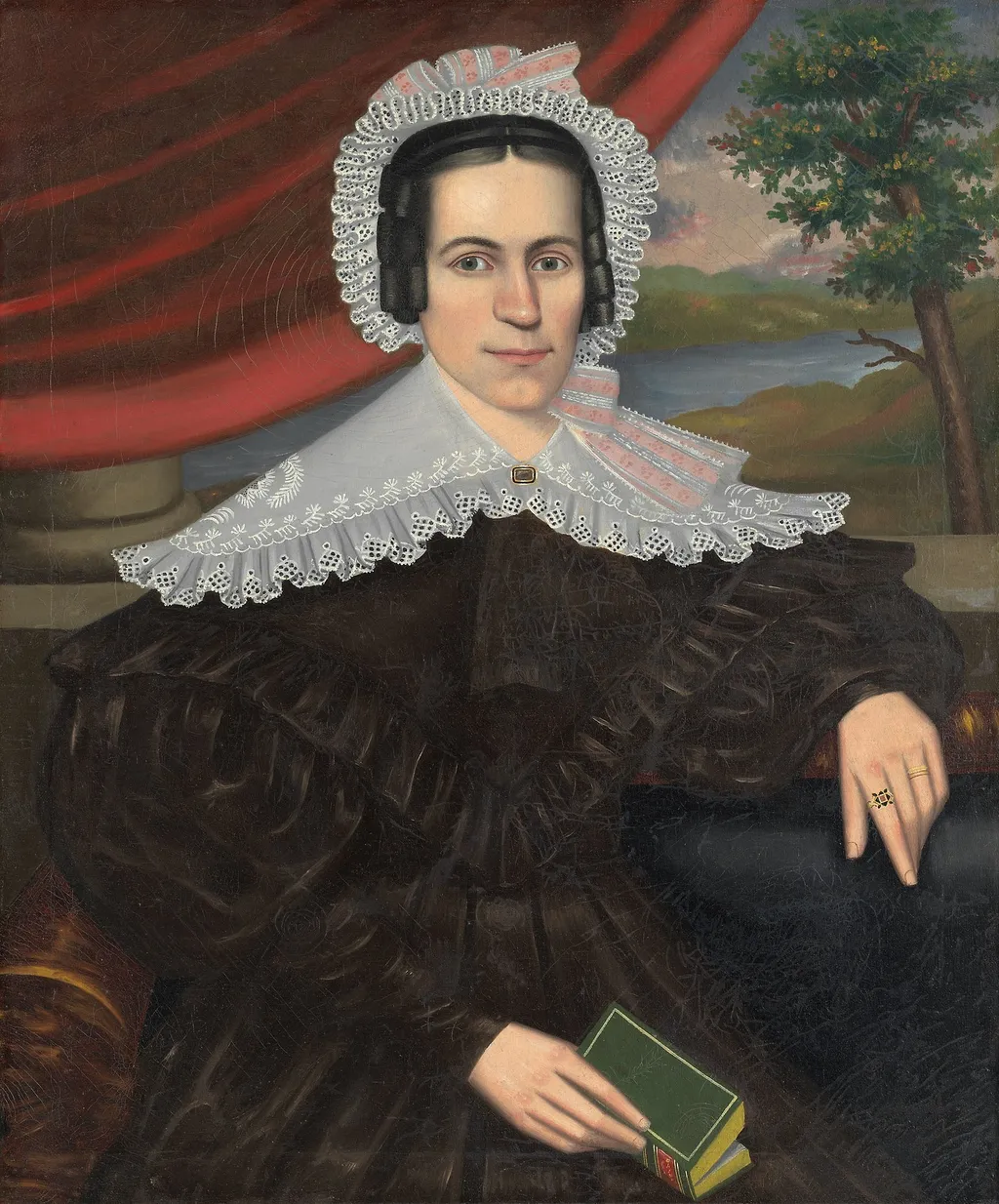
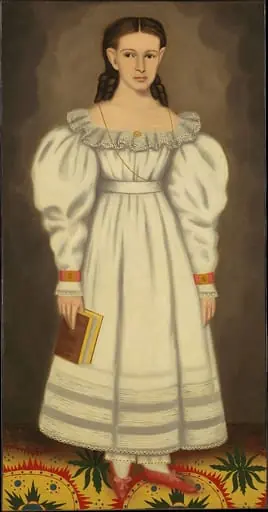
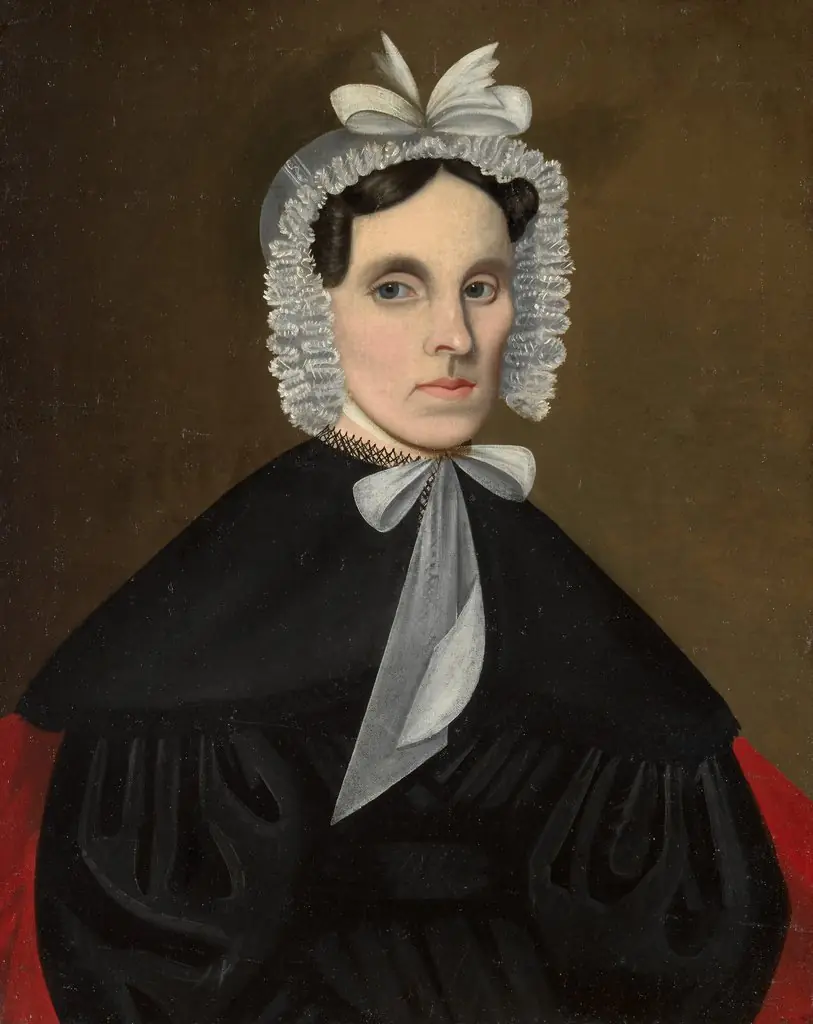
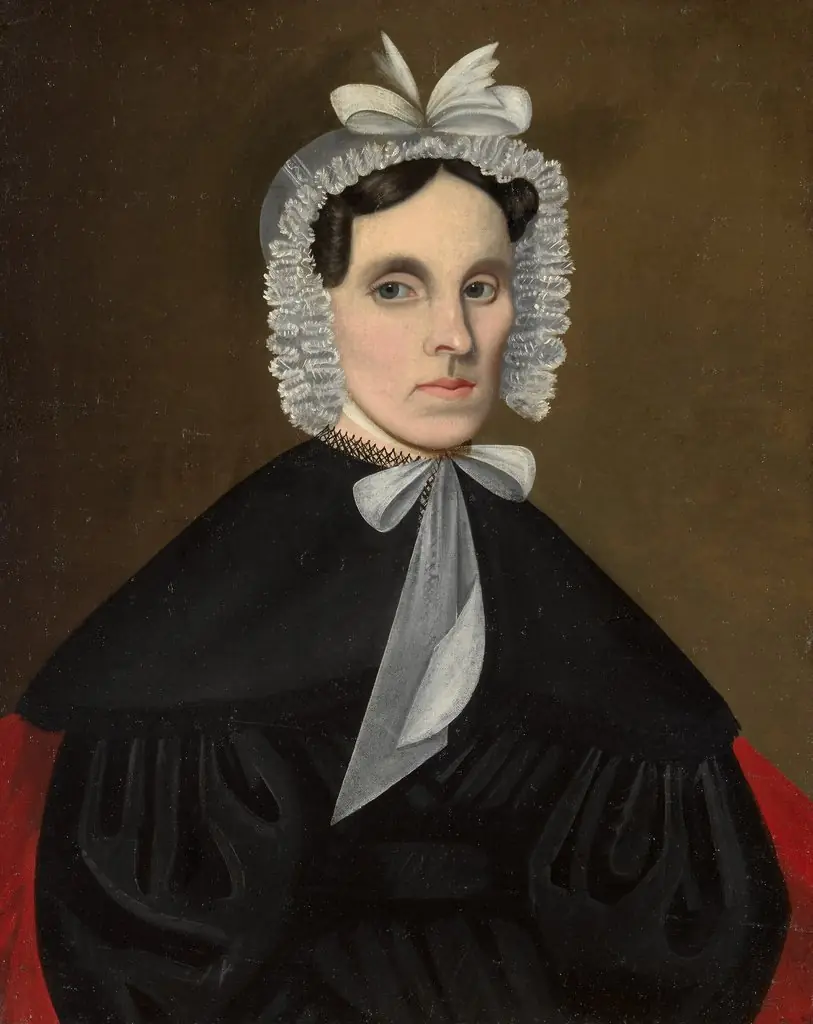
Woman with a Green Book (Louisa Gallond Cook) is an oil painting by the American Folk Art artist Erastus Salisbury Field. It dates from 1838 and is held in the collection of the Art Institute of Chicago.
About this work
The level of detail and realism in the portrait indicate the artist's skill in capturing the subject's likeness.
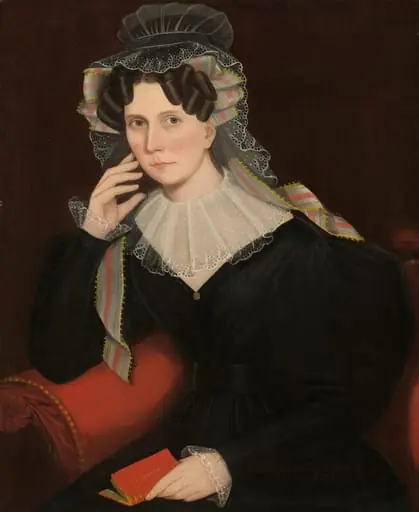
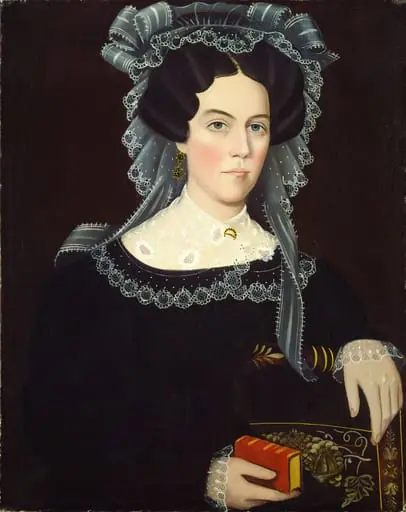
This painting depicts a woman sitting in a chair, holding a green book in her right hand. She wears a dark dress with a white lace collar and a ring on her finger. The background features a red curtain, a tree, and a body of water.
The woman's attire and the style of the painting suggest it was created in the 19th century. The level of detail and realism in the portrait indicate the artist's skill in capturing the subject's likeness.
To learn more about the artist who created this portrait, explore the works of Erastus Salisbury Field.
Overview
Erastus Salisbury Field’s 1838 oil painting, titled *Woman with a Green Book (Louisa Gallond Cook)*, presents a seated female figure holding a green‑bound volume. The work is part of the American folk‑art tradition and is currently in the Art Institute of Chicago’s collection.
Subject & Meaning
The portrait shows a woman in a dark dress with a white lace collar, a ring on her finger, and a green book clasped in her right hand. The inclusion of the book suggests literacy or personal study, while the calm pose conveys a modest, domestic presence typical of early‑nineteenth‑century portraiture.
Technique & Style
Field employed oil on canvas with a careful yet straightforward handling of form, characteristic of folk‑art painters who emphasized clear outlines and modest detail. The figure is rendered with realistic facial features, while the background—red curtain, a tree, and water—provides a simple, flattened setting that supports the sitter without distracting from her.
History & Provenance
Born in Leverett, Massachusetts, in 1805, Field briefly studied portraiture under Samuel F. B. Morse before returning to his native region. He produced this work during a period when he was establishing a reputation for portraiture and genre scenes. The painting entered the Art Institute of Chicago’s holdings through acquisition, where it remains on view.
Context
Created in the late 1830s, the piece reflects the growing middle‑class desire for personal portraiture in New England. While not a formal academic work, it aligns with the folk‑art movement’s emphasis on accessible, locally produced images that document everyday individuals and their surroundings.
Own this work as a print
Artist & collection