Artwork
The Great Bather
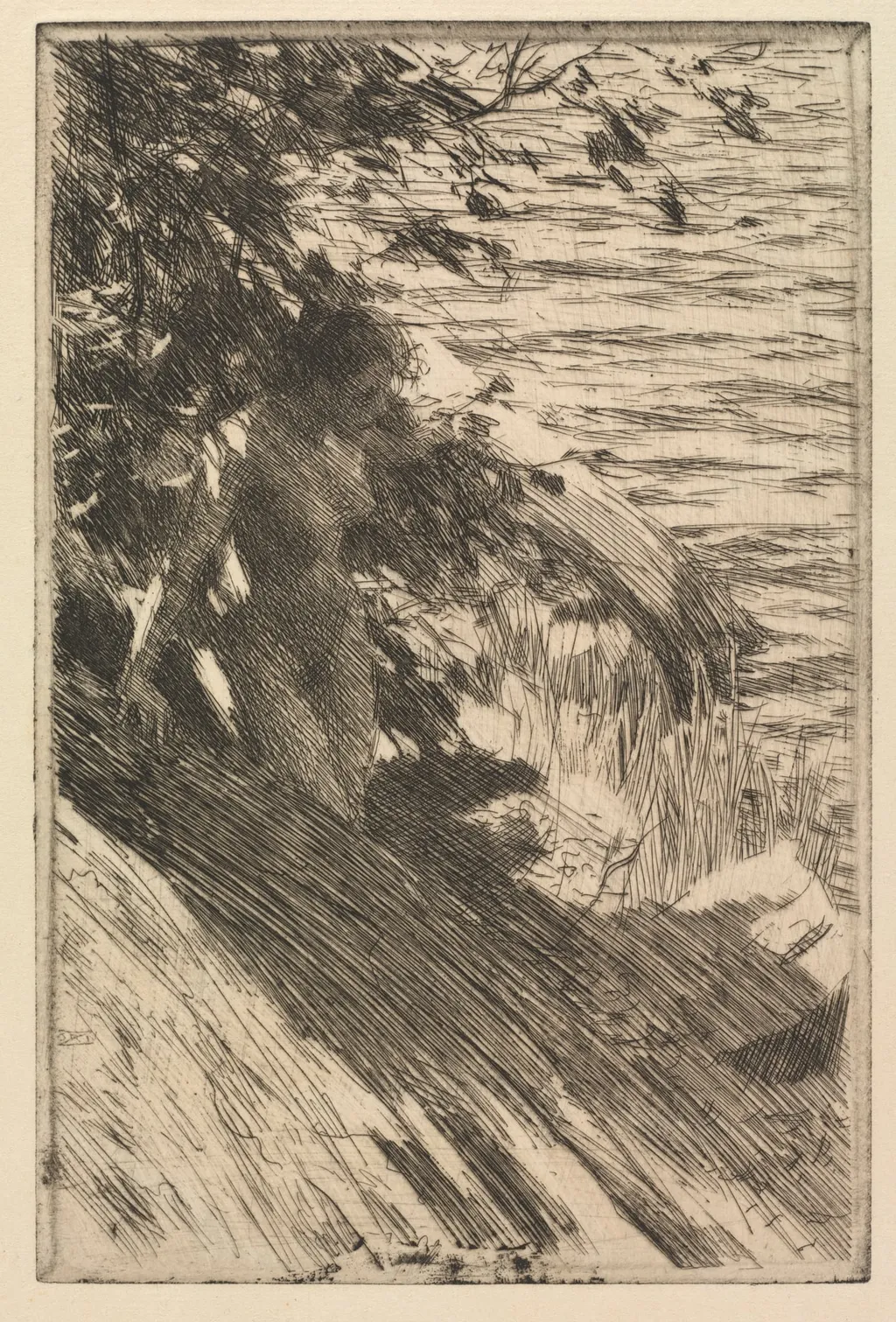
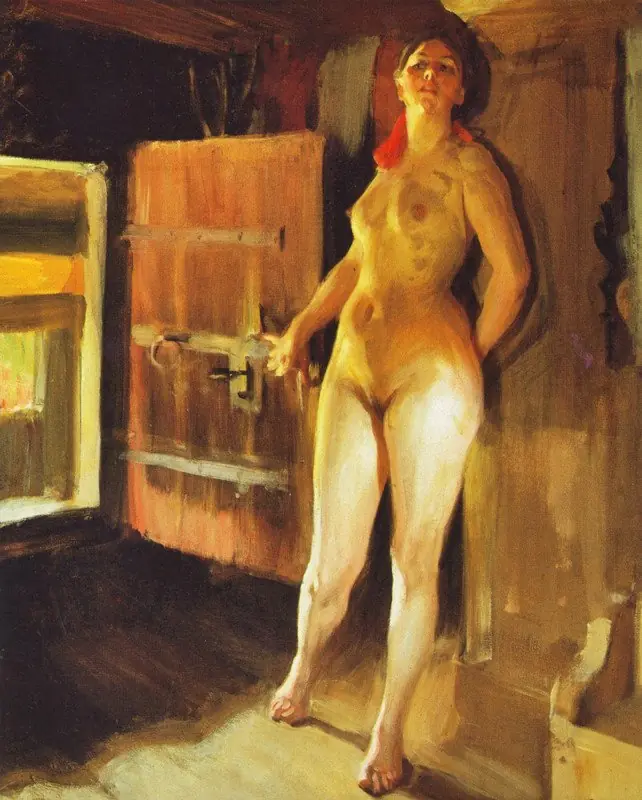
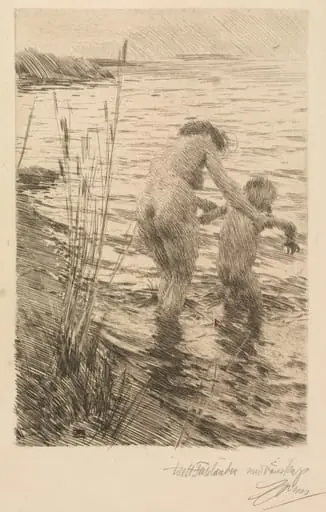
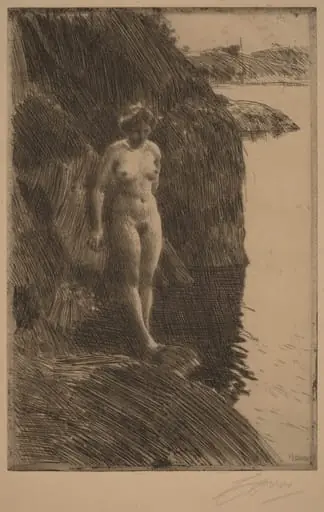
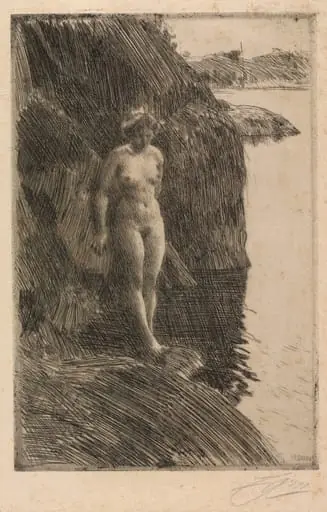
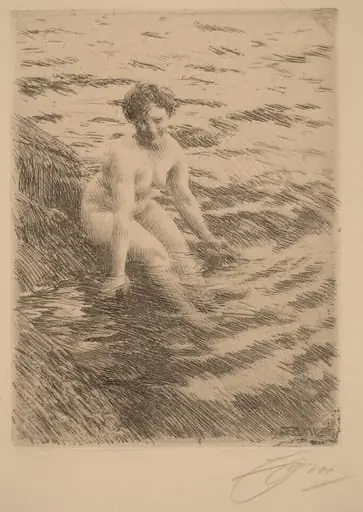
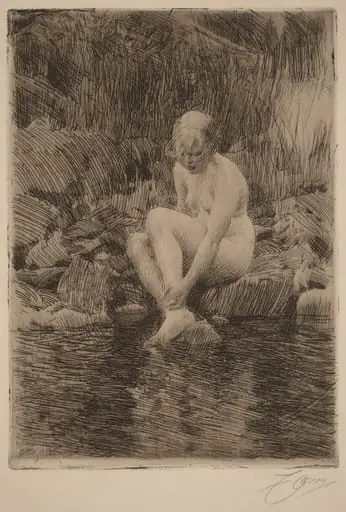
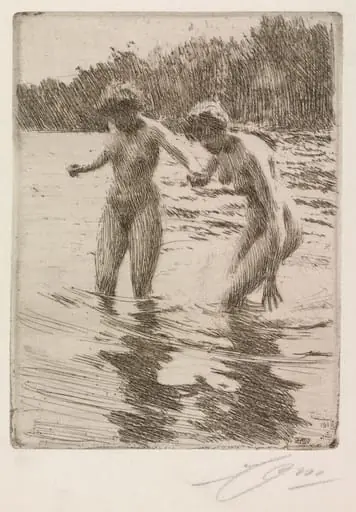
The Great Bather is a print by the Impressionist artist Anders Zorn. It dates from 1895 and is held in the collection of the Cleveland Museum of Art.
About this work
Overview
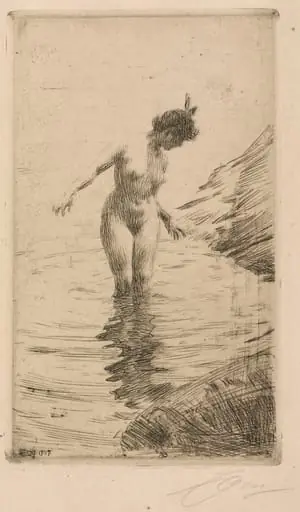
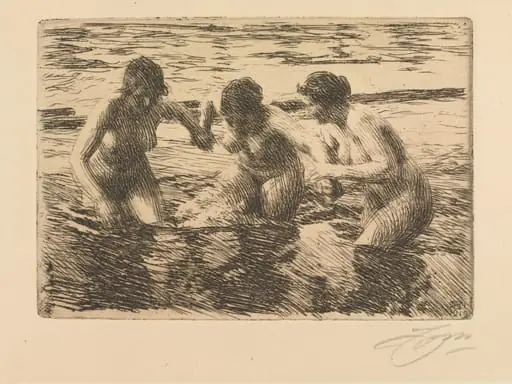
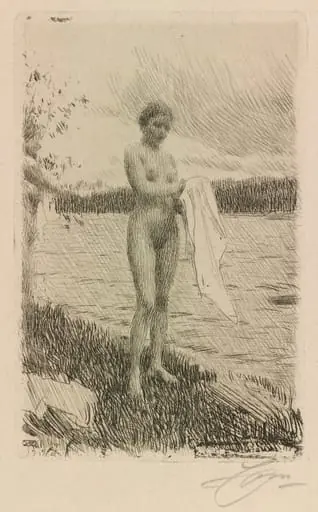
Created in 1895 by Anders Zorn, The Great Bather is an etching depicting a solitary female figure in a wooded setting. The work is held in the collection of The Cleveland Museum of Art. Executed in dark ink on light paper, it exemplifies the tonal contrasts achievable through etching, emphasizing form and atmosphere with minimal lines.
Subject & Meaning
The figure stands barefoot in a forest, clutching a bundle of sticks, dressed in a simple garment. Her posture and isolation suggest a quiet communion with nature, neither idealized nor narrative-driven. The absence of context invites interpretation as a symbol of rural simplicity or an embodiment of natural vitality, rooted in the Swedish landscape Zorn often portrayed.
Technique & Style
The trees are rendered with rapid, slanted strokes that convey movement and texture, while the woman’s form is modeled with deliberate, economical marks.
Zorn employed etching to achieve sharp contrasts between the dark, fluid lines of the trees and the softer, more defined contours of the figure. The trees are rendered with rapid, slanted strokes that convey movement and texture, while the woman’s form is modeled with deliberate, economical marks. This technique highlights the artist’s mastery of line and his ability to suggest volume without heavy shading.
History & Provenance
The print was produced during Zorn’s mature period, when he was actively exploring printmaking alongside his painting. It entered The Cleveland Museum of Art’s collection through established acquisition channels, likely in the early 20th century, as interest in European graphic arts grew among American institutions.
Context
Zorn worked in a period when Nordic artists were redefining realism through intimate, naturalistic scenes. The Great Bather reflects a broader cultural turn toward rural life and the human form in harmony with the environment, distinct from academic traditions. His etchings were widely circulated, influencing how modern audiences perceived Scandinavian art.
Legacy
The print remains a key example of Zorn’s graphic work, admired for its directness and technical precision. It contributed to the recognition of etching as a serious medium for expressive figuration in the late 19th century, and continues to inform discussions on the relationship between nature and the human figure in modern printmaking.
Artist & collection

Artist
Anders Leonard Zorn was born in February 1860 in Mora, Dalarna, the illegitimate son of a Bavarian brewer and a Swedish farmer's daughter; his mother died shortly after his birth, and his grandparents raised him.