Artwork
Wet
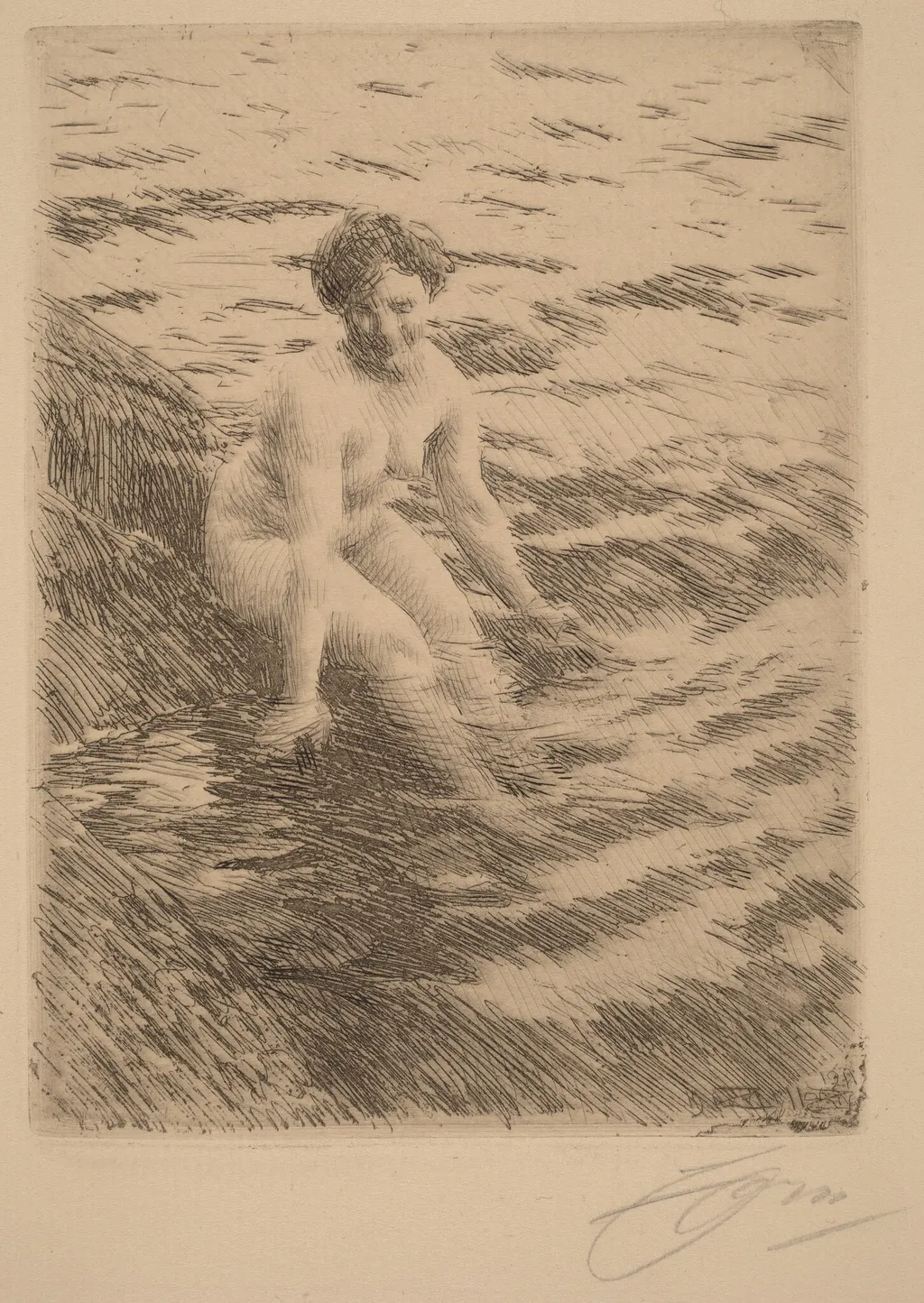
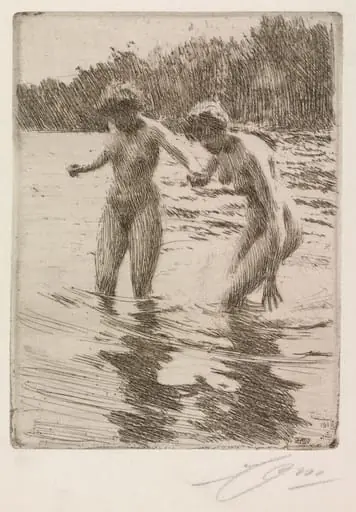
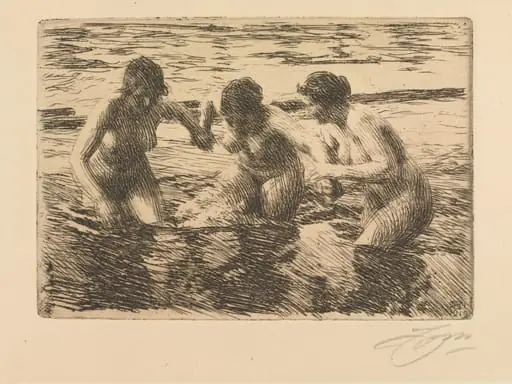
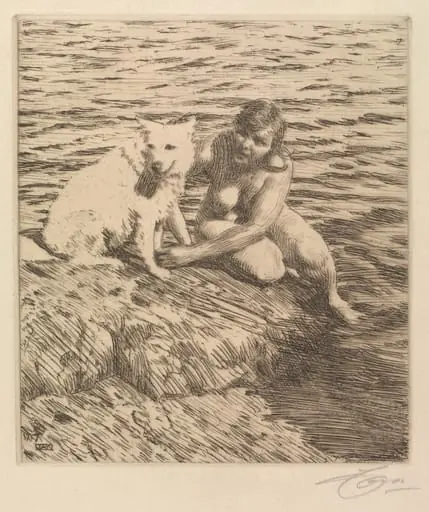
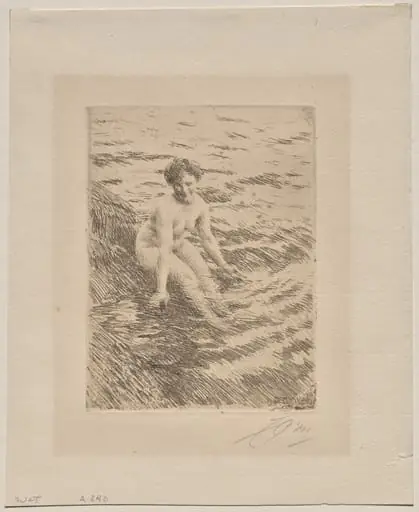
Wet is an ink print by Anders Zorn. It dates from 1911 and is held in the collection of the National Gallery of Art.
About this work
Overview
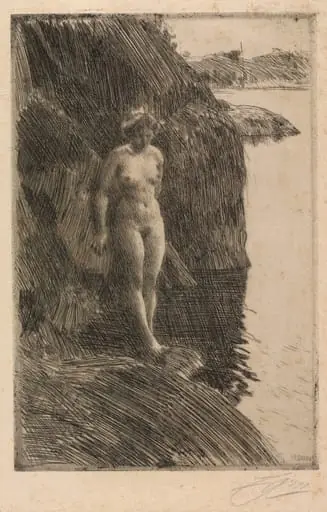
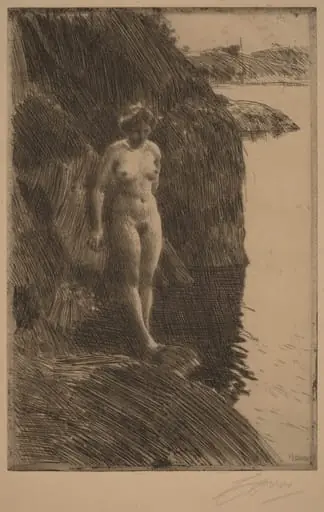
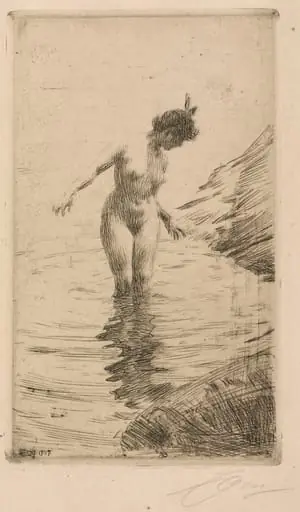
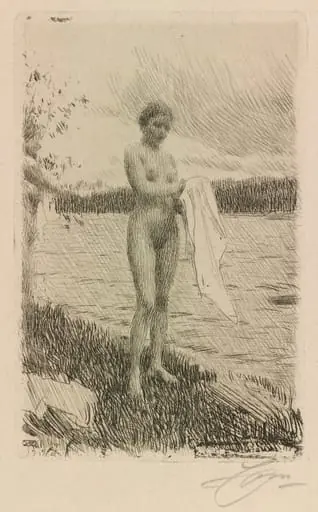
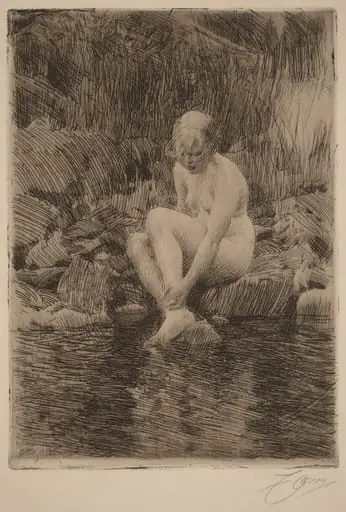
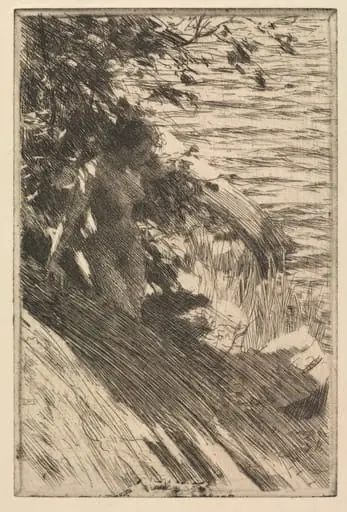
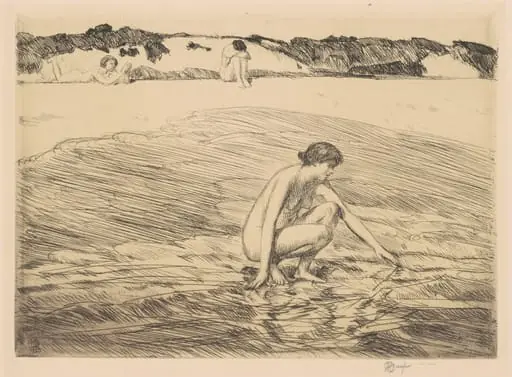
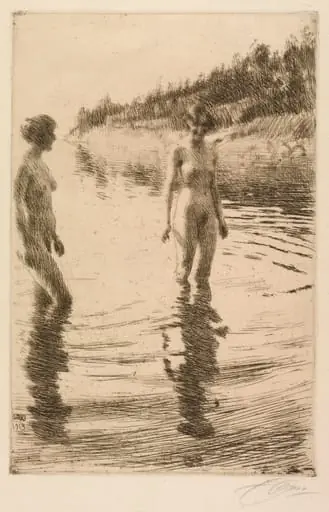
Created in 1911, Wet is an etching by Swedish artist Anders Zorn on laid paper. It depicts a woman engaged in the labor of washing clothes in a river. Zorn, known for his mastery of printmaking, used the medium to explore texture and the interplay of light and moisture. The work captures a quiet, momentary act of daily life with sensitivity and precision.
Subject & Meaning
The figure is shown bent over, sleeves rolled, intently scrubbing a white garment in dark water. Her posture and focused expression convey the physicality of domestic labor. The absence of context—no landscape, no other figures—draws attention to the solitary act, suggesting themes of routine, endurance, and the quiet dignity of work.
Technique & Style
Zorn employed etching to render subtle tonal variations, allowing ink to pool in the paper’s fibers and create soft, damp shadows along the woman’s arms. The lines are fluid and economical, resembling spontaneous pencil sketches. The reflective quality of the water and the cloth’s near-silver sheen emerge through careful control of ink density and paper texture.
History & Provenance
The print was made during Zorn’s mature period, when he increasingly turned to etching as a primary medium. It was produced in Sweden and later entered public collections in the United States, including the National Gallery of Art in Washington, D.C. Its preservation reflects early 20th-century interest in European printmaking as a serious artistic form.
Context
Zorn’s etchings often focused on rural and domestic scenes, contrasting with the grander themes of his oil paintings. In this era, artists across Europe were re-engaging with everyday subjects through direct, unidealized techniques. Wet aligns with this trend, emphasizing realism and tactile presence over narrative drama.
Legacy
The work exemplifies Zorn’s ability to elevate ordinary moments through technical finesse. His use of wet paper and ink to simulate water’s translucence influenced later printmakers interested in atmospheric effects. While not widely exhibited, it remains a key example of early 20th-century etching’s expressive potential.
Artist & collection

Artist
Anders Leonard Zorn was born in February 1860 in Mora, Dalarna, the illegitimate son of a Bavarian brewer and a Swedish farmer's daughter; his mother died shortly after his birth, and his grandparents raised him.