Artwork
Bull
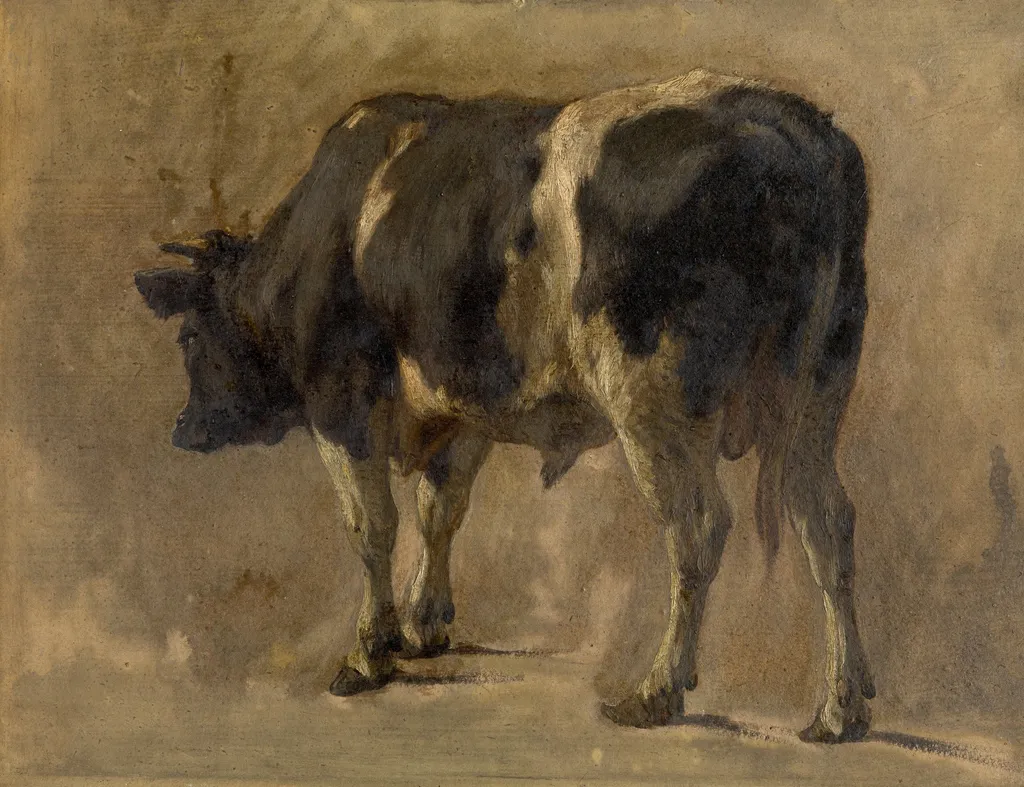
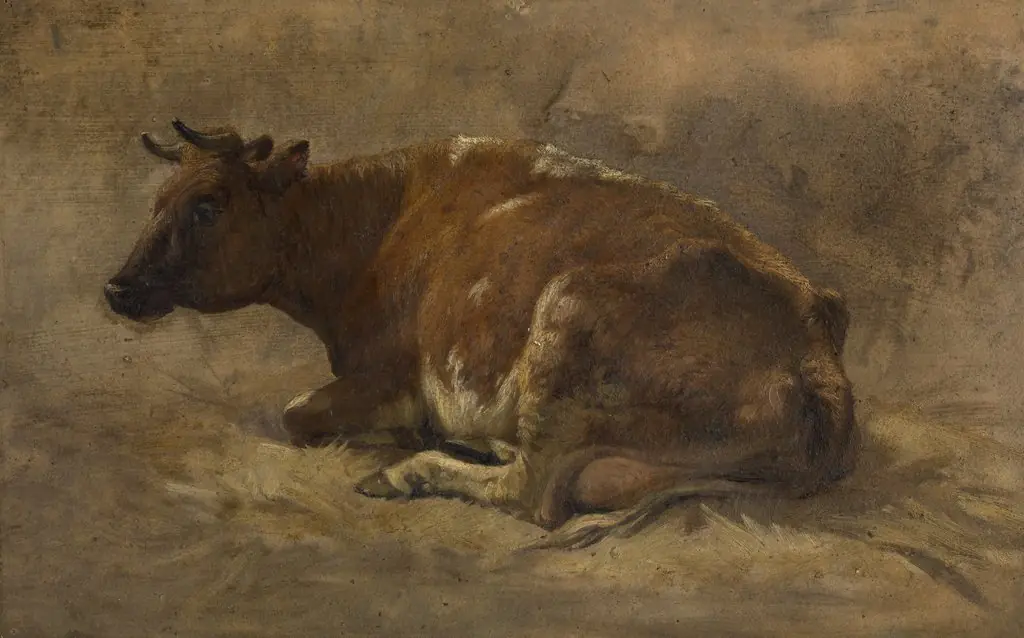
Bull is an unspecified painting by the Mannerist artist André Plumot. It dates from 1535 and is held in the collection of the Royal Museum of Fine Arts Antwerp.
About this work
Overview
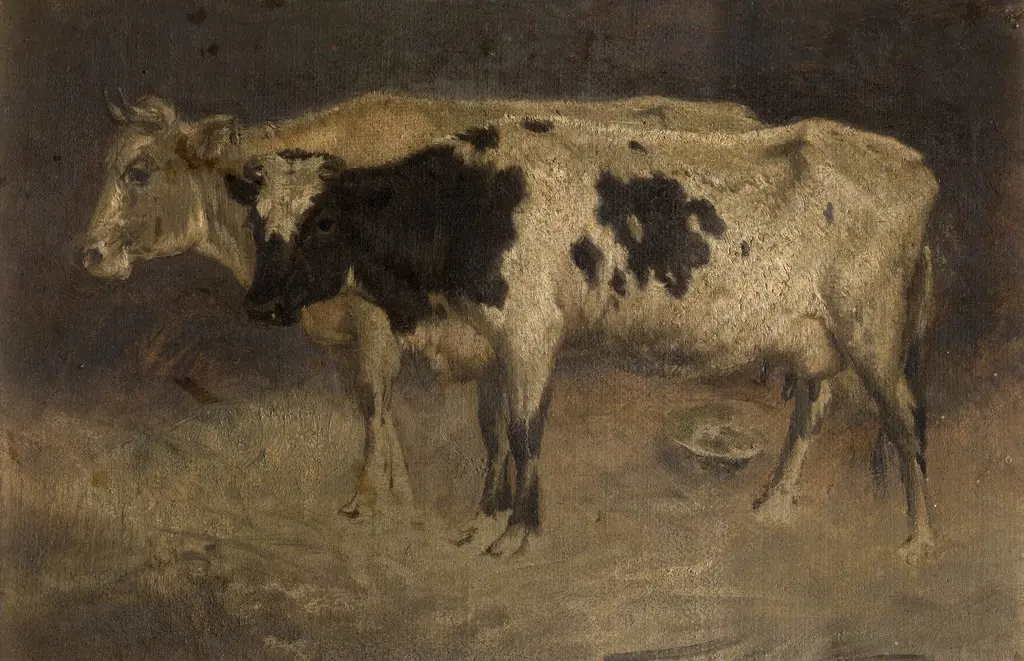
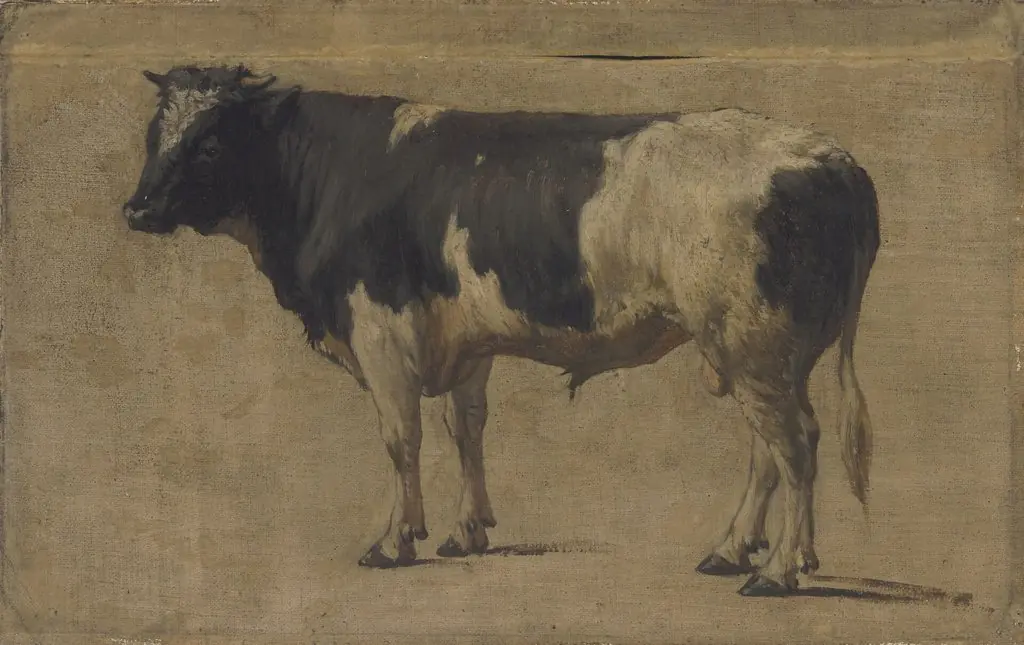
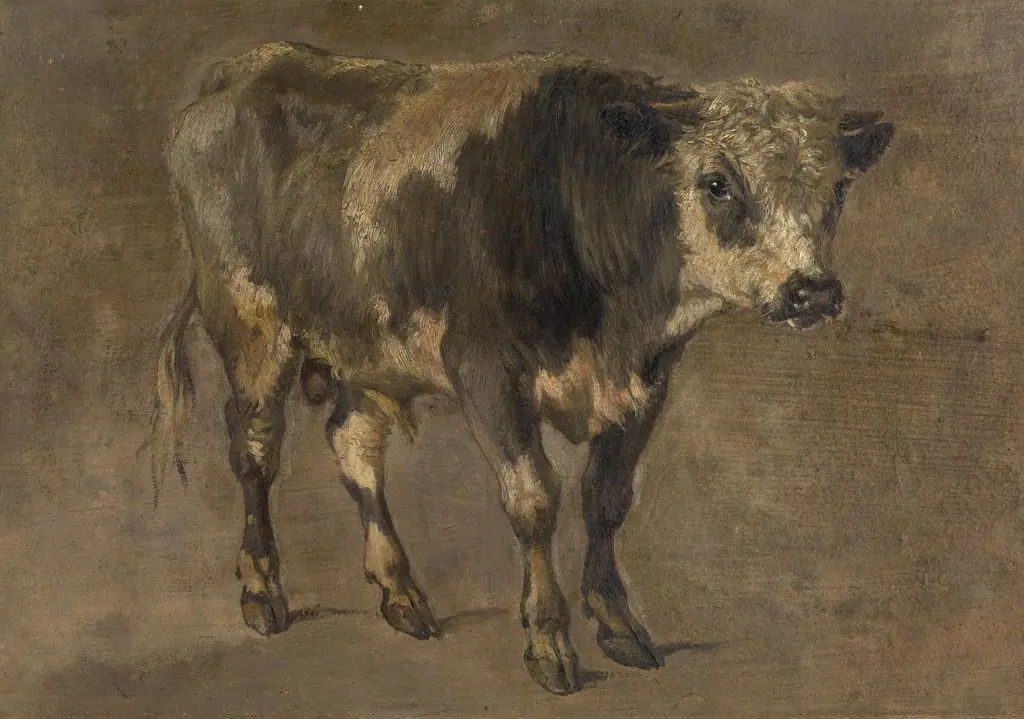
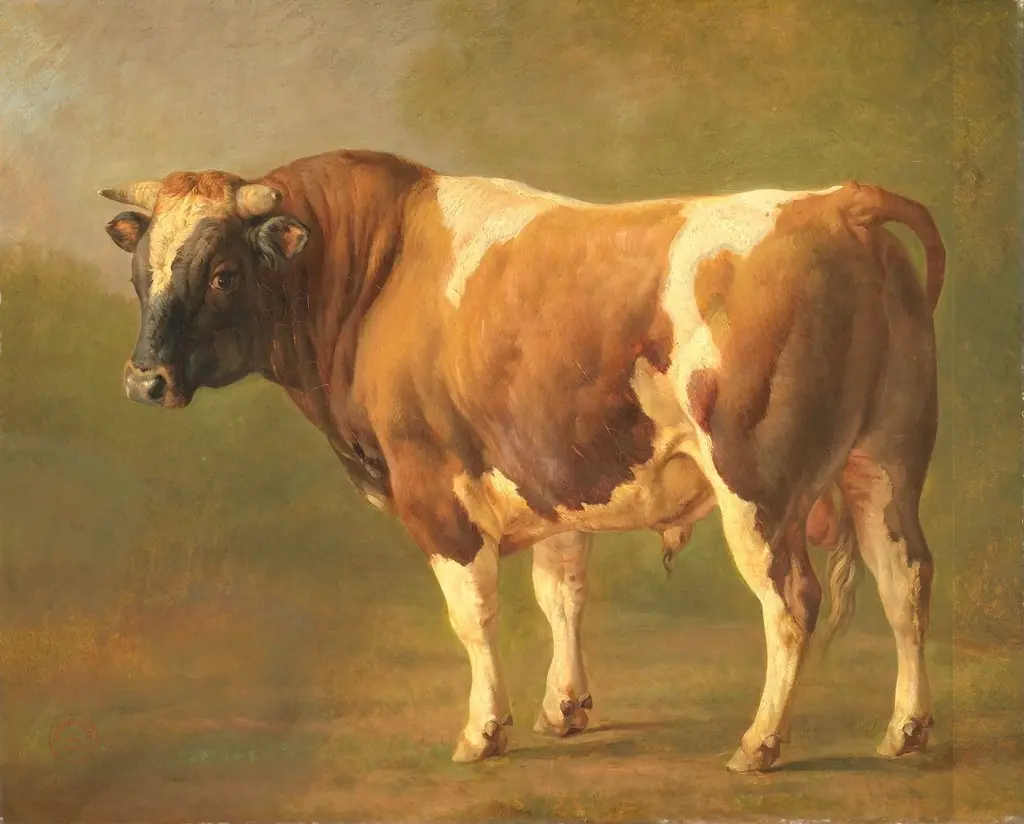
Painted in 1535 by André Plumot, this work depicts a solitary bull rendered in naturalistic detail. The painting is part of the collection at the Royal Museum of Fine Arts Antwerp. Its composition isolates the animal against a uniform background, emphasizing form over narrative. The subject’s stillness and grounded posture suggest a focus on observation rather than symbolism.
Subject & Meaning
The bull is portrayed in a moment of quiet repose, head lowered as if grazing or resting. Its placement on a flat plane and lack of contextual elements remove it from any specific setting or story. The absence of human figures or symbolic attributes implies an interest in the animal as a physical presence, possibly reflecting Renaissance curiosity about natural forms.
Technique & Style
Plumot employs careful modeling to define the bull’s musculature and textured coat, using subtle tonal shifts to suggest volume. The fur is rendered with fine, deliberate strokes, while the shadow beneath the animal anchors it to the ground. The solid, unmodulated background enhances the figure’s presence, a technique that draws attention to anatomical precision over atmospheric depth.
History & Provenance
The painting has been held since at least the early modern period in the collection now known as the Royal Museum of Fine Arts Antwerp. Its attribution to André Plumot is based on stylistic comparison and archival records, though little is known about the artist’s broader output. The work’s survival suggests it was valued within its original context, possibly as a study of animal form.
Context
In the early 16th century, detailed animal studies were uncommon in Northern European art, which favored religious or portraiture subjects. Plumot’s focus on a single bovine reflects a growing interest in natural observation, paralleling developments in scientific illustration. The painting stands as a quiet example of pre-modern zoological attention in painting.
Legacy
Though André Plumot remains a minor figure in art history, this work endures as a rare example of early 16th-century animal portraiture. It contributes to understanding how artists engaged with the natural world outside religious or mythological frameworks. Its preservation highlights the museum’s role in safeguarding lesser-known but historically significant works.
Own this work as a print
Artist & collection