Artwork
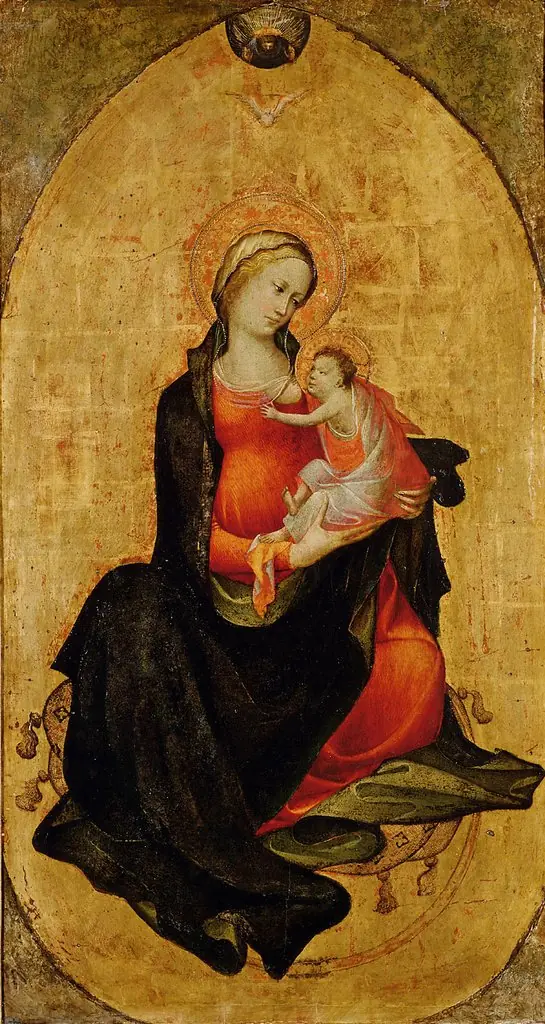
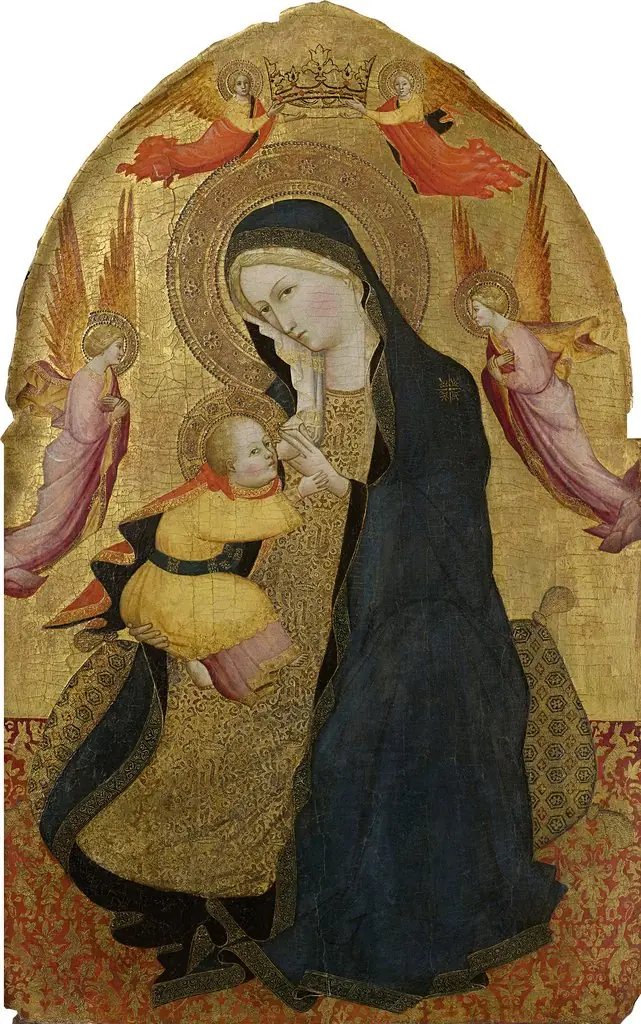
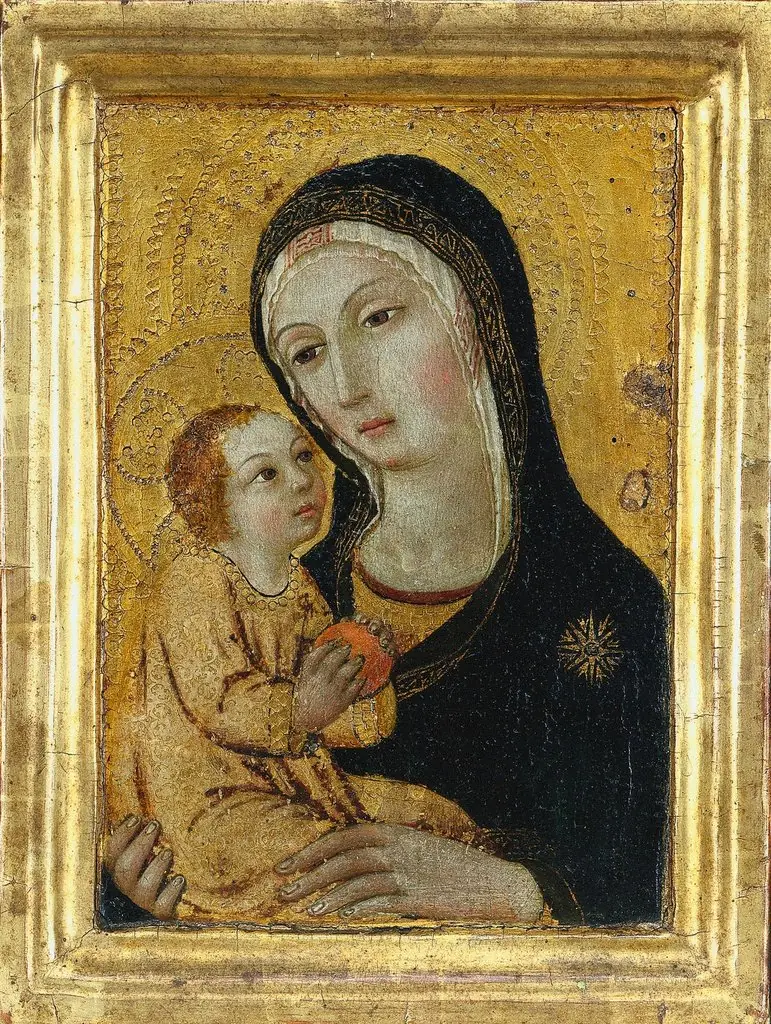
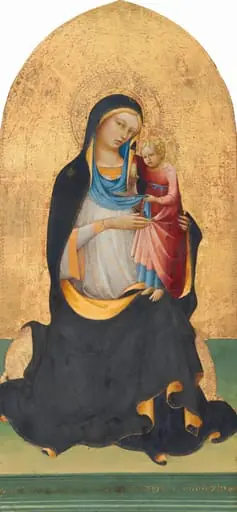
Vierge d'humilité
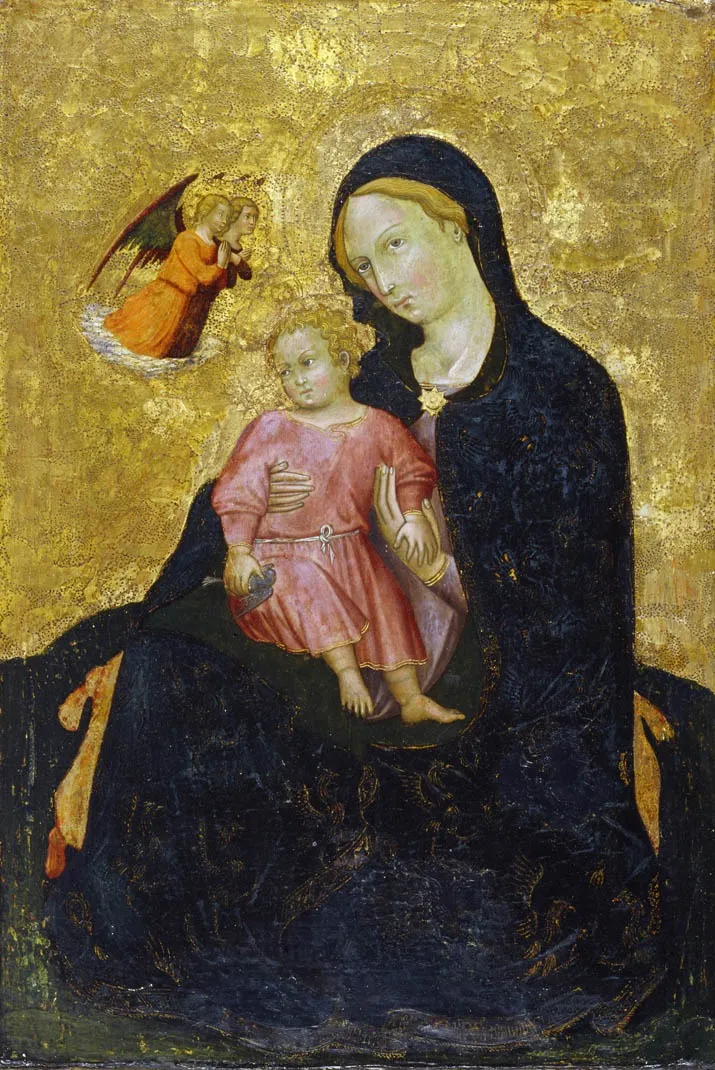
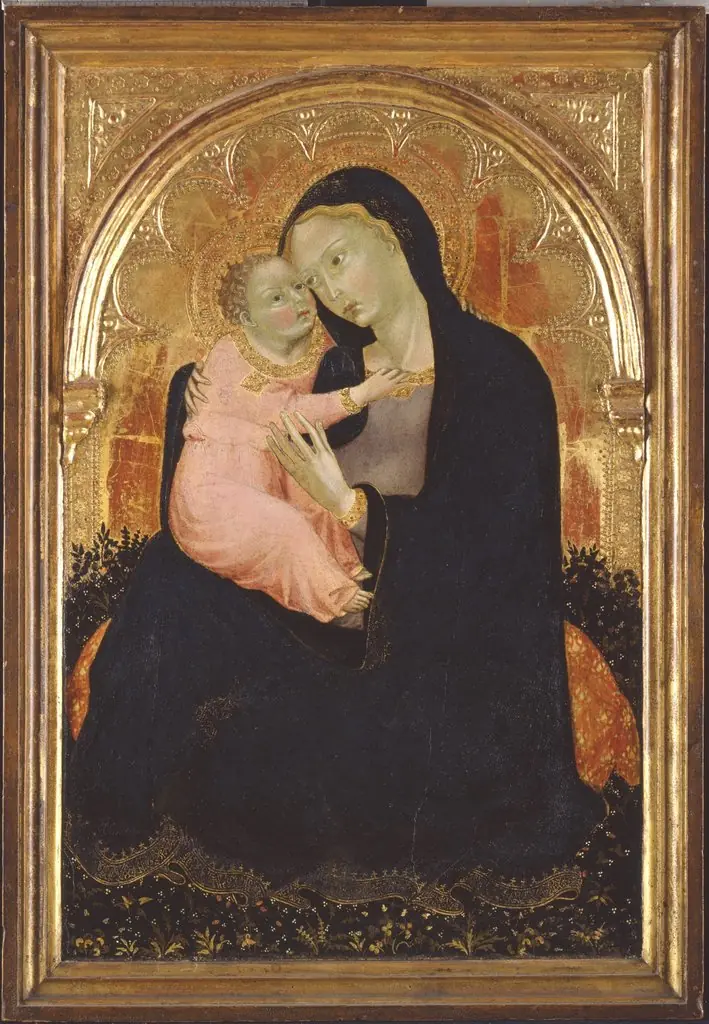
Vierge d'humilité is a tempera painting by the Byzantine icon painting artist Andrea di Bartolo. It is held in the collection of the Montreal Museum of Fine Arts.
About this work
Overview
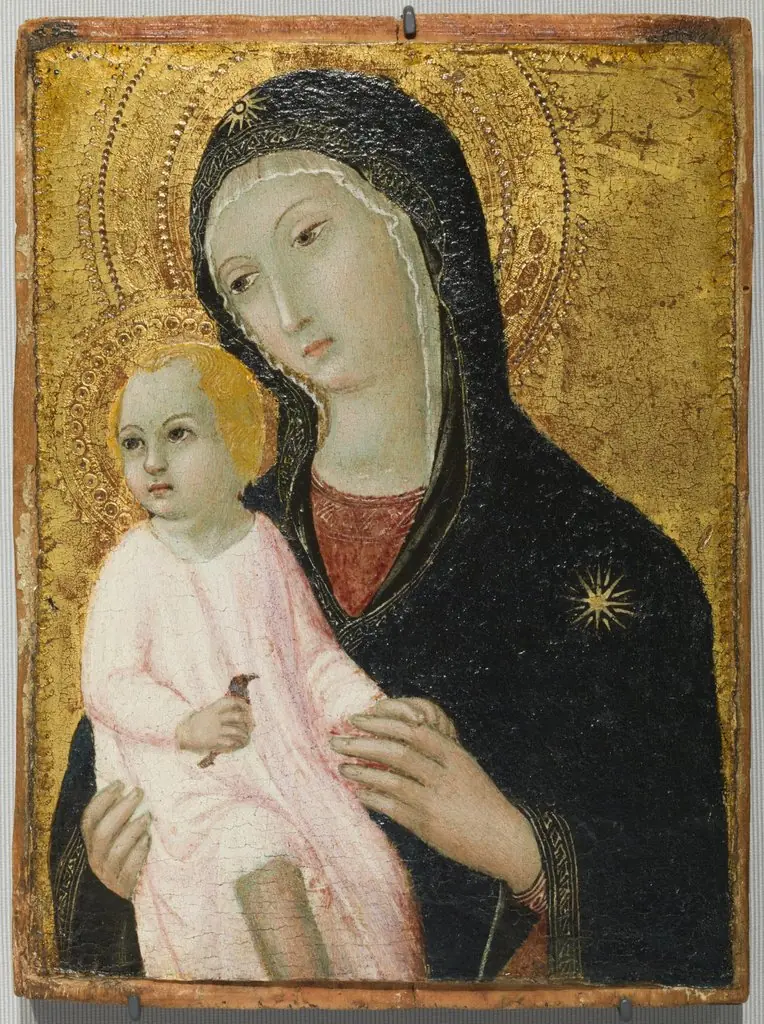
This tempera painting, dated around 1400, is attributed to the Sienese artist Andrea di Bartolo. It portrays the Virgin Mary seated in a posture of humility, holding the Christ Child. The work is part of the collection at the Montreal Museum of Fine Arts, where it remains a quiet example of early 15th-century devotional art from Tuscany.
Subject & Meaning
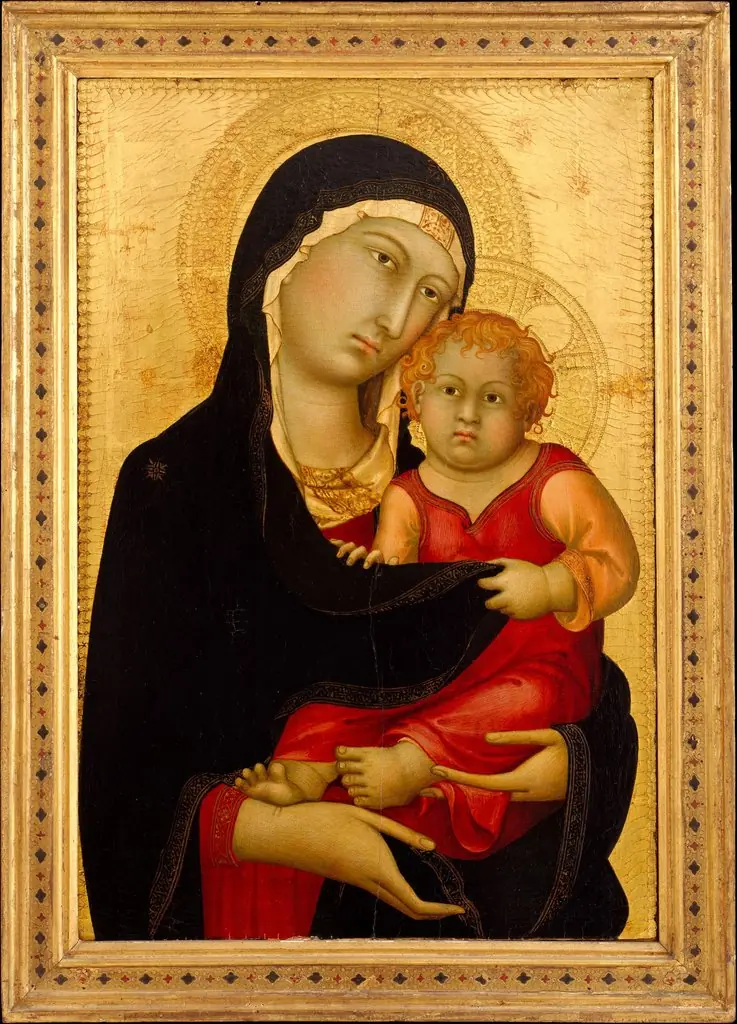
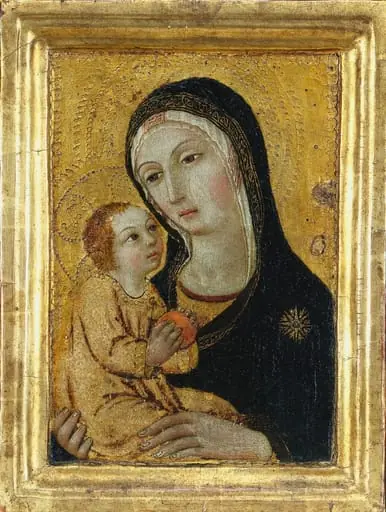
The Virgin is depicted as the Vierge d'humilité, a devotional type emphasizing her modesty and accessibility. She holds the Christ Child, who gazes with quiet curiosity, his bare feet and small object suggesting both humanity and symbolic significance. The composition avoids grandeur, focusing instead on intimacy and spiritual tenderness, aligning with late medieval ideals of maternal devotion.
Technique & Style
Facial expressions are softened, eyes downcast or gently attentive, reflecting the Sienese tradition’s emphasis on emotional restraint and spiritual stillness.
Executed in tempera on panel, the painting features delicate brushwork and a restrained palette. The Virgin’s black robe contrasts with the child’s pink garment, while the golden background enhances the sacred atmosphere without ornamentation. Facial expressions are softened, eyes downcast or gently attentive, reflecting the Sienese tradition’s emphasis on emotional restraint and spiritual stillness.
History & Provenance
Created in the early 1400s in Siena, the painting entered the Montreal Museum of Fine Arts’ collection through documented acquisitions in the 20th century. Its survival in good condition suggests continuous veneration or careful preservation, likely within ecclesiastical or private devotional contexts before its migration to North America.
Context
This work emerged during a period when Sienese painters favored intimate, emotionally grounded religious imagery over the increasing naturalism of Florence. The Vierge d'humilité type was especially popular in devotional settings, offering worshippers a relatable, approachable Virgin. Andrea di Bartolo, son of the more famous Bartolo di Fredi, carried forward this regional style with quiet refinement.
Legacy
Though not widely exhibited, the painting endures as a representative example of late medieval Sienese piety. Its calm demeanor and unadorned composition reflect a devotional aesthetic that prioritized contemplation over spectacle. It contributes to understanding how religious imagery functioned in private and communal worship beyond grand altarpieces.
Artist & collection


![Christ on the Cross [reverse], by Andrea di Bartolo](https://artifactworldgallery.com/img/andrea-di-bartolo--christ-on-the-cross-reverse--6bfe980f802a6327-w320.webp) Christ on the Cross [reverse]
Christ on the Cross [reverse]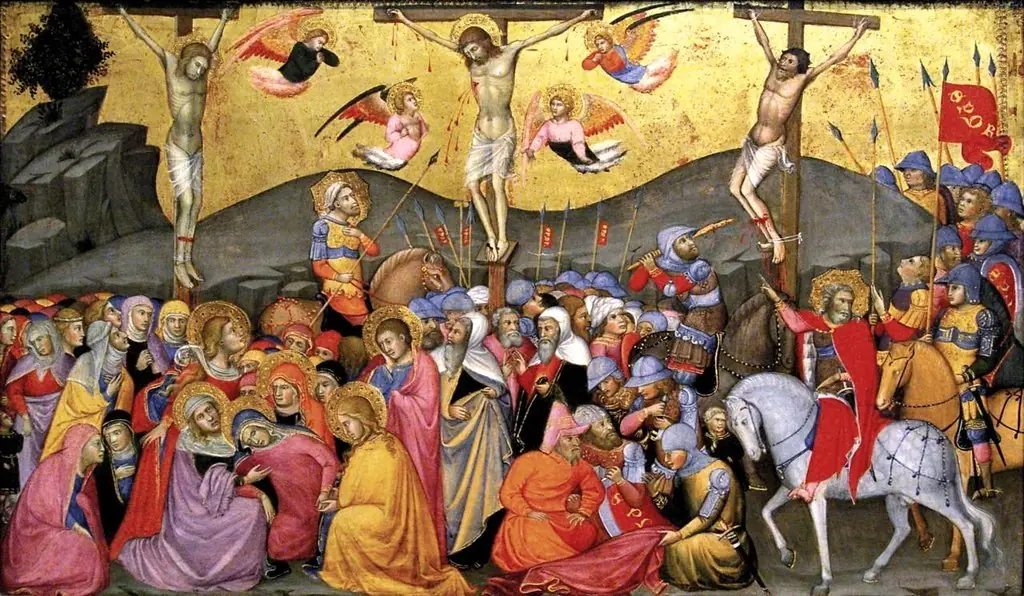 The Crucifixion
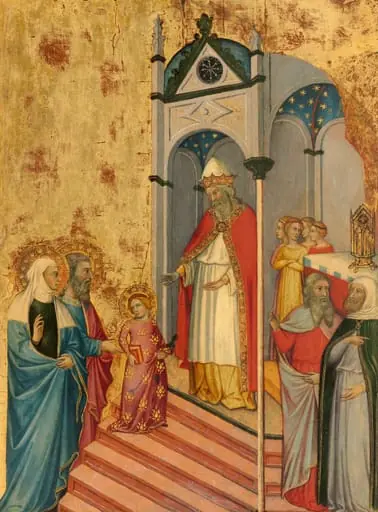 The Presentation of the Virgin in the Temple
![Madonna of Humility, The Blessing Christ, Two Angels, and a Donor [obverse], by Andrea di Bartolo](https://artifactworldgallery.com/img/andrea-di-bartolo--madonna-of-humility-the-blessing-christ-two-angels-and-a-don--d37c382429905539-w320.webp) Madonna of Humility, The Blessing Christ, Two Angels, and a Donor [obverse]
Madonna of Humility, The Blessing Christ, Two Angels, and a Donor [obverse]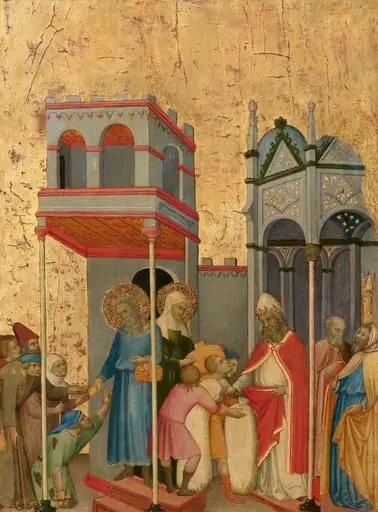 Joachim and Anna Giving Food to the Poor and Offerings to the Temple
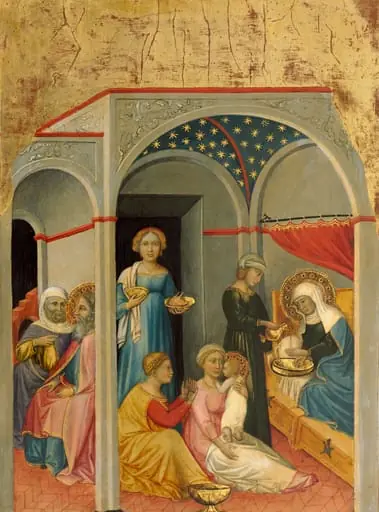 The Nativity of the Virgin
 Madonna and Child
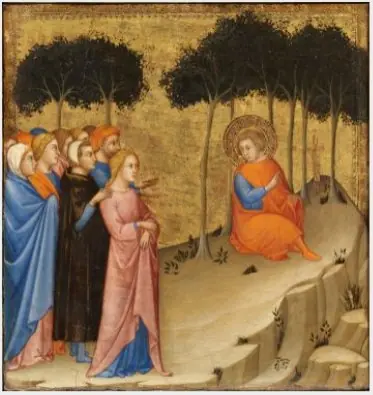 Saint Galgano Inviting the People to Adore the Cross