Artwork
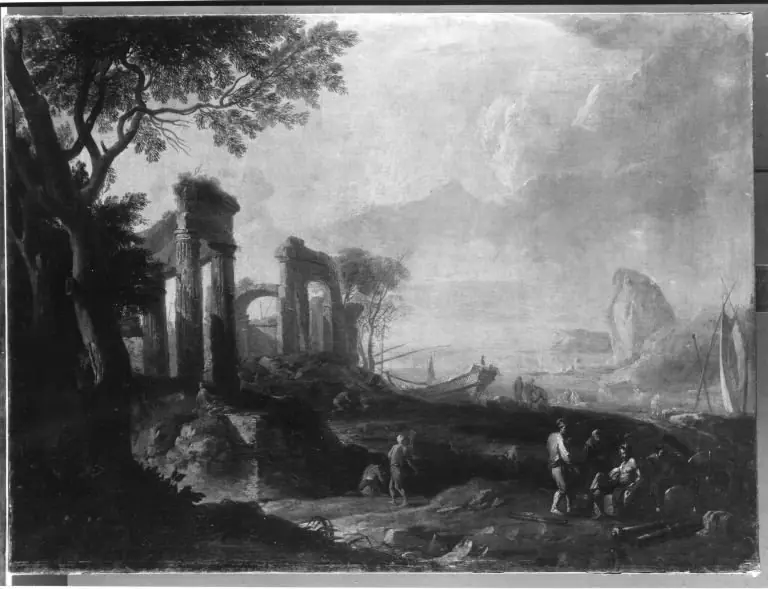
Architekturbild mit zwei Bettlern, Soldat und Hund (Kopie nach)
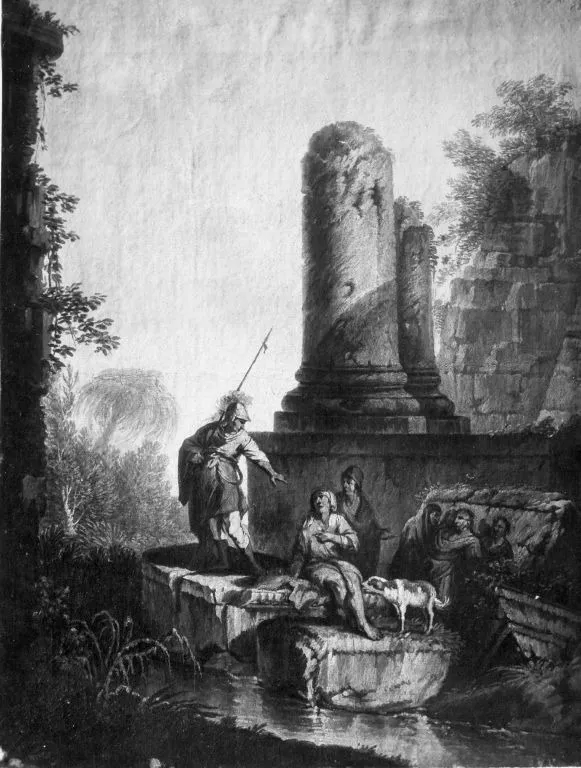
Architekturbild mit zwei Bettlern, Soldat und Hund (Kopie nach) is an unspecified painting by the Barbizon school artist Andrea Locatelli. It dates from 1700 and is held in the collection of the Bavarian State Painting Collections.
About this work
Overview
Though originally a landscape painter trained in architectural and marine subjects, Locatelli often integrated genre elements into his scenes.
This painting is a copy after a work by Andrea Locatelli, an Italian artist active around 1700. Though originally a landscape painter trained in architectural and marine subjects, Locatelli often integrated genre elements into his scenes. The present version reflects his interest in combining naturalistic settings with figures engaged in everyday life, rendered with careful attention to atmospheric perspective and structural detail.
Subject & Meaning
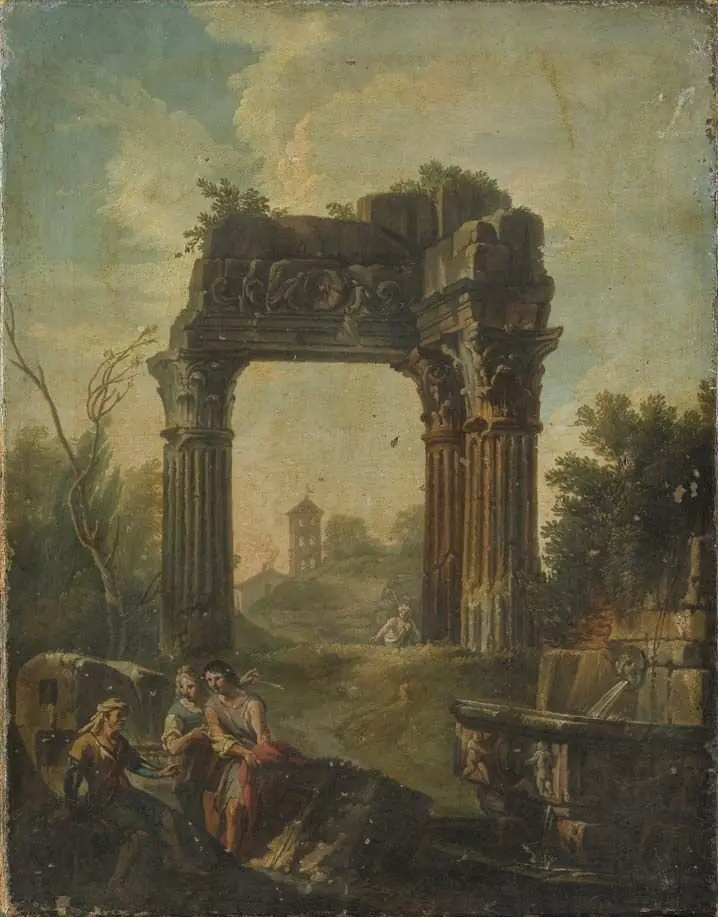
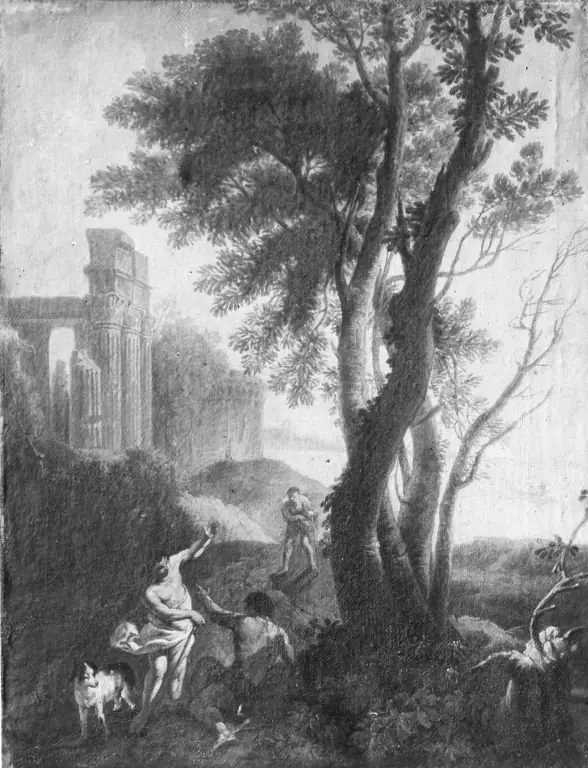
The scene portrays a quiet urban moment: two beggars, a soldier, and a dog gather near a seated woman beside a stone structure. The figures, dressed in period attire, suggest social stratification and transient human encounters within a cityscape. The presence of the soldier and the destitute may imply themes of displacement or post-conflict life, though no explicit narrative is given—focus remains on the quiet coexistence of individuals within a shared space.
Technique & Style
The composition employs layered brushwork to distinguish foreground figures from the architectural backdrop, using muted earth tones and soft chiaroscuro to suggest depth. Trees and a monumental stone pillar frame the scene, guiding the viewer’s eye toward the central group. Light falls unevenly, enhancing the sense of a specific time of day and reinforcing the painting’s observational realism over idealization.
History & Provenance
The painting is recorded as a copy after Locatelli’s original, likely made in the 18th or early 19th century. It entered the collection of the Alte Pinakothek in Munich, where it remains today. While the original by Locatelli is lost or unidentified, this version preserves key compositional elements and reflects the continued interest in Italianate landscape genre scenes among Northern European collectors.
Context
Though sometimes misassociated with the Barbizon School, this work predates that movement by over a century. It aligns instead with the 17th-century Italian tradition of combining landscape with genre scenes, influenced by artists like Salvator Rosa and Claude Lorrain. Such works appealed to collectors seeking both topographical detail and human narrative, bridging the gap between topography and storytelling in early modern painting.
Legacy
The painting serves as a testament to the enduring appeal of Locatelli’s compositional approach, even in derivative forms. Its presence in a major European collection underscores the value placed on Italianate scenes during the 19th-century consolidation of art-historical canons. While not an original, it preserves stylistic traits that informed later landscape traditions in Northern Europe.
Artist & collection
Artist
Andrea Locatelli (19 December 1695 – 19 February 1741) was an Italian painter of landscapes (vedute).

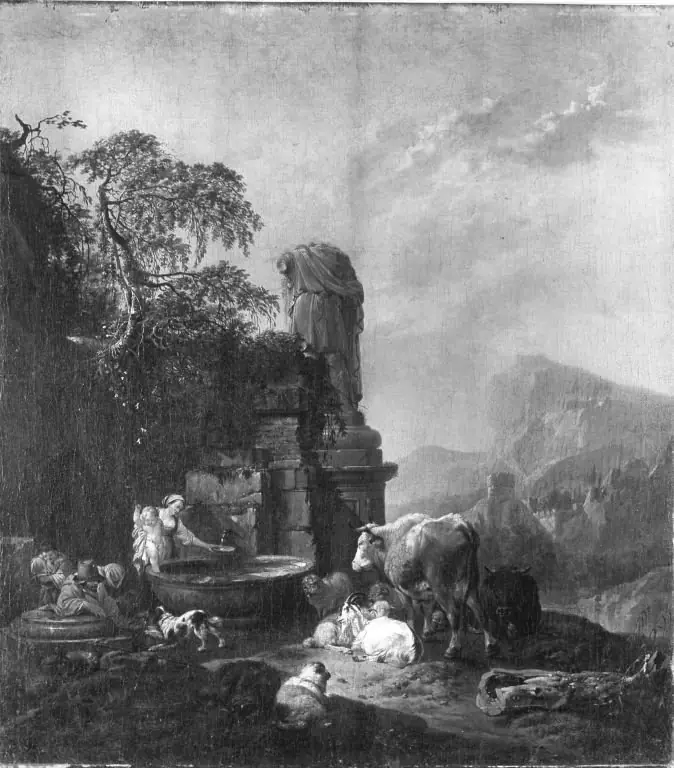 Hirtenfamilie und Herde am Brunnen
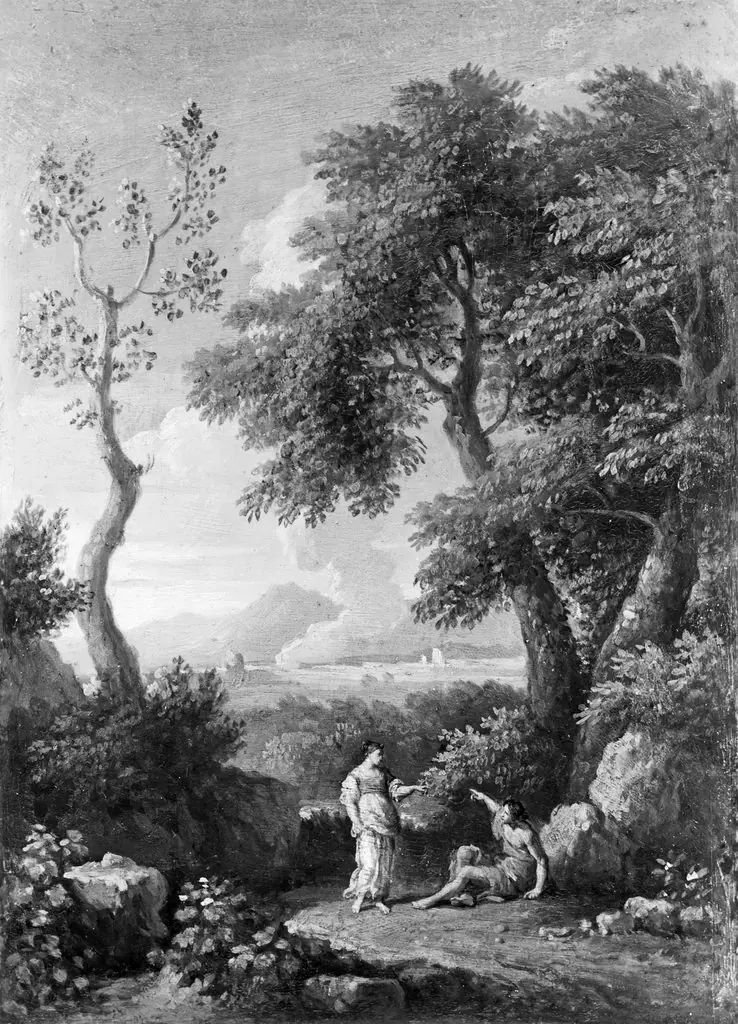 Landscape of the Roman "Compagna"
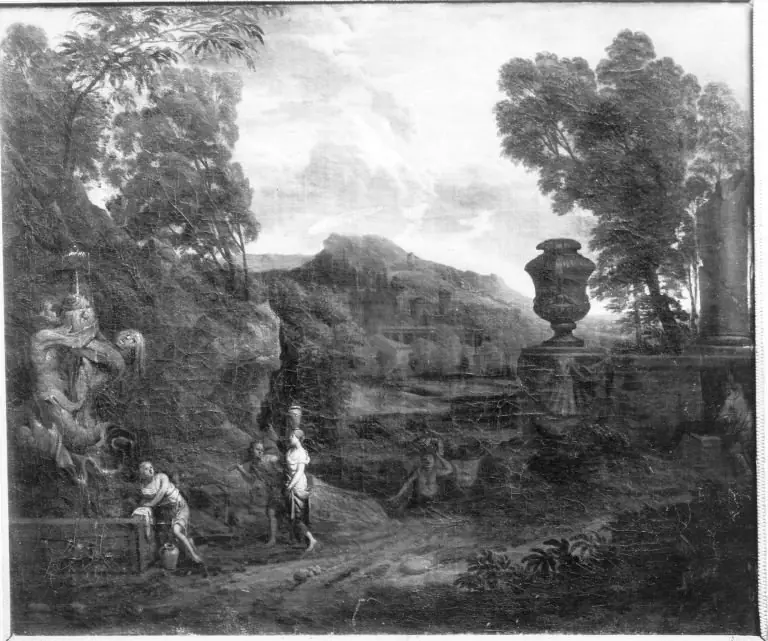 Italienisch-klassische Landschaft
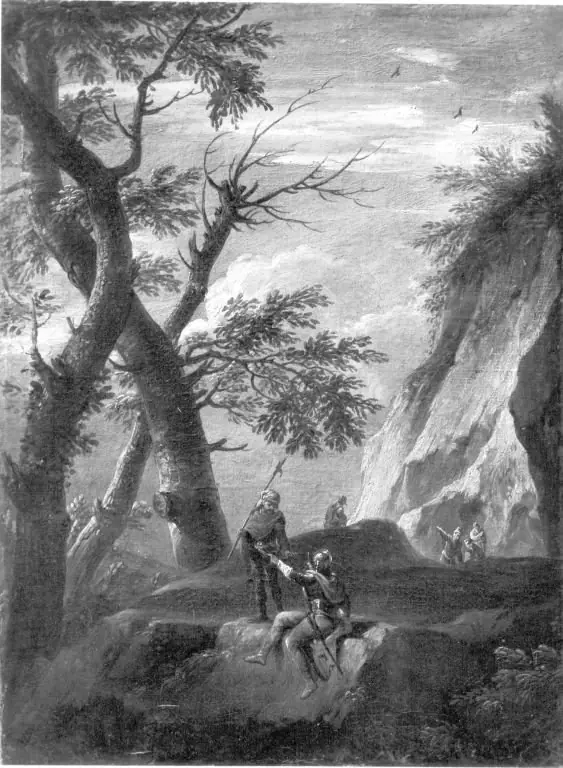 Gebirgslandschaft
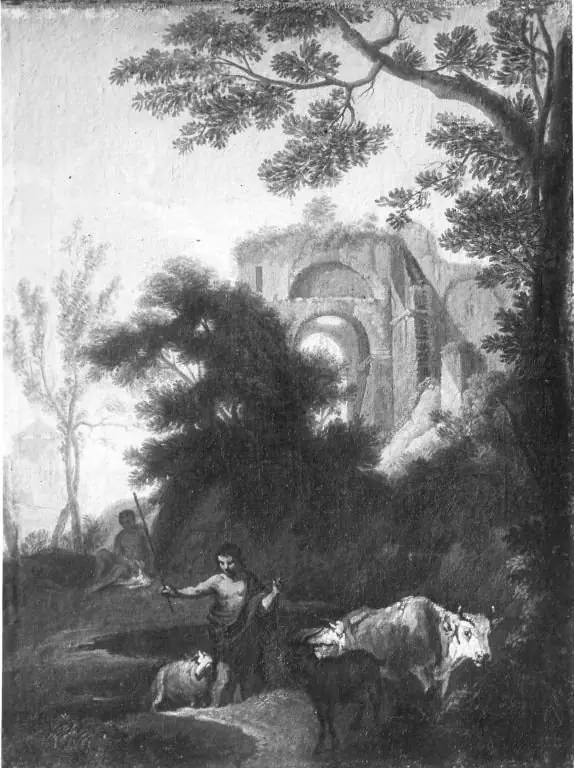 Ideallandschaft mit Hirt und Herde
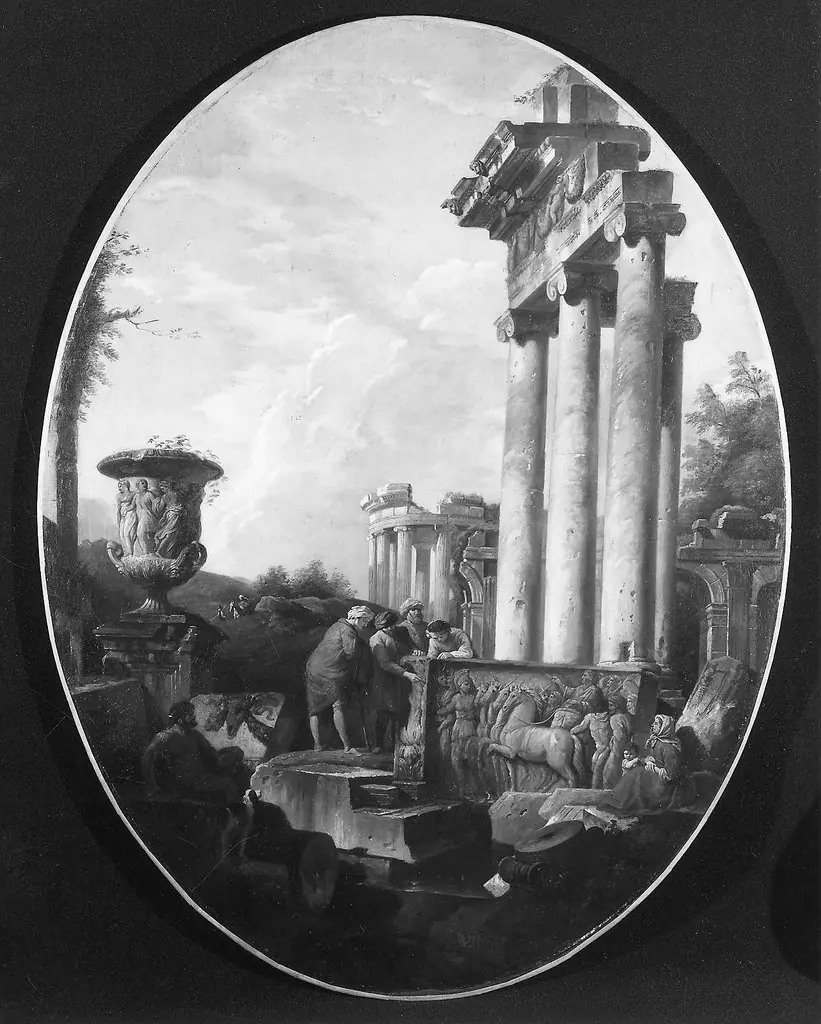 Capriccio of Roman Ruins with a Bas-Relief of a Charioteer
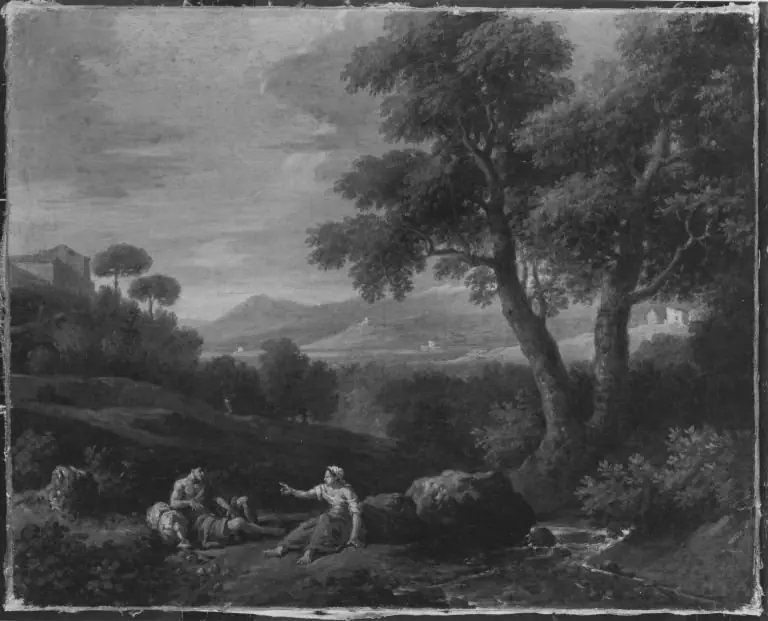 Italienische Landschaft
 Waldlandschaft
 Landscape with Sacrifice to Diana
 Felsenlandschaft
 Italian Landscape with Shepherds