Artwork
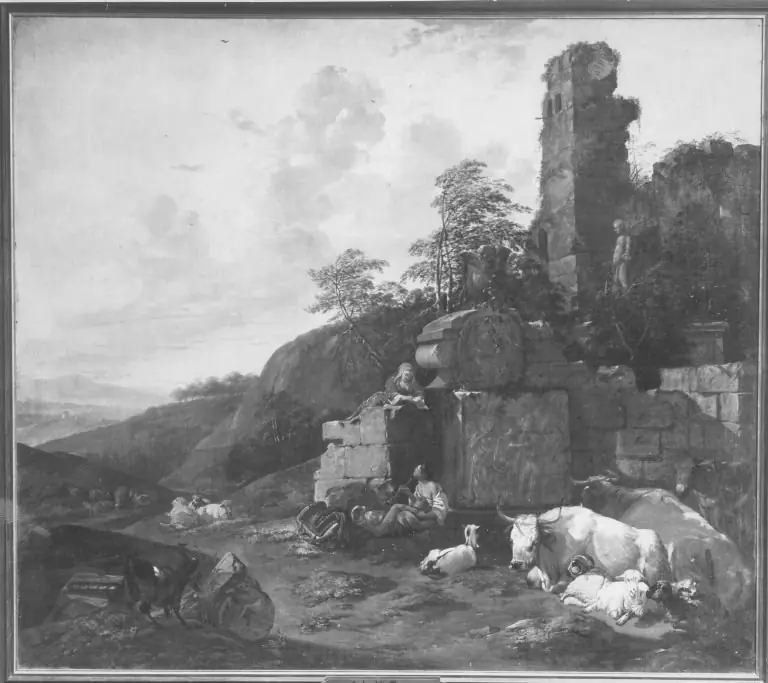
Hirtenfamilie und Herde am Brunnen
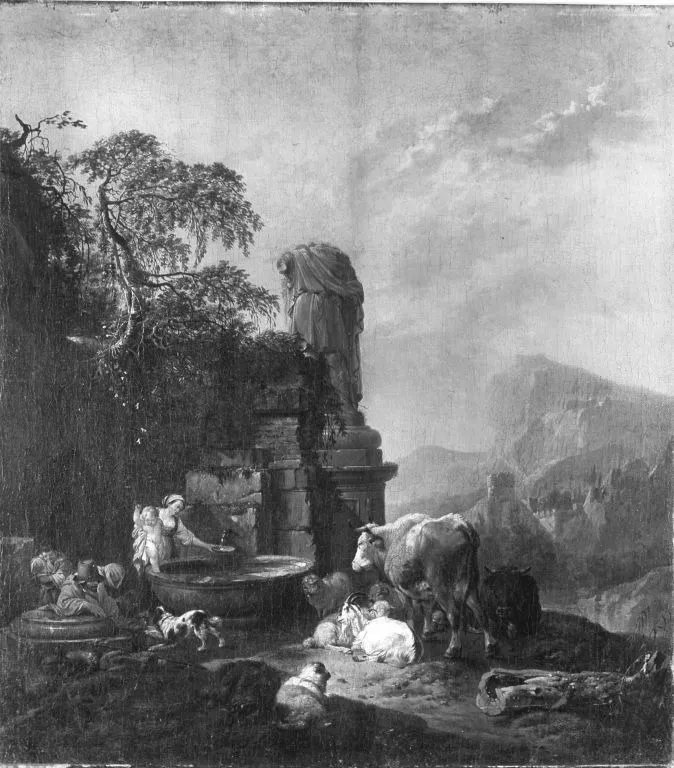
Hirtenfamilie und Herde am Brunnen is an unspecified painting by the Flemish Baroque painting artist Johann Heinrich Roos. It dates from 1673 and is held in the collection of the Bavarian State Painting Collections.
About this work
Overview
Painted in 1673 by Johann Heinrich Roos, this work depicts a quiet rural scene centered on a well in a pastoral setting. The composition brings together human figures and livestock in harmonious coexistence with the natural environment. Rendered in oil on canvas, the painting exemplifies Roos’s focus on everyday rural life, framed within a landscape that emphasizes stillness and subtle light.
Subject & Meaning
The scene portrays a shepherd family at rest beside a watering source, a common motif in 17th-century German pastoral art.
The scene portrays a shepherd family at rest beside a watering source, a common motif in 17th-century German pastoral art. The woman leaning over the well and the man gazing outward suggest a moment of pause amid labor. The presence of grazing animals and a resting dog reinforces themes of domestic tranquility and the cyclical rhythms of rural existence, devoid of narrative drama or symbolic allegory.
Technique & Style
Roos employs soft, diffused lighting to unify the composition, with warm tones guiding the eye across the rolling terrain. Brushwork is detailed yet restrained, particularly in the rendering of animal forms and foliage. The background merges gently into hazy hills, creating depth without sharp contrasts. This approach reflects the influence of Dutch landscape traditions adapted to German sensibilities of quiet observation.
History & Provenance
The painting entered the collection of the Alte Pinakothek in Munich, where it remains today. Its documented history traces back to the late 17th century, likely acquired through regional patronage or aristocratic circles familiar with Roos’s work. No significant alterations or reattributions are recorded, and its condition reflects careful preservation over centuries.
Context
In post-Thirty Years’ War Germany, depictions of peaceful rural life gained resonance as symbols of stability and renewal. Roos, active in the Palatinate and later Frankfurt, contributed to a growing genre that idealized agrarian scenes without overt moralizing. His work aligned with broader European trends in landscape painting but retained a distinctly regional character through its attention to local topography and livestock.
Legacy
Roos’s paintings, including this one, helped shape the tradition of German pastoral art in the late Baroque period. While less widely known than his Dutch contemporaries, his focus on serene, unembellished rural moments influenced regional artists and contributed to the development of landscape painting in southern Germany. His oeuvre remains a quiet but consistent presence in museum collections focused on 17th-century German art.
Artist & collection

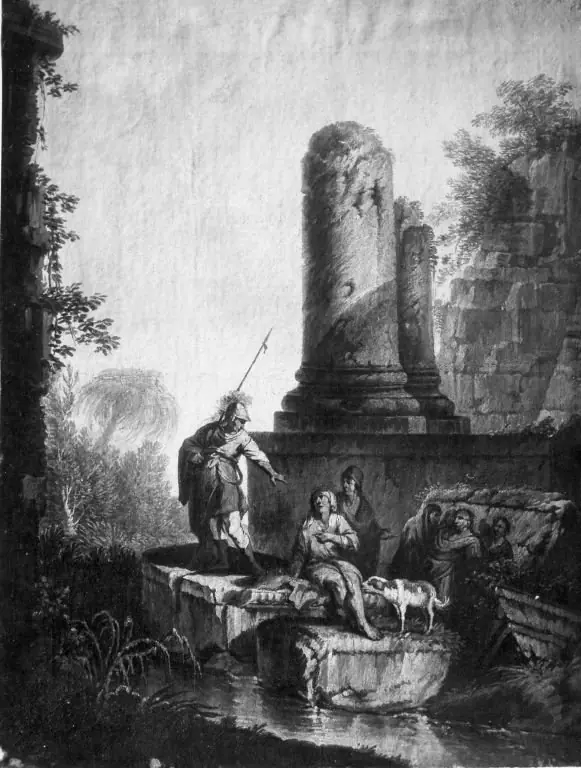 Architekturbild mit zwei Bettlern, Soldat und Hund (Kopie nach)
 Abendlandschaft mit Vieh
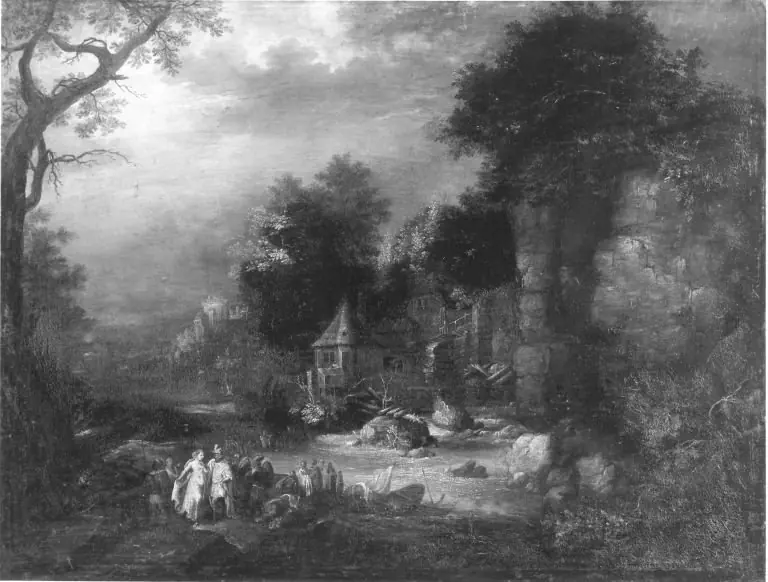 Ideallandschaft
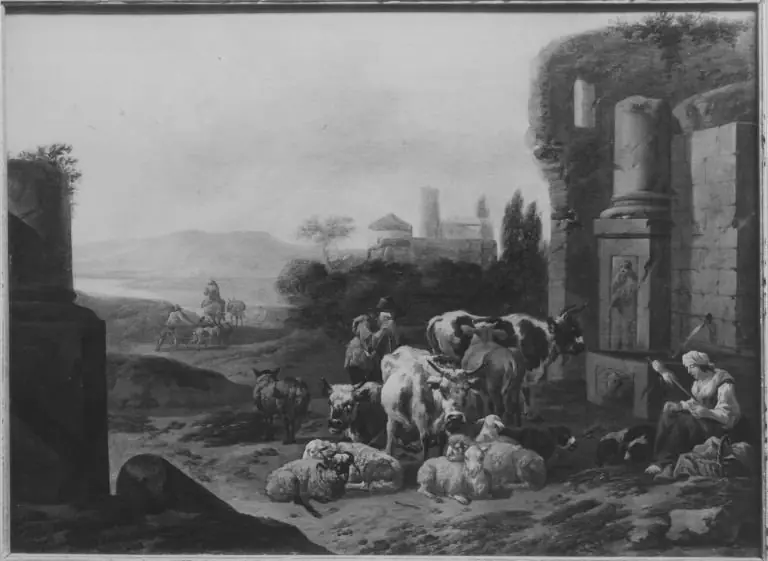 Ruinen
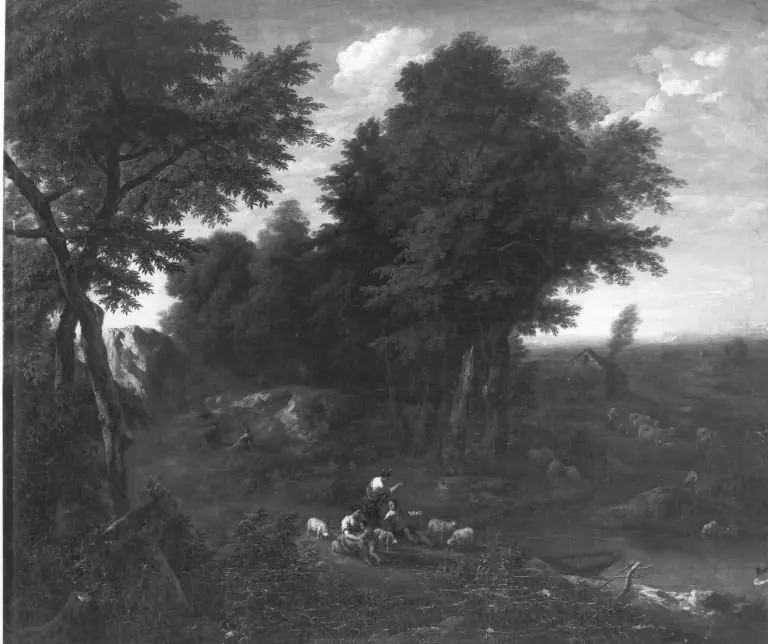 Waldlandschaft
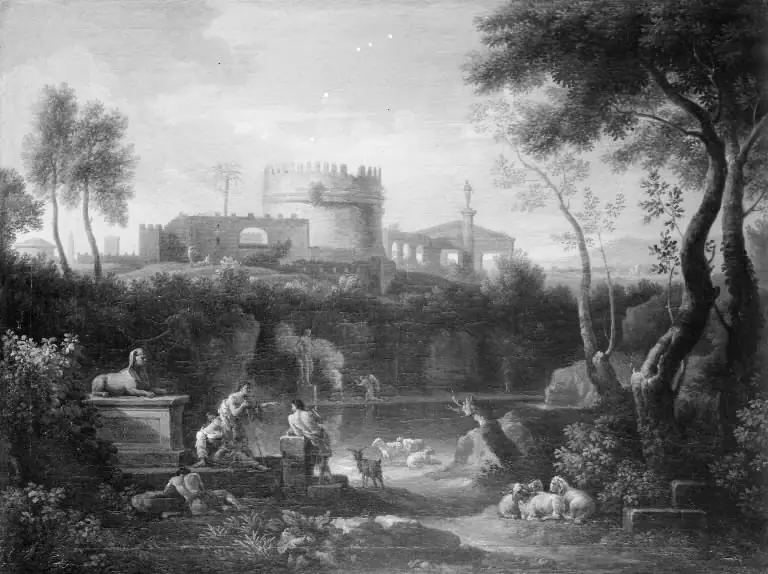 Landscape with the Tomb of Cecilia Metella
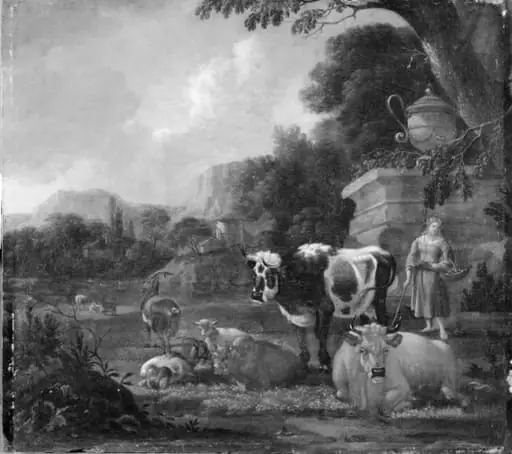 Shepherdess with her Cattle, Sheep and Goats
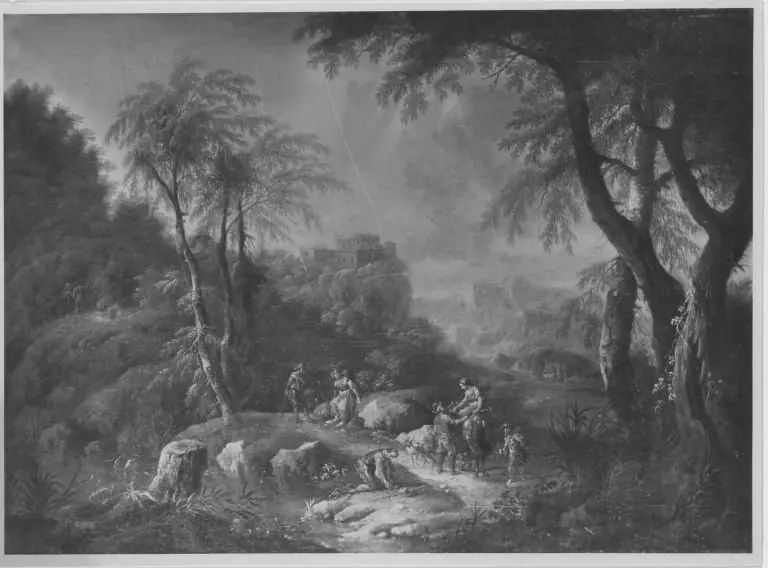 Ideallandschaft
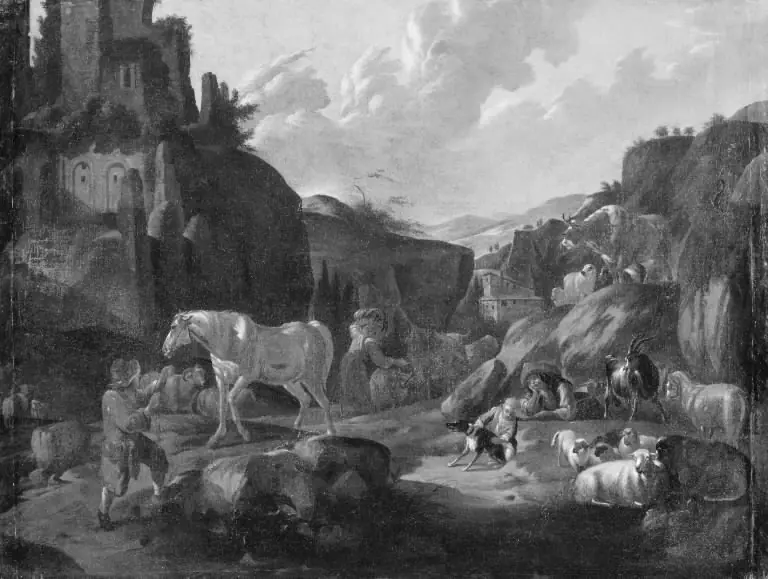 Italian Landscape with Shepherds
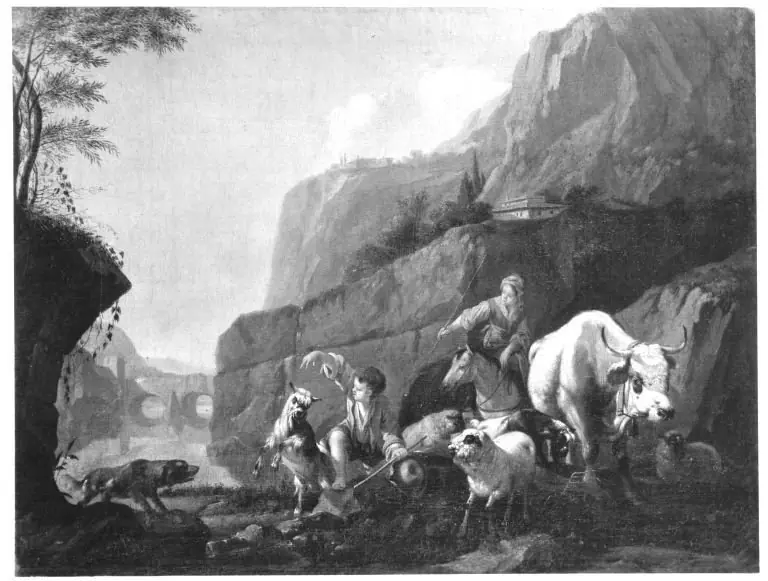 Hirten mit Tieren am Wasser
 Landscape with Peasants at a Fountain
 Italienisch-klassische Landschaft