Artwork
Outdoor study
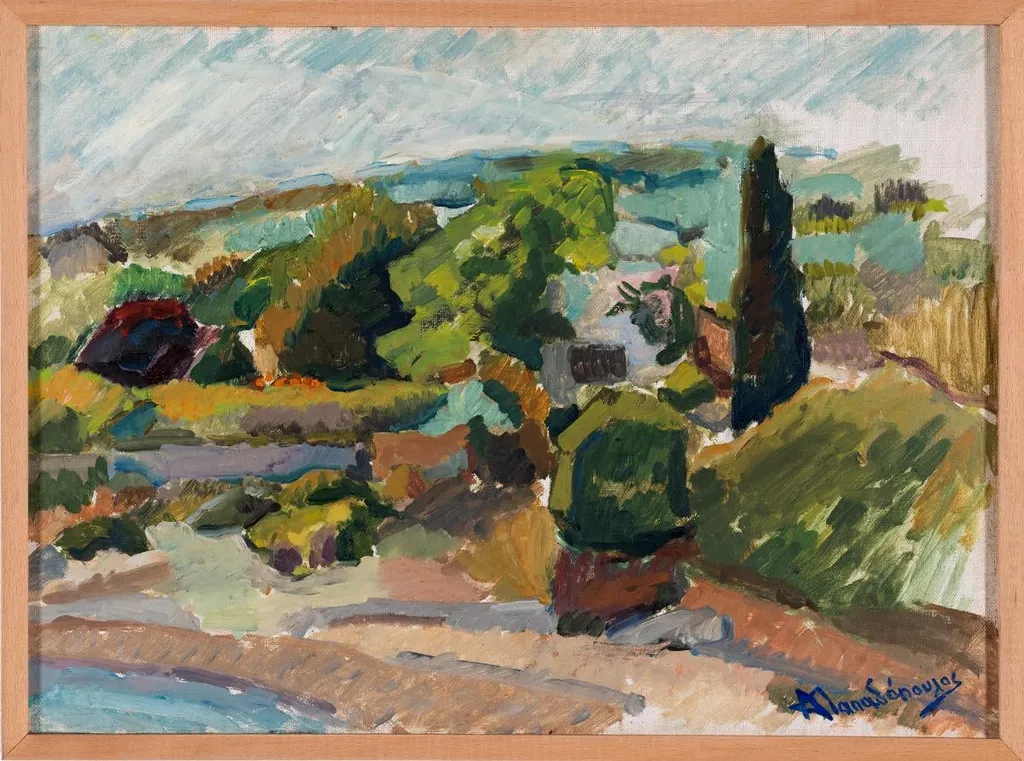
Outdoor study is a drawing by Andreas Papadopoulos. It dates from 1966 and is held in the collection of the Athens School of Fine Arts.
About this work
Overview
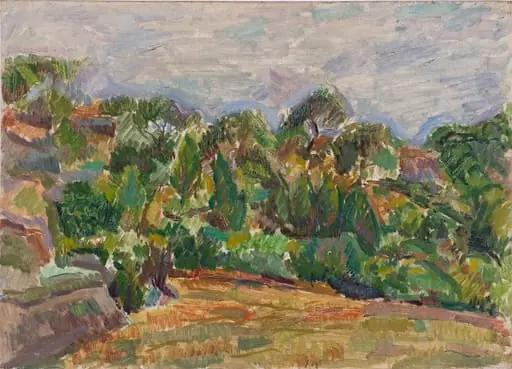
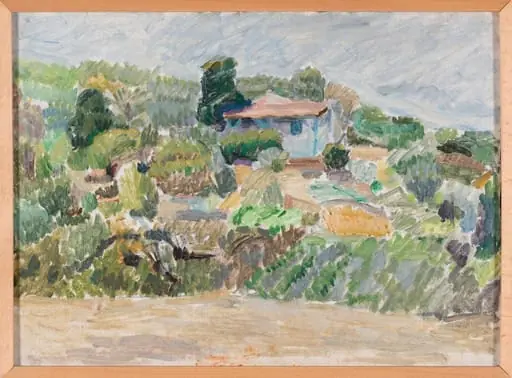
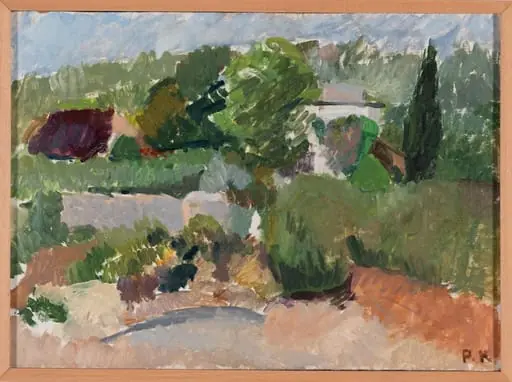
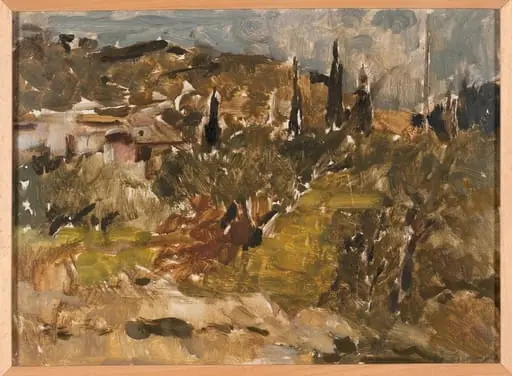
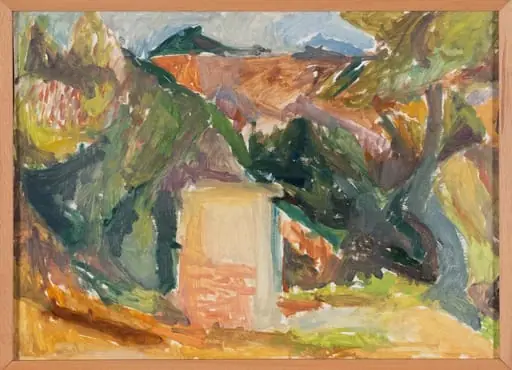
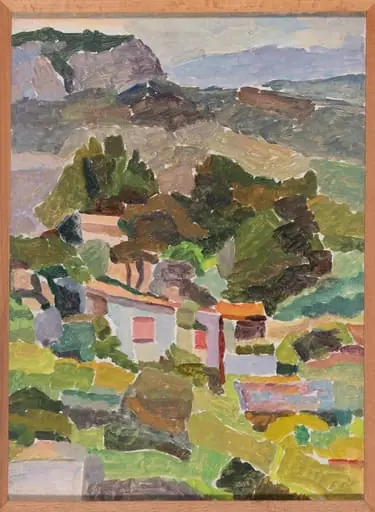
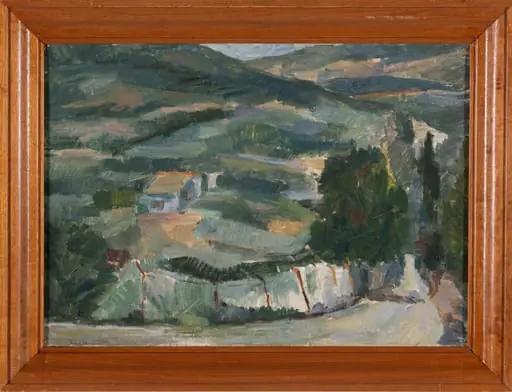
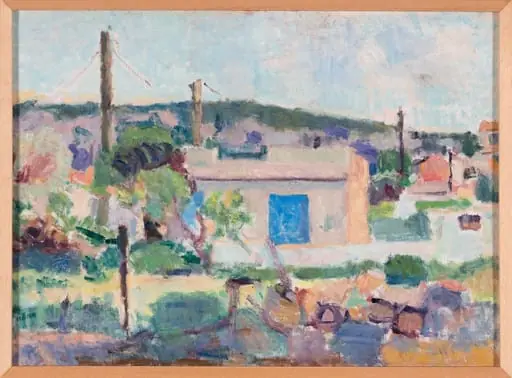
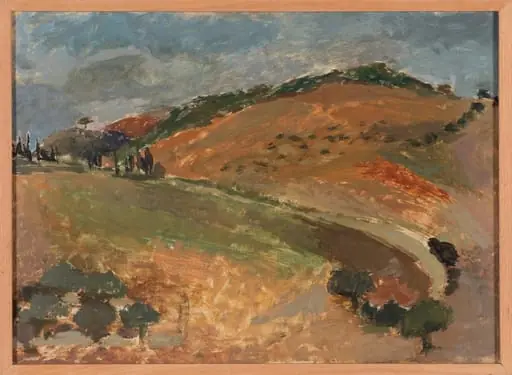
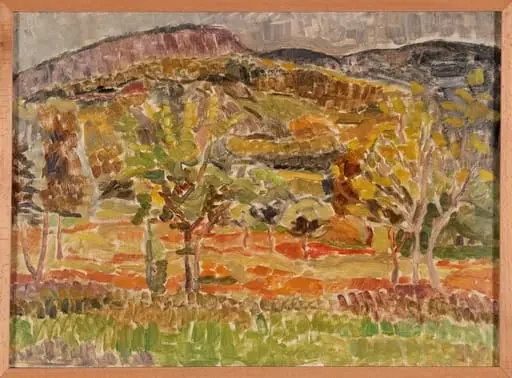
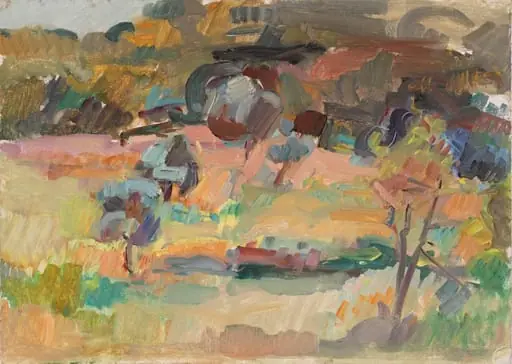
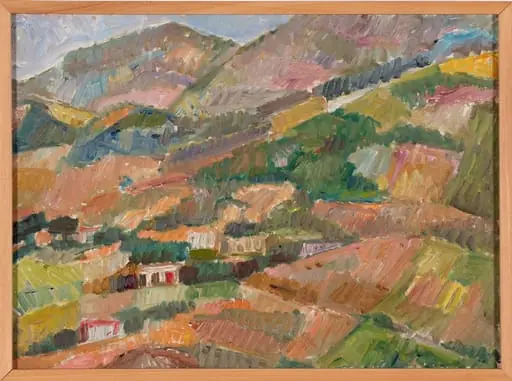
Created in 1966 by Andreas Papadopoulos, this oil on canvas work captures a fleeting moment in a rural landscape. Executed with rapid, expressive brushwork, it reflects the artist’s practice of painting en plein air. The piece is part of the Museum of Ethnography’s collection, where it is valued for its direct engagement with natural light and informal composition.
Subject & Meaning
The scene depicts a quiet countryside with a solitary tree on the right, flanked by distant buildings and rolling hills. No human figures are present, emphasizing solitude and the quiet rhythm of rural life. The loose handling suggests immediacy—this is not an idealized landscape but a spontaneous record of sight and atmosphere, rooted in observation rather than narrative.
Technique & Style
Papadopoulos employed thick, uneven strokes to convey texture and movement, favoring bold greens, earthy browns, and cool blues.
Papadopoulos employed thick, uneven strokes to convey texture and movement, favoring bold greens, earthy browns, and cool blues. The sky is rendered with diluted pigment, creating a translucent, watercolor-like effect. Brushwork is unrefined and urgent, indicating rapid execution outdoors. The absence of fine detail reinforces the sense of a momentary impression, prioritizing light and motion over precision.
History & Provenance
The work entered the Museum of Ethnography’s collection shortly after its creation, likely through direct acquisition or donation by the artist. Its preservation as part of a cultural institution underscores its role in documenting 20th-century Greek artistic practices. No significant changes in ownership or restoration are documented, suggesting the piece has remained in stable condition since its completion.
Context
Painted during a period of renewed interest in landscape and everyday life among Greek artists, this work aligns with broader postwar trends favoring spontaneity over academic formalism. While not part of a named movement, it reflects a regional shift toward direct observation and personal expression, echoing contemporaneous practices in Mediterranean art circles.
Legacy
Though not widely exhibited beyond institutional holdings, the painting remains a representative example of Papadopoulos’s approach to plein air painting. It contributes to understanding how Greek artists engaged with modernist tendencies through intimate, unpolished observations of their surroundings, influencing later generations interested in authentic, non-idealized depictions of nature.
Artist & collection
Artist
Andreas Papadopoulos left behind a small but focused set of work from the late 1960s.