Artwork
Outdoor study
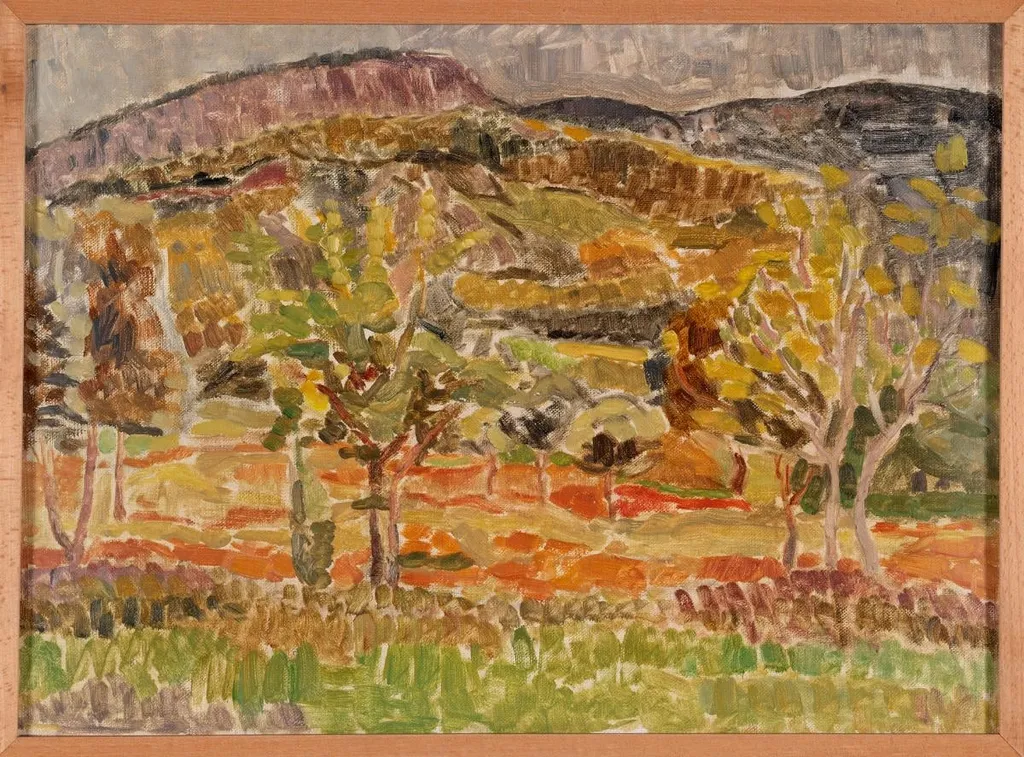
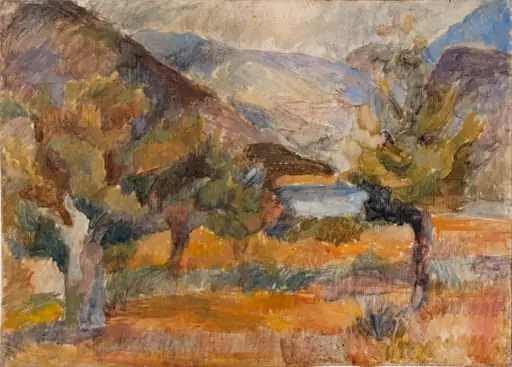
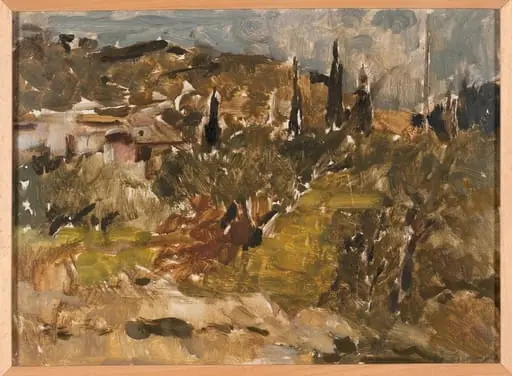
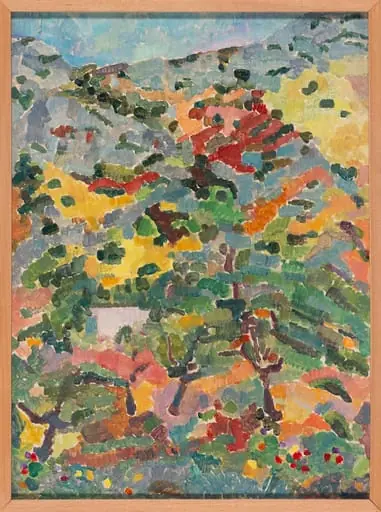
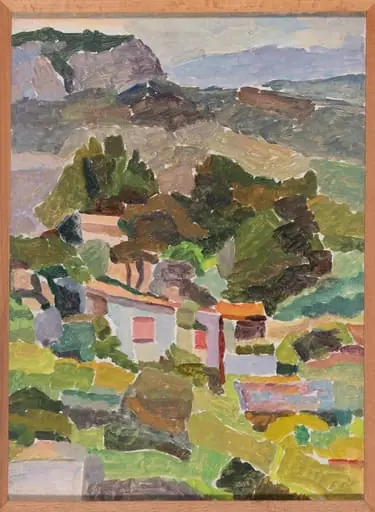
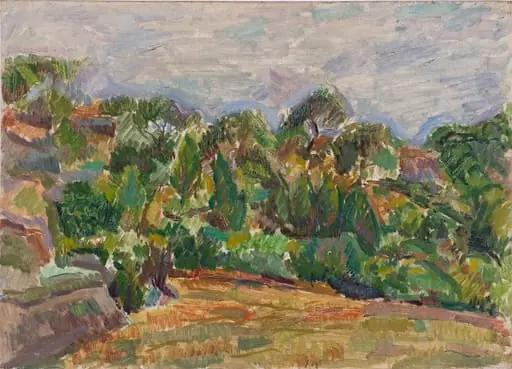
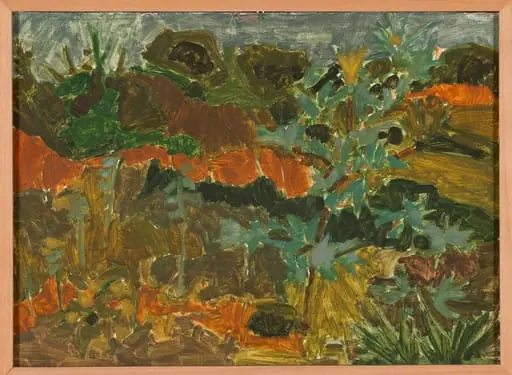
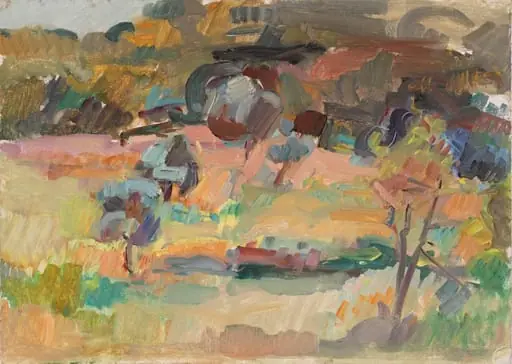
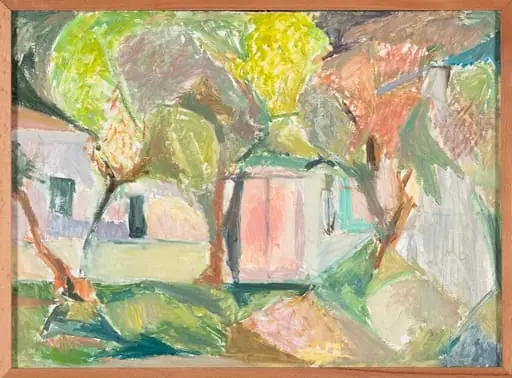
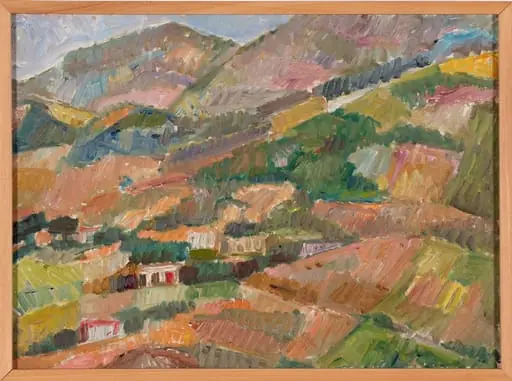
Outdoor study is a drawing by Eleni Karagiannis. It dates from 1965 and is held in the collection of the Athens School of Fine Arts.
About this work
Overview
The work avoids narrative detail, instead emphasizing the physicality of paint and the rhythm of brushwork.
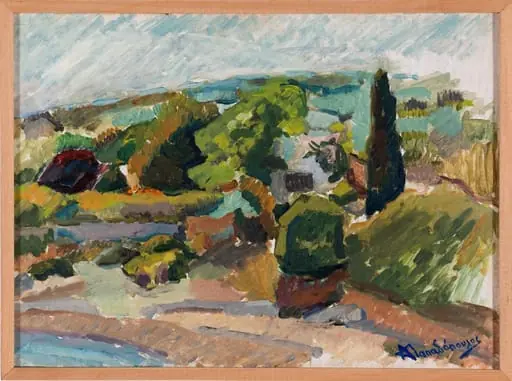
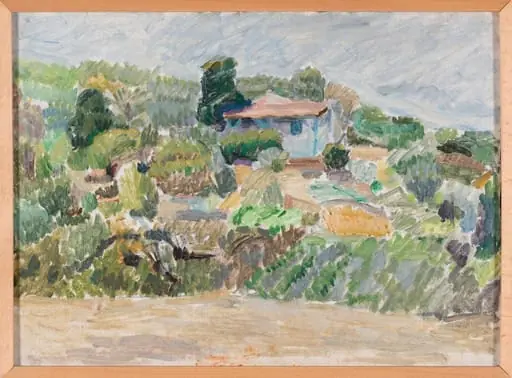
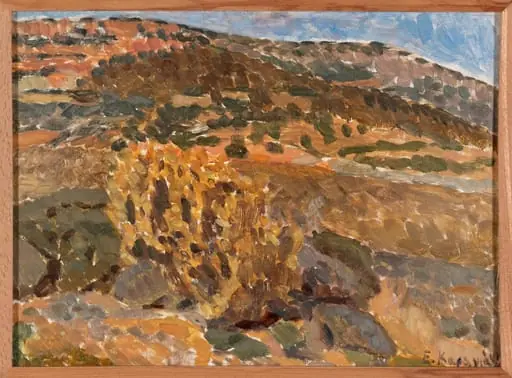
Created in 1965 by Eleni Karagiannis, this oil painting captures a quiet hillside landscape. It resides in the Museum of Ethnography, where it is noted for its tactile surface and restrained palette. The work avoids narrative detail, instead emphasizing the physicality of paint and the rhythm of brushwork. Its modest scale and unadorned subject reflect a focus on perception rather than representation.
Subject & Meaning
The scene depicts a rural slope with sparse vegetation and a distant, indistinct structure. Bare trees punctuate the middle ground, their forms simplified to suggest endurance rather than botanical accuracy. The absence of human figures or clear symbolism invites contemplation of place and materiality. The painting’s quietness suggests an intimate, personal observation rather than a grand statement.
Technique & Style
Karagiannis applied paint in thick, irregular strokes, building texture through layering rather than blending. Earth tones dominate—ochres, russets, and muted greens—while the brushwork varies in pressure and direction, creating a sense of movement across the surface. The lack of smooth contours or fine detail prioritizes tactile presence over illusionistic depth, aligning with mid-century explorations of materiality in painting.
History & Provenance
The work entered the Museum of Ethnography’s collection shortly after its creation, likely through direct acquisition or donation by the artist. Its inclusion in an ethnographic institution, rather than a fine arts museum, suggests an interest in its cultural or regional resonance. No public exhibition history or documented sales are recorded prior to its institutional acquisition.
Context
Made during a period when Greek artists were reevaluating traditional landscape conventions, this piece reflects a broader shift toward abstraction and material experimentation. While not part of a formal movement, its emphasis on surface and local terrain aligns with postwar European tendencies to ground art in physical experience rather than idealized nature.
Legacy
Though not widely reproduced or studied, the painting contributes to understanding of lesser-known Greek modernists who prioritized sensory engagement over formal innovation. Its presence in an ethnographic context underscores how regional artistic practices were being reclassified in the mid-20th century, expanding definitions of what constituted culturally significant art.
Artist & collection
Artist
Eleni Karagiannis worked in metal and on paper in the mid-1960s, shaping clean heads and gentle nudes from sheet metal and turning the garden into simple, rhythmic line drawings.