Artwork
Wedding train in Moscow (XVII century)
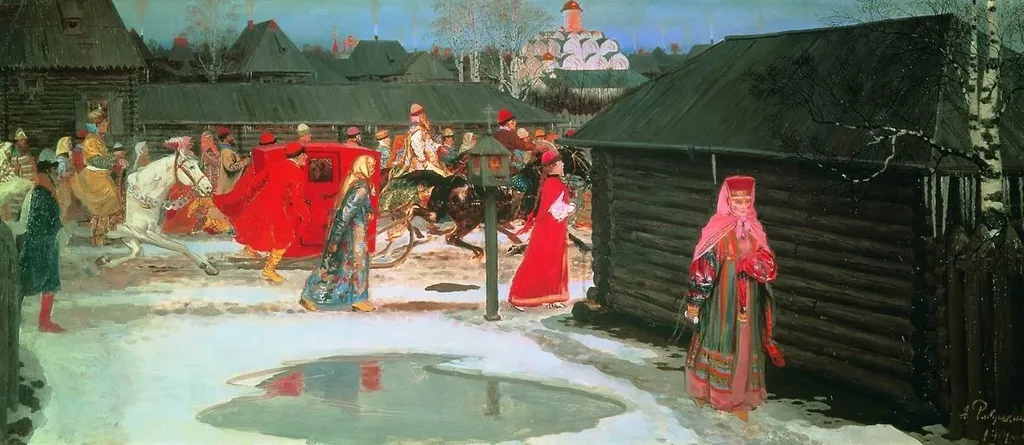
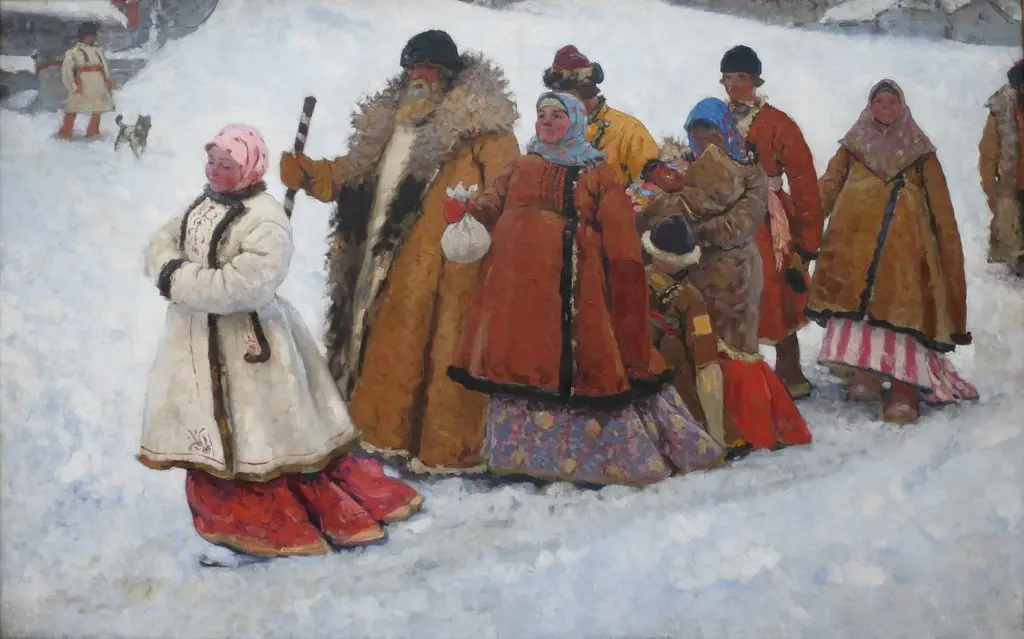
Wedding train in Moscow (XVII century) is an oil painting by the Realist artist Andrei Petrovich Ryabushkin. It dates from 1901 and is held in the collection of the Tretyakov Gallery.
About this work
Overview
Though set in 17th-century Moscow, the work reflects the artist’s interest in historical realism rather than contemporary life.
Andrei Petrovich Ryabushkin painted this scene in 1901, long after the period it portrays. Though set in 17th-century Moscow, the work reflects the artist’s interest in historical realism rather than contemporary life. Executed in oil on canvas, it belongs to the genre of historical everyday scenes, aiming to reconstruct the visual texture of pre-Petrine Russia with careful attention to costume and setting.
Subject & Meaning
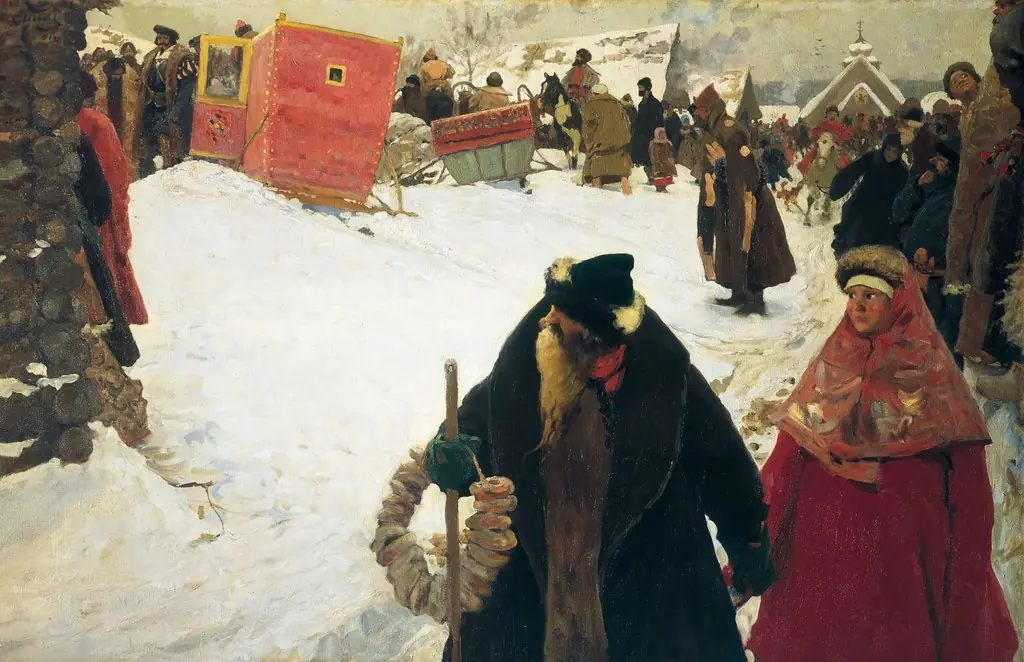
The painting captures a wedding procession moving through a snow-covered street, centered on a horse-drawn carriage carrying the bride and groom. Figures in traditional attire—richly colored robes, fur-lined garments, and embroidered headwear—surround the vehicle, suggesting communal participation in the ritual. The scene emphasizes social continuity and the ceremonial nature of marriage in early modern Russian society, not as an idealized event but as a lived, public custom.
Technique & Style
Ryabushkin employed bold, visible brushwork to convey motion and texture, particularly in the fabric of garments and the fall of snow. His palette contrasts warm reds, blues, and golds against the muted grays and whites of winter, creating visual rhythm without romanticizing the cold. Light is rendered naturally, with subtle shifts in tone across surfaces, though not through dramatic chiaroscuro; instead, the effect is grounded in observational clarity.
History & Provenance
Completed in 1901, the painting entered the collection of the Tretyakov Gallery shortly after its creation, where it remains today. Ryabushkin was known for his meticulous research into historical dress and architecture, often consulting period documents and artifacts. This work was part of a broader late-19th-century movement in Russian art seeking to recover and represent national identity through pre-modern daily life.
Context
During Ryabushkin’s time, Russian artists increasingly turned to historical subjects as a form of cultural affirmation amid rapid modernization. The 17th century, before Peter the Great’s Westernizing reforms, was viewed as a uniquely Russian era. This painting aligns with that sentiment, portraying customs and environments that had largely vanished by the 1900s, offering viewers a tangible link to a perceived authentic past.
Legacy
Though not widely known outside Russia, the painting contributes to the scholarly understanding of how 19th-century artists reconstructed historical life. Its inclusion in the Tretyakov Gallery underscores its role as a reference for costume, social ritual, and urban setting in early modern Russia. It continues to inform exhibitions on Russian folk traditions and the evolution of genre painting in the empire.
Artist & collection
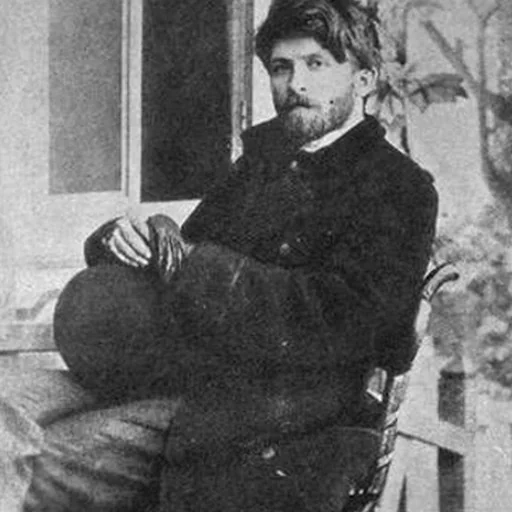
Artist
Andrei Petrovich Ryabushkin (Russian: Андре́й Петро́вич Ря́бушкин; 29 October 1861 – 10 May 1904) was a Russian painter. His major works were devoted to life of ordinary Russians of the 17th century.